
Abu Dhabi, United Arab Emirates
What to Do in Abu Dhabi in 4 Days: Mosques, Louvre, and the Dunes You'll Remember
A picture-first walk through Abu Dhabi, from white marble at dawn to red dunes at dusk.
TL;DR
Four days that swing from the quietest marble courtyard you've ever stood in to a roller coaster that outruns a sports car, with a desert sunset in between.
- Sheikh Zayed Grand Mosque's 82 white domes glowing at golden hour
- A wooden dhow drifting past the Corniche skyline at dinner
- Louvre Abu Dhabi's raining-light dome over Saadiyat Island water
- Saadiyat Beach where sea turtles nest on soft white sand
- Ferrari World's red coaster hitting 240 km/h in five seconds flat
Have this trip planned in 60 seconds
We built the Abu Dhabi, United Arab Emirates itinerary that pairs with this guide, day-by-day with verified venues and one-tap booking links. Free to adopt, edit however you want.
The First Thing You See Is All That White Marble
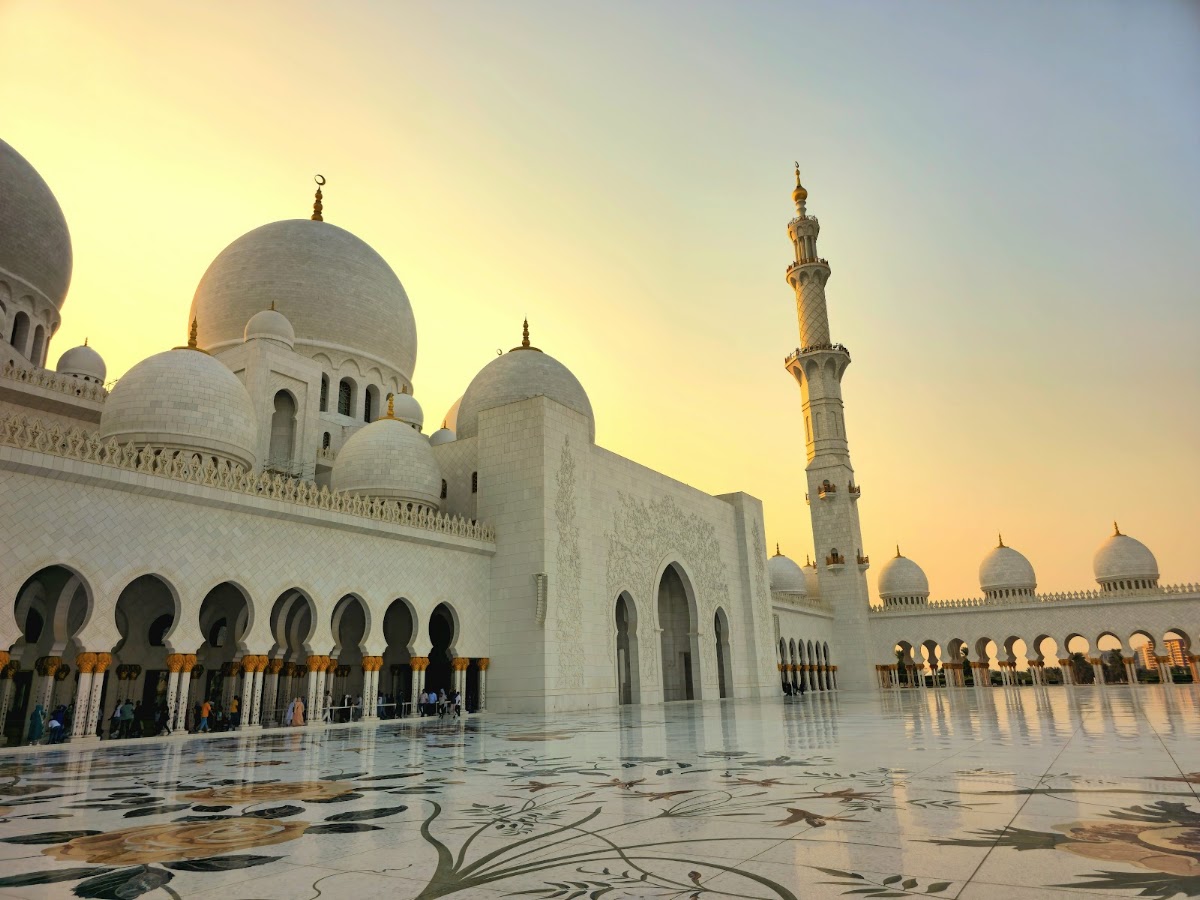
Eighty-two domes, a courtyard so polished it mirrors the sky, and a hush that makes everyone lower their voice.
You will arrive at Sheikh Zayed Grand Mosque and immediately understand why people photograph it from ten different angles. The main courtyard is paved in white marble inlaid with trailing flower patterns in colored stone, and when the afternoon light hits it the whole floor seems to glow from underneath.
Go late afternoon. The marble is cooler underfoot, the crowds thin out before the golden hour rush, and the domes turn from bright white to warm cream to lit-up gold as the sun drops. Inside, the main prayer hall holds the world's largest hand-knotted carpet and seven chandeliers dripping with Swarovski crystal.
Entry is free. Dress code is strict and enforced: shoulders and knees covered for everyone, hair covered for women. If you forget, free abayas are available at the entrance. Check opening hours before you go, since the mosque closes to tourists during Friday morning prayers (see szgmc.gov.ae).
Landing, and the Drive That Sets the Tone
Floor-to-ceiling glass, a highway lined with manicured palms, and the skyline rising out of flat desert light.
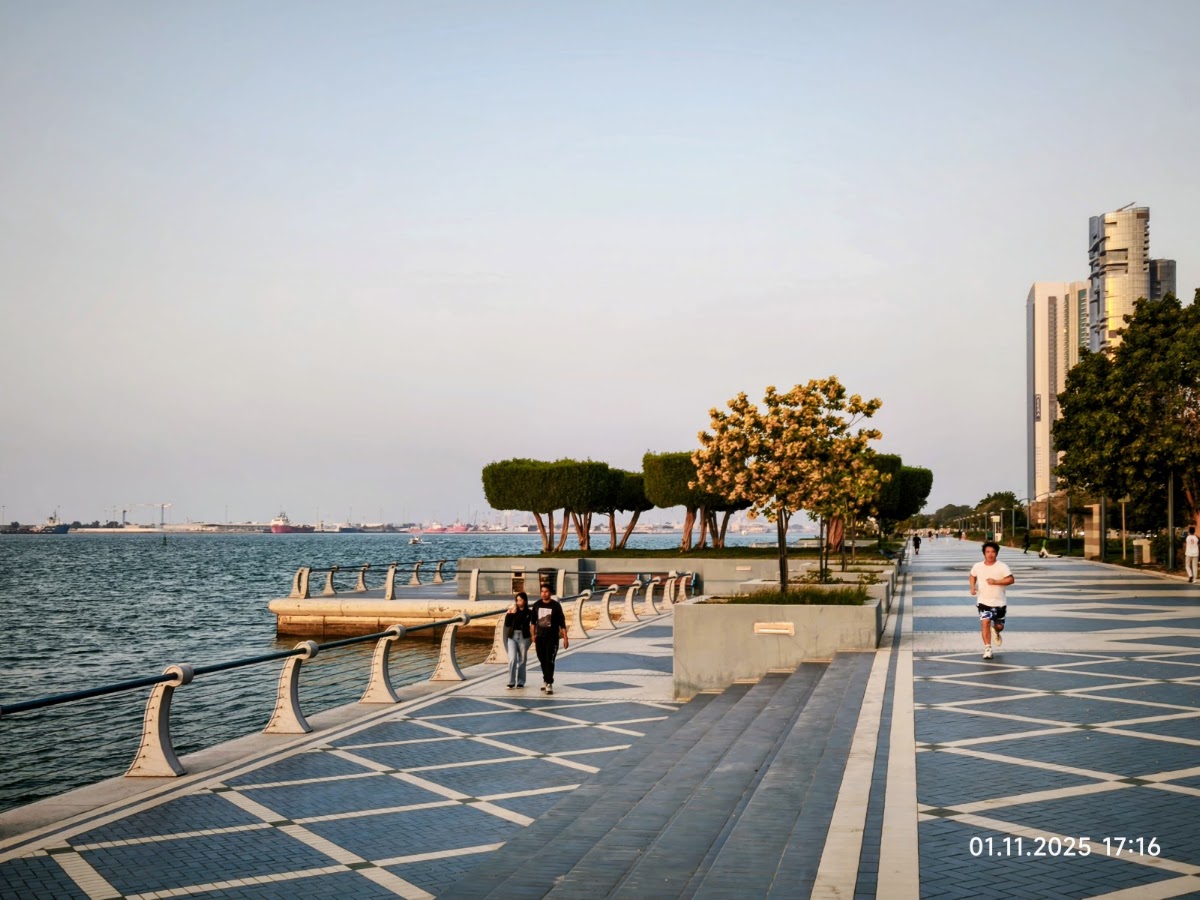
Abu Dhabi International Airport is a smooth place to land, and the ride into the city is your first real look at how the place is laid out: wide, green-edged roads, the sea appearing on your right, towers clustered along the Corniche.
The drive from the airport to the downtown hotels runs about 30 to 40 minutes depending on traffic. A metered taxi is straightforward and inexpensive, but if you have been flying all day, a pre-booked transfer with a name board waiting for you is the gentler option.
Base yourself downtown near the Corniche for your first two nights. You will be within easy reach of the waterfront, Qasr Al Hosn, and the dhow pier, which keeps the early part of the trip walkable and calm.
The Mud-Brick Fort the City Grew Around
Pale coral-stone walls, a watchtower older than the oil, and the sound of the modern skyline humming just beyond.
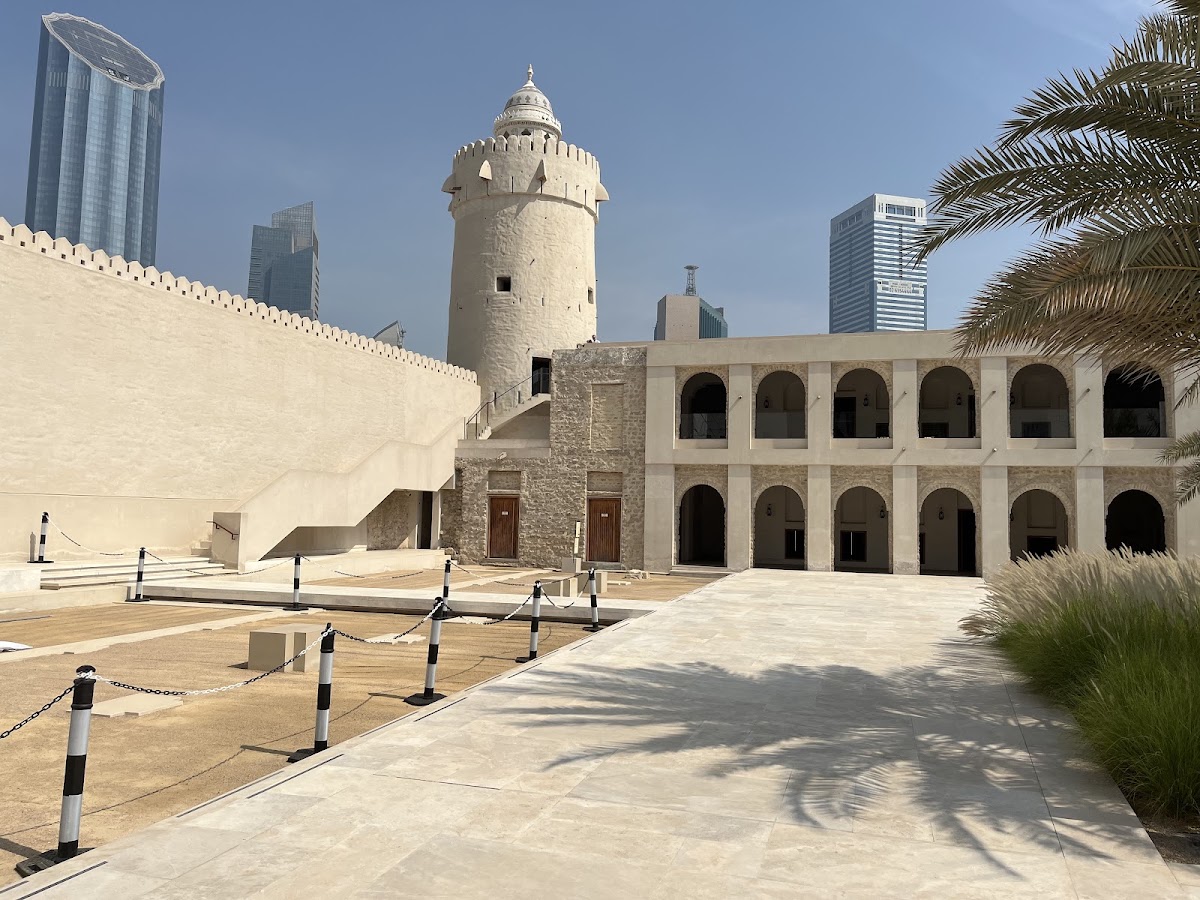
Qasr Al Hosn is the oldest stone building in Abu Dhabi, and standing inside the restored fort you get the story of how a fishing and pearling settlement became the city of glass towers now reflected in its windows.
The inner watchtower dates to the 1790s. The whitewashed palace wrapped around it is full of old photographs, pearling tools, and displays that walk you through daily life before the 1960s. It is a surprisingly quiet, shaded spot, and a good counterweight to the shine of everything else.
It sits right in the center of downtown, a short hop from the Corniche. Give it an hour or two. The ticket is modest (around 30 AED, roughly 8 USD), and the attached House of Artisans often has craftspeople weaving sadu and demonstrating palm-frond work.
Dinner on a Wooden Boat Under the Skyline
Lantern light on dark water, the towers lit up gold and blue, and a slow wooden hull cutting across the bay.
A dhow is a traditional wooden sailing boat, and climbing aboard one for dinner is the most relaxed way to see the Corniche. You drift out onto the water as the sun sets and the whole skyline switches on behind you.
Most cruises run a buffet of Arabic and international dishes while the boat makes a slow loop of the bay. Keep your camera ready for the stretch where the Etihad Towers and the waterfront come into one frame, mirrored on the water.
Book an evening slot, bring a light layer for the breeze off the Gulf, and eat on the open upper deck if there is space. It is touristy in the best way: easy, scenic, and genuinely pretty once the lights come up.
The Museum Where It Rains Light
A vast silver dome, thousands of overlapping stars punched through steel, and sunlight falling in soft pools on the floor.
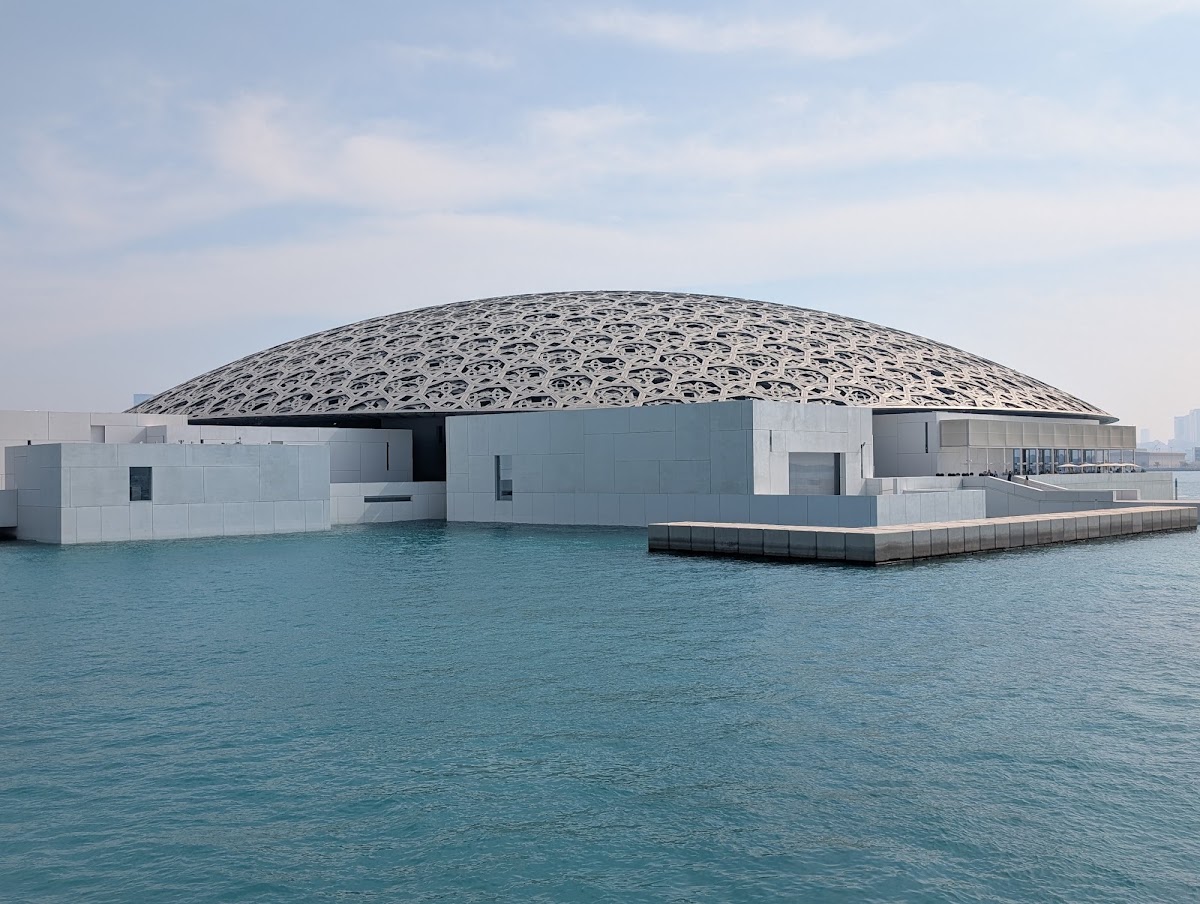
Louvre Abu Dhabi, out on Saadiyat Island, is worth the trip for the building alone. Jean Nouvel's giant latticed dome filters the sun into what the architects call a rain of light, scattering shifting patterns across the white walkways and the water channels that run between the galleries.
Inside, the collection is arranged chronologically across civilizations rather than by region, so you walk from ancient artifacts to modern pieces and see how human ideas connect. It is a manageable size: you can do it properly in two to three hours.
Go in the late afternoon when the dome light softens, then step out to the seafront terrace as it cools. Tickets run around 63 AED (about 17 USD); children under 18 enter free. Hours and current exhibitions are on louvreabudhabi.ae.
The Beach Where Turtles Still Come Ashore
Soft pale sand, water that shifts from clear to deep turquoise, and dunes of sea grass instead of a wall of hotels.
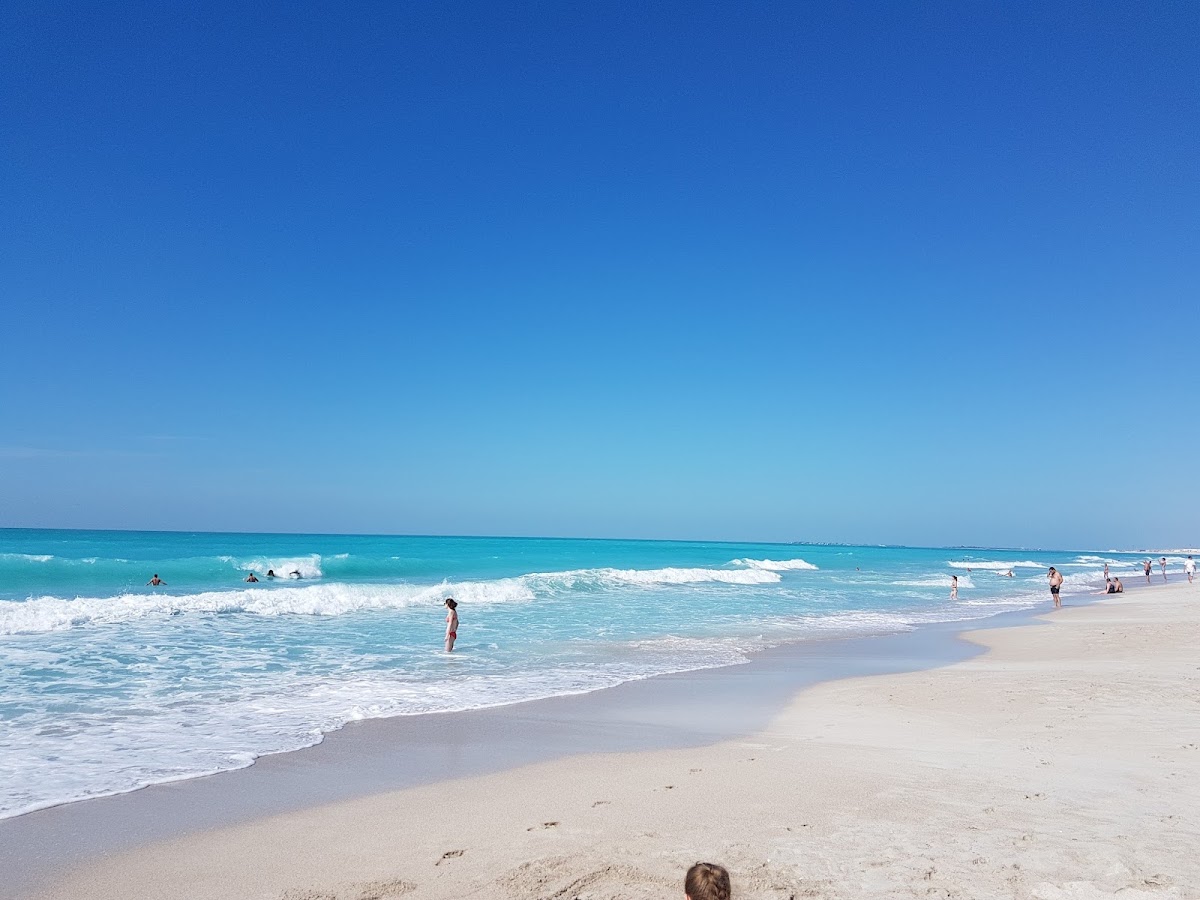
Saadiyat Beach is the one to swim at. The sand is fine and pale, the water is calm and warm, and the whole stretch feels gentler and less built-up than the city beaches. It is a protected nesting site for hawksbill turtles, which is why the natural dunes behind it are left wild.
Spend a slow morning here before the afternoon heat peaks. The public beach has loungers and a few cafes; the beach-club side offers pools and full service if you want to settle in for the day.
This is your Saadiyat Island day, so pair the beach with the Louvre for a nice rhythm: art, then sand, then dinner. Staying out this way for a night puts both within a short drive and lets you catch the quiet early-morning beach before anyone else.
Zero to 240 in Under Five Seconds
A sea of Ferrari red under a glass roof, the smell of rubber and popcorn, and that gut-drop as the coaster fires you into the open air.
Ferrari World on Yas Island is home to Formula Rossa, the fastest roller coaster on the planet. It launches you to 240 km/h in under five seconds, hard enough that you wear protective goggles, and it is over before your brain catches up.
But the whole park is a blast even if you skip the big coaster. There are gentler driving rides, a go-kart experience, a full-size Ferrari showroom, and enough for a half day easily. The giant red roof keeps most of it shaded and air-conditioned, which matters here.
Buy tickets ahead to skip the queue, wear something you can ride in, and if you are chasing Formula Rossa, hit it first thing before the lines build. A single-park ticket runs around 345 AED (about 94 USD).
Dinner at the Marina, One Last Lap
Superyachts lined up under deck lights, the Yas Marina Circuit grandstands glowing behind, and the water flat as glass.
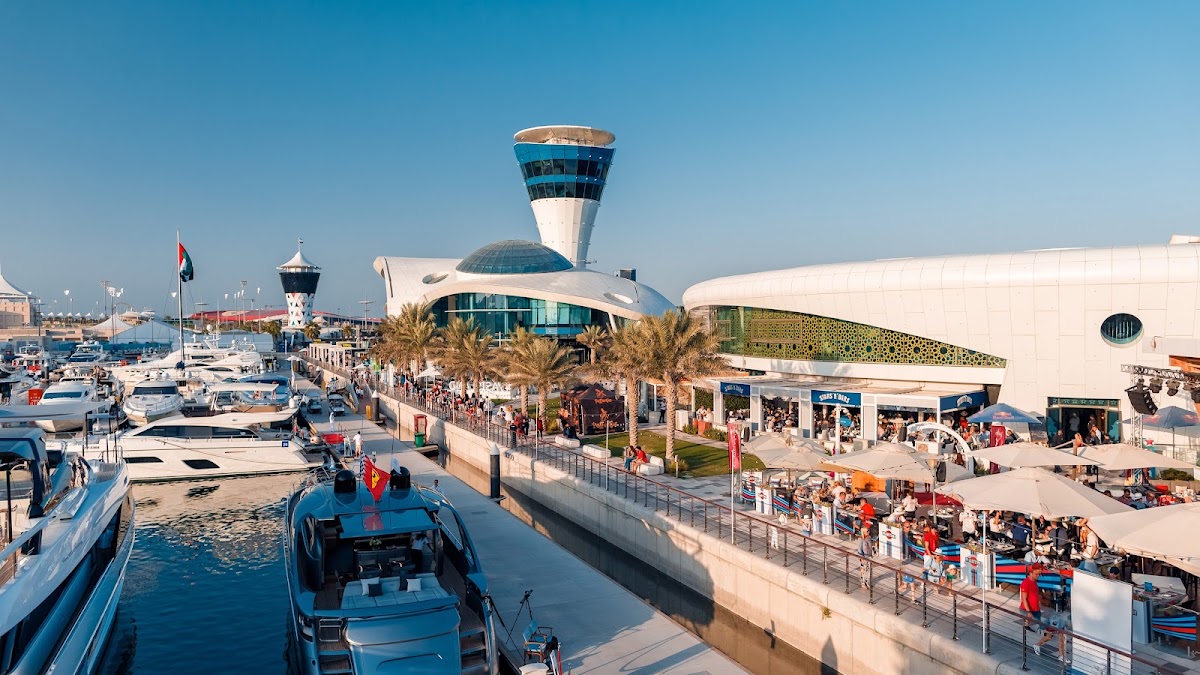
Round off your Yas Island day with dinner at Yas Marina. The waterfront restaurants here look out over moored yachts and, just beyond, the grandstands of the Formula 1 circuit, which lights up beautifully after dark.
It is a lively, polished spot without feeling stiff. Grab a table on the water, order something slow, and watch the marina lights flicker on across the harbor. On race weekends the whole area buzzes, but on a normal evening it is simply a lovely place to sit by the sea.
Save your final morning for whatever you did not get to: a last walk along the Corniche, a souvenir run, a slow coffee. Then it is a short, smooth transfer back to the airport, 30 to 40 minutes from the city, and you are off.
Ready to book?
Book the rest of Abu Dhabi, United Arab Emirates
Handpicked partner searches, dates pre-filled. Pricing is identical to going direct — the partner shares a small commission with Tabi so this guide stays free.
Frequently asked
What should I wear to Sheikh Zayed Grand Mosque?
Cover shoulders and knees. Women must also cover their hair. Loose, modest clothing in light fabric is ideal given the heat. If you arrive unprepared, the mosque provides free abayas at the entrance, but bringing your own scarf saves time in the queue.
When is the best time of year to visit Abu Dhabi?
November through March is the sweet spot, with warm days around 24 to 30 C and comfortable evenings for the Corniche and dhow cruises. Summer (June to September) regularly exceeds 42 C, so plan indoor attractions like the Louvre and Ferrari World for the hottest hours if you travel then.
How do I get between downtown, Saadiyat, and Yas Island?
Metered taxis are cheap and everywhere, and ride-hailing apps work well. Public buses connect the main areas but take longer. Because the islands are spread out, this itinerary groups each day by area to cut down on driving. Budget 15 to 30 minutes for most island-to-island hops.
Is four days enough for Abu Dhabi?
Yes, four days comfortably covers the Grand Mosque, Qasr Al Hosn, a Corniche dhow dinner, Louvre Abu Dhabi, Saadiyat Beach, and Ferrari World, with a relaxed final morning. If you want to add a desert safari or a day trip to Dubai, stretch it to five or six.
Do I need to book attraction tickets in advance?
For Ferrari World and Louvre Abu Dhabi, booking ahead saves money and skips the ticket line, especially on weekends and holidays. The Grand Mosque is free but has set visiting hours that change around Friday prayers, so check the official site before you go.
Skip the planning
Your Abu Dhabi, United Arab Emirates trip, ready to go
Adopt the day-by-day itinerary we built to match this guide. Every stop is a real place, every booking link is validated. Free forever, no card needed.
Open the Abu Dhabi, United Arab Emirates itinerary