
Berlin, Germany
What to Do in Berlin in 5 Days: Walls, Museums, and the Currywurst You'll Remember
A picture-first walk through Berlin's big monuments, its island of museums, and the canal-side afternoons in between.
TL;DR
Follow the city east to west, from Cold War concrete to a domed island of antiquities, with currywurst stops the whole way.
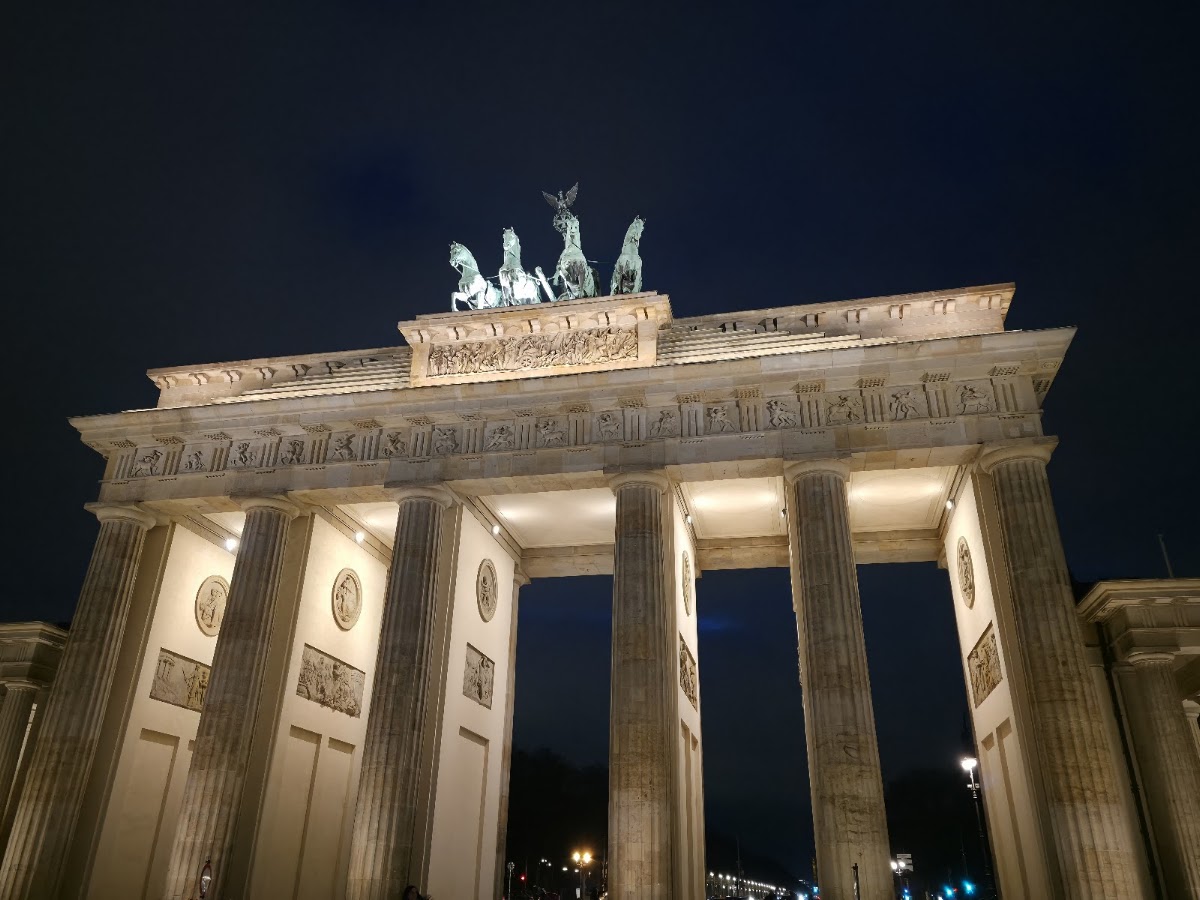
- Sunrise between the Brandenburg Gate's six sandstone columns
- The Reichstag's glass dome, spiraling up over the city for free
- Pergamon's blue Ishtar Gate, taller than your apartment
- East Side Gallery murals on the last long stretch of Wall
- A canal-side currywurst in Kreuzberg as the light drops
Have this trip planned in 60 seconds
We built the Berlin, Germany itinerary that pairs with this guide, day-by-day with verified venues and one-tap booking links. Free to adopt, edit however you want.
Sunrise Between the Columns at the Brandenburg Gate
Twelve sandstone columns, a green copper chariot up top, and almost nobody around if you get there before the tour buses. Your footsteps echo on the cobbles.
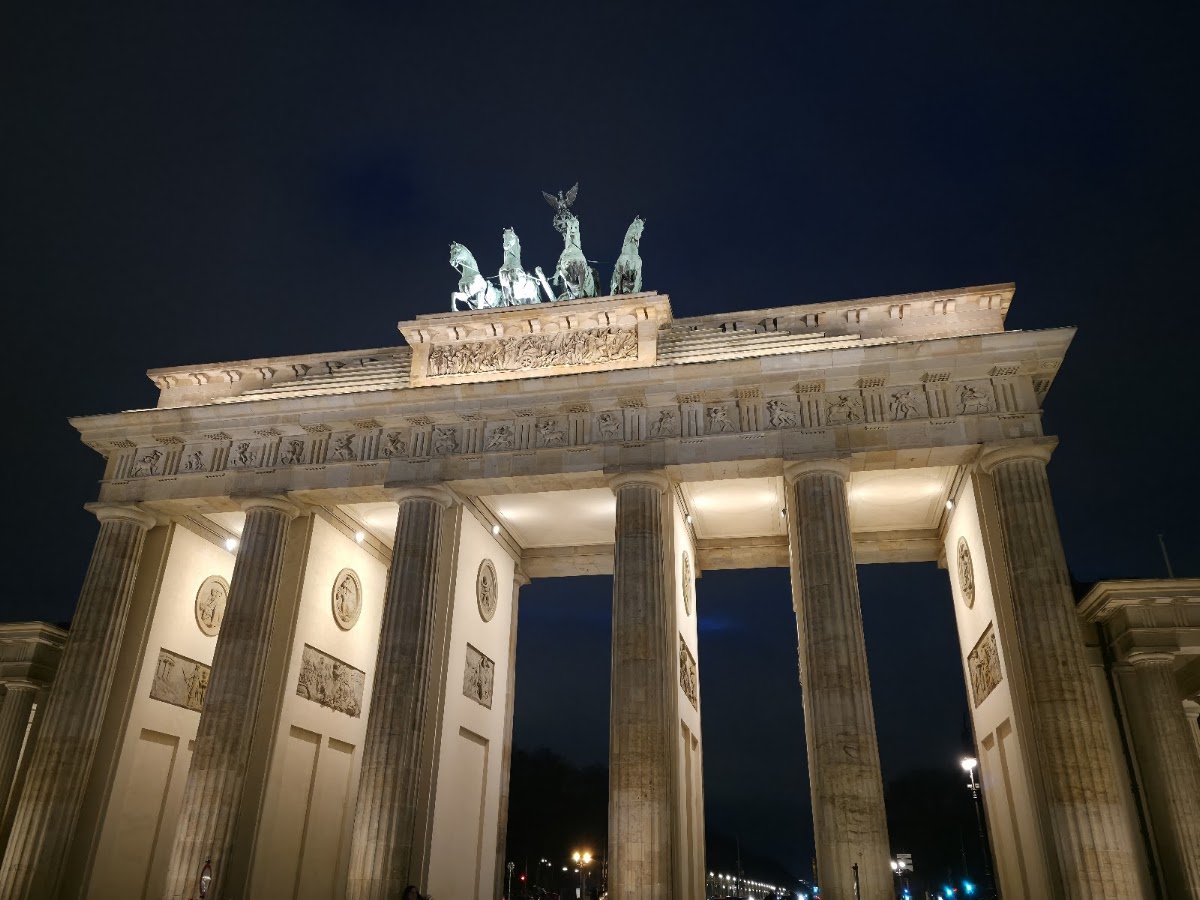
Come at 7am and Pariser Platz is yours. The Brandenburg Gate looks bigger in the low light, and you can actually see the whole quadriga, the goddess of victory driving her four horses back into the city.
Stand under the central archway. This is the spot where the Wall ran right in front of you until 1989, sealing the gate off in the death strip for 28 years. Now you can walk straight through, which is the entire point.
Grab a coffee from one of the stands as the square fills up, then head five minutes north. The Reichstag is your next stop, and you want to be inside that dome before the crowds thicken.
The Glass Dome You Climb for Free at the Reichstag
A double helix of ramps spiraling up inside a glass bubble, with the whole flat sprawl of Berlin turning slowly below your feet.
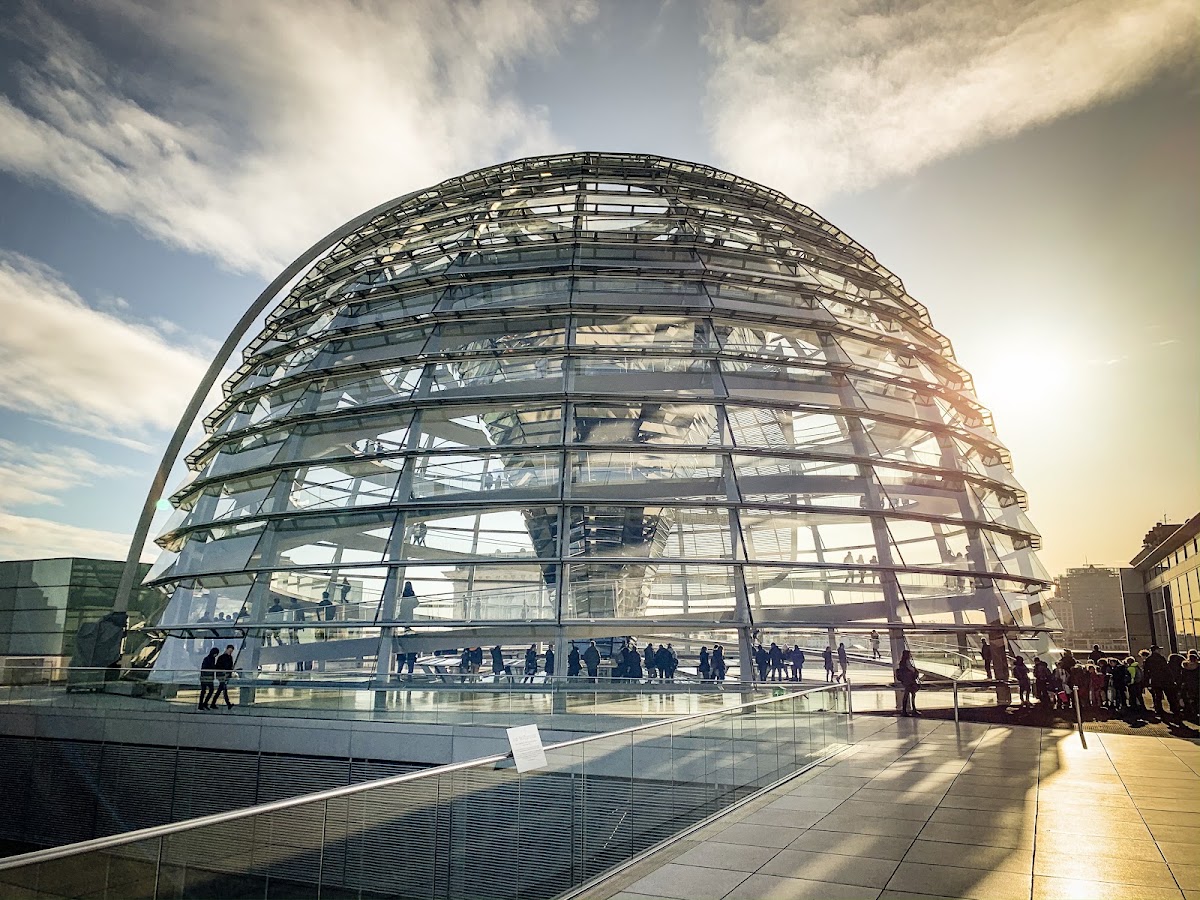
The Reichstag is Germany's parliament, and the glass dome Norman Foster dropped on top of it is genuinely one of the best free views in the city. You walk up two intertwined ramps to a rooftop terrace, and a mirrored cone in the center bounces daylight down into the debating chamber underneath.
The catch: you must register in advance. Book a free timed slot on the Bundestag website (bundestag.de) and bring your passport, because security is airport-strict.
Up top, the audio guide keys off your location and points out landmarks as you climb. You can trace the whole day ahead of you from here, Tiergarten to the west, Museum Island glinting to the east.
Where the Ground Goes Quiet: The Memorial to the Murdered Jews of Europe
2,711 grey concrete slabs, all the same footprint, all different heights. The ground dips as you walk in and the traffic noise just falls away.
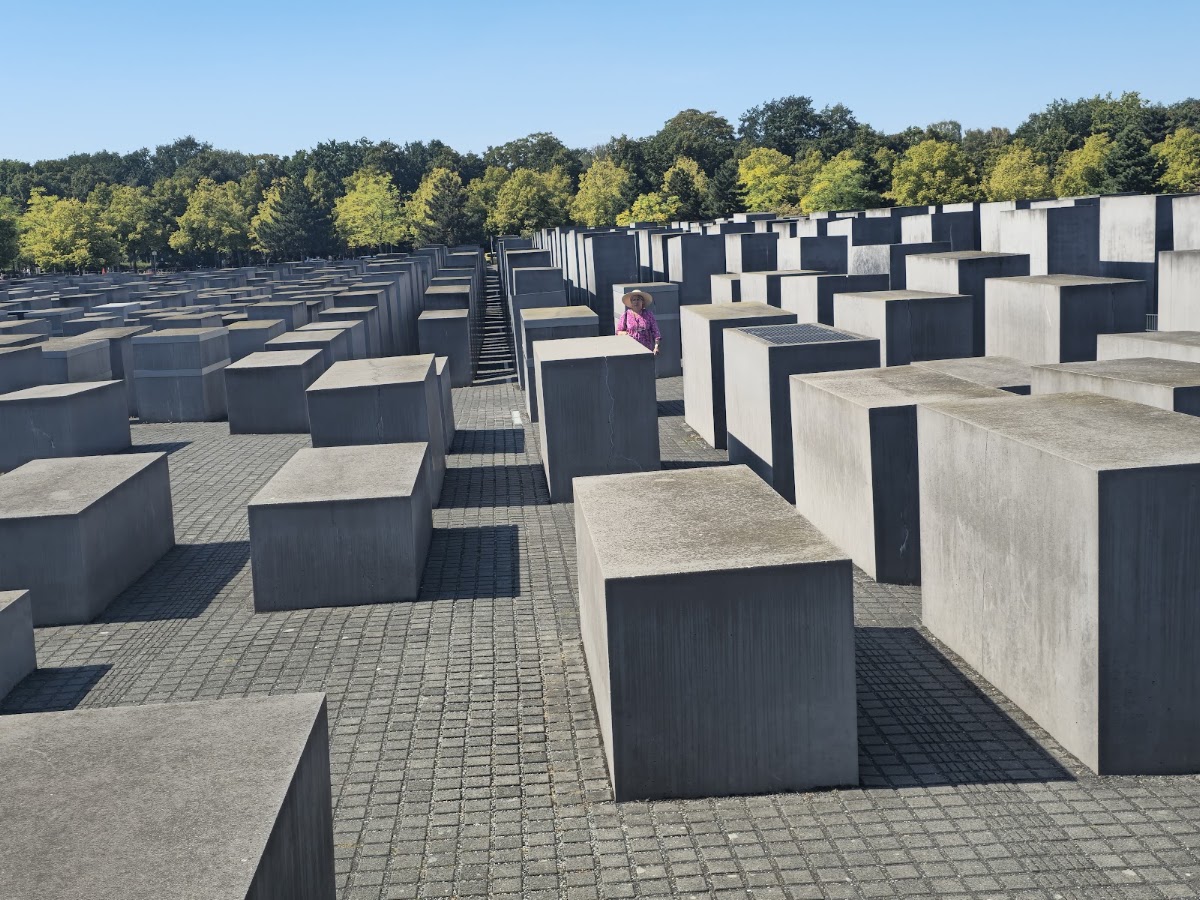
Two minutes south of the Brandenburg Gate, the Memorial to the Murdered Jews of Europe fills a whole city block. From the edge it looks almost flat. Walk in and the floor sinks, the slabs rise over your head, and you lose sight of everyone you came with.
Peter Eisenman never explained the design, which feels right. You just feel it: disoriented, alone, hemmed in. Go slowly and let the corridors do their work.
Underneath is the Information Centre, free to enter, holding the names and stories of victims. It is quiet and heavy and worth the time. Give yourself an hour here before you move on.
The 2,600-Year-Old Blue Gate on Museum Island
You round a corner inside the Pergamon and the Ishtar Gate of Babylon rises in front of you, cobalt-blue tiles studded with golden lions and dragons, taller than a three-story house.
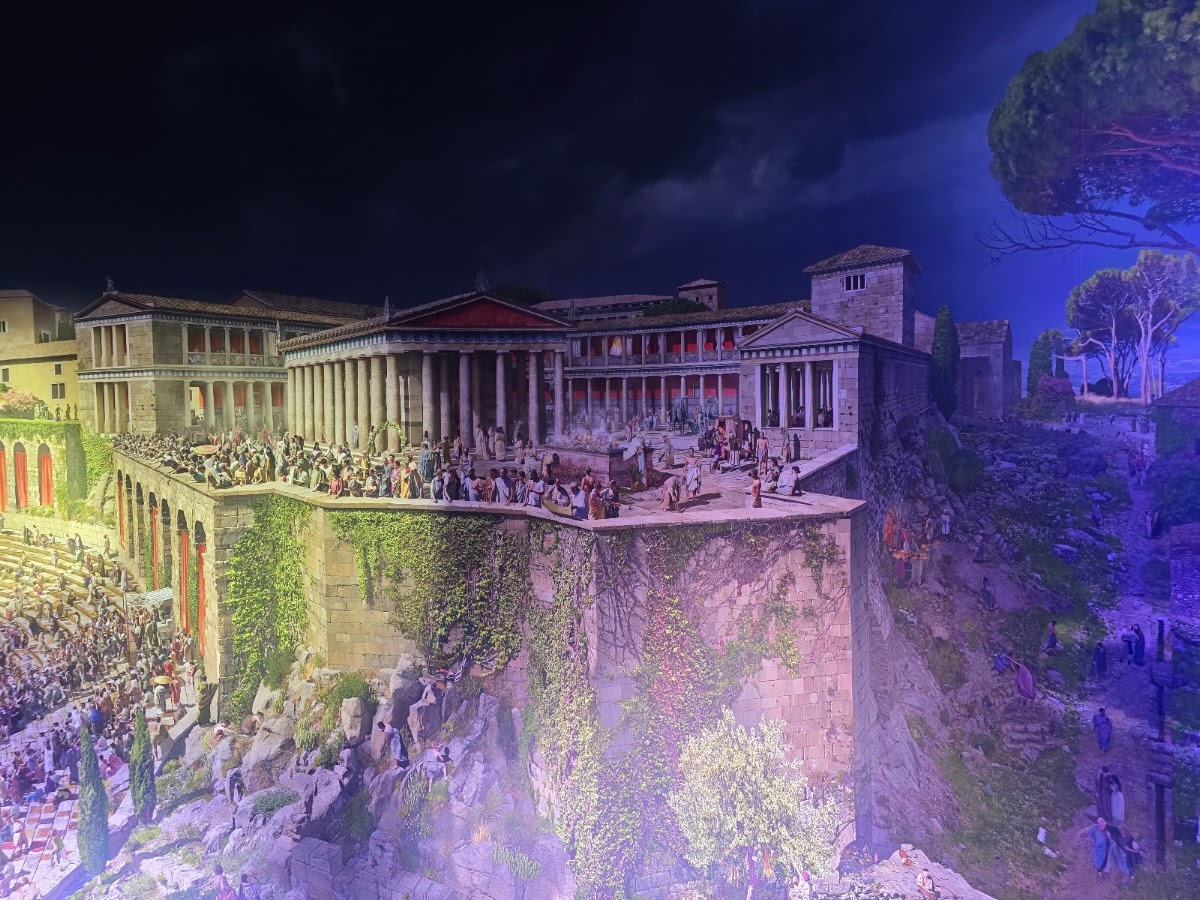
Museum Island is five museums on one river island, a UNESCO World Heritage site, and you could lose two days here. Prioritize. The Pergamon holds the reconstructed Ishtar Gate and the Market Gate of Miletus, monumental architecture rebuilt indoors at full scale. Note that parts of the Pergamon are under a long renovation, so check pergamonmuseum.de for what is currently open before you go.
Next door, the Neues Museum guards the bust of Nefertiti, 3,300 years old and still impossibly serene. Photography of her is not allowed, so you just stand and look.
Book timed tickets online to skip the queue, and break for lunch at a cafe on the island itself when your feet start complaining. Then walk out to the water for the Berlin Cathedral, its green dome the loudest thing on the skyline here.
Down Unter den Linden to the Empty Library at Bebelplatz
A wide boulevard of lime trees, and then a pane of glass set into the cobbles. Look down and you see a room of empty white bookshelves, lit from below.
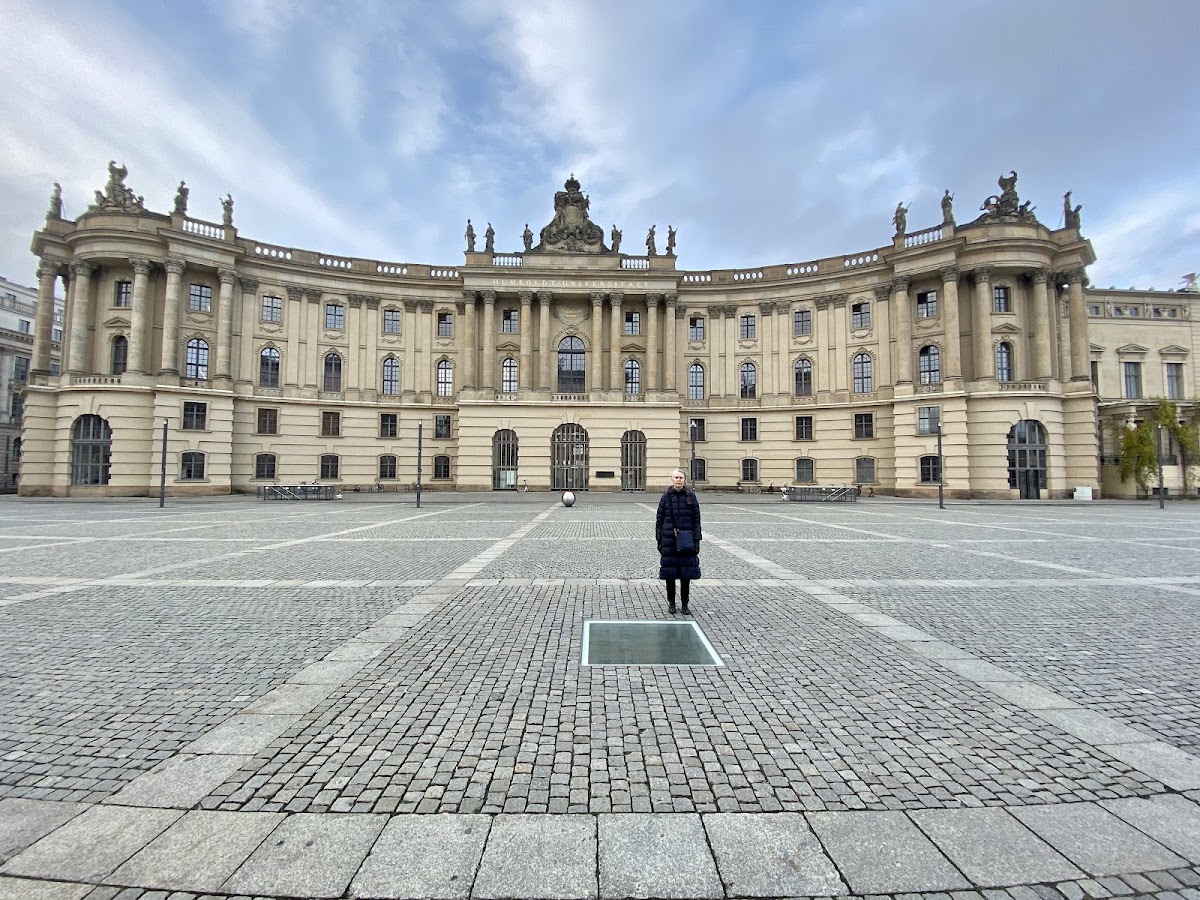
Stroll west along Unter den Linden, Berlin's grand old avenue, past opera houses and the Humboldt University. It is a flat, easy 15-minute walk and the plane trees give you shade the whole way.
Stop at Bebelplatz and find the glass panel in the middle of the square. Below it, Micha Ullman's memorial marks the spot where students burned 20,000 books in 1933. The shelves are empty and sized to hold exactly those lost volumes. A plaque nearby carries Heinrich Heine's line from a century earlier, that where they burn books they will in the end burn people.
When evening comes, walk 10 minutes north to Hackescher Markt. The old courtyards there are stuffed with restaurants and the crowd spills onto the cobbles. Good place to sit down and eat.
The Longest Stretch of Wall Still Standing: East Side Gallery
A 1.3-kilometer ribbon of the old Wall, painted end to end. A Trabant car bursting through the concrete. Two leaders kissing. The Spree river sliding by on the other side.
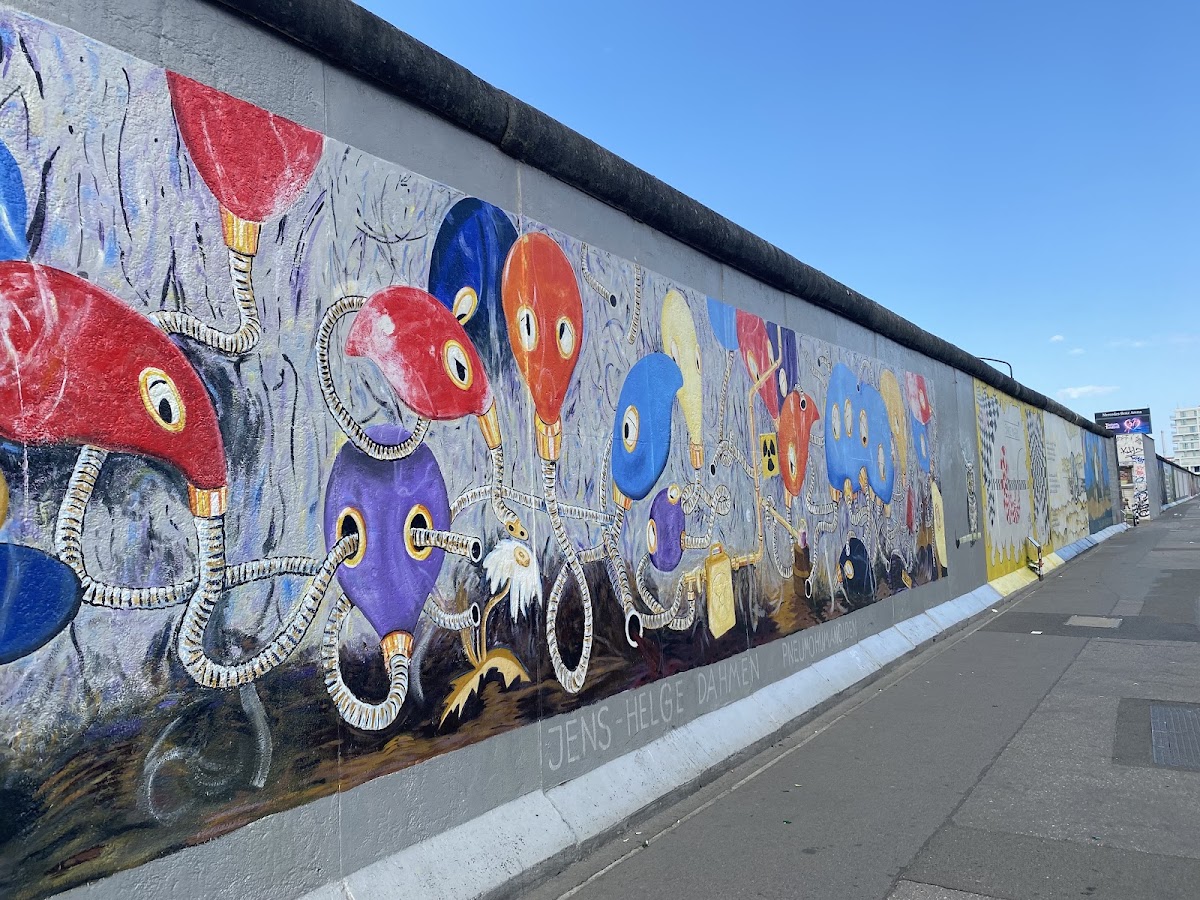
Over in Friedrichshain, the East Side Gallery is the longest surviving section of the Berlin Wall, turned into an open-air canvas by more than a hundred artists in 1990. It is free, it never closes, and it runs right along the river.
Walk the whole length. The famous ones (the fraternal kiss, the Trabant smashing through) draw crowds, but the smaller panels in between are often the ones that stick with you. Early morning or late afternoon gives you the softest light and the fewest selfie sticks.
Earlier in the day, do your Cold War homework at Checkpoint Charlie and its Wall Museum in Mitte, then cross to Kreuzberg for the Jewish Museum Berlin, where Daniel Libeskind's zinc-clad zigzag is as much the exhibit as anything inside it.
Currywurst and Golden Light Along the Landwehr Canal
Sliced sausage under a slick of curry-spiced ketchup, a paper tray warm in your hands, and the low sun turning the canal water copper.
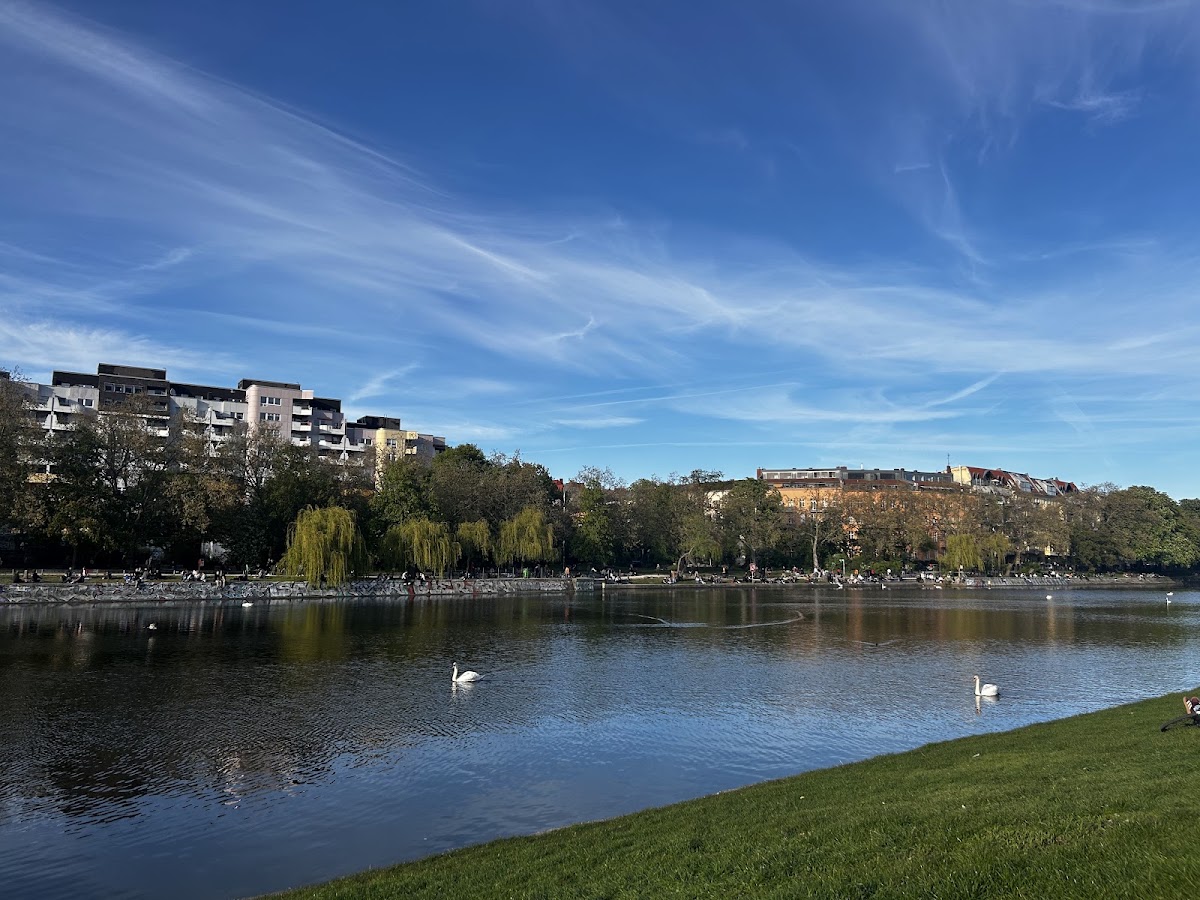
Kreuzberg is where you slow down. The Landwehr Canal cuts through the neighborhood, lined with willows and pop-up seating, and on a warm evening half of Berlin is sitting on its banks with a beer.
Grab a currywurst from a classic Imbiss (a street sausage stand) first. Expect around 4 to 5 euros, roughly 5 US dollars, and eat it standing up like everyone else. It is Berlin's signature snack and it hits perfectly here by the water.
When you want a proper sit-down meal, Kreuzberg's Turkish restaurants are the move. This is the neighborhood that gave the doner kebab its Berlin form, so a plate of grilled meat, flatbread, and sharp salad is never far. Cheap, generous, and exactly what you want after a day on your feet.
Last Light From the TV Tower Over Alexanderplatz
A silver sphere on a needle, 368 meters up, with the sun setting and the whole grid of Berlin lighting up beneath the tinted glass.
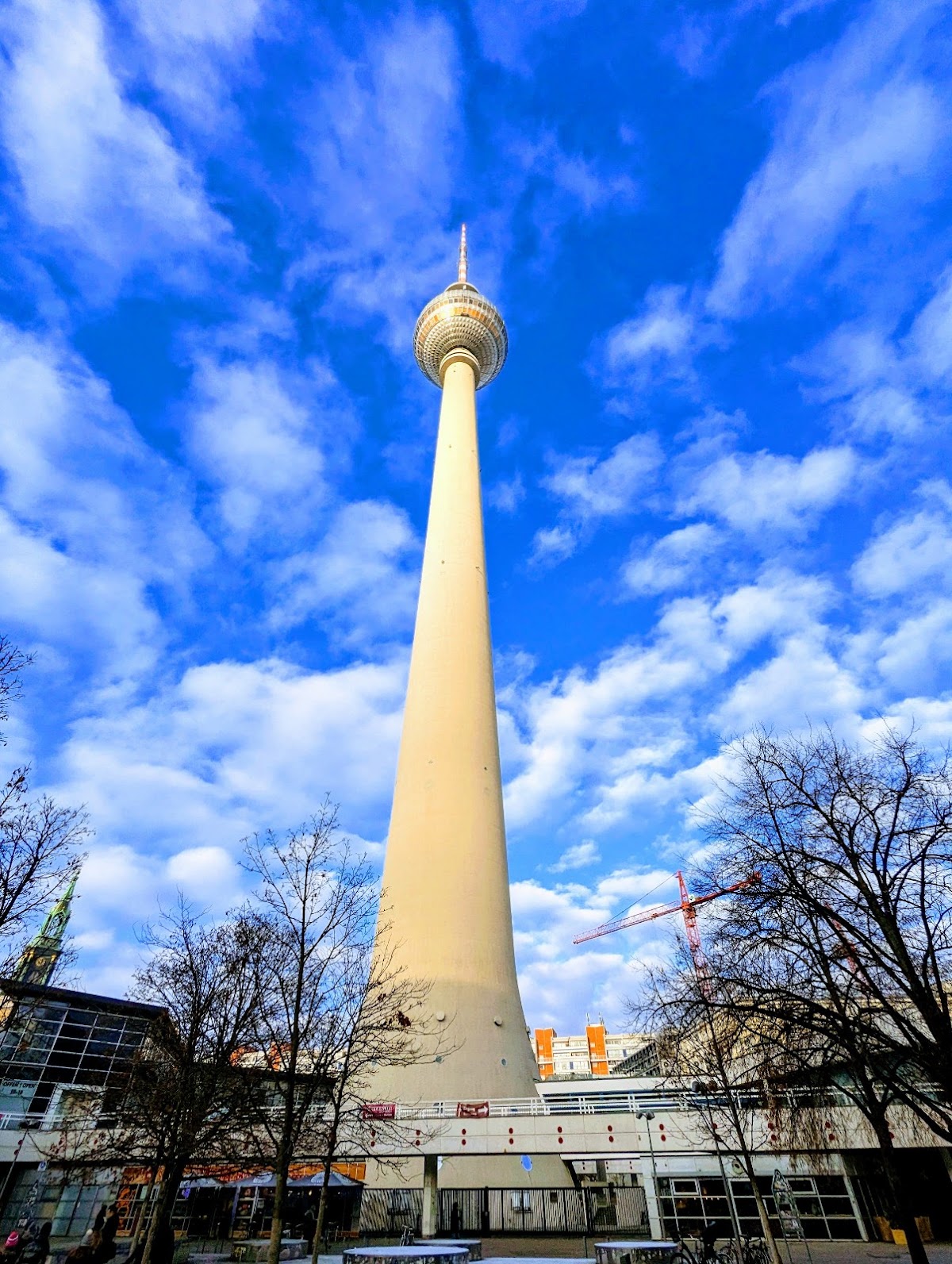
The Fernsehturm at Alexanderplatz is the tallest structure in Germany and the easiest way to see how Berlin actually fits together. The observation deck sits at 203 meters, and there is a slowly revolving restaurant just above it if you want dinner with the view. Book a timed slot at tv-turm.de to skip the ground-floor line.
Time it for golden hour. You can pick out everywhere you have walked all week, the Cathedral's dome, the Tiergarten's green mass, the sleek towers of Potsdamer Platz that rose from the old no-man's-land.
Spend your last night up in Prenzlauer Berg. The streets around Kollwitzplatz are full of easygoing restaurants in restored old apartment blocks, and it makes for a relaxed farewell before you head home.
Ready to book?
Book the rest of Berlin, Germany
Handpicked partner searches, dates pre-filled. Pricing is identical to going direct — the partner shares a small commission with Tabi so this guide stays free.
Frequently asked
How do I get into the Reichstag dome, and is it really free?
Yes, entry is free, but you must register in advance through the Bundestag website (bundestag.de) for a timed slot. Bring the ID you registered with, usually your passport, as security is strict. Slots book up in summer, so reserve a week or two ahead.
Is the Pergamon Museum open right now?
The Pergamon is undergoing a major multi-year renovation and parts of it, including at times the hall with the Pergamon Altar, are closed. The Ishtar Gate has been affected by phases of the work, so check pergamonmuseum.de for exactly what is open before you buy a ticket.
What is the best way to get around Berlin in five days?
The U-Bahn and S-Bahn network is fast, frequent, and covers everywhere in this log. Buy a day travelcard (Tageskarte) or a multi-day pass and validate it before your first ride. Most central sights are also walkable from one another, so you will do a mix of both.
Is Berlin walkable, or do the neighborhoods sprawl too much?
The core is very walkable and completely flat. Mitte, Museum Island, and the memorials cluster together on foot. Friedrichshain (East Side Gallery), Kreuzberg (the canal), and Charlottenburg (the palace and KaDeWe) are farther out, so pair a short train ride with walking once you arrive.
How much should I budget for food each day?
Berlin is friendly on the wallet. A currywurst or doner runs about 4 to 7 euros (roughly 5 to 8 US dollars), a casual sit-down dinner with a drink lands around 15 to 25 euros, and a coffee is 3 to 4 euros. Many of the top sights are free, so food and museum tickets are your main spend.
Skip the planning
Your Berlin, Germany trip, ready to go
Adopt the day-by-day itinerary we built to match this guide. Every stop is a real place, every booking link is validated. Free forever, no card needed.
Open the Berlin, Germany itinerary