
Busan, South Korea
What to Do in Busan in 4 Days: Beaches, Temples, and the Hillside You'll Photograph All Day
A picture-first walk through Busan, from a cliff-edge temple at dawn to a bridge that lights up over Gwangalli Beach.
TL;DR
Busan is where mountains, sea, and a sprawling port city collide, so you spend your days hopping from cliff temples to pastel hillsides to a beach that glows after dark.
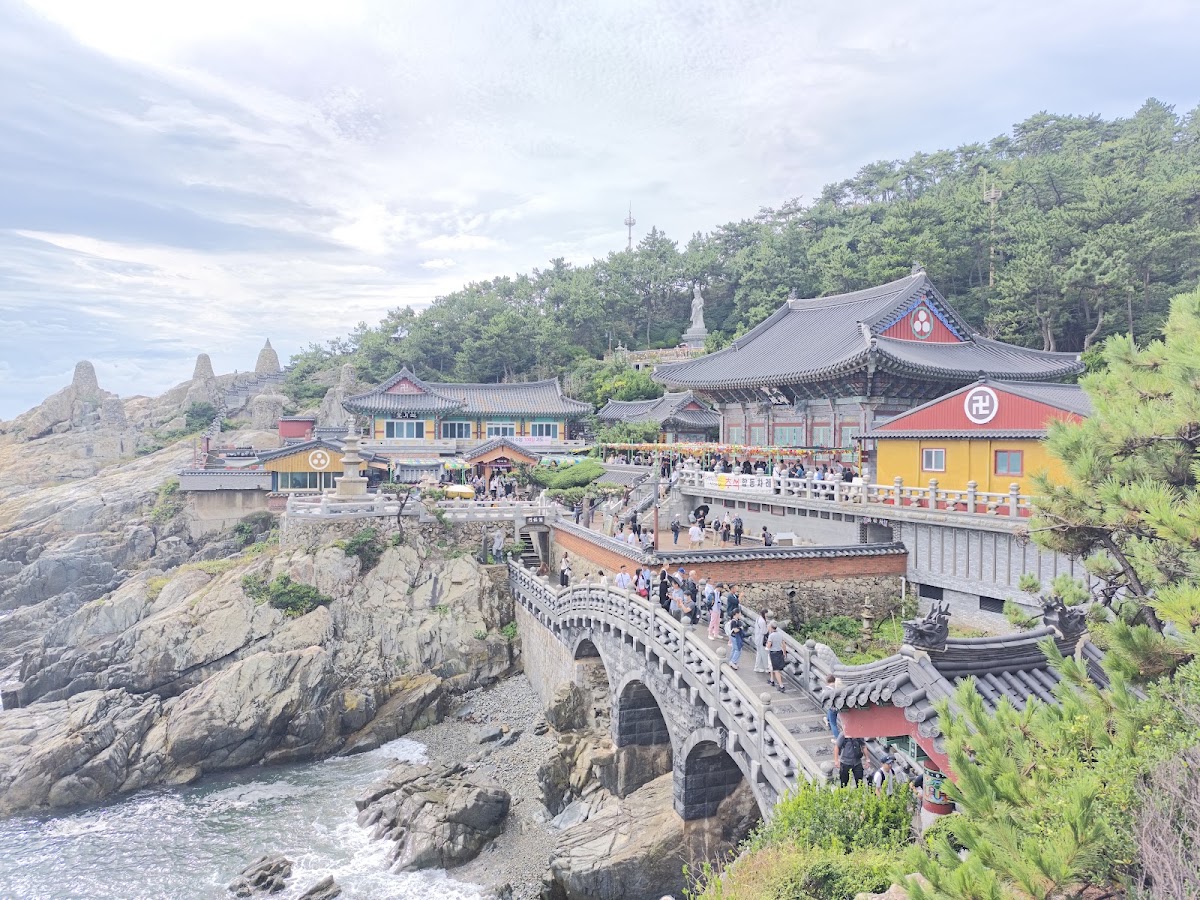
- Haedong Yonggungsa Temple perched on black rocks above crashing waves
- Gamcheon's pastel houses stacked up the hillside like a paint set
- Jagalchi Fish Market, where you pick dinner from the tank
- Gwangan Bridge lighting up the water at Gwangalli Beach
- Beomeosa Temple quiet under pines on Geumjeongsan
Have this trip planned in 60 seconds
We built the Busan, South Korea itinerary that pairs with this guide, day-by-day with verified venues and one-tap booking links. Free to adopt, edit however you want.
Where Busan Smells Like Salt and Grilled Clams
Step off the metro at Haeundae and the air hits you first: brine, sunscreen, and somewhere down the boardwalk, clams popping on a grill.
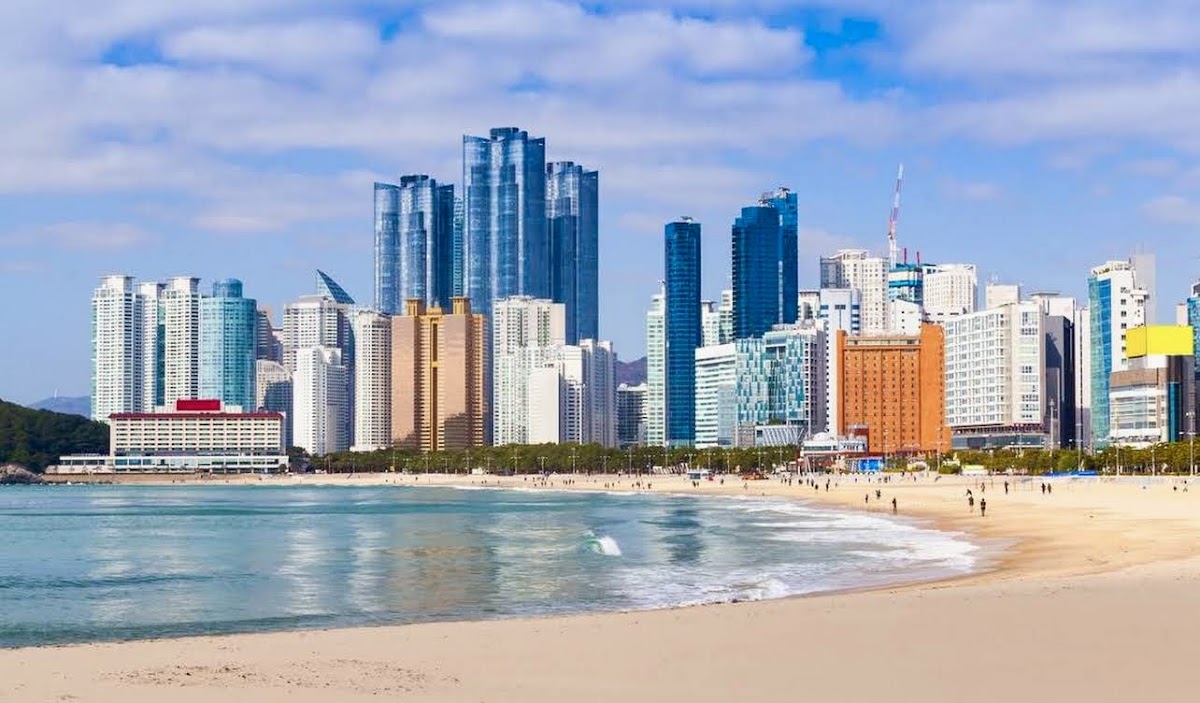
Haeundae Beach is the wide, easy crescent everyone starts with, and there is a reason. The sand stretches almost 1.5 km, the high-rises curve behind it like an amphitheater, and in summer the whole thing turns into a parade of striped umbrellas.
Walk the full length toward Dongbaek Island at the eastern end, where a short wooded path wraps around the headland. You get the skyline on one side and open water on the other, and the crowds thin out fast once you are on the trail.
Coming in from Gimhae airport, do not wrestle your luggage onto the subway on day one. A pre-booked car drops you straight at your hotel door and you can be on the sand within the hour.
Pick Your Dinner From the Tank at Jagalchi
Rows of blue tubs bubble with live octopus, abalone, and fish the size of your forearm, and the vendors wave you over with a grin and a pair of tongs.
Jagalchi is Korea's largest seafood market, loud and gloriously wet underfoot. On the ground floor you choose your catch straight from the tanks. Point at a flatfish or a cluster of scallops, agree on a price, and the vendor sends it upstairs.
The second floor is where it gets good. Little restaurants cook or slice whatever you just bought. Expect to pay roughly 30,000 to 60,000 won (about 22 to 45 USD) for two people eating well, more if you go for the big stuff.
Order the grilled gizzard shad in autumn or a plate of hoe (raw fish, Korean style) any time. Wash it down with soju and watch the harbor lights come on through the windows.
A Temple on the Rocks Where the Sea Does the Talking
Waves slam the black boulders below while incense drifts across a pavilion that seems to hang right over the water.
Most Korean temples sit tucked into mountains. Haedong Yonggungsa does the opposite, clinging to a rocky stretch of coast up in Gijang. You walk down a stone stairway lined with lanterns, cross a short bridge, and suddenly the whole complex opens up against the sea.
Go early. By mid-morning the main bridge fills with people, but at sunrise you get the golden light on the main hall almost to yourself, with just the crash of water for company.
It is about an hour from central Busan by bus or taxi, and worth every minute. Bring a light jacket even in summer; the wind off the water has opinions.
The Hillside That Looks Like Someone Spilled a Paint Set
Pastel houses stack up the slope in blues, pinks, and mints, with narrow alleys zigzagging between them and tiny art studios tucked in the corners.
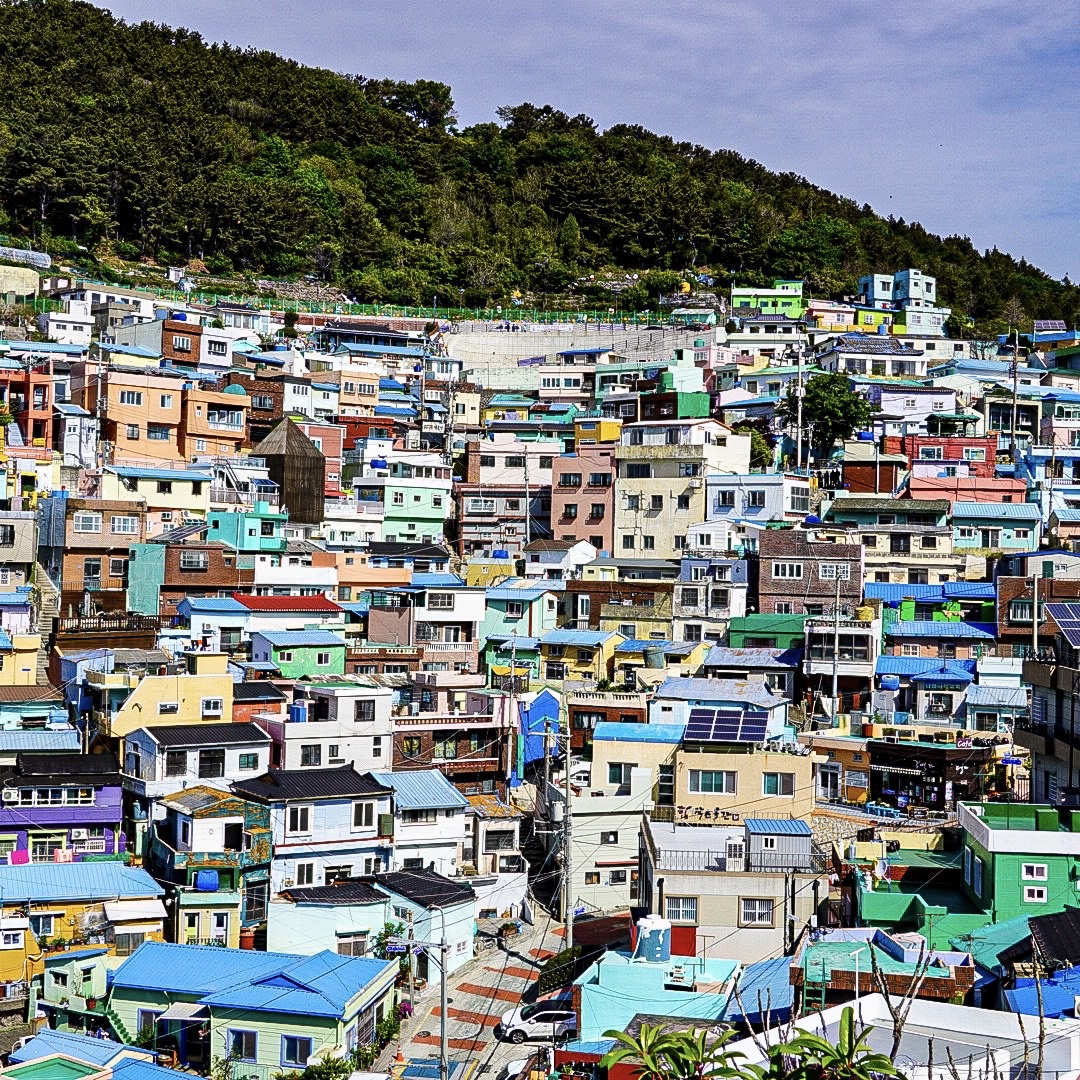
Gamcheon Culture Village was once a cluster of refugee homes on a steep hillside. Artists moved in, painted everything, and now it is one of the most photogenic corners of the whole city. The famous view is from the top, looking down over the tumble of colored roofs toward the sea.
Buy a little paper map from the info center near the entrance and follow the stamp trail. It routes you past the best murals and the Little Prince statue perched on a wall, where the queue for a photo is half the fun.
Give it two to three hours. The alleys are a maze on purpose, and the whole joy is getting slightly lost, then turning a corner into a view you did not expect.
Up Busan Tower for the City All at Once
The elevator doors open onto a wraparound window, and there it is: the port, the mountains, the bridges, and the sea stitching them together.
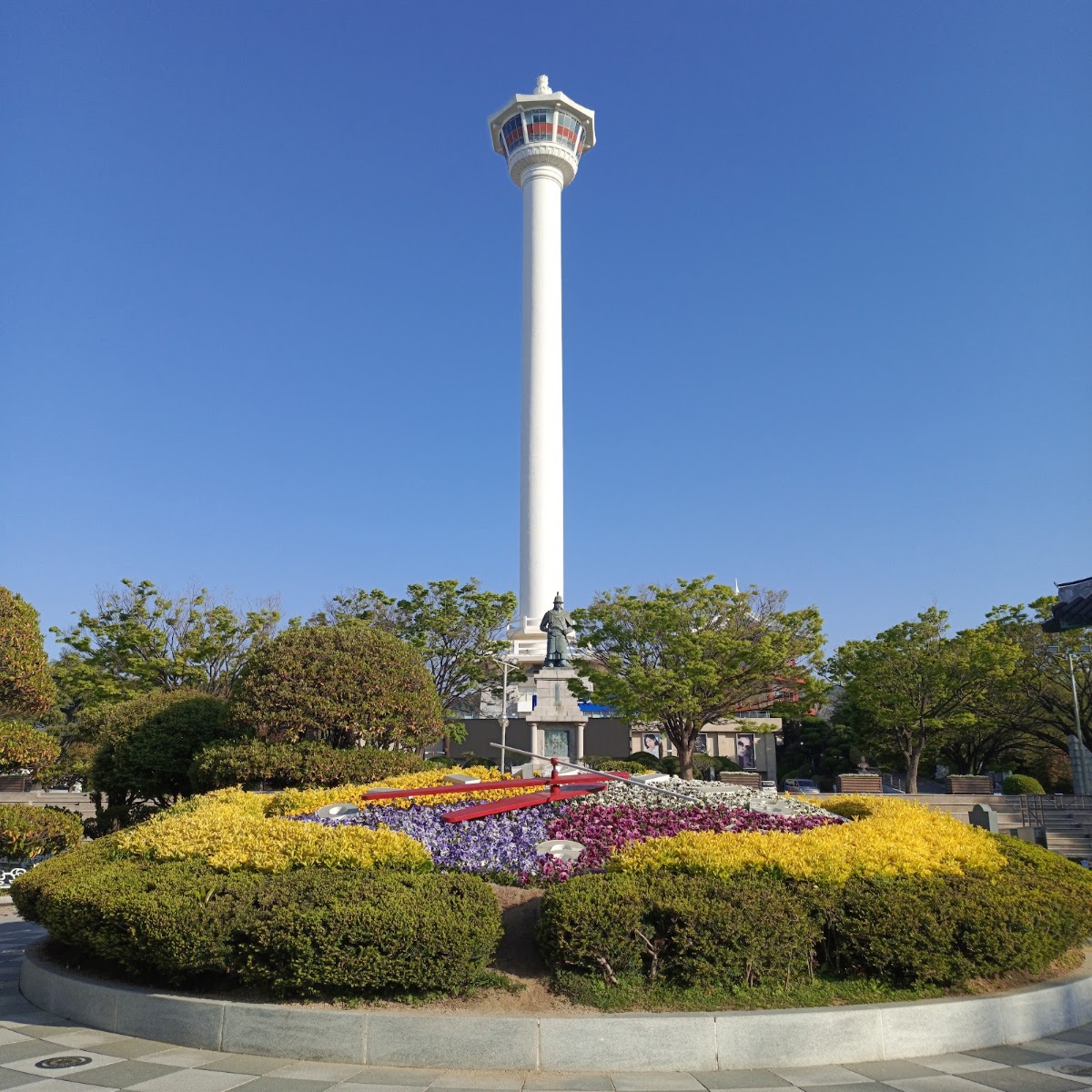
Busan Tower sits atop Yongdusan Park, reached by a short escalator ride up from the shopping streets of Nampo. The park itself is pleasant, full of pigeons and pensioners, but the tower is the reason you climb.
Time your visit for late afternoon so you catch the city in daylight, then watch it flick over to a carpet of lights as the sun drops. The 360-degree view makes sense of Busan's geography in a way no map does.
From here it is a short hop to Seomyeon, the city's buzzing center, where the Korean barbecue is some of the best in town. Grab a table, order the pork belly, and let the staff handle the grill while you pile lettuce wraps.
When the Bridge Starts Glowing Over Gwangalli
As dusk settles, Gwangan Bridge switches on and throws ribbons of colored light across the water, with beach bars thumping softly behind you.
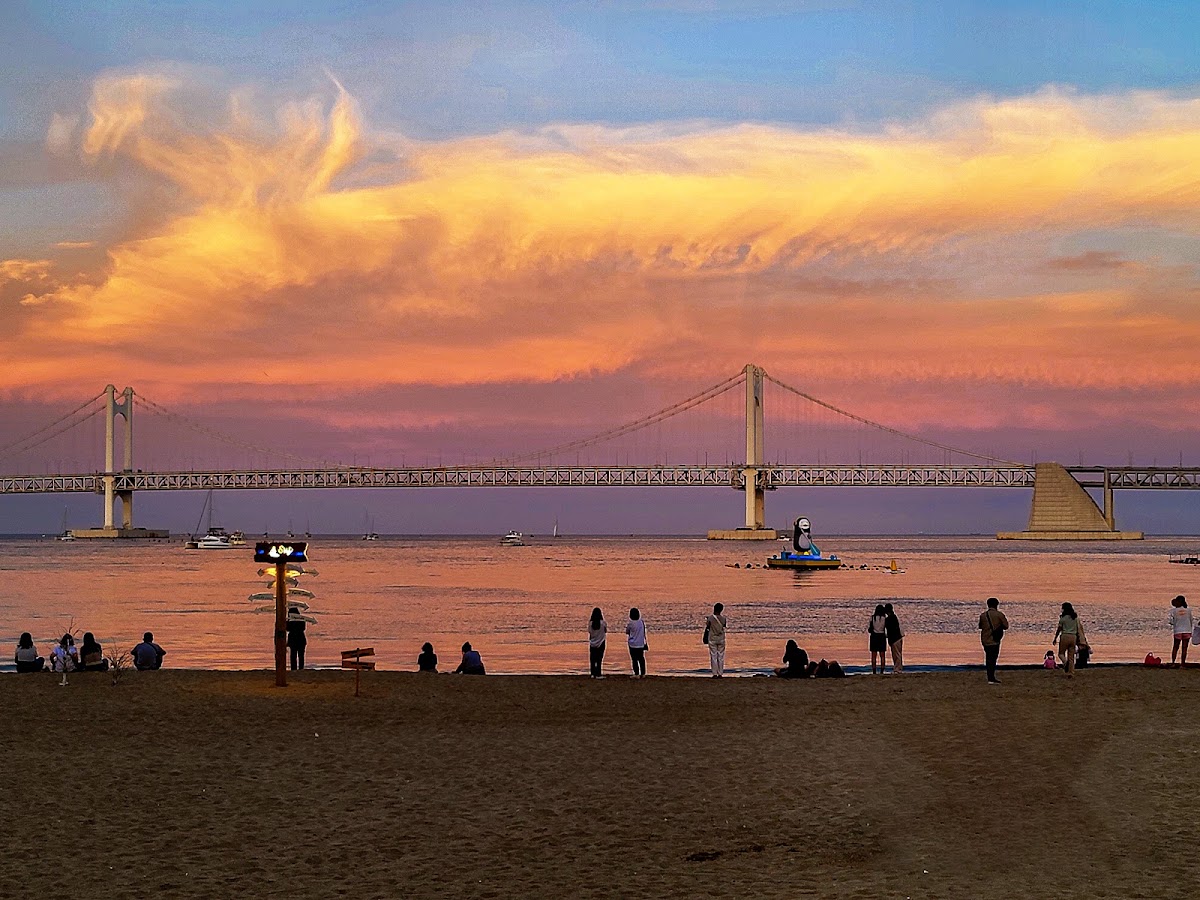
Gwangalli Beach is where locals come to hang out after dark. The sand is softer underfoot than Haeundae, the crowd is younger, and the main event is the bridge. Gwangan Bridge arcs across the bay and runs a nightly light show that reflects off the whole stretch of water.
Grab a seat at one of the cafes or beer joints lining the promenade, or just plant yourself on the sand with takeaway chicken and beer (chimaek, the national pastime). On some nights the city runs drone or fireworks shows over the bay; check the schedule if your timing is lucky.
It is an easy, slow evening, the kind you remember precisely because you did not try to pack anything else into it.
The Mountain Temple Where the City Finally Goes Quiet
Pine-scented air, a one-pillar gate, and the low thrum of monks chanting somewhere behind the main hall.
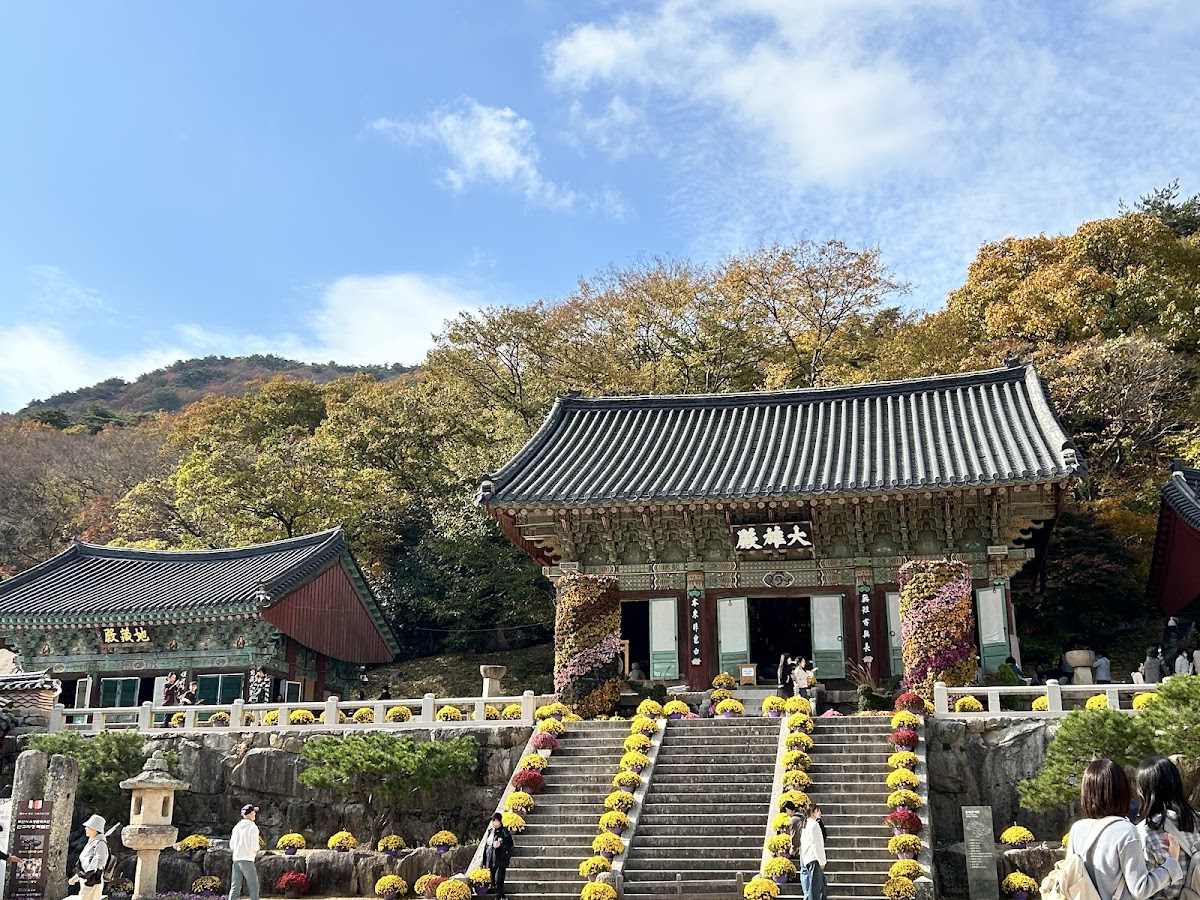
Beomeosa sits on the slopes of Geumjeongsan, and crossing through its gate feels like someone turned the city's volume down. Founded in 678, it is one of Korea's great Zen temples, all weathered wood, painted eaves, and stone lanterns under tall trees.
Wander past the Iljumun gate and up to the main courtyard, then follow the quieter paths to the smaller hermitages uphill. In spring the wisteria is famous; in autumn the maples light up red.
If you have the legs for it, the temple is a trailhead for hikes up Geumjeongsan and its old fortress walls. Even a short walk up gets you big views back over the city and the sea beyond.
One Last Pastry Before the Train
Warm red-bean buns and the smell of fresh-baked bread drift out of a Nampo bakery as you nurse a coffee before heading out.
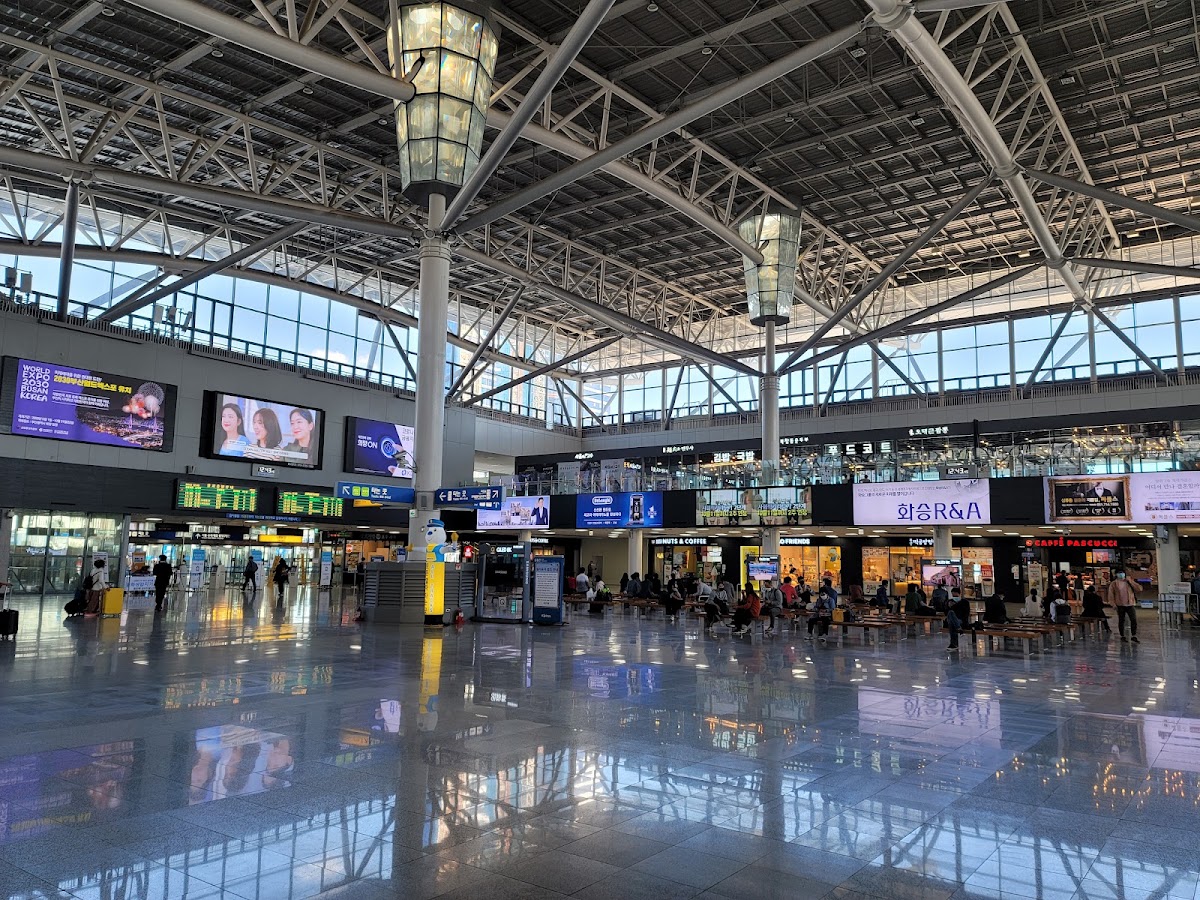
Busan takes its bakeries seriously, and Nampo-dong is the place to prove it. Before you roll your bags toward the station, settle in for a slow Korean bakery breakfast: a sweet bun, maybe a slice of soft castella cake, and a coffee strong enough to launch you home.
Busan Station puts you on the KTX high-speed line, roughly two and a half hours to Seoul. If you are flying out of Gimhae instead, the airport is about 45 minutes across town. Either way, book your onward train ahead so you are not scrambling for a seat.
For a deeper day-by-day route through all of this, the curated Busan coastal and urban itinerary linked on this page lays it out beach by temple by hillside.
Ready to book?
Book the rest of Busan, South Korea
Handpicked partner searches, dates pre-filled. Pricing is identical to going direct — the partner shares a small commission with Tabi so this guide stays free.
Frequently asked
How many days do you need in Busan?
Four days hits the sweet spot. It gives you time for the main beaches (Haeundae and Gwangalli), the two headline temples (Haedong Yonggungsa on the coast and Beomeosa in the mountains), Gamcheon Culture Village, and the markets of Nampo without rushing. Three days works if you cut one temple; five lets you add day trips or more mountain hiking.
What is the best way to get around Busan?
The metro is the backbone: fast, cheap, in English, and it reaches most major sights. Grab a rechargeable T-money or Cashbee card and tap through. Taxis are plentiful and reasonable for spots the metro misses, like Haedong Yonggungsa and Beomeosa, which both sit a short ride beyond the nearest station.
When is the best time to visit Busan?
Late spring (April to June) and autumn (September to November) are ideal, with mild weather and clear coastal views. Summer is hot, humid, and packed at the beaches, though the nightlife at Gwangalli peaks then. Avoid the rainy season spikes in July and early typhoon season in late summer if you can.
Where should you stay in Busan?
Haeundae suits beach lovers and first-timers, with the sand, resorts, and easy metro access. Seomyeon is the central transit and nightlife hub, handy if you want to bounce around the city. Nampo-dong puts you next to Jagalchi market, Busan Tower, and the bakeries, great for food-focused trips.
Is Busan easy to reach from Seoul?
Very. The KTX high-speed train links Seoul and Busan in about two and a half hours and runs frequently through the day; book ahead on busy weekends. Gimhae International Airport also handles domestic and regional international flights, roughly 45 minutes from the city center by car or airport bus.
Skip the planning
Your Busan, South Korea trip, ready to go
Adopt the day-by-day itinerary we built to match this guide. Every stop is a real place, every booking link is validated. Free forever, no card needed.
Open the Busan, South Korea itinerary