
Casablanca, Morocco
What to Do in Casablanca: 7 Stops Through Art Deco, the Sea, and the Grand Mosque
A photo-first journey through Morocco's most underrated city.
TL;DR
Skip the stereotypes: Casablanca is a city of Art Deco facades, seafood piers, and a mosque that rises straight from the Atlantic. Here's where to look.
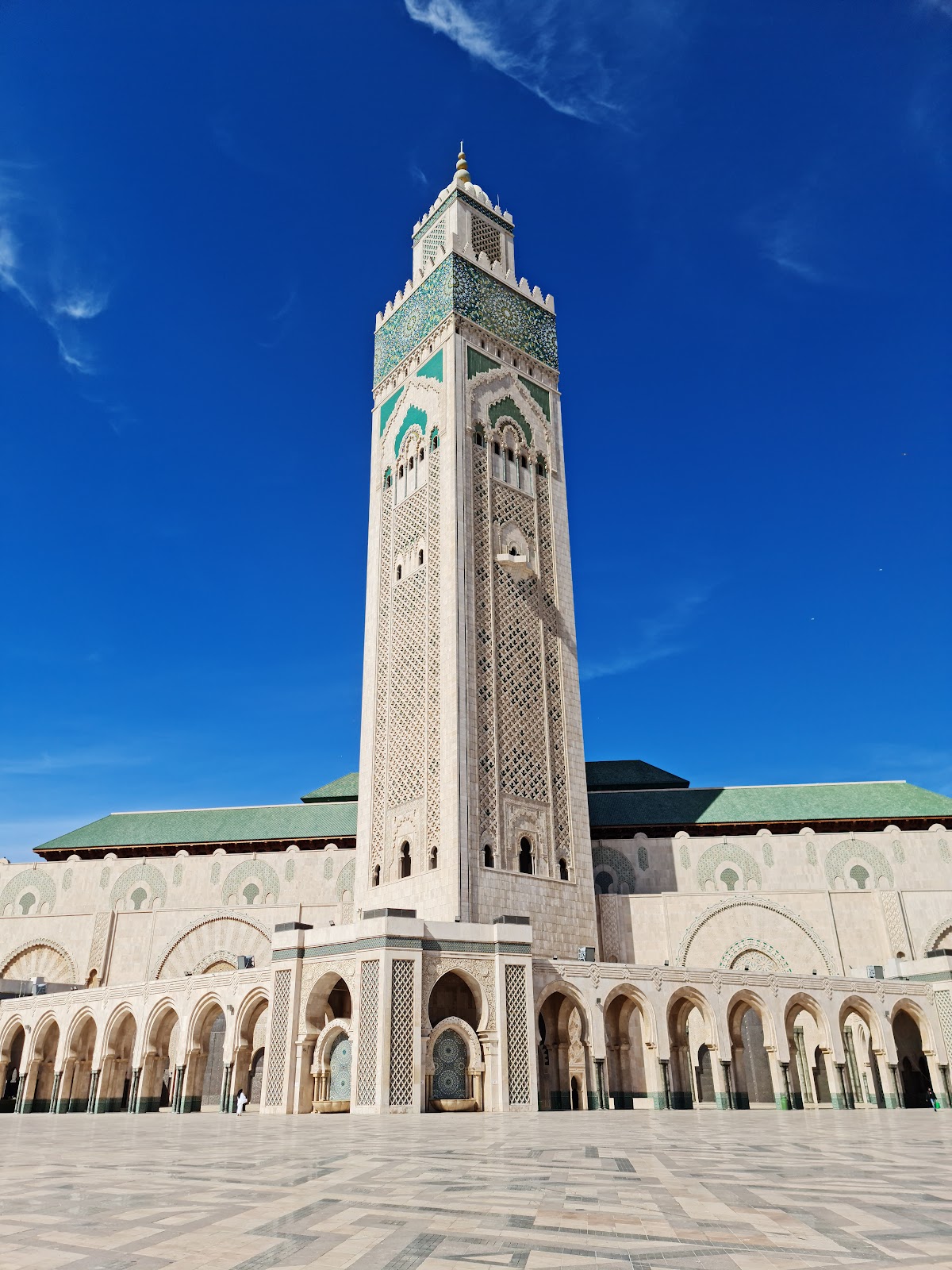
- **Hassan II Mosque**, The minaret glows at sunset as waves crash against the prayer hall's base.
- **Boulevard Mohammed V**, Peeling pastel buildings that could be a 1930s movie set.
- **Habous Quarter**, White arches and the scent of fresh mint, then tagine steam rising from a clay pot.
- **Gauthier district**, A Moroccan take on a French bistro, with wine and lamb meatballs.
- **Corniche at dawn**, Empty tables overlooking the sea, with a glass of orange juice and a croissant before the flight home.
Have this trip planned in 60 seconds
We built the Casablanca, Morocco itinerary that pairs with this guide, day-by-day with verified venues and one-tap booking links. Free to adopt, edit however you want.
The Lobby That Sets the Scene
A painted wooden ceiling and a tiled fountain greet you as you drop your bag in the city centre.
You land at CMN, and within 20 minutes you are standing under a zellij-covered archway in a boutique hotel on Avenue des FAR. The receptionist hands you a glass of mint tea before you even ask. Your room overlooks a courtyard garden where orange trees grow.
Casablanca’s best boutique hotels cluster between the port and the old medina. This one has a rooftop terrace where you can spot the minaret of the Hassan II Mosque. Dinner tonight is a short walk away, but first you want to feel the salt air.
The Mosque That Defies Gravity
The world's tallest minaret, 210 metres of limestone and marble, stands at the edge of the Atlantic where waves crash against its prayer hall.
You walk along the parking lot that stretches beside the ocean, and the scale of it makes your neck ache. The Hassan II Mosque, finished in 1993, is one of the few mosques in Morocco open to non-Muslims. Inside, the ceiling retracts to let in moonlight, and the floor is heated for cold mornings.
Go for the 11:00 guided tour (there are several per day; check the official website). You will stand under a chandelier of 50 bulbs, each Swiss-crystal, and look down at the tide washing the mosque's underbelly. The ticket is 130 MAD (around $13). Book ahead on GetYourGuide to skip the queue.
The Art Deco Walk That Unfolds Like a Movie
Pastel-painted apartment blocks with wrought-iron balconies line a boulevard that has barely changed since the 1930s.
Boulevard Mohammed V is Casablanca’s spine. You start at Place Mohammed V, where pigeons scatter around the courthouse steps. The buildings here are a mix of Art Deco and Neo-Mauresque. Look up: the Central Market’s facade has geometric tiles that catch the noon light.
Walk south for 15 minutes, past the La Princière bakery (buy a _msemen_ flatbread) and the Cinema Rialto (its art deco neon sign still flickers at night). Many of these facades were designed by French architects in the 1920s. The city tourism office offers a printed guide for 20 MAD, or you can self-guide with a coffee stop at Café Laqnat on the corner.
The White Alleyways of the Habous Quarter
White arches, red tile roofs, and the smell of fresh mint from a spice stall.
Ten minutes by taxi from the city centre, the Habous Quarter feels like a village dropped into the city. Built by the French in the 1930s, it is often called the Nouvelle Medina, a deliberate attempt to re-create a traditional Moroccan neighbourhood. The alleys are narrow and shaded by climbing bougainvillea.
Brush past hanging leather bags and trays of dates. At Marché Habous, stop at a stall selling argan oil in hand-painted bottles. Then find Restaurant Dar Beida on Rue Tiznit, where you sit on a rooftop terrace overlooking the white rooftops. Order a tagine of chicken with preserved lemon and olives (80 MAD, about $8). The waiter will pour mint tea from a height to aerate the sugar.
The Quiet Afternoon at the Museum of Moroccan Judaism
A Torah scroll, silver menorah, and a photo of a wedding in a Casablanca synagogue from 1950.
Not many people know, but Casablanca was home to one of the largest Jewish communities in the Arab world. The Museum of Moroccan Judaism, nestled in the quiet Oasis district, tells that story through objects, textiles, and audio recordings. The building itself is a 1940s house with a courtyard fountain.
You will see a reconstructed synagogue arc and a cabinet of leather-bound prayer books. The small gift shop sells replicas of Hanukkah lamps. Entry is 50 MAD ($5). It takes 45 minutes to an hour to walk through the four rooms. The museum is a 15-minute taxi ride from the Habous Quarter.
A Moroccan-French Bistro in the Gauthier District
The clink of wine glasses against a backdrop of exposed stone walls and a chalkboard menu.
As dusk settles, you head to the Gauthier district, Casablanca’s answer to a Parisian block. The streets are lined with plane trees and fin-de-siècle apartment blocks. Le Bistrot du Gauthier on Rue de Medine serves a _pastilla_ with squab and almonds followed by a lamb tagine with prunes. A glass of Moroccan red wine from the Guerrouane valley costs 40 MAD ($4).
The owner might stop by to ask where you are from. Order the _briouats_ (fried pastries with cheese) as a starter. Dinner for two runs about 400 MAD ($40). Afterward, a short walk takes you back to the hotel along streets lit by old-fashioned lamps.
The Corniche Breakfast Before You Fly
Morning sunlight on the Atlantic, a plate of _msemen_ with honey, and the sound of a ferry horn.
Your last morning in Casablanca should be slow. Take a taxi to the Corniche, the seaside promenade that runs through the Ain Diab neighbourhood. Find Café de la Corniche, a simple spot with plastic chairs facing the water. Order a coffee and a _croissant aux amandes_ (25 MAD, $2.50). A group of fishermen is untangling nets on the rocks below.
When it is time to leave, your hotel can arrange a transfer to CMN airport. It is a 45-minute drive, depending on traffic. The coast road runs alongside the mosque one last time. You watch the minaret shrink in the side mirror as the plane climbs over the Atlantic.
Ready to book?
Book the rest of Casablanca, Morocco
Handpicked partner searches, dates pre-filled. Pricing is identical to going direct — the partner shares a small commission with Tabi so this guide stays free.
Frequently asked
Is Casablanca safe for solo travellers?
Yes, generally. The main boulevards and tourist areas are well-lit and patrolled. Use the same street smarts you would in any big city. Avoid walking alone in the old medina at night and keep valuables in your hotel safe.
How many days do you need in Casablanca?
Two full days gives you time for the mosque, the Art Deco walk, the Habous Quarter, and a museum. With three days you can add the Corniche and a day trip to nearby Rabat (1 hour by train).
Can non-Muslims visit the Hassan II Mosque?
Yes. Guided tours run several times a day, usually at 9:00, 10:00, 11:00, 14:00, and 15:00. Check the official website for the seasonal schedule. Tickets cost 130 MAD ($13). No photography is allowed inside during prayers.
What is the best way to get around Casablanca?
Taxis are cheap (30-50 MAD for trips within the centre) and easy to hail. Use the red petit taxis for short trips. The tram line is useful for the Boulevard Mohammed V stretch but doesn't reach the Habous Quarter or Gauthier district.
Do I need to speak French or Arabic?
Basic French is very helpful. Many signs are in French and Arabic. English is spoken at hotels and tourist sites, but you will get a warmer reception with a simple 'Bonjour' before switching to English.
Skip the planning
Your Casablanca, Morocco trip, ready to go
Adopt the day-by-day itinerary we built to match this guide. Every stop is a real place, every booking link is validated. Free forever, no card needed.
Open the Casablanca, Morocco itinerary