
Cinque Terre, Italy
What to Do in Cinque Terre in 4 Days: Trains, Trails, and Five Villages
A picture-first walk through the five painted villages, on foot, by train, and from the water.
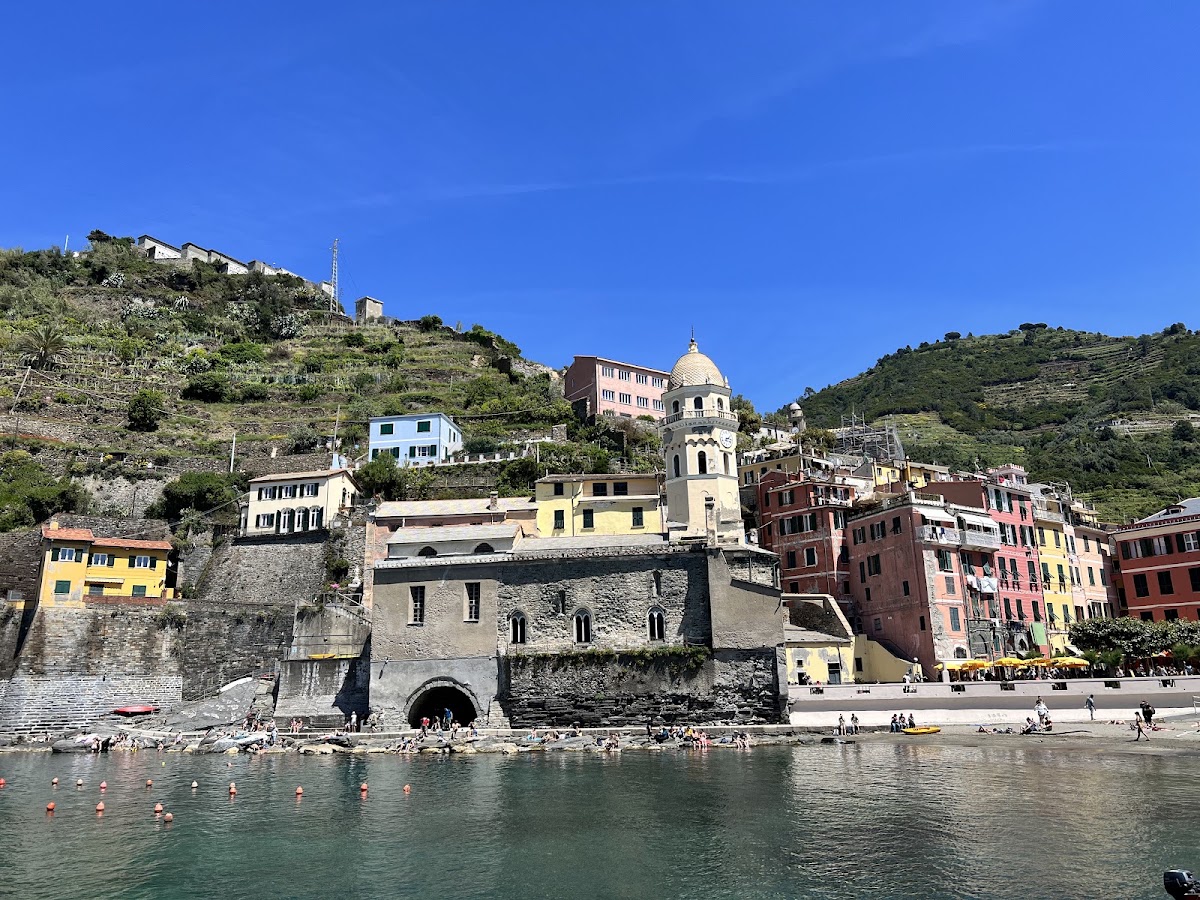
TL;DR
Five villages stacked on the Ligurian cliffs, linked by a local train, a coastal footpath, and a ferry that gives you the postcard view no one else on the platform gets.
- Monterosso's old town, where warm focaccia meets a wide swimming beach
- Vernazza's tiny harbour, the most photographed cove on the whole coast
- The Sentiero Azzurro cliff path from Monterosso to Vernazza
- Corniglia's Belvedere, a terrace of Sciacchetra wine above the sea
- The evening ferry into Manarola, glowing gold at sunset
Have this trip planned in 60 seconds
We built the Cinque Terre, Italy itinerary that pairs with this guide, day-by-day with verified venues and one-tap booking links. Free to adopt, edit however you want.
First Night: Salt Air and a Plate of Whatever Came in Today
The smell hits before the view does: garlic, hot olive oil, and the sea. Boats knock softly against the harbour wall while a waiter chalks the day's catch onto a board.
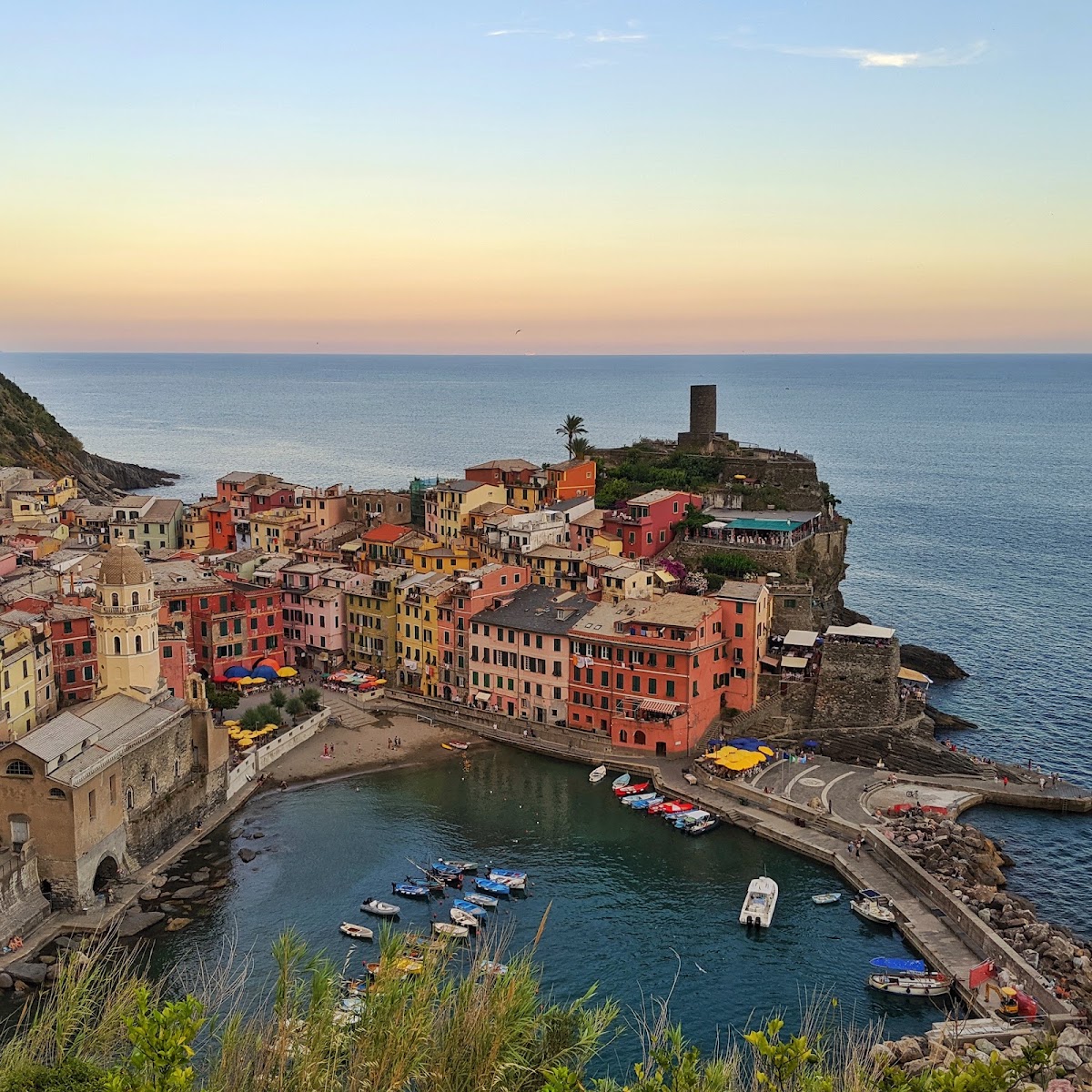
You've made it to the coast, and the first thing to do is sit down at a harbourfront trattoria and let dinner happen to you. Order the fritto misto (a cone of fried anchovies, calamari, and tiny shrimp, usually 14 to 18 euros, around 15 to 20 USD) and a carafe of the local white. The anchovies here are a point of regional pride, not a pizza topping.
Everything in Cinque Terre runs on the train. The five villages sit in a row along the cliffs, and the local Cinque Terre Express connects them in a few minutes each. Grab a Cinque Terre Card at the station; it bundles unlimited train rides with trail access, which you'll want by tomorrow.
Watch the light go pink over the water, then wander back slowly. Tomorrow you start walking.
Waking Up in Monterosso, the One Village with a Real Beach
Striped umbrellas fan out across the sand, church bells roll down the hill, and someone is already swimming in water so clear you can count the pebbles.
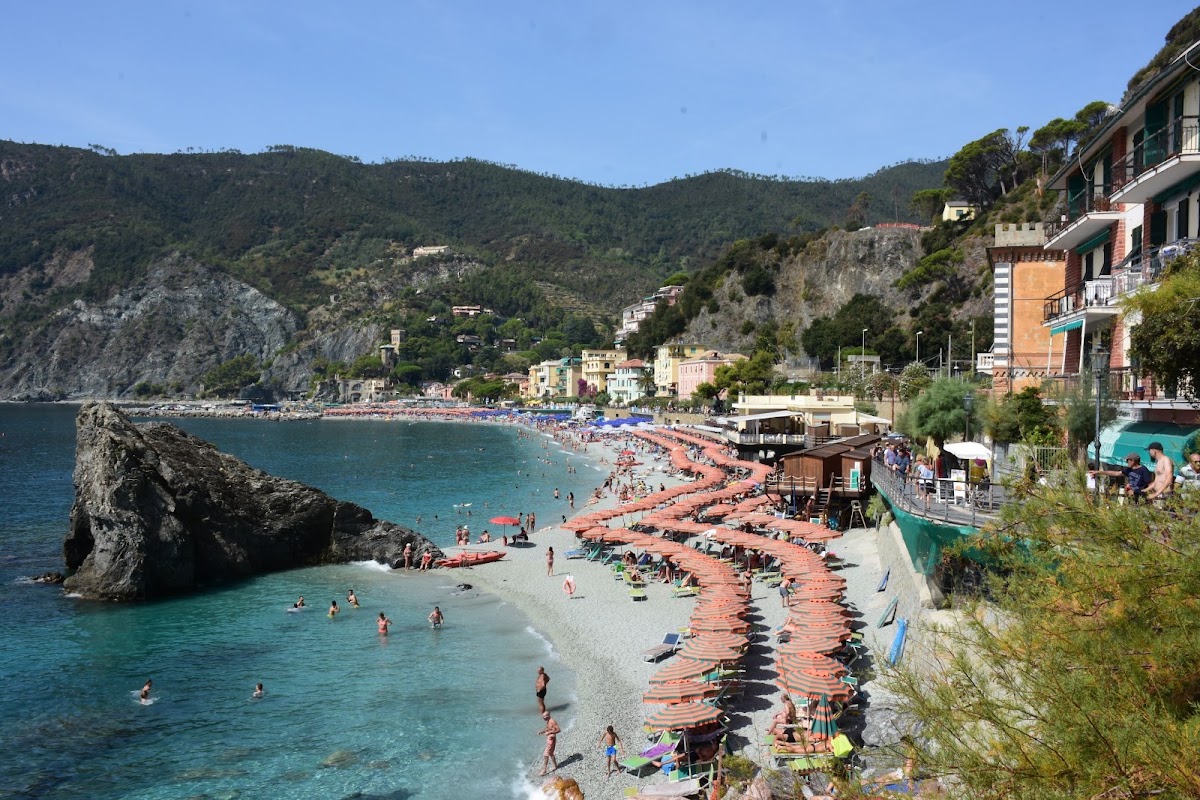
Monterosso al Mare is your home base, and it's the easiest of the five to love on day one. It's the only village with a proper wide beach, so this is where you plant a towel and go for a first swim in the Ligurian Sea.
Split your morning between the old town and the newer beach quarter, linked by a short tunnel under the headland. In the old town, narrow lanes open onto the Church of San Giovanni Battista with its black-and-white striped marble. Stop for a slab of focaccia, still warm, sold by weight from a bakery window.
Staying here means the crowds thin out at night when the day-trippers catch their trains back. The village becomes yours after dark, and that alone is worth basing yourself in Monterosso.
The Cliff Path to Vernazza You'll Be Talking About for Years
One turn in the trail and the whole coast unfolds below you: terraced vineyards dropping to the sea, and far ahead, Vernazza's tower catching the sun.
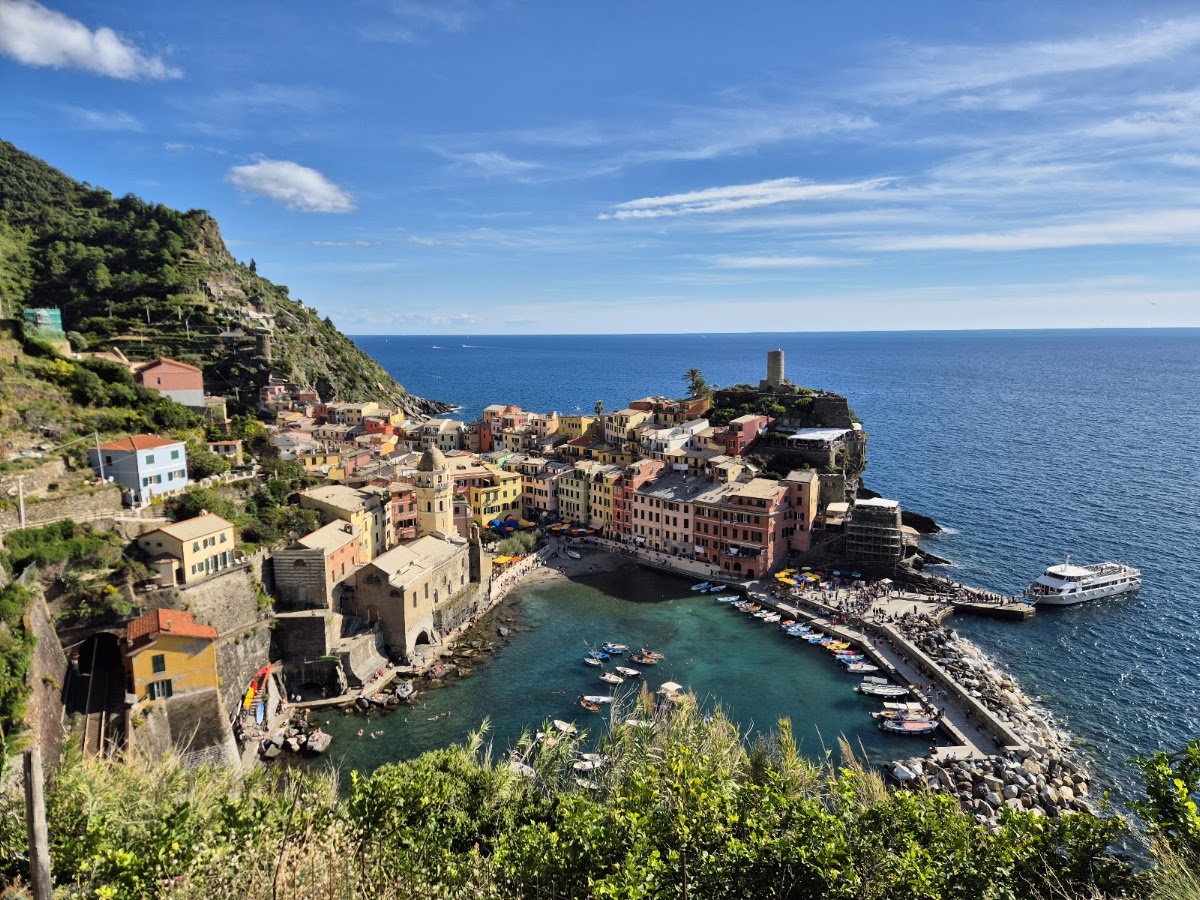
The Sentiero Azzurro (the Blue Trail) from Monterosso to Vernazza is the classic Cinque Terre hike, and it earns every bit of its reputation. Reckon on about two hours over roughly 3.5 km of stone steps, dirt path, and lemon groves. It is not flat, so wear real shoes and carry water.
You'll pause constantly, because every switchback gives you a new angle on the vineyards clinging to the hillside. These terraces have been hand-built over centuries, held up by dry-stone walls that run for kilometres.
Then Vernazza appears beneath you, and it stops you cold. This is the view on every postcard, and somehow it's better in person. Trail access is included with the Cinque Terre Card, and rangers sometimes check at the trailhead, so keep it handy.
Vernazza's Pocket Harbour and a Piazza Built for Doing Nothing
The path spills you out beside a tiny cove where fishing boats bob in impossibly turquoise water, and the whole village leans in around a single sunlit square.
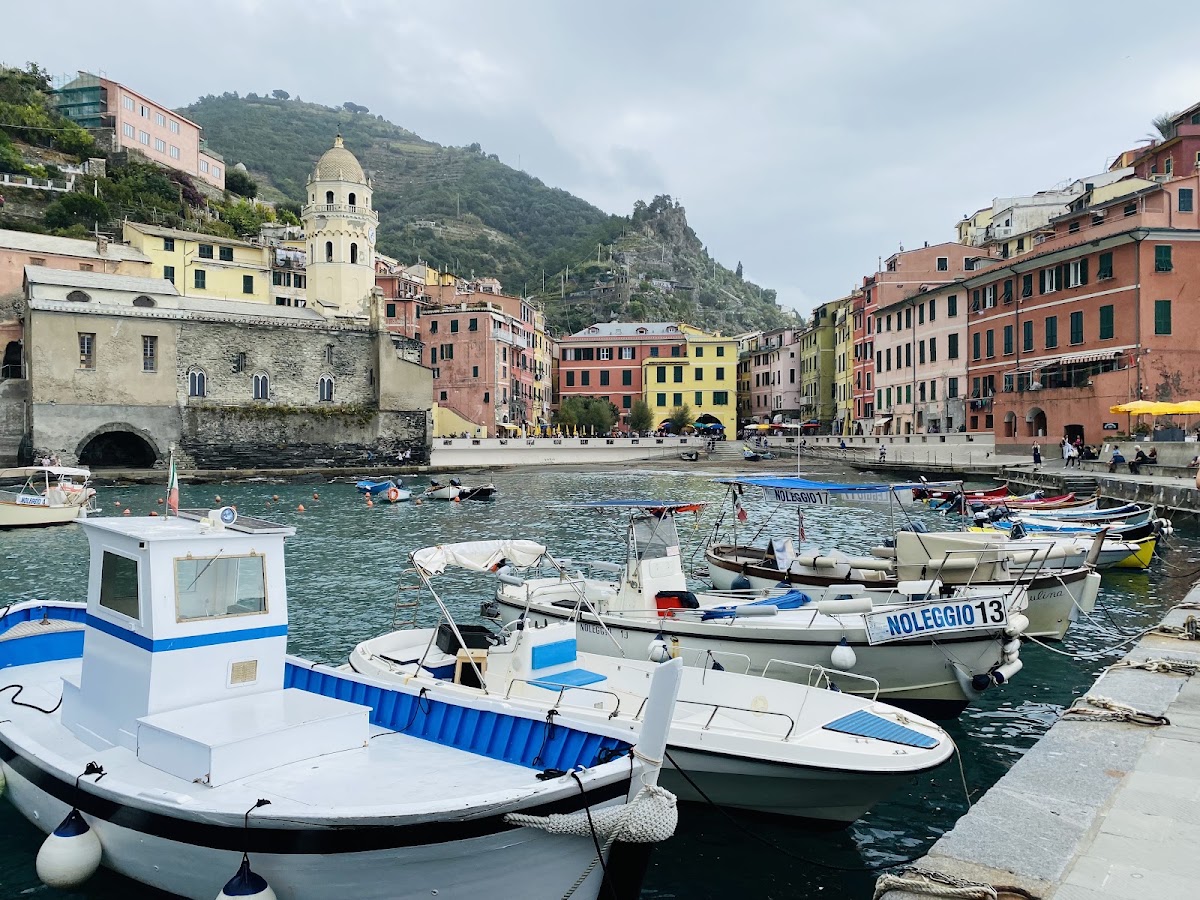
Vernazza is the one people fall hardest for, and after that hike you've earned your reward. The harbour is barely more than a slipway, ringed by pastel houses and a stubby church that sits almost in the water at Piazza Marconi.
Drop into a seat on the piazza, order a spritz, and just watch the boats. If your legs are done, this is a fine place to reward them with more focaccia and a gelato before catching the train back.
For the photograph everyone wants, climb the steps toward the Doria Castle tower on the point. From up there the harbour, the church, and the stacked houses all line up into a single frame. The train back to Monterosso from here takes about four minutes, which never stops feeling absurd.
Corniglia, the Village on the Cliff, and a Glass of Sciacchetra
No harbour here, just a green shoulder of vineyard high above the sea and a terrace where the wine tastes like it was made from sunlight.
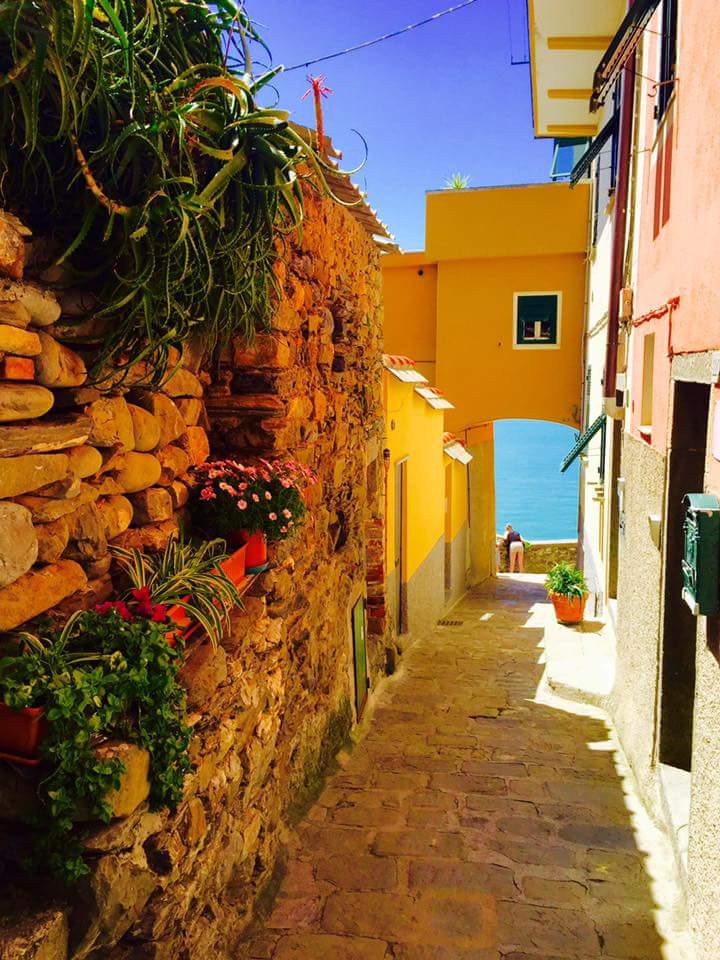
Corniglia is the odd one out, the only village of the five with no direct sea access. It perches on a headland about a hundred metres up, reached by a staircase of 382 steps (the Lardarina) or a shuttle bus from the station. Either way, it's quieter than its neighbours, and that's the point.
Head for the Belvedere di Corniglia, a stone terrace at the tip of the village. From here the coastline curves away in both directions, and on a clear afternoon you can see most of the way along the shore.
This is wine country, so do a tasting of the local whites and, if you can find it, the sweet Sciacchetra dessert wine made from grapes dried on these very slopes. A small pour is a treat, usually around 5 to 8 euros. Sip it slowly with the sea in front of you.
Seeing Cinque Terre the Way It Was Meant to Be Seen: from the Water
The engine hums, the coast slides past, and suddenly you understand it. The villages don't sit on the cliffs so much as tumble down them into the sea.
Trains are fast and trails are beautiful, but the ferry is where Cinque Terre finally makes sense. Catch the boat from Monterosso's little pier and ride south along the coast. From offshore you get the full stacked-house panorama that no train window or footpath can give you.
Aim for Manarola in the late afternoon. Its harbour, wedged into a rocky ravine with houses piled up on either side, glows amber as the sun drops. Wander the single main lane, then find the flat rocks by the water where locals dive in.
From Manarola it's a short hop to Riomaggiore for aperitivo and dinner: a plate of trofie pasta with Ligurian pesto, the green, garlicky sauce that was basically invented on this stretch of coast. Then the train carries you home to Monterosso in the dark.
One Last Morning, the Giant, and a Slow Cappuccino
Steam curls off a cappuccino, the beach is nearly empty, and a stone giant watches over the water like he's been waiting for you to say goodbye.
On your last morning, keep it gentle. Start with breakfast the local way: a cappuccino and a piece of plain focaccia, dunked if no one's watching. Italians take their morning coffee standing at the bar, so join them.
Then take a final stroll along the Monterosso seafront to see Il Gigante, the weathered statue of Neptune built into the rock at the far end of the beach. He's battered by a century of storms, missing an arm, and somehow all the more striking for it.
When it's time, the station is a short walk away and the trains run often toward La Spezia and the wider network. Four days is enough to fall for these five villages, and just short enough to leave you plotting a return.
Ready to book?
Book the rest of Cinque Terre, Italy
Handpicked partner searches, dates pre-filled. Pricing is identical to going direct — the partner shares a small commission with Tabi so this guide stays free.
Frequently asked
How many days do you need in Cinque Terre?
Four days is the sweet spot. It gives you time to swim in Monterosso, hike the Blue Trail to Vernazza, taste wine in Corniglia, and ride the ferry to Manarola at sunset without rushing between villages. You could see the highlights in two full days, but you'd be constantly on the move and would miss the quiet evenings after the day-trippers leave.
Do you need a car in Cinque Terre?
No, and a car is honestly a liability here. The villages have almost no parking and the streets are pedestrian lanes and staircases. The Cinque Terre Express train links all five villages in a few minutes each, the ferry connects them by sea, and the coastal trails connect them on foot. Buy a Cinque Terre Card for unlimited train and trail access.
How hard is the Sentiero Azzurro hike from Monterosso to Vernazza?
It's moderate. The Monterosso to Vernazza stretch runs about 3.5 km and takes roughly two hours, with plenty of stone steps and some steady climbing, so it's more strenuous than a flat coastal walk. Wear real walking shoes and carry water, especially in summer. The reward is the postcard view of Vernazza appearing beneath you near the end.
When is the best time to visit Cinque Terre?
Late spring (May to June) and early autumn (September to October) are ideal: warm enough to swim, comfortable for hiking, and less crowded than peak July and August. Summer brings the biggest crowds and heat that makes the trails tough. Winter is quiet and atmospheric but many restaurants and some ferry services scale back, and trails can close after storms.
Which Cinque Terre village is best to stay in?
Monterosso al Mare is the most practical base. It's the only village with a proper swimming beach, has the most hotels and restaurants, and its train station connects easily to the other four. Vernazza and Manarola are more picturesque but smaller and pricier, with steeper walks and less availability. Staying in Monterosso lets you enjoy the village after the day crowds thin out at night.
Skip the planning
Your Cinque Terre, Italy trip, ready to go
Adopt the day-by-day itinerary we built to match this guide. Every stop is a real place, every booking link is validated. Free forever, no card needed.
Open the Cinque Terre, Italy itinerary