
Da Nang, Vietnam
What to Do in Da Nang in 4 Days: Beaches, Marble Caves, and a Lantern-Lit Night in Hoi An
A journey log from the first barefoot sunset on My Khe to the morning you drive back past the Dragon Bridge.
TL;DR
You land on a coastline where the sand goes gold at 5pm, then work your way inland through caves lit by sun shafts before ending up somewhere that glows with paper lanterns.
- Barefoot sunset on My Khe Beach, South China Sea going pink
- Climbing marble staircases into cool, incense-scented cave temples
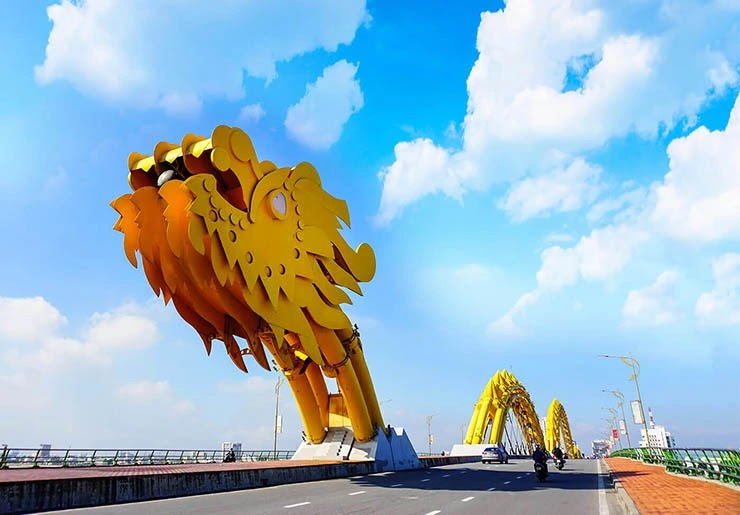
- The Dragon Bridge breathing actual fire on weekend nights
- Da Nang Cathedral, a candy-pink spire topped with a rooster
- Hoi An's old town at dusk, the river full of floating lanterns
Have this trip planned in 60 seconds
We built the Da Nang, Vietnam itinerary that pairs with this guide, day-by-day with verified venues and one-tap booking links. Free to adopt, edit however you want.
The First Barefoot Walk, When the Sand Turns Gold
Warm sand underfoot, the South China Sea sliding in flat and silver, and the whole stretch of coast going pink at about 5pm.
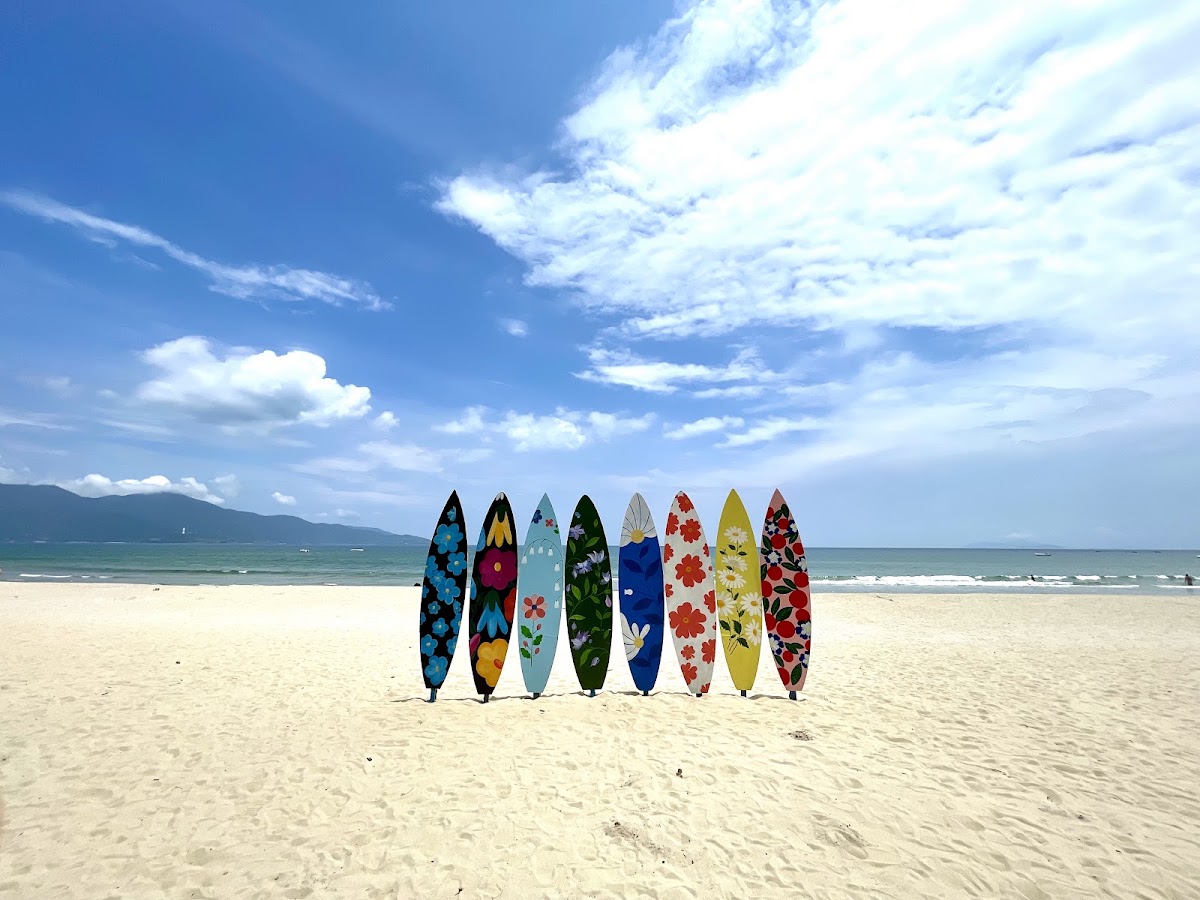
You will probably land, drop your bag, and head straight here, and that is exactly the right move. My Khe runs for kilometers in a long clean arc, and by late afternoon the light does something you will want to stop and look at instead of photographing (though you will photograph it anyway).
Walk north with your shoes in your hand. The fishermen's round coracle boats sit tipped on the sand, locals wade in waist-deep after work, and the high-rises behind you catch the last orange. It is a public beach, free, and completely unfussy.
When you are ready for dinner, cut back one block inland to any seafood place with a tank out front. You point at what you want, they weigh it, they grill it. Steamed clams with lemongrass and a plate of garlic morning glory, maybe 250,000 to 400,000 VND (about 10 to 16 USD) for two.
Base Camp in the City Center
A quiet boutique room a few streets back from the river, where the AC hums and the breakfast pho shop is a 90-second walk away.
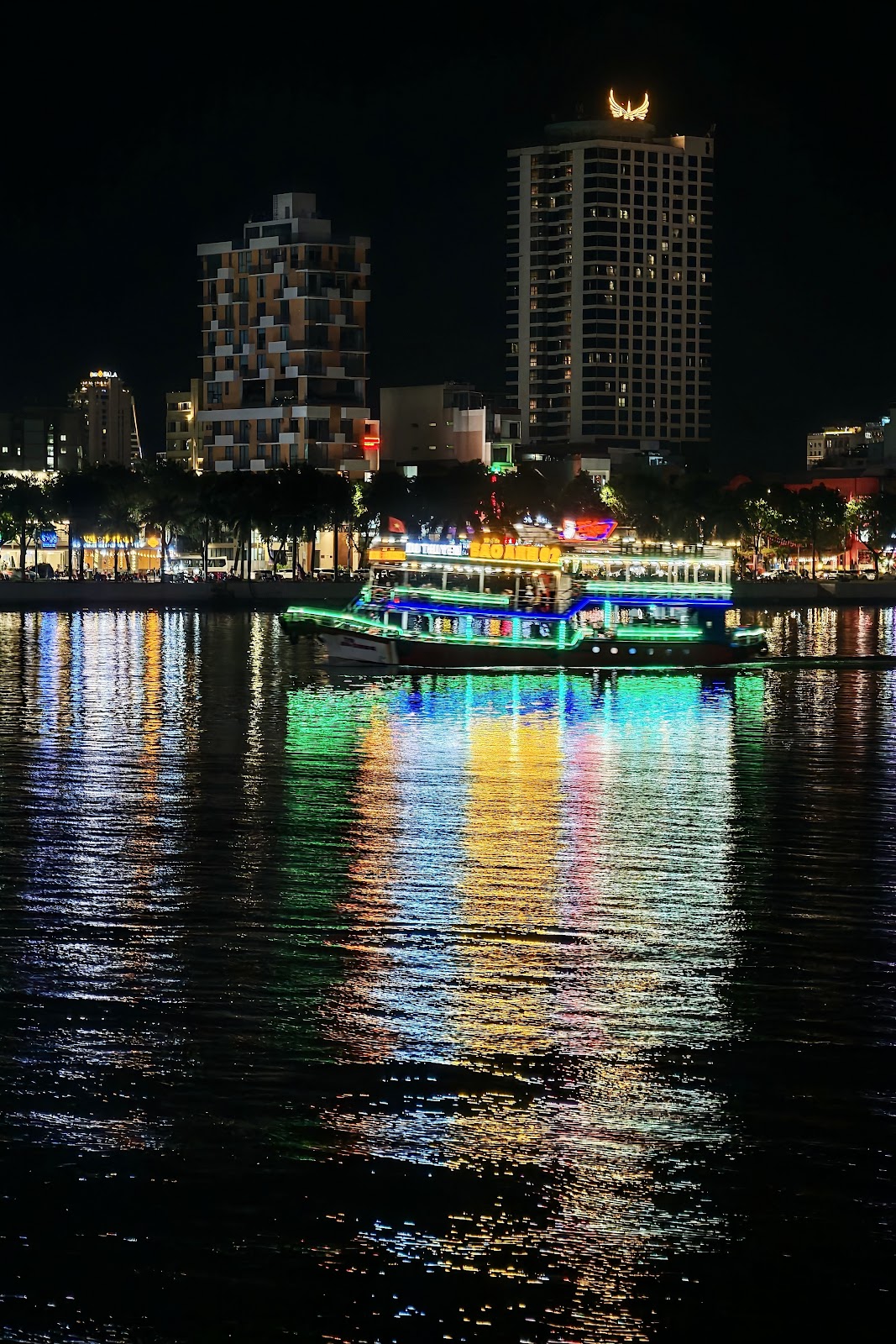
You want to sleep in central Da Nang for the first couple of nights, not out by the resorts. The city-center boutiques put you within a short walk of the river promenade, the Dragon Bridge, and about a thousand tiny eateries, which matters when you roll in tired and hungry.
Expect to pay anywhere from 900,000 to 2,000,000 VND a night (roughly 35 to 80 USD) for something clean, modern, and well-reviewed with a rooftop. Book a river-facing or east-facing room if you can, you are close enough to catch morning light on the water.
This is your launchpad for the Marble Mountains day and your home base before you move to Hoi An on day three.
The Candy-Pink Church with a Rooster on Top
A Gothic spire painted the exact pink of a petit four, a weathervane rooster spinning at the very top instead of a cross.
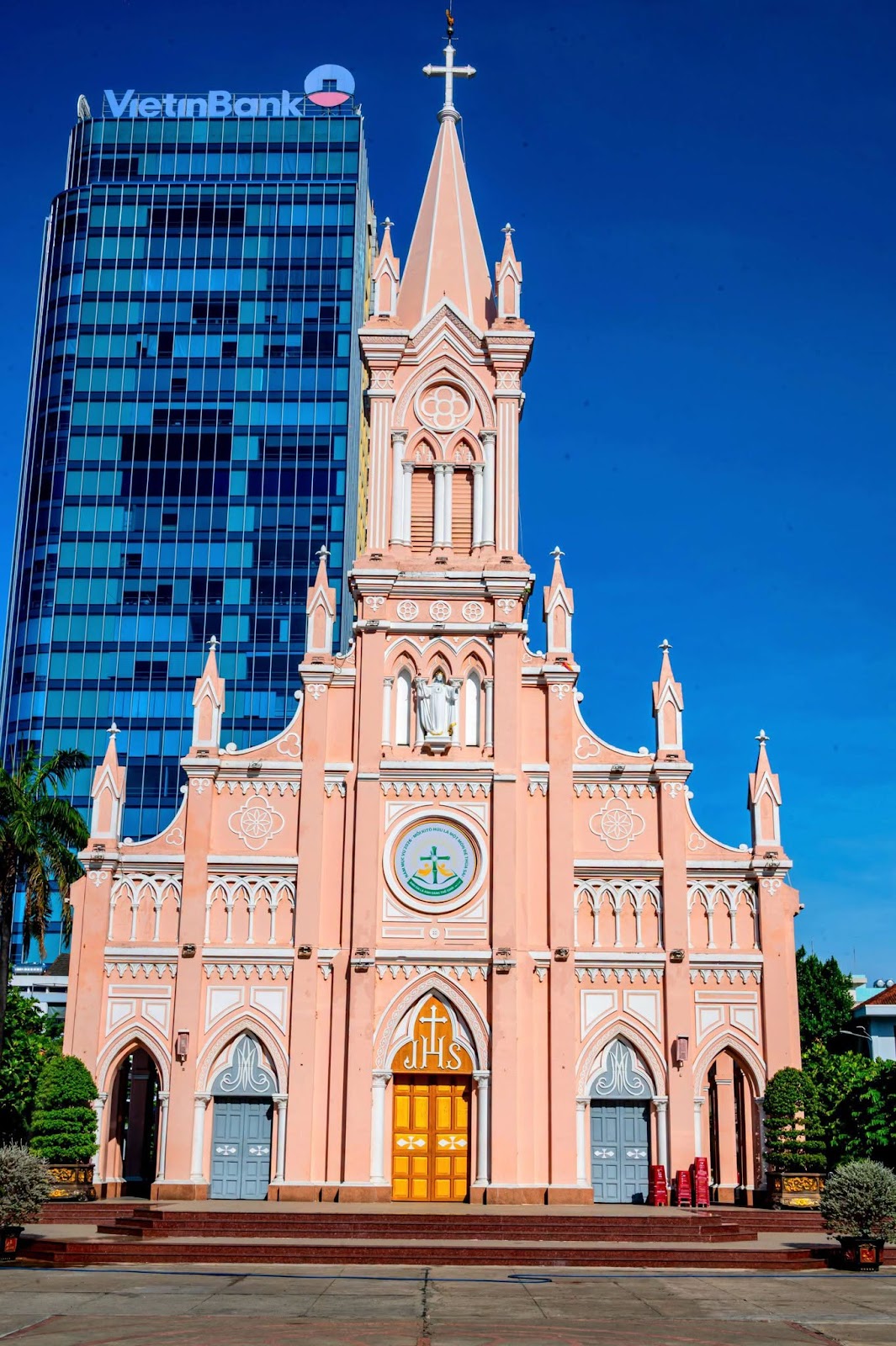
Locals call it the Rooster Church. The French built Da Nang Cathedral in 1923, and the facade is this improbable, delightful pink that photographs like a storybook against a blue morning sky. The rooster weathervane is why it got its nickname.
Go in the morning before the midday glare flattens the color. The interior has cool stained glass and a hush, and it is still an active parish, so step quietly if a service is on. It sits right on Tran Phu street in the thick of downtown.
Afterward, lunch on com tam, broken rice piled with grilled pork, a fried egg, pickled veg, and a little bowl of fish sauce on the side. A plate runs around 40,000 to 60,000 VND (under 3 USD) at a neighborhood spot.
Climbing Into the Marble Mountains
Cool air pouring out of a cave mouth, incense drifting up through a shaft of daylight, a stone Buddha glowing in the half-dark.
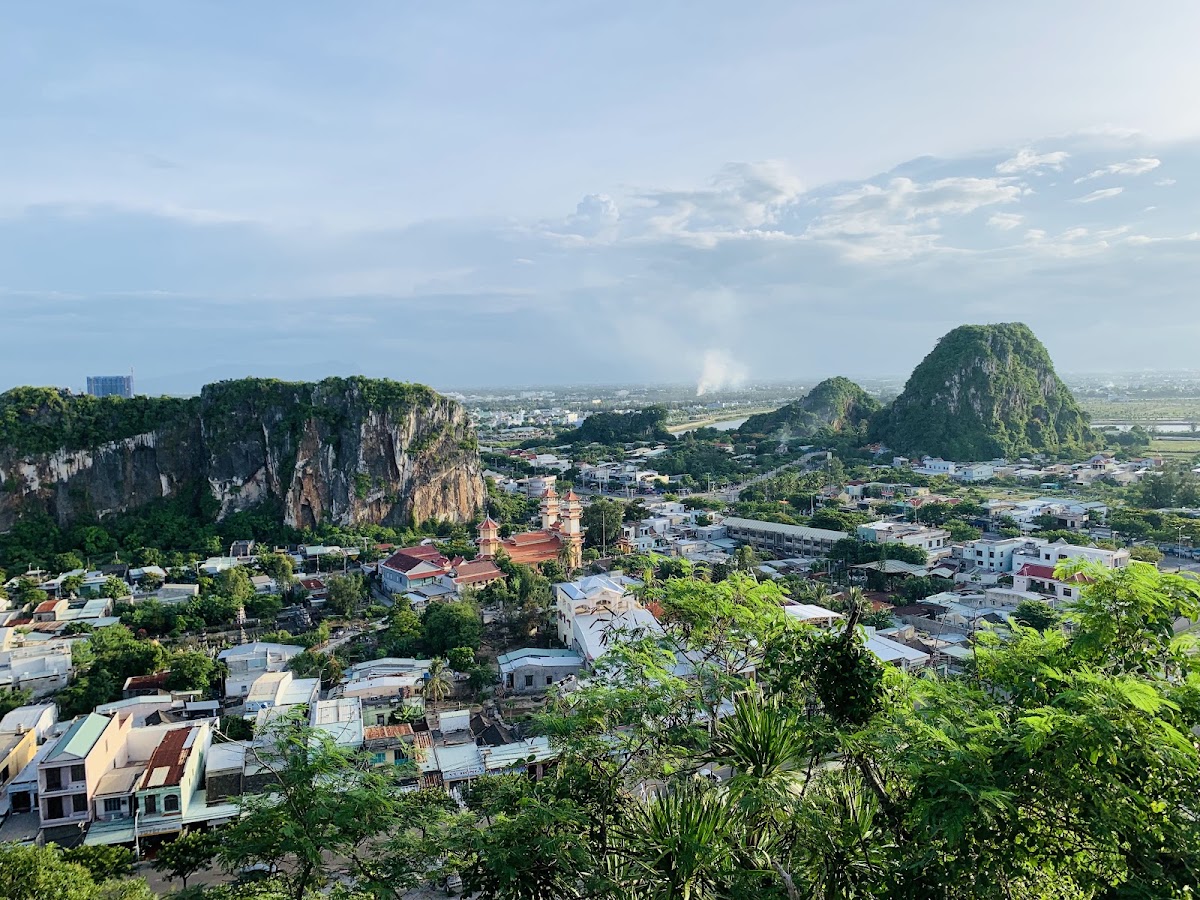
These five limestone and marble hills rise straight out of the flat coastal plain, honeycombed with caves that have been Buddhist shrines for centuries. Thuy Son is the big one you climb, and the moment you step from the heat into Huyen Khong Cave, with its sunlight falling through a hole in the ceiling onto the altars below, is the thing people remember.
There is a lift for part of the way up, or you take the stone staircases if your legs are willing. Entry is about 40,000 VND (under 2 USD), with a small extra fee for the Am Phu (Hell) cave and the lift. Wear real shoes, the steps get slick.
At the base of the mountains sits the stone-carving village and, just beyond, Non Nuoc Beach: a quieter, softer stretch of the same coastline if you want a swim to cool off before heading back into the city.
The Bridge That Breathes Fire
A quarter-mile of steel dragon arching over the Han, its scales cycling through color, and on weekend nights a jet of real flame from its mouth.
Come back to the river after dark on a Saturday or Sunday and position yourself near the dragon's head before 9pm. The Dragon Bridge lights up gold and then breathes fire, several bursts, followed by sprays of water. It is pure spectacle and the crowd loves it.
Stroll the riverside promenade for the full effect, with the pastel Han River Bridge (which actually swings open for ships late at night) glowing downstream. The whole walk is free, open, and busy with families and street vendors selling grilled corn and sugarcane juice.
This is your last big Da Nang evening before you move south, so take your time along the water.
Walking Into Hoi An's Old Town
Mustard-yellow shophouses, bougainvillea spilling over tiled roofs, and the salt-and-river smell of a town that has barely changed in 400 years.
A private car gets you from Da Nang to Hoi An in about 30 minutes, and the shift in pace is immediate. The Ancient Town is pedestrian in its core, a UNESCO-listed trading port of wooden merchant houses, Chinese assembly halls, and the little arched Japanese Covered Bridge that ends up on every postcard.
Spend the afternoon just drifting. Duck into a tailor if you want something made (Hoi An is famous for it), sip a Vietnamese coffee by the Thu Bon River, or try the local cao lau noodles, which you can supposedly only make properly with water from one specific town well.
The UNESCO listing is worth a quick read before you go, it explains why the whole place feels frozen: https://whc.unesco.org/en/list/948/
The River Fills with Lanterns
Hundreds of silk lanterns glowing red, gold, and magenta overhead, and tiny paper candles drifting down the dark river below.
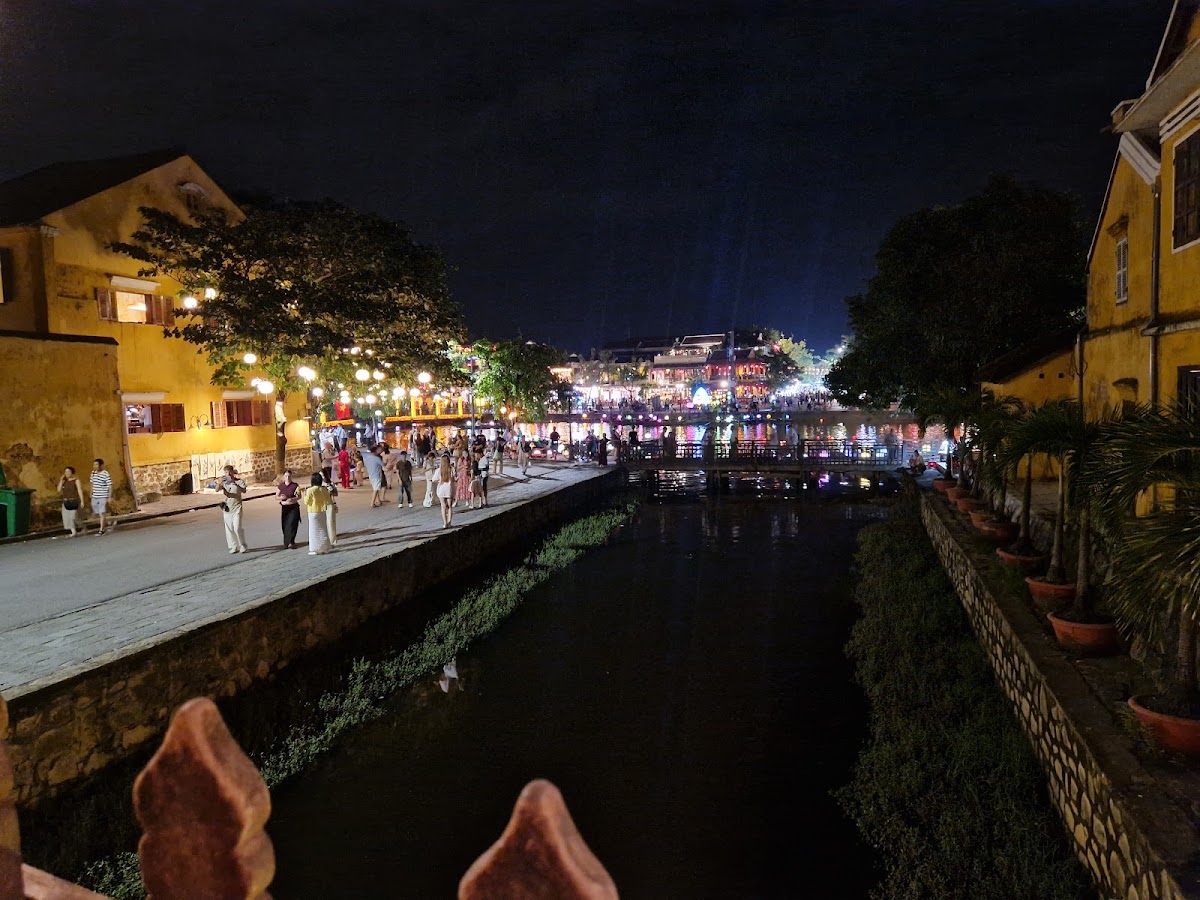
This is the moment the whole trip has been building toward. As the sky goes dark, Hoi An switches off much of its electric lighting and the lanterns take over. The night market on An Hoi islet, just across the footbridge, is a tunnel of color, stalls stacked with lanterns, street food sizzling, and vendors selling little floating candles to set loose on the water.
Buy one for a few thousand dong, make a wish, and lower it into the Thu Bon. Then eat your way down the market: white rose dumplings, grilled skewers, banh mi from one of the stalls that has been doing it for decades.
Sit on the riverbank for a while. This is the picture you will show people when they ask what Vietnam looked like.
One Last Bowl Before the Airport
A steaming bowl of pho on a low plastic stool, the morning still cool, your bag already packed by the door.
On your last morning, skip the big hotel buffet if you can and find a local pho shop instead. A bowl of pho or the lighter, herb-piled Quang-style noodles runs about 40,000 to 50,000 VND (around 2 USD), and it is the quietest, most ordinary, most Vietnamese way to say goodbye.
Then it is a private transfer back to Da Nang International Airport, about 45 minutes from Hoi An. Leave buffer time; traffic on the coastal road can bunch up.
If you are already plotting the return trip, the full day-by-day version of this route lives in the curated itinerary linked on this page.
Ready to book?
Book the rest of Da Nang, Vietnam
Handpicked partner searches, dates pre-filled. Pricing is identical to going direct — the partner shares a small commission with Tabi so this guide stays free.
Frequently asked
How many days do you need in Da Nang and Hoi An?
Four days is the sweet spot. Two days for Da Nang's beaches, Marble Mountains, cathedral, and the Dragon Bridge, then two for Hoi An's Ancient Town and its lantern-lit nights. You can compress to three if pressed, but you lose the slow riverside evenings that make Hoi An special.
What is the best time of year to visit Da Nang?
February to August is the dry, beach-friendly stretch, with the hottest months around June and July. September through December brings the rainy season, and October and November can flood parts of low-lying Hoi An. For reliable sun, aim for spring to early summer.
Is it easy to get from Da Nang to Hoi An?
Very. It is about 30 to 45 minutes by road. A private car transfer is the smoothest option and inexpensive, and the Grab app works for taxis too. Many travelers stay in Da Nang first, then move to a hotel inside Hoi An's Ancient Town for a night or two.
When does the Dragon Bridge breathe fire?
The fire-and-water show runs on Saturday and Sunday nights (and some public holidays), typically starting around 9pm. Get into position near the dragon's head a little early, as the riverside fills up fast with families and photographers.
What food should you not miss around Da Nang?
In Da Nang, chase mi Quang (turmeric noodles) and fresh grilled seafood near the beach. In Hoi An, try cao lau noodles, white rose dumplings, and the legendary banh mi. Com tam, broken rice with grilled pork, is a cheap and filling everyday lunch across both towns.
Skip the planning
Your Da Nang, Vietnam trip, ready to go
Adopt the day-by-day itinerary we built to match this guide. Every stop is a real place, every booking link is validated. Free forever, no card needed.
Open the Da Nang, Vietnam itinerary