
Dubai, United Arab Emirates
What to Do in Dubai in 5 Days: Skyline, Souks, and a Desert Sunset
A picture-first walk through the shiny towers, the spice-heavy old town, and the dune where the light goes gold.
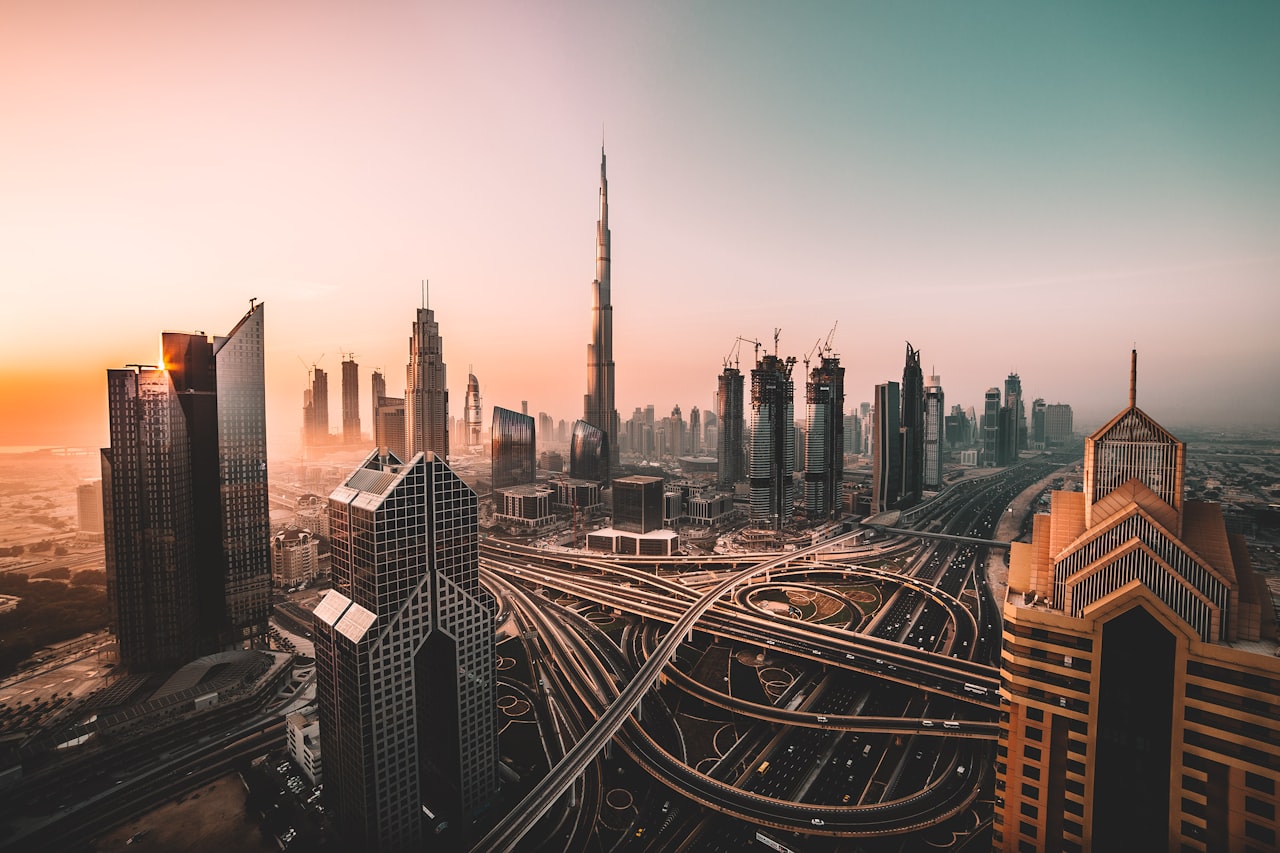
Photo by David Rodrigo on Unsplash
TL;DR
Five days that swing from the top of the world's tallest building to a campfire in the sand, with a spice-souk detour in between.
- Fountains dancing 150 metres up under the Burj Khalifa at dusk
- A one-dirham wooden abra chugging across Dubai Creek
- Gold Souk windows stacked with more chains than you can count
- Camel silhouette on a dune as the desert turns copper
- Palm-shaped island seen whole from The View at The Palm
Have this trip planned in 60 seconds
We built the Dubai, United Arab Emirates itinerary that pairs with this guide, day-by-day with verified venues and one-tap booking links. Free to adopt, edit however you want.
The Tower You Feel in Your Ears
The lift doors close, your ears pop twice, and 48 seconds later the whole city is a circuit board glowing below your shoes.
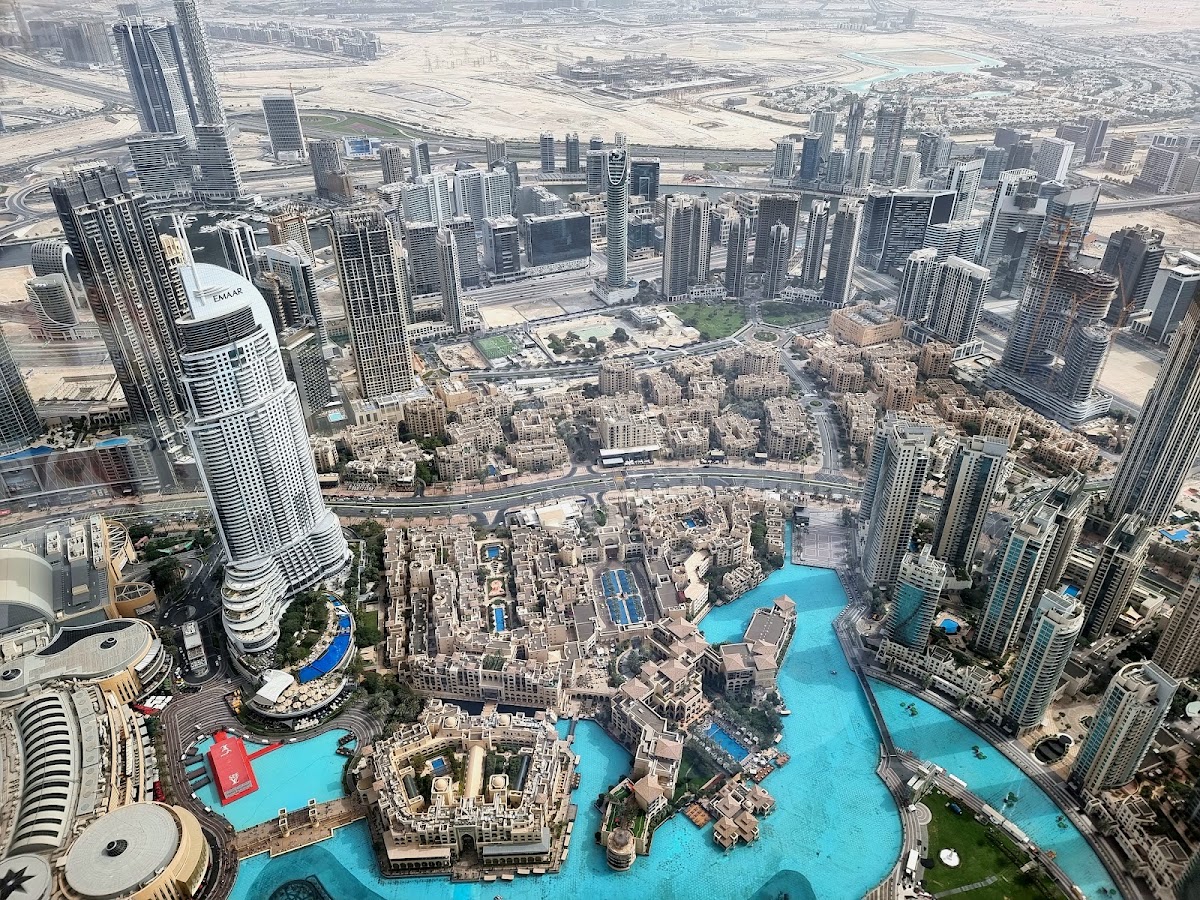
Start high. At the Top on the Burj Khalifa puts you on the 124th and 125th floors, and the glass runs floor to ceiling, so you get the full sweep: the Gulf on one side, the desert fading brown on the other, Sheikh Zayed Road threading traffic between them like a lit fuse.
Book the 5pm-ish slot if you can. You catch the city in daylight, watch the sun drop behind the horizon, then stay up top as every tower switches its lights on. Standard adult tickets run around 179 AED (about 49 USD) for the 124/125 levels; prime sunset times cost more and sell out days ahead.
Getting here is easy and cheap. The Metro Red Line drops you at Burj Khalifa/Dubai Mall station, then a long air-conditioned travelator carries you straight into the mall at the tower's base. No taxi haggling required.
Dinner Where the Water Dances on Cue
Every half hour after dark the lake erupts, jets of water 150 metres high swaying to Arabic pop while a thousand phones go up at once.
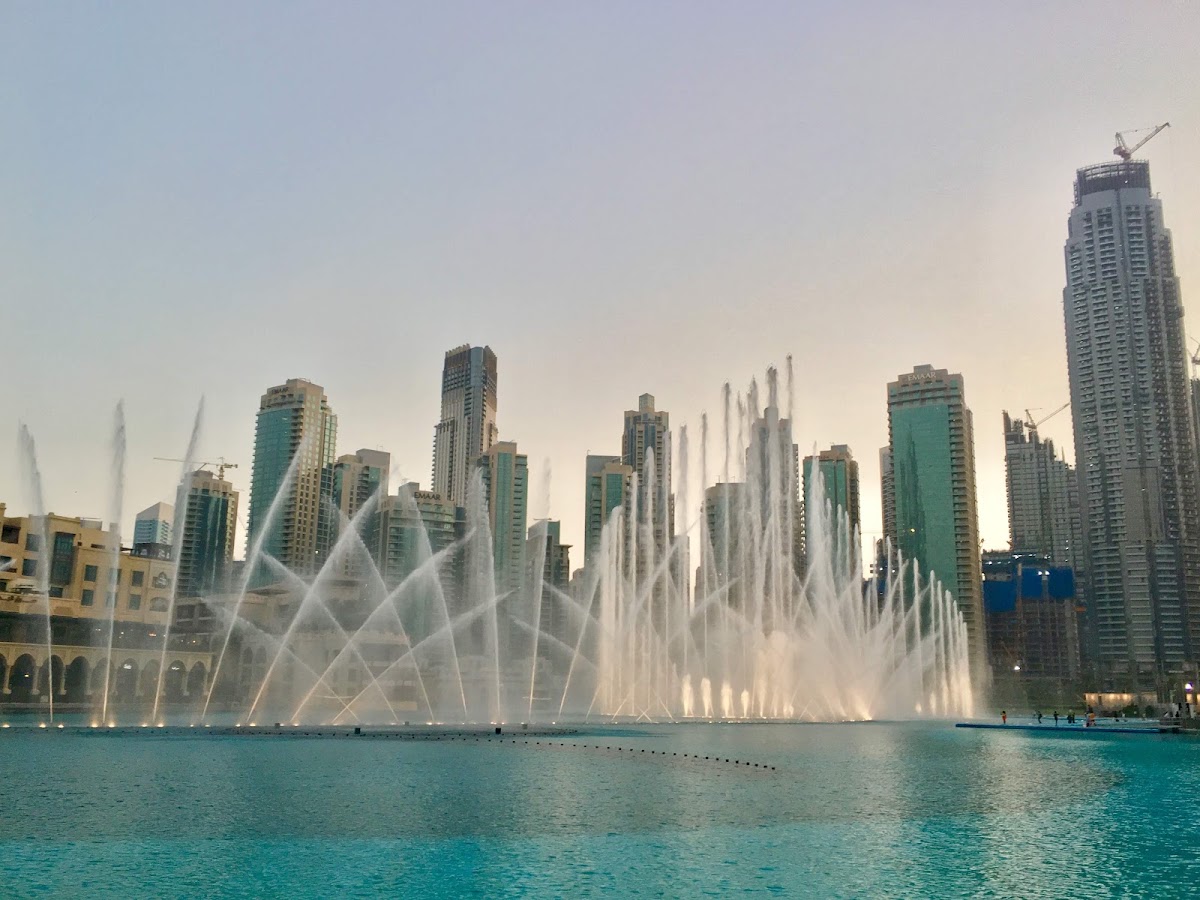
Come down from the tower and walk out to the Dubai Mall Waterfront Promenade. Grab an outdoor table at one of the restaurants lining the lake, order whatever, and time it so the Dubai Fountain show starts while your food arrives.
The show is free and runs every 30 minutes from around 6pm to 11pm, plus a couple of afternoon sets. Each one lasts a few minutes and cycles through different songs, so if you love it, just wait; another is coming. The Burj Khalifa lights up directly behind it, which is the shot you came for.
If you'd rather be on the water than beside it, small boats putter across the lake during the show for a closer, spray-in-your-face view. Otherwise the promenade railing is perfectly good, and free is free.
One Dirham Across the Creek
The wooden abra sits low in the water, diesel engine chugging, and for a single coin it ferries you and a dozen locals across Dubai Creek in five minutes flat.
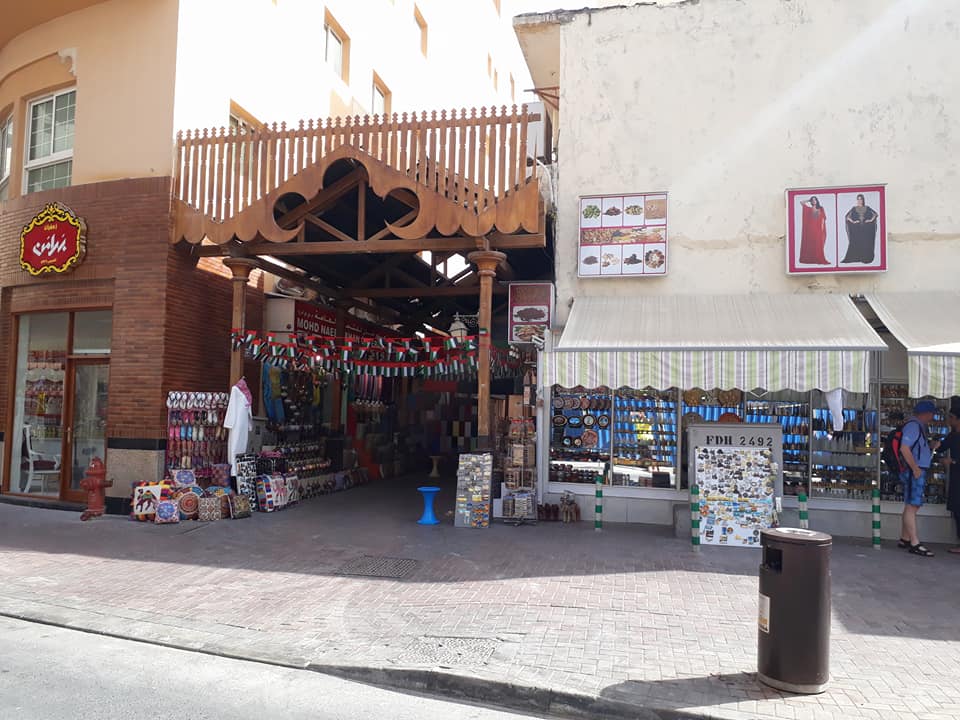
Day two, go old. Take the Metro to Bur Dubai and find the abra station on the creek. These traditional wooden ferries have crossed this water for generations, and they still cost 1 AED (under 30 cents) per trip. Sit on the bench, feel the wake rock you, and watch the dhows loaded with cargo drift past.
On the Deira side, the Gold Souk is a covered lane where the shop windows are solid walls of chains, bangles, and necklaces. Even if you buy nothing, the sheer density of it is a sight. A few minutes away the Spice Souk hits you first through the nose: sacks of saffron, dried lemon, cinnamon bark, and frankincense spilling into the walkway.
Haggling is expected here, not rude. Offer roughly half, settle somewhere in the middle, and don't feel bad about walking away to think.
The Dubai That Existed Before the Towers
Wind towers rise over sand-coloured walls, the lanes narrow to shoulder width, and the air suddenly drops a few degrees in the shade.
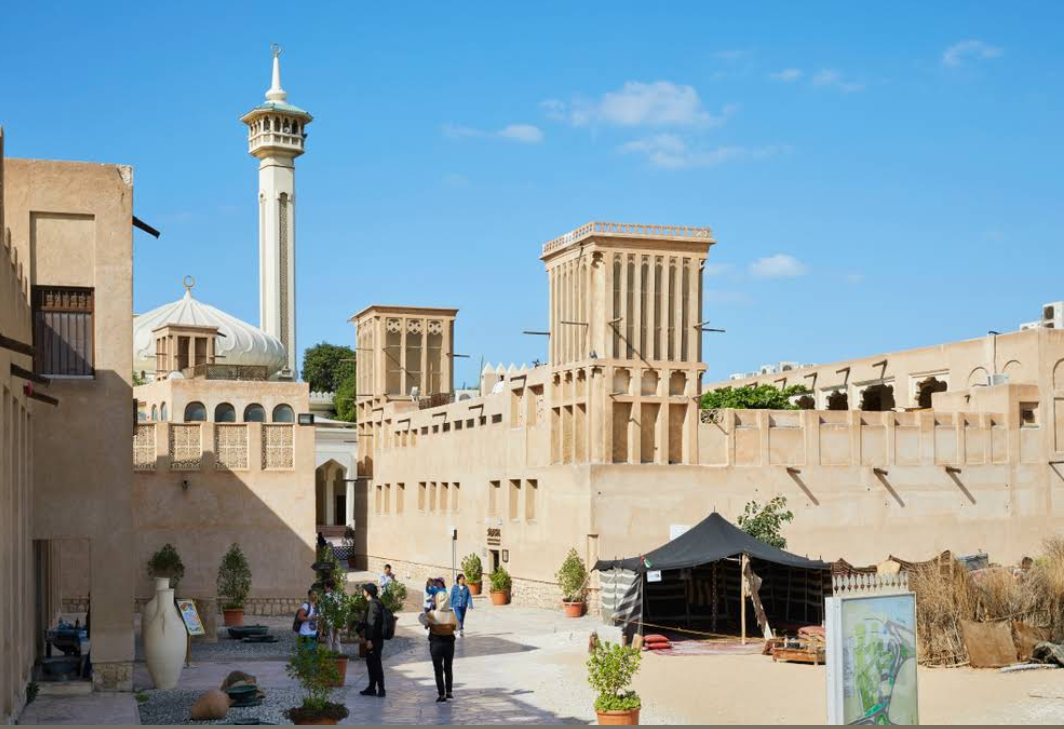
Back on the Bur Dubai side, the Al Fahidi Historical Neighbourhood is the city's oldest quarter, a maze of restored coral-and-gypsum houses with tall wind towers, the original air conditioning. Wander with no map. Every turn opens onto a tiny gallery, a courtyard cafe, or a calligraphy studio.
At the edge sits Al Fahidi Fort, built in the late 1700s and now home to the Dubai Museum. Underground galleries recreate the souks, the pearl-diving trade, and desert life, and entry is only a few dirhams. It's the fastest way to understand how a fishing and pearling town became all that glass.
When you're hungry, walk over to Al Seef, a stretch along the creek where restored buildings house Emirati kitchens. Order a slow-cooked lamb machboos or a plate of luqaimat, warm dough balls drenched in date syrup, and eat with the water right beside you.
The Dune Where the Light Goes Copper
The 4x4 crests a ridge, tips forward, and slides down a wall of sand while everyone yelps; then it stops, and there's nothing but silence and orange in every direction.
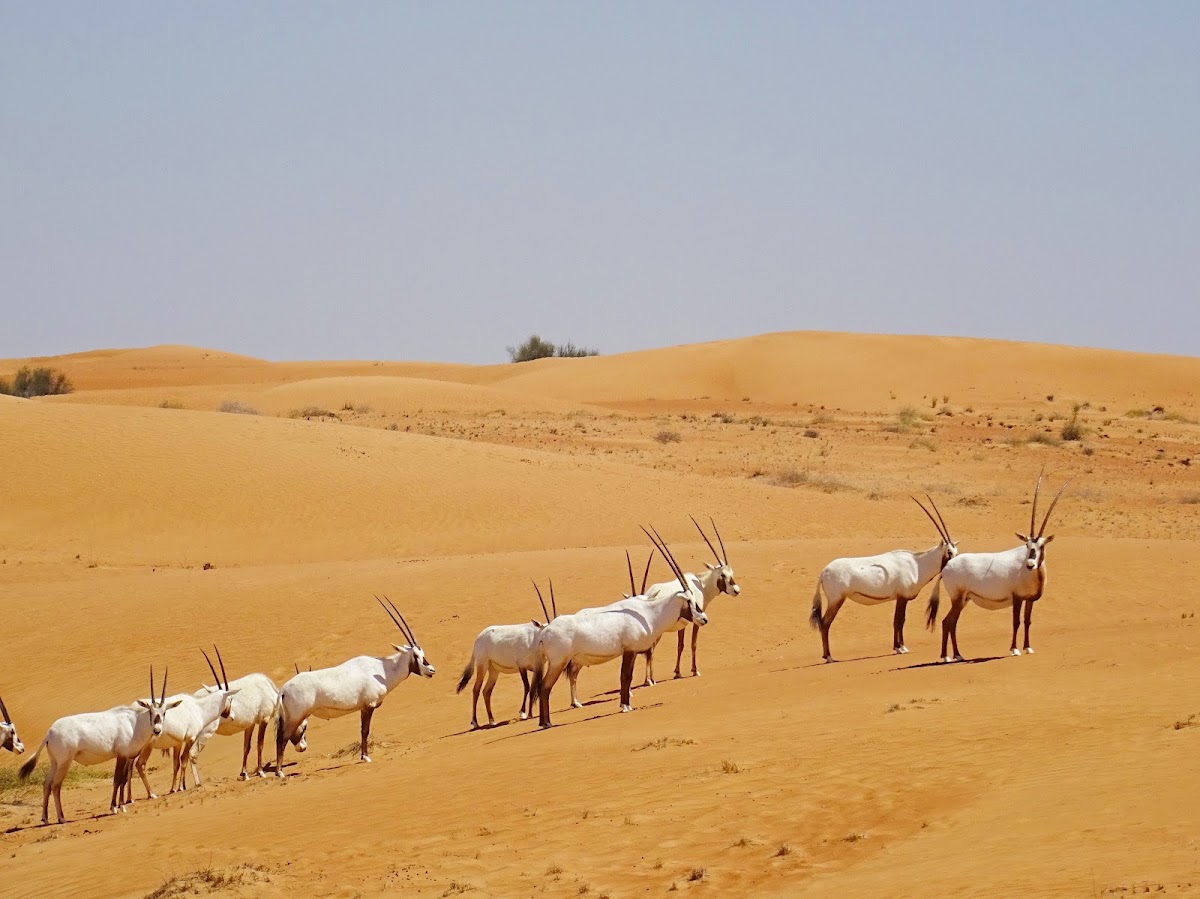
Day three belongs to the desert. Sleep in, float in the hotel pool through the hot middle of the day, then get collected mid-afternoon for the Dubai Desert Conservation Reserve, a protected stretch of proper dunes about an hour out.
Dune bashing comes first: your driver deflates the tyres and carves up and over the ridges. After that it slows down. Climb onto a camel for a plodding walk as the sun sinks, and the whole desert turns copper then rose then deep blue. This is the photo of the trip.
Dinner is at a Bedouin-style camp under strings of lights: grilled meats, mezze, mint tea, and shows that might include falconry, tanoura spinning, or henna. Choose an operator licensed inside the Conservation Reserve rather than the cheaper open-desert outfits; the driving is gentler on the dunes and the wildlife.
Marina Walks and the Palm Seen Whole
Yachts nose into their berths, the towers curve overhead like a canyon of glass, and the smell of grilled seafood drifts off the boardwalk restaurants.
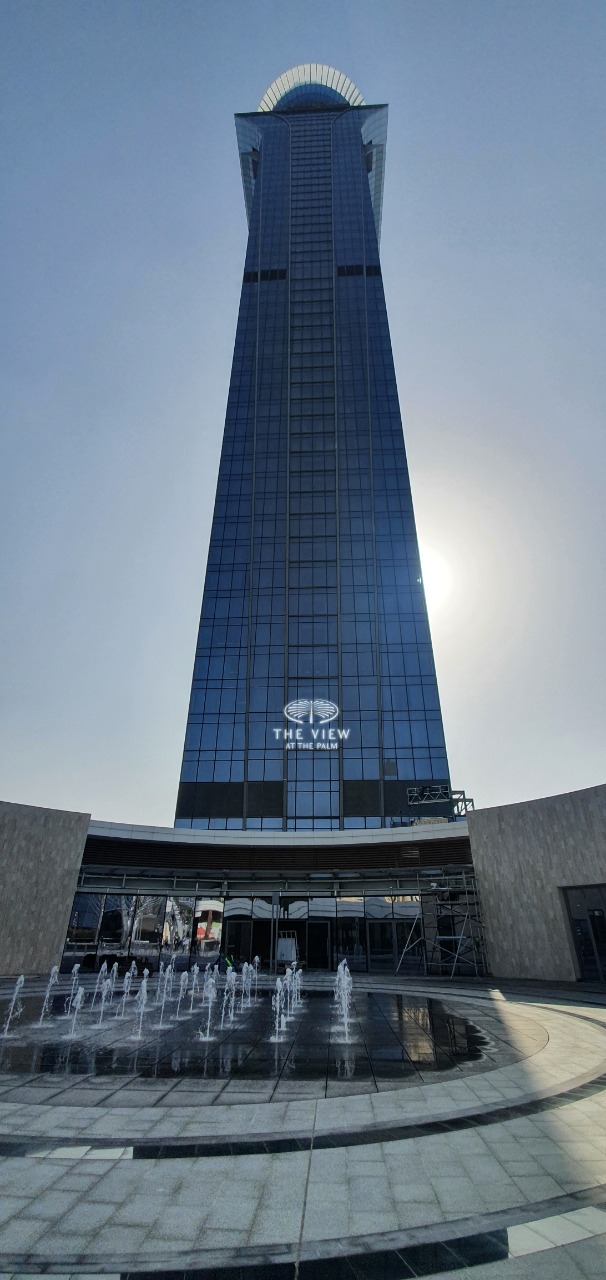
Day four is the coast. Start along Dubai Marina Walk, a waterfront promenade ringed by superyachts and skyscrapers, then drift down to JBR The Walk and the beach behind it, where the sand meets a strip of cafes. If you want it quieter and more local, Kite Beach on Jumeirah has softer crowds, food trucks, and a clear view back toward the Burj Al Arab.
Mid-afternoon, hop the Palm Monorail out along Palm Jumeirah, the man-made island shaped like a palm tree, and ride up to The View at The Palm. From the observation deck the entire island unfurls beneath you, fronds, trunk, and crescent, in a way you simply can't grasp from the ground.
End on the water. A dhow dinner cruise leaves from the Marina after dark, gliding slowly past the lit towers while dinner is served on deck. Slow, a little touristy, and genuinely lovely.
The Frame That Splits Old From New
Stand in the right spot and a 150-metre golden picture frame lines up so old Dubai sits on one side of the glass and the future skyline on the other.
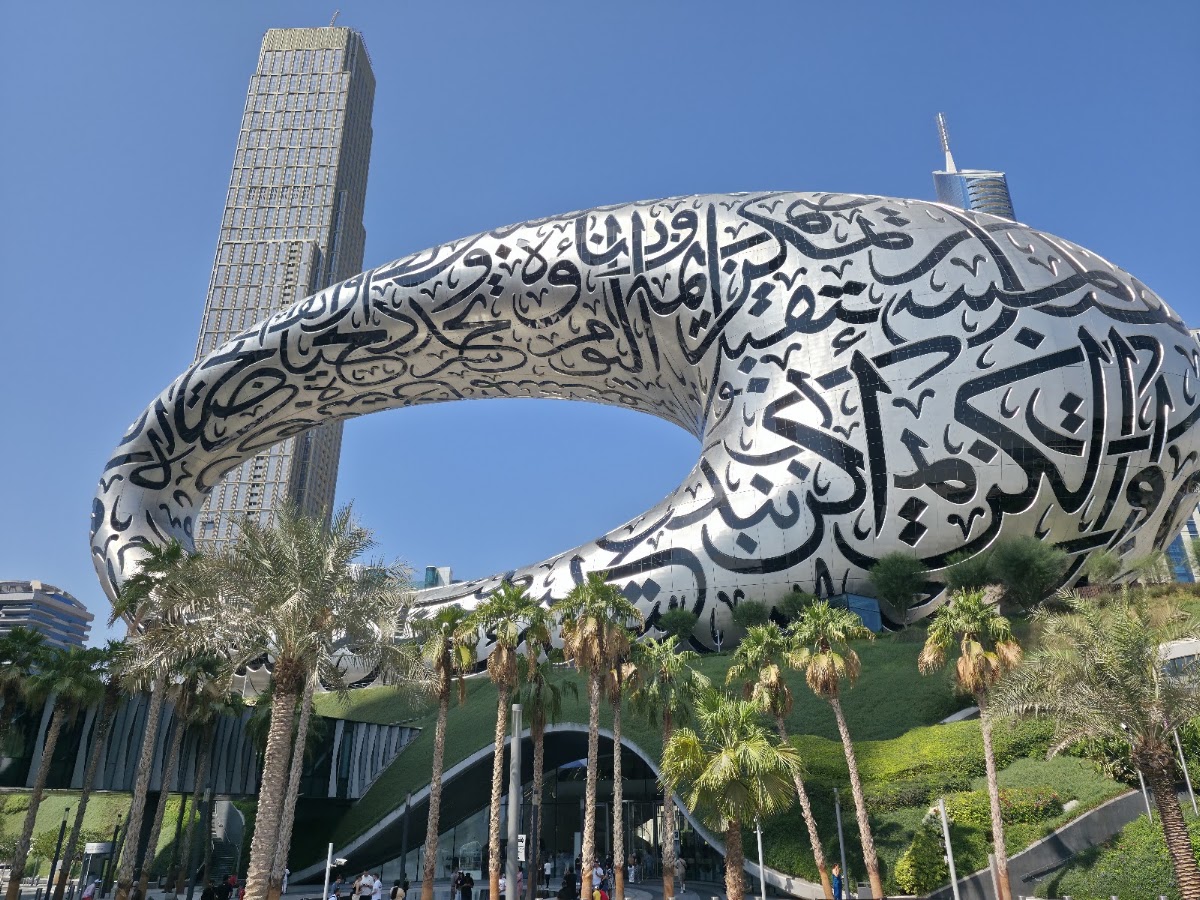
For your last day, lean into Dubai's obsession with tomorrow. The Dubai Frame in Zabeel Park is exactly what it sounds like: a giant rectangular frame you ride to the top of, with a glass-floored bridge between the two towers and a deliberate view of the old city to the north and the new to the south.
Then the Museum of the Future, that gleaming ovoid wrapped in Arabic calligraphy near the Trade Centre. Inside, the exhibits imagine space stations, rewilded ecosystems, and future wellness. It's part museum, part art installation, and it books out fast, so grab timed tickets ahead.
If the heat wins, both Mall of the Emirates (yes, the one with the indoor ski slope) and DIFC give you cool refuge. DIFC in particular has become the city's serious dining district, a fitting spot for a farewell dinner before you head to the airport.
Ready to book?
Book the rest of Dubai, United Arab Emirates
Handpicked partner searches, dates pre-filled. Pricing is identical to going direct — the partner shares a small commission with Tabi so this guide stays free.
Frequently asked
How many days do you need in Dubai?
Five is the sweet spot. It gives you a full day each for Downtown, the historic creek and souks, the desert, and the coast, plus a final day for the Frame and Museum of the Future without rushing. Three days works if you skip the beach district, but you'll feel the squeeze around the desert safari, which eats a full afternoon and evening.
What's the best time of year to visit Dubai?
November to March is ideal, with daytime highs in the mid-20s Celsius and pleasant evenings for the fountains and desert. April and October are still fine if you accept some heat. June through September regularly pushes past 40 Celsius, so if you travel then, plan outdoor stops for early morning and after sunset and lean on the malls midday.
How do you get around Dubai without renting a car?
The Metro Red Line covers Downtown, the Marina, the Mall of the Emirates, and the airport, and it's cheap with a Nol card. Ride-hailing apps and metered taxis handle the rest, including the Palm Monorail connection and the desert-safari pickup. A car only makes sense if you want to explore beyond the city, and even then most desert tours include hotel transfers.
Do you need to dress conservatively in Dubai?
Beaches, pools, and malls are relaxed, so swimwear and shorts are fine in those settings. In the souks, Al Fahidi, and any mosque, cover shoulders and knees as a courtesy; carry a light scarf or throw-on layer. Public affection is best kept low-key. It's an easygoing city for visitors, but a little modesty in the older districts goes a long way.
Is a desert safari worth it, and which type should you book?
It's the highlight of the trip for most people. Book a tour operating inside the Dubai Desert Conservation Reserve rather than the cheaper open-desert options; the driving is more controlled and the setting is protected. Look for one that bundles dune bashing, a camel ride at sunset, and a camp dinner with shows. Late-afternoon departures catch the best light.
Skip the planning
Your Dubai, United Arab Emirates trip, ready to go
Adopt the day-by-day itinerary we built to match this guide. Every stop is a real place, every booking link is validated. Free forever, no card needed.
Open the Dubai, United Arab Emirates itinerary