
Galle, Sri Lanka
What to Do in Galle in 3 Days: Ramparts, Sea Air, and a Fort That Still Lives
A slow walking log through Sri Lanka's Dutch fort town, where the Indian Ocean crashes against 400-year-old walls and the streets smell like cardamom and sea salt.
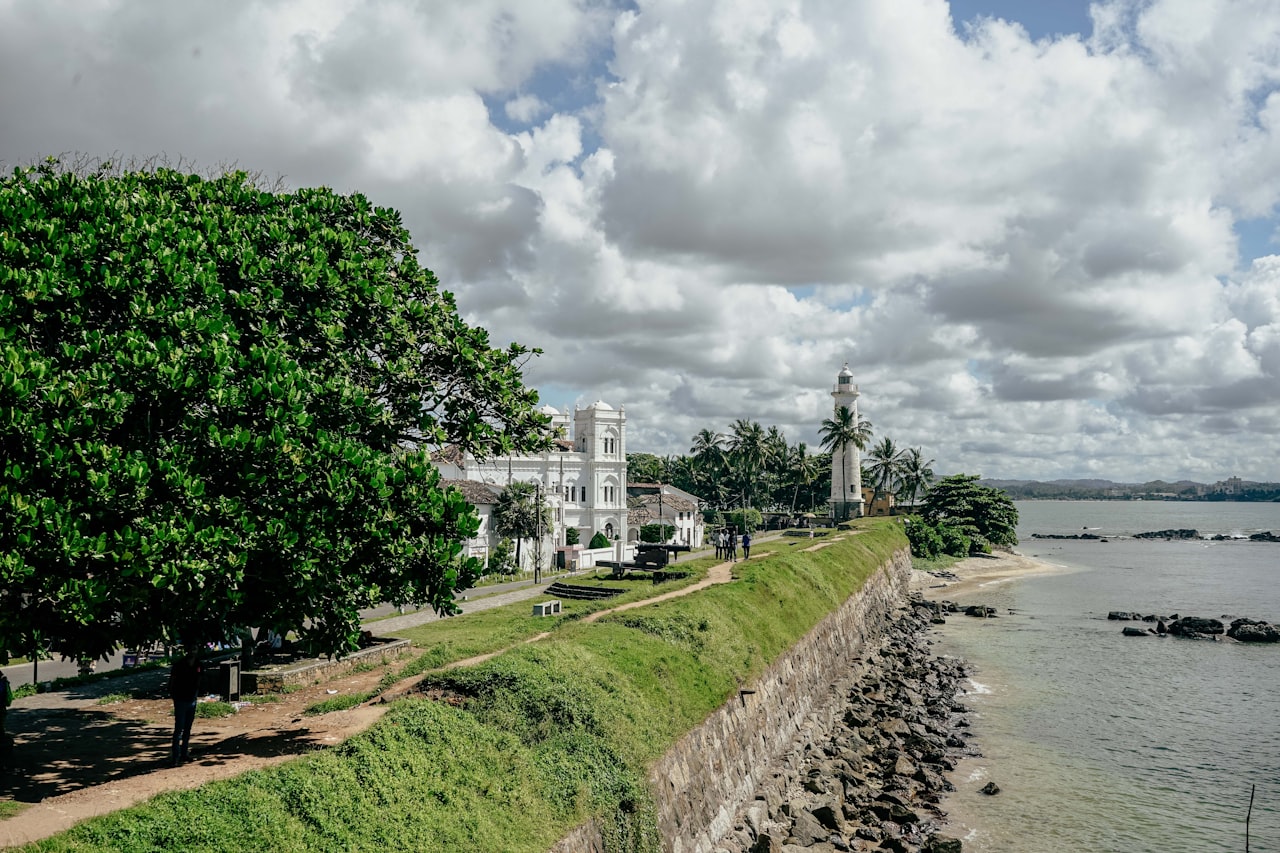
Photo by Matt Dany on Unsplash
TL;DR
Galle Fort is small enough to walk in an afternoon and rich enough to hold you for three days, so slow down and let the sea set the pace.
- Sunset from the Galle Fort ramparts, waves breaking below your feet
- Coral-stone lanes and Dutch gables softened by 300 years of salt
- A maritime museum where you can smell the old rope and timber
- Rampart-cafe coffee with the ocean filling the whole window
- Grilled tuna and cold Lion beer as the fort walls go gold
Have this trip planned in 60 seconds
We built the Galle, Sri Lanka itinerary that pairs with this guide, day-by-day with verified venues and one-tap booking links. Free to adopt, edit however you want.
The Drive Down the Coast, and the First Sight of the Walls
You come off the Southern Expressway, the palm trees close in, and then the road bends and there it is: a low grey rampart holding back the whole Indian Ocean.
Most people arrive from Colombo or the airport, and the drive is the gentle overture to everything that follows. The expressway (E01) gets you from Colombo to Galle in around two hours; the old coastal road takes longer but trades the highway for fishing villages and glimpses of the sea. Expect roughly LKR 4,000 to 8,000 (about $13 to $27) for a private car depending on where you start.
Ask the driver to drop you at the Main Gate rather than a car park outside. The moment you pass under the wall, the traffic noise falls away and you are on cobbles, walking past whitewashed shopfronts with names half-Dutch, half-Sinhala.
Drop your bag, splash water on your face, and go straight up onto the ramparts before you do anything else. That first horizon of open ocean is the reason you came.
Golden Hour on the Ramparts
The stone is still warm from the day, boys are launching themselves off the wall into the sea below, and the whole sky goes copper behind the lighthouse.
The Galle Fort ramparts are the best free show in southern Sri Lanka. You can walk almost the entire circuit, roughly a kilometer and a half, in under an hour, but do not rush it. Start near the lighthouse, follow the wall clockwise, and let the light do the work.
This is where the town comes to breathe in the evening. Local families spread out on the grass, kite sellers work the crowd, and cricket games run on any flat patch. The wind off the water is a relief after the heat of the day.
Time your loop so you are near Flag Rock as the sun drops. It is the classic sunset spot for a reason, and the cliff jumpers put on a show for tips. Bring small notes, wear shoes with grip; the stone gets slick near the edges.
Coral Streets and the Church Where Time Stopped
Cool air, worn flagstones underfoot, and gravestones in the floor with dates from the 1600s that you can read with your own eyes.
Spend a morning letting someone who knows the fort walk you through it. A good guided walk untangles the layers here: Portuguese foundations, Dutch engineering, British additions, all packed into a grid you could cross in fifteen minutes.
Start at the Dutch Reformed Church (Groote Kerk) on Church Street. The floor is paved with tombstones, the pulpit is carved dark wood, and the whole place feels suspended somewhere in the 1700s. Entry is free, though a small donation is welcome.
From there the guide will thread you past the old Dutch Hospital (now shops and cafes), down Pedlar Street and Leyn Baan Street, pointing out the gables, the fanlights, the shady verandahs built to catch the sea breeze. This is the walk you will remember: no big monuments, just a whole living town made of coral stone and salt.
Coffee With the Ocean Filling the Window
A ceiling fan turning slowly, the hiss of an espresso machine, and beyond the shutters the sea going all the way to the edge of the world.
By late morning the sun has real weight, and the fort's cafes are where you retreat. Several sit right up against the ramparts, so you get your coffee with an uninterrupted ocean view and a breeze coming straight off the water.
Order a Ceylon coffee or a fresh king coconut and take the seat closest to the wall. Expect around LKR 600 to 1,200 (about $2 to $4) for coffee and something sweet. The pace here is deliberately slow; nobody will hurry you.
This is the reset button in the middle of your day. Sit, write postcards, watch the fishing boats, and wait out the worst of the heat before you head back into the lanes.
The Maritime Museum in the Old Dutch Warehouse
You push open a heavy door into a thick-walled hall, and the air changes: cool, dim, smelling of old timber, tar, and centuries of sea.
The National Maritime Museum is tucked inside a 1600s Dutch warehouse built right into the fort wall, which is half the appeal. Even on a scorching afternoon the stone keeps the interior cool and hushed.
Inside you get the story of the ocean that shaped this coast: model ships, salvaged cargo, old fishing gear, and displays on the marine life just offshore. It is modest, not a blockbuster museum, and you can see it thoroughly in 45 minutes to an hour.
Entry runs around LKR 500 to 700 for foreign visitors (roughly $2). Opening hours can shift, so check before you go and avoid the Monday closure. Think of it less as a must-do checklist item and more as an atmospheric, air-cooled break with real history in the walls.
Grilled Tuna as the Walls Turn Gold
A plate of fish landed that morning, a wedge of lime, a cold Lion beer sweating in the heat, and the fort lighting up amber all around you.
Dinner in the fort is where the day rounds off. The seafood restaurants here work with the day's catch, so the menu is really whatever came in off the boats: tuna, seer fish, prawns, crab, sometimes cuttlefish.
Go for something simple and grilled, or a Sri Lankan crab curry if you want the local classic (be warned, it is a hands-on, gloriously messy affair). A good seafood dinner with a drink lands somewhere around LKR 2,500 to 5,000 (about $8 to $17), and the higher end buys you a rooftop or courtyard table.
Book ahead in peak season (December to March), especially for the places with rooftop views. Ask for a table where you can see the ramparts, and time it so you are seated as the last light goes.
One Last Bakery Breakfast Before the Road North
Warm coconut roti, a flaky egg hopper, sweet milk tea, and the fort quiet in the early light before the day-trippers arrive.
On your last morning, get up before the heat and walk the fort while it is still calm. The lanes are near-empty, the light is soft, and the shopkeepers are just rolling up their shutters.
Head to one of the fort bakeries for breakfast. This is where you eat like a local: kottu is more of a lunch-and-dinner thing, but mornings bring hoppers, roti, seeni sambol, and short eats to grab and go. Coffee and a proper breakfast will run you around LKR 800 to 1,500 (about $3 to $5).
Then it is back up the coast. The transfer to Colombo or the airport is the same two-hour run in reverse; leave a solid buffer for a flight, as Colombo traffic can stretch that final stretch. Sit on the ocean side of the car and watch the south coast slide past one more time.
Ready to book?
Book the rest of Galle, Sri Lanka
Handpicked partner searches, dates pre-filled. Pricing is identical to going direct — the partner shares a small commission with Tabi so this guide stays free.
Frequently asked
How many days do you need in Galle?
Two to three days is the sweet spot. One day covers the ramparts and a first wander, a second lets you do a proper guided walk, the museum, and a leisurely seafood dinner, and a third gives you an unhurried morning before moving on. The fort is small, so more time simply means slower mornings and more coffee on the wall.
When is the best time of year to visit Galle?
The south and west coast dry season runs roughly December to March, which is peak season for clear skies and calm seas. April to September brings the southwest monsoon and heavier rain. If you want the ramparts at their sunset best with lower crowds, aim for the shoulder edges of the dry season.
How do you get from Colombo or the airport to Galle?
The Southern Expressway (E01) links Colombo to Galle in about two hours by car; a private transfer typically runs LKR 4,000 to 8,000 (about $13 to $27). There is also a scenic but slower coastal train and public buses. For airport arrivals, a pre-booked car door to fort is the easiest option.
Is Galle Fort walkable, and do you need a car once you're there?
The fort is very walkable and you will not need a car inside it at all. The entire rampart circuit is under two kilometers, and the streets, church, museum, cafes, and restaurants are all a few minutes apart on foot. Keep the car only for arriving and leaving, or for day trips out to nearby beaches.
What food should you try in Galle?
Lean into seafood, since the catch comes in daily: grilled tuna and seer fish, prawns, and a hands-on Sri Lankan crab curry. For breakfast, seek out hoppers, coconut roti, and short eats from a fort bakery. Wash it down with king coconut water or Ceylon tea, and a cold Lion beer at dinner.
Skip the planning
Your Galle, Sri Lanka trip, ready to go
Adopt the day-by-day itinerary we built to match this guide. Every stop is a real place, every booking link is validated. Free forever, no card needed.
Open the Galle, Sri Lanka itinerary