
Halong Bay, Vietnam
What to Do in Halong Bay: A 3-Day Cruise Log Through the Karst
A picture-first walk through the embarkation chaos, the kayak caves, and the sunrise you'll want to bottle.
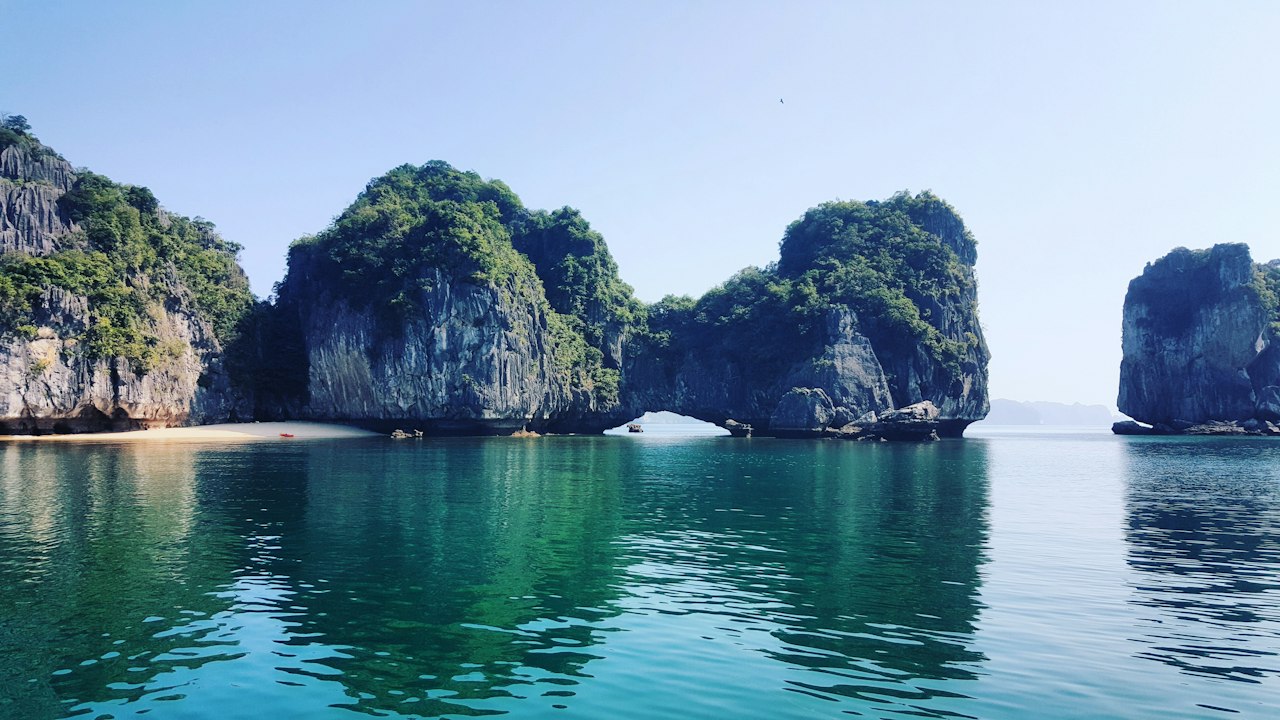
Photo by VENUS MAJOR on Unsplash
TL;DR
You board a wooden junk in a tangle of other junks, then spend three days drifting between limestone towers that look painted onto the water.
- Sunrise on the top deck while mist peels off the karst towers
- Kayaking through the low stone arch at Luon Cave lagoon
- Climbing into Sung Sot Cave's cathedral-sized second chamber
- Buying still-flapping fish at Cua Van floating village
- Rolling your own spring rolls at the onboard cooking demo
Have this trip planned in 60 seconds
We built the Halong Bay, Vietnam itinerary that pairs with this guide, day-by-day with verified venues and one-tap booking links. Free to adopt, edit however you want.
The Shuttle Out of Hanoi (Where the Towers Start)
Flat green rice paddies for two hours, then suddenly a wall of grey limestone fins rising straight out of the haze.
The ride from Hanoi is the overture. You leave the Old Quarter's scooter roar behind and settle into a minivan for roughly 2.5 to 3 hours on the expressway, past brick kilns and water buffalo and endless paddies.
Most cruise operators fold this transfer into the package, with a rest stop around the halfway mark (toilets, iced coffee, a pearl showroom you can ignore). Keep your eyes out the right window on the final stretch; the first karst peaks appear long before you reach the water, and that's when it stops feeling like a drive and starts feeling like an arrival.
If you'd rather control your own pickup time or you're coming from a hotel outside the usual zones, booking a private transfer keeps the morning calm.
Embarkation: Finding Your Junk in the Floating Traffic Jam
Dozens of wooden boats nose-to-tail at the pier, crews calling out cabin numbers, the smell of diesel and sea salt all at once.
The cruise port is organized chaos, and honestly it's half the fun. You'll check in at a terminal that feels a bit like an airport gate, then walk or tender out to your boat among a crowd of near-identical junks with dark wood hulls and white upper decks.
Once you're aboard and the lines drop, the noise falls away fast. Within twenty minutes of pulling out, the port shrinks behind you and the first solitary karsts slide past the railing. Grab a welcome drink, drop your bag in the cabin, and get up to the sun deck quickly; the opening cruise through the main channel is the postcard everyone comes for.
The /curated/halong-bay-3d-classic route above sets the full rhythm of this trip if you want the hour-by-hour.
Kayaking the Low Arch at Luon Cave
A stone doorway barely tall enough for your paddle, and then a hidden lagoon ringed by vertical cliffs and dangling vines.
This is the bay at its most intimate. Luon Cave isn't a dark cavern so much as a natural tunnel through the base of a karst; you duck your head, glide through the low arch, and pop out into a near-enclosed emerald pool.
Inside, the cliffs go straight up and the water goes dead calm. Look for macaques picking along the ledges and egrets stalking the shallows. Most boats hand out two-person kayaks here, and the paddling is gentle, so you don't need to be sporty.
Time it for late afternoon if you can; the light drops low across the water and the whole lagoon glows. Dry bag your phone, the entry is a real squeeze and splashes happen.
Inside Sung Sot: The Cave That Earns the Name 'Surprise'
You climb a shaded stone staircase expecting a modest cavern, then the ceiling vaults open into a chamber the size of a train station.
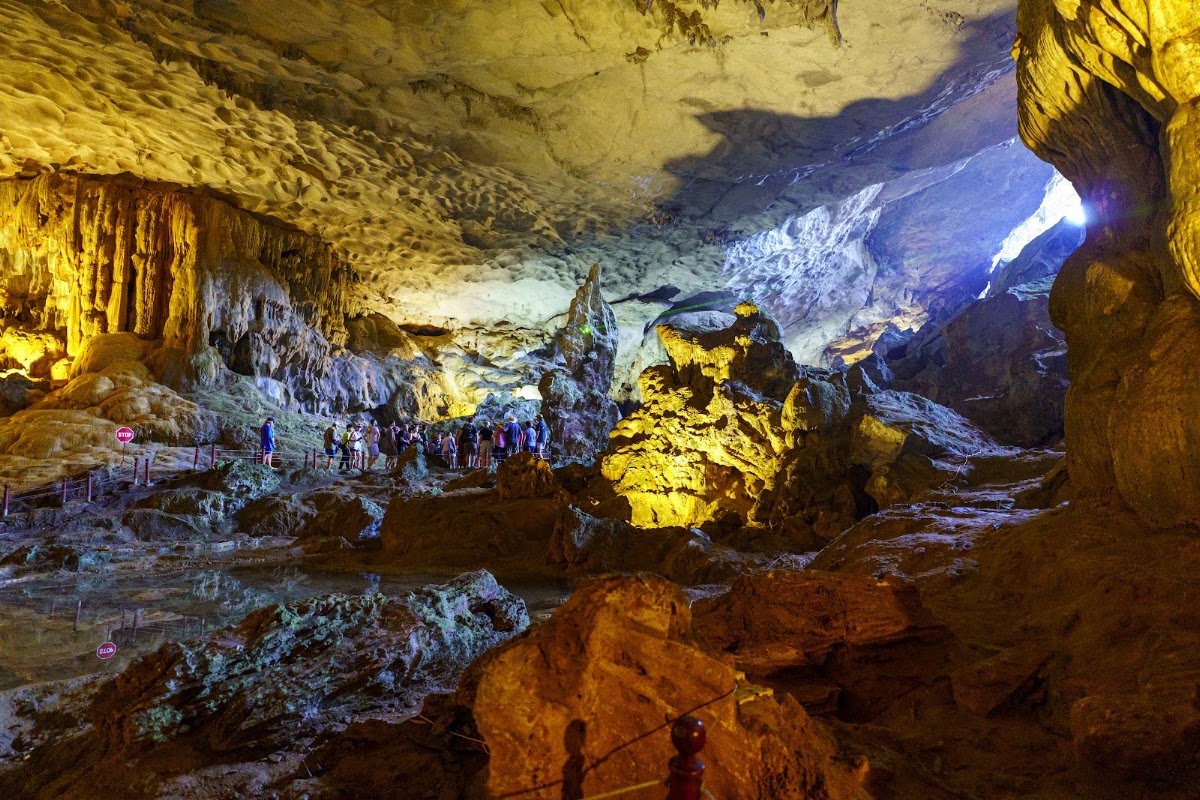
Sung Sot translates roughly to Surprise Cave, and the name holds up. From the boat you walk up a short jungle path, through a tight first chamber, and then the space explodes into an enormous second hall lit by colored floodlights, with stalactites hanging like organ pipes.
It gets busy, because nearly every cruise stops here, so aim to be in the first group off your boat in the morning. The paved loop takes about 40 minutes and ends at a viewpoint over the anchored junks below.
Entry is covered by the cruise, but keep your ticket handy. Wear shoes with grip; the limestone steps stay damp year-round.
Rowing Into Cua Van, a Village That Floats
Painted wooden houses bobbing on pontoons, a dog asleep on a deck, kids paddling to school in round bamboo boats.
Cua Van is one of the last inhabited floating fishing villages in the bay, a cluster of homes, a school, and a tiny cultural center all resting on the water with no land in sight.
You'll usually transfer to a small rowing sampan steered by a local, and glide quietly between the houses. It's a window into a way of life that's slowly shrinking as families relocate ashore, so watch more than you shop. If you buy fresh seafood or snacks, a little goes to the household directly.
Some itineraries visit Vung Vieng instead, which is quieter and more about pearl farming. Either way, go in with curiosity rather than a camera-first mindset; people actually live here.
The Cooking Demo (Where Dinner Becomes a Lesson)
A chef lays out rice paper, shredded carrot, and prawns on the deck as the sky goes pink behind the karsts.
Before dinner on the second evening, most boats run a hands-on cooking demonstration, usually fresh Vietnamese spring rolls. You'll fumble the first wrap, nail the third, and eat all of them.
Then comes the real spread. Seafood is the star out here: steamed clams, grilled fish, garlic prawns, served family-style as the boat sits at anchor in a quiet cove. Lunches on board lean the same way, heavy on whatever came off the morning boats.
If you have dietary needs, flag them at check-in; galleys are small and advance notice genuinely helps. Pair the meal with a sunset beer on the top deck and you've found the trip's easy highlight.
Sunrise and the Slow Ride Back
Mist sitting on the water at 6am, the towers half-dissolved, a cup of coffee and almost total silence before the fleet wakes up.
Set an alarm for the last morning. Sunrise over the anchored junks, with fog threading between the karsts, is the image you'll keep. Many boats offer an optional dawn tai chi session on the deck, but even just standing at the rail with breakfast is enough.
After one last meal aboard, the junk cruises back toward port and you transfer to the shuttle for the return run to Hanoi, roughly 2.5 to 3 hours. Plan a buffer if you have a same-day flight; traffic into the city can thicken in the afternoon.
Back on the expressway, the towers fade behind the paddies again, and the whole thing starts to feel like something you dreamed on the water.
Ready to book?
Book the rest of Halong Bay, Vietnam
Handpicked partner searches, dates pre-filled. Pricing is identical to going direct — the partner shares a small commission with Tabi so this guide stays free.
Frequently asked
How many nights should I spend on a Halong Bay cruise?
Two nights (a three-day cruise) is the sweet spot. One-night cruises feel rushed and skip the quieter corners, while two nights give you a proper sunrise, more kayaking, and time at a floating village. Day trips from Hanoi exist but spend most of the day in transit for only a couple of hours on the water.
What is the best time of year to visit Halong Bay?
October through December brings the clearest skies and calmest seas, the most reliable window. March to May is pleasant but hazier. June to August is hot and green but carries typhoon risk, and cruises can be cancelled on short notice. Winter (January to February) can be cold and foggy, which softens the views.
How do I get from Hanoi to Halong Bay?
By road, roughly 2.5 to 3 hours on the expressway. Most cruise packages include a shared shuttle from central Hanoi to the cruise port and back, which is the simplest option. You can also book a private transfer for flexible pickup times, useful if you're staying outside the Old Quarter or have a tight flight.
Is the onboard food good if I have dietary restrictions?
Generally yes, but galleys are small, so give advance notice at booking or check-in. Seafood dominates the menus, with vegetarian options usually available on request. Vegan, gluten-free, and allergy needs are easier to accommodate when flagged early rather than at the table.
Which caves and stops are standard on a Halong Bay cruise?
Most two-night cruises include Sung Sot (Surprise) Cave, kayaking around Luon Cave, and a visit to a floating village such as Cua Van or Vung Vieng, plus onboard meals and often a cooking demonstration. Exact stops vary by operator and by daily conditions, so confirm the route when you book.
Skip the planning
Your Halong Bay, Vietnam trip, ready to go
Adopt the day-by-day itinerary we built to match this guide. Every stop is a real place, every booking link is validated. Free forever, no card needed.
Open the Halong Bay, Vietnam itinerary