
Interlaken, Switzerland
What to Do in Interlaken in 4 Days: Alps, Lakes, and the Walk You'll Remember
A journey log from the promenade to the Top of Europe and back, one glacier, one turquoise lake, and one tandem leap at a time.
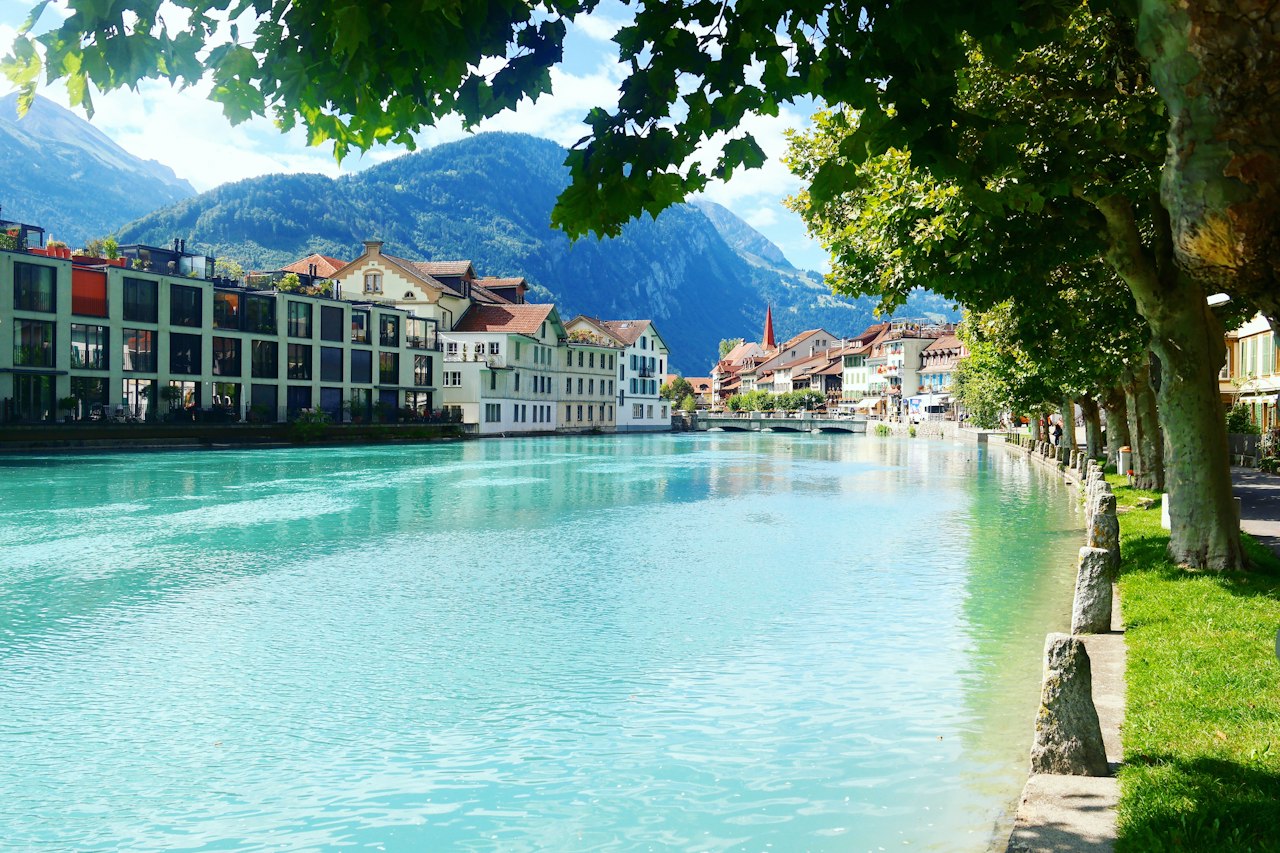
Photo by Tucker Monticelli on Unsplash
TL;DR
Four days wedged between two impossibly blue lakes, climbing from café chairs on the Höheweg all the way to a glacier terrace at 3,454 meters.
- Höheweg Promenade with the Jungfrau framed dead center
- Jungfraujoch glacier terrace, where snow falls in July
- The Ice Palace carved into a moving glacier below Sphinx
- Iseltwald's tiny stone jetty on turquoise Lake Brienz
- Running off a grassy ridge on a tandem paraglider
Have this trip planned in 60 seconds
We built the Interlaken, Switzerland itinerary that pairs with this guide, day-by-day with verified venues and one-tap booking links. Free to adopt, edit however you want.
The Ride In, When the Valley Suddenly Opens
You come out of a tunnel and the whole green valley just drops open in front of you, two lakes glinting at either end like someone spilled sapphires.
Most people land at Zurich Airport and the journey to Interlaken takes about two hours by train through the Swiss Mittelland. The easiest move is a private transfer straight to your hotel so you can keep your face glued to the window instead of wrestling luggage at changeovers.
Watch for the moment the landscape shifts from flat farmland to steep walls of pine. That is Interlaken announcing itself. The town sits on a narrow strip of land (the name literally means "between lakes") with Lake Thun on one side and Lake Brienz on the other.
Drop your bags, grab a coffee, and let the altitude and the air do their thing. Tomorrow goes up. Way up.
The Promenade Where the Jungfrau Shows Off
Paragliders spiral down onto the big green lawn while, behind them, a snow peak sits perfectly framed like the whole street was built to point at it.
The Höheweg is the main promenade and it is the first place you should walk. On one side sit grand belle-epoque hotels; on the other, the wide Höhematte meadow opens up with an uninterrupted view of the Jungfrau massif straight down the gap.
Time your stroll for late afternoon. The light goes gold, the paragliders keep landing on the grass, and horse-drawn carriages clip past. Pastry at a café chair here costs around 7-9 CHF (roughly 8-10 USD), which buys you a front-row seat to the best people-watching in town.
This is your orientation walk. Get your bearings, clock which restaurant you want to come back to, and let the mountain sink in.
Up to the Top of Europe
The train grinds up through a tunnel bored into solid rock, and when the doors open the air is thin, the light is blinding, and there is snow underfoot in the middle of summer.
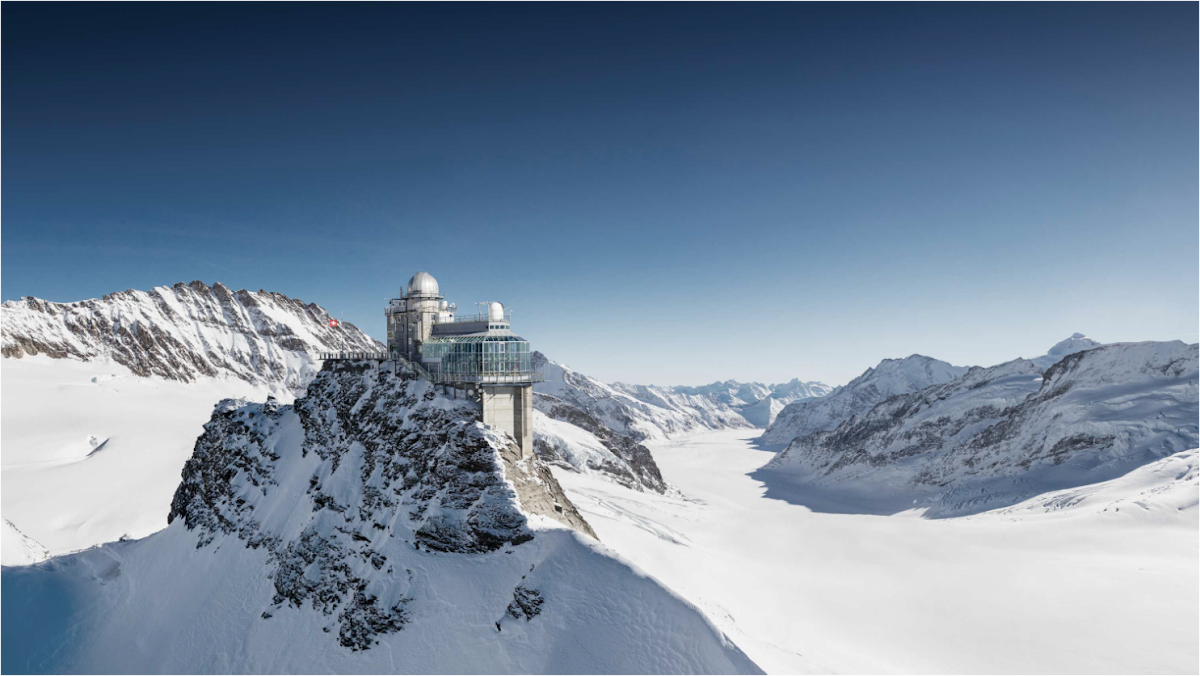
Jungfraujoch sits at 3,454 meters and the railway station there is the highest in Europe. You ride the cog train up from the valley, changing at Kleine Scheidegg, climbing through a tunnel carved inside the Eiger and Mönch. Book the journey ahead; it is the centerpiece of the whole trip and tickets sell out in peak season (expect roughly 210-230 CHF, about 240-260 USD, for the full return).
Up top the Aletsch Glacier stretches out below you, the longest glacier in the Alps, a frozen river of white that curves away for 20 kilometers. The cold hits hard even in July, so bring a proper jacket and sunglasses.
For the full picture of what the day looks like start to finish, the curated 4-day itinerary maps out the train timings so you are not scrambling.
Inside the Glacier, Then Out onto the Sphinx
You walk through a tunnel carved into living ice, blue-white walls glowing, your breath fogging, ice sculptures of eagles and bears watching you pass.
The Ice Palace is cut directly into the glacier beneath the station. The floor is literally frozen, so step carefully. The walls shift and move over the years because the glacier is alive and flowing, which makes the whole thing feel less like a museum and more like being inside something breathing.
Then ride the fast lift up to the Sphinx Observatory terrace at 3,571 meters. On a clear day you can see all the way into Germany and France. Grab lunch at one of the mountain restaurants up here (a hot bowl of soup or rösti runs around 20-28 CHF, roughly 23-32 USD) because the warmth is very welcome at this altitude.
Stand on the Sphinx deck, let the wind go quiet for a second, and just look. This is the highest you will stand on the whole trip.
The Turquoise Lake and the Village on the K-Drama Jetty
The water of Lake Brienz is a turquoise so vivid it looks fake, and the little stone pier at Iseltwald juts right out into it.
Day three slows down to lake pace. Hop a cruise across Lake Brienz, the quieter and more jewel-toned of the two lakes, fed by glacier meltwater that gives it that unreal color. The boat glides past waterfalls and tiny villages tucked into the steep shore.
Get off at Iseltwald, a fishing village of stone houses and a famous little jetty made globally popular by a Korean drama. Have lunch at a lakefront restaurant here; grilled fish fresh from the lake with a glass of white runs around 28-38 CHF (roughly 32-43 USD) and you eat it with your feet almost in the water.
Back in Interlaken that evening, book a table at a traditional Swiss spot and do it properly: a bubbling pot of fondue or a plate of älplermagronen, the Alpine mac and cheese with apple sauce on the side.
The Part Where You Run Off a Mountain
Your pilot says "keep running" and then the ground simply isn't there anymore, and you are floating over the whole valley with both lakes spread out beneath your boots.
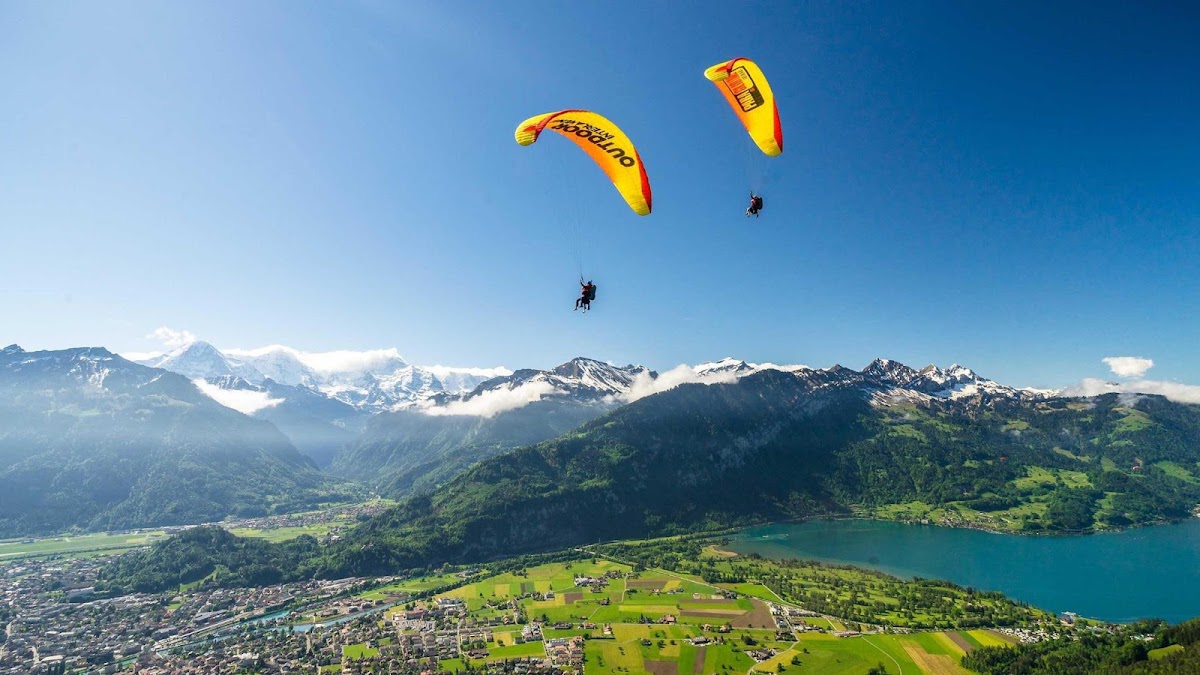
Interlaken is one of the great paragliding spots on the planet, and the tandem flights here need zero experience. You take a short van ride up to a grassy launch slope, get strapped to a certified pilot, run a few steps downhill, and then you are airborne.
The flight lasts around 10-15 minutes and costs roughly 180-220 CHF (about 205-250 USD). From up there you see the two lakes, the town threading between them, and the big peaks catching sun on the ridgeline. It is calm, not scary, more like sitting in a very good chair that happens to be a thousand feet up.
If flying is not your thing, the same valley views come free from the ground, but honestly, do the flight. This is the one.
One Last Climb for the Postcard View
The old red funicular hauls you up through the forest at a tilt that feels almost silly, and at the top the whole town shrinks to a model railway between two blue mirrors.
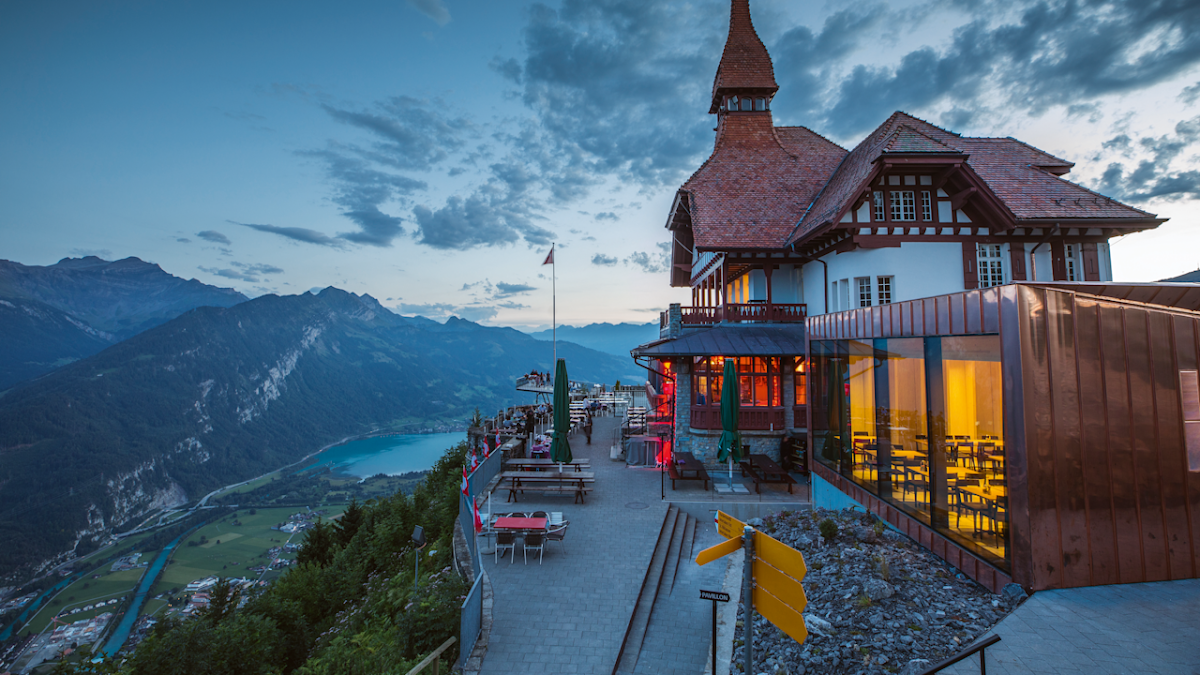
Save Harder Kulm for your final morning. The funicular climbs steeply from the edge of town up to a viewing platform at 1,322 meters, the "Top of Interlaken," with a railway-restaurant perched at the summit (the round-trip ticket runs about 38 CHF, roughly 43 USD).
The platform juts out over the drop and gives you the single best orientation shot of the trip: Interlaken laid out on its narrow strip, Lake Thun to the left, Lake Brienz to the right, and the Jungfrau trio behind. Grab a coffee at the summit and take it slow.
Then it is back down, bags collected, and a transfer to Zurich Airport. You leave with cold-glacier air still in your lungs and a camera roll that does not quite do it justice.
Ready to book?
Book the rest of Interlaken, Switzerland
Handpicked partner searches, dates pre-filled. Pricing is identical to going direct — the partner shares a small commission with Tabi so this guide stays free.
Frequently asked
How many days do you need in Interlaken?
Four days is ideal. It gives you a settling-in day, a full day up at Jungfraujoch, a lake-and-paragliding day, and a final morning at Harder Kulm before flying out. Three days works if you cut the final summit; two days only really covers Jungfraujoch and a quick promenade walk.
Is the trip up to Jungfraujoch worth the cost?
Yes, for most first-time visitors. The full return ticket runs roughly 210-230 CHF, but it takes you to the highest railway station in Europe with glacier views, the Ice Palace, and the Sphinx terrace all in one day. Pick a clear day using the Jungfrau webcams so you actually get the view you paid for.
When is the best time to visit Interlaken?
June through September gives you green valleys, open lake cruises, and reliable paragliding, though it is the busiest and priciest stretch. December through March is for snow and skiing nearby. May and October are quieter shoulder months with lower prices, but some high-altitude activities and restaurants run reduced hours.
Do you need to book paragliding in advance?
In summer, yes. Tandem flights over Interlaken are hugely popular and the good weather windows fill up fast. Booking a day or two ahead is usually fine, but on peak weekends book earlier. Flights need no experience and are weather-dependent, so operators will reschedule you if conditions are poor.
How do you get from Zurich Airport to Interlaken?
The train takes about two hours with one easy change, usually at Bern, and runs frequently all day. If you want zero hassle with luggage, a private transfer takes you door to door in a similar time. Both are straightforward; the train is cheaper, the transfer is more comfortable after a long flight.
Skip the planning
Your Interlaken, Switzerland trip, ready to go
Adopt the day-by-day itinerary we built to match this guide. Every stop is a real place, every booking link is validated. Free forever, no card needed.
Open the Interlaken, Switzerland itinerary