
Jeju, South Korea
What to Do in Jeju in 4 Days: Sunrise Peaks, Black Pork, and the Sea Women
A coastal walking log around Korea's volcanic island, from the dragon-shaped rock in Jeju City to the crater you climb at dawn.
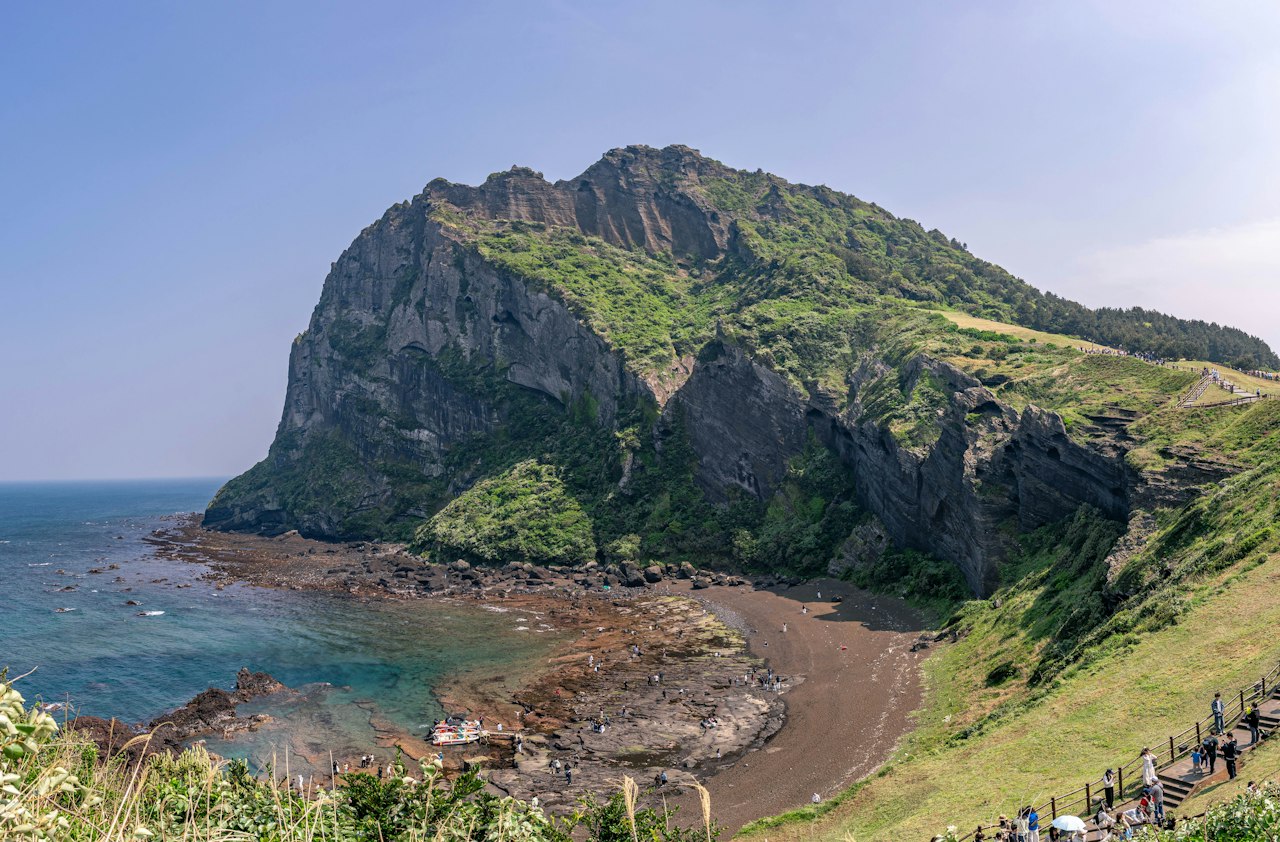
Photo by Jake Mullins on Unsplash
TL;DR
Four days tracing Jeju's rim, where volcanic rock meets the sea and grandmothers still dive for abalone without tanks.
- Dragon Head Rock jutting black and jagged over Jeju City's tide
- Black pork sizzling on a grill inside bustling Dongmun Market
- Sunrise Peak's green crater rim, a 20-minute climb before breakfast
- Haenyeo sea women free-diving the cold water off Seongsan
- Cheonjiyeon Waterfall thundering into a pool ringed by subtropical ferns
Have this trip planned in 60 seconds
We built the Jeju, South Korea itinerary that pairs with this guide, day-by-day with verified venues and one-tap booking links. Free to adopt, edit however you want.
Touchdown Over a Sea the Color of Jade
The plane banks low and suddenly it is all there: a ring of dark coastline, fields of black volcanic stone, and water so green it looks fake.
You land right in the middle of everything. Jeju International Airport sits a 15-minute cab ride from the old harbor, so there is no long slog into town. Grab a taxi outside Gate 5 (around 7,000 to 9,000 won, roughly 6 to 7 USD) and you are checked into the city before you have shaken off the flight.
Jeju City is low and salt-washed, more fishing town than metropolis. Drop your bag at a boutique place near the waterfront, splash some cold water on your face, and head straight back out. The light here is best in the late afternoon, when the black rock warms up and the sea goes from jade to pewter.
Dragon Head Rock, Where the Lava Froze Mid-Roar
Black basalt claws up out of the surf in the exact shape of a dragon lifting its head, spray breaking white against its jaw.
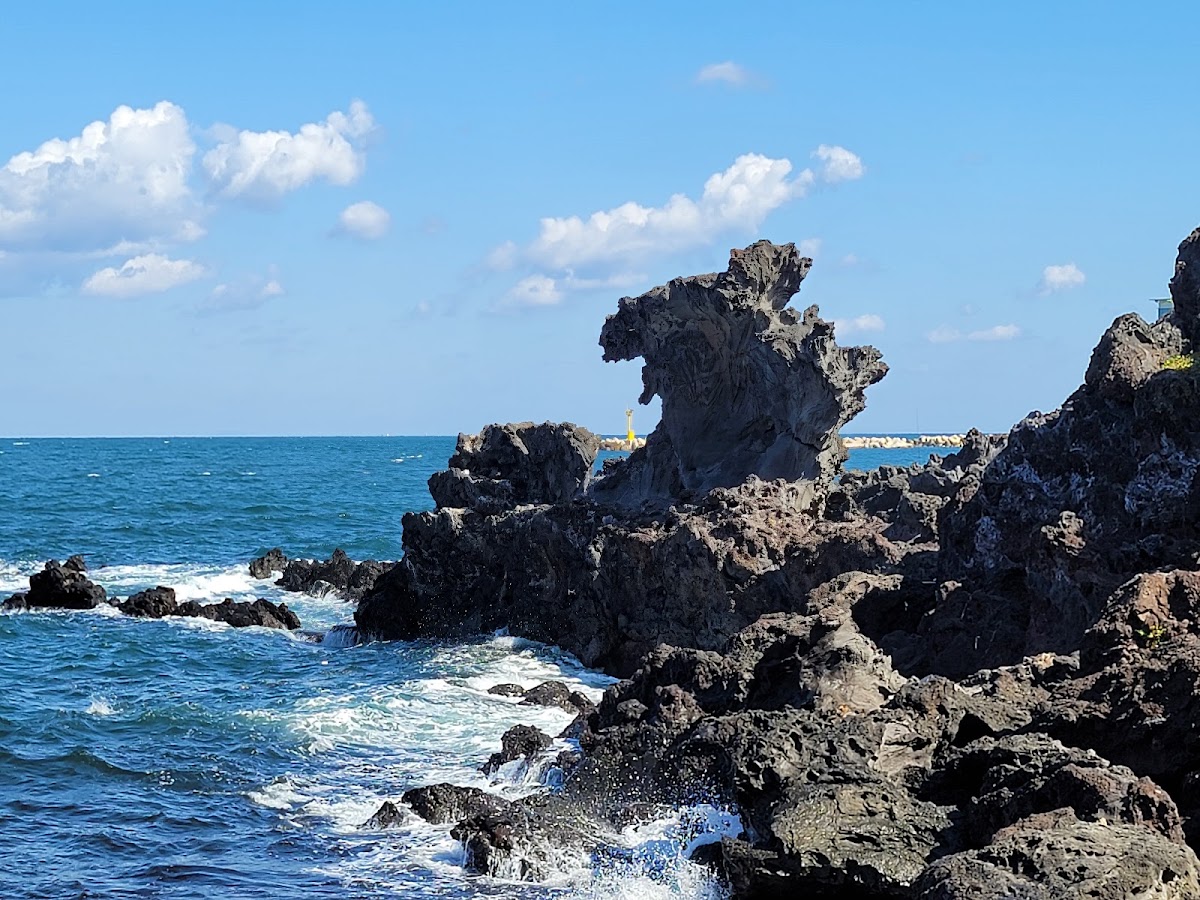
Yongduam Rock is a ten-minute walk west along the shore from central Jeju City, and it is the island in miniature: an ancient lava flow that cooled into something that looks carved. Locals will tell you it is a dragon that tried to fly to heaven and got turned to stone for stealing. Stand on the low cliff path at the right angle and you will absolutely see it.
Come near sunset. The crowds thin, the fishing boats start heading out, and the women selling fresh sea urchin and conch from plastic tubs along the path pack up for the day. It is free, it takes twenty minutes, and it is the perfect way to shake hands with Jeju.
Black Pork and Market Steam at Dongmun
The smell hits first: pork fat dripping onto hot coals, garlic hitting the grill, soybean paste bubbling in a little iron pot.
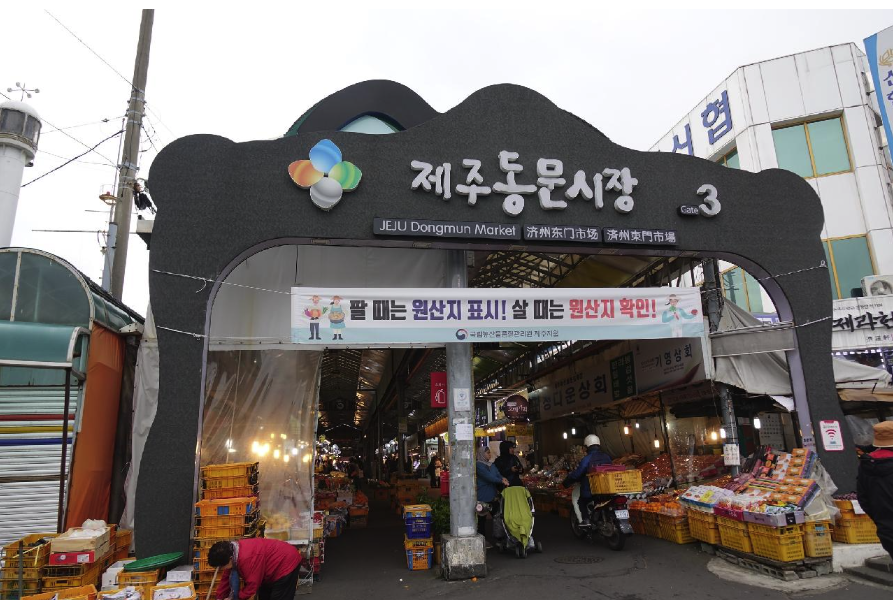
Jeju's black pork (heukdwaeji) is the real reason people here grin when you mention dinner. The pigs are a native island breed, and the meat is fattier and more intense than anything you get on the mainland. Dongmun Market, Jeju City's covered night market, is where to try it among locals rather than tourists.
Find a grill spot, order the thick-cut samgyeopsal, and let the staff handle the coals. You wrap each bite in lettuce with raw garlic, green chili, and a smear of salted shrimp. Expect to pay around 15,000 to 20,000 won per person (about 12 to 16 USD) for a very full table. Afterward, wander the market stalls for hallabong tangerine juice and fresh hotteok fried on the spot.
Climbing Sunrise Peak Before the Island Wakes
A perfect green crater, 180 meters of grass-covered tuff cone rising straight out of the sea, and a stone path zigzagging up the side.
Seongsan Ilchulbong is the picture everyone has seen of Jeju, and it earns it. This is a volcanic crater that erupted out of shallow water about 5,000 years ago, leaving a bowl of green ringed by jagged cliffs on the eastern tip of the island. The name means Sunrise Peak, and if you can drag yourself up before dawn, the view of the sun cracking over the water is the one you will keep.
The climb to the rim takes about 20 to 25 minutes on well-built stairs. It is a real cardio push near the top but nothing technical, and the reward is the full crater opening up in front of you. Entry is 5,000 won (about 4 USD). Go early not just for the light but to beat the midday tour buses.
The Sea Women Who Dive on a Single Breath
Old photographs of women in black wetsuits, orange floats bobbing behind them, surfacing from the cold with a sharp whistling exhale.
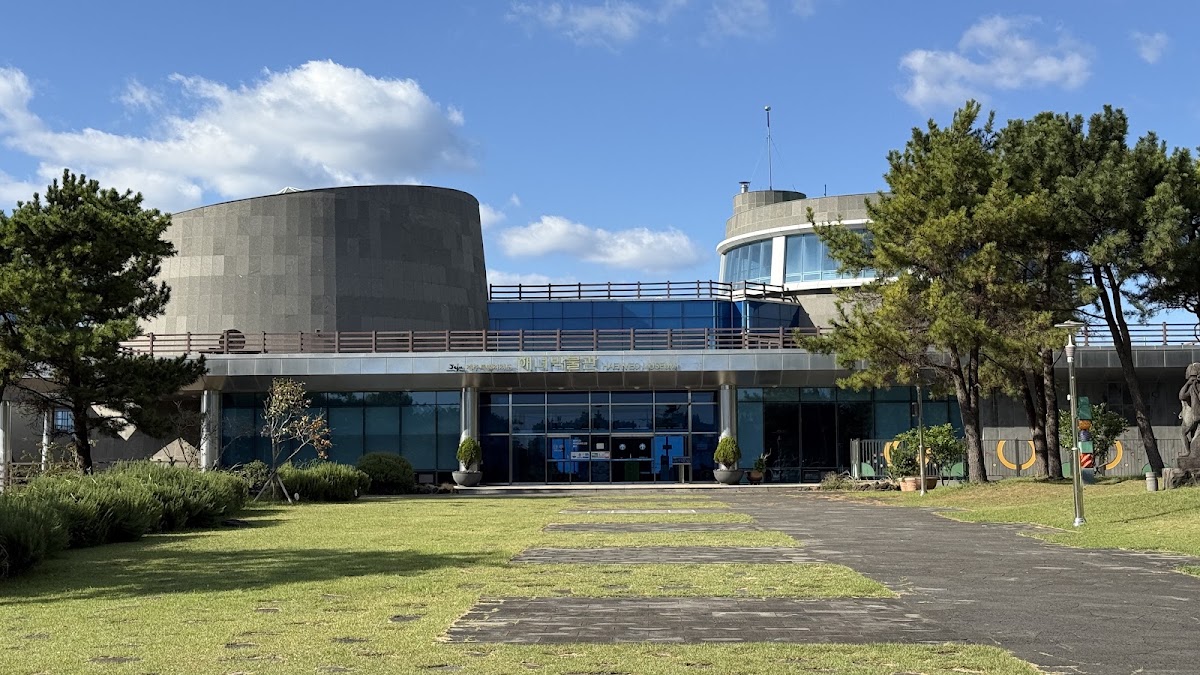
Just up the coast from Sunrise Peak, the Haenyeo Museum tells one of Jeju's most extraordinary stories. The haenyeo are the island's sea women, free-divers who go down 10 meters and more without tanks to harvest abalone, conch, and sea urchin. Many are in their sixties, seventies, even eighties. UNESCO lists the practice as living cultural heritage, and the numbers are dwindling, which makes seeing it matter.
The museum is small and well done, with real diving gear, the breathing technique explained, and footage of the women at work. For lunch, head down to Seongsan port where some of that catch comes straight in. A plate of raw abalone or grilled fish by the water runs around 20,000 won (about 16 USD). If you are lucky you will spot the orange floats of divers still working the shallows.
Cheonjiyeon Falls, a Curtain of Water in the Subtropics
A short forested walk, then the roar of water dropping 22 meters into a dark green pool fringed with ferns and twisted old trees.
On the southern coast near Seogwipo, Cheonjiyeon Waterfall feels like stepping into a different climate zone. The name translates to something like "sky connected with land," and the walk in follows a gentle stone path through dense subtropical growth, including a rare species of eel and strange native trees that grow nowhere else.
The path to the falls takes about ten minutes and is mostly flat, so it is an easy stop after the morning's climbing. Entry is 2,000 won (under 2 USD). Come in the afternoon when the light slants through the gorge and lights up the spray. Seogwipo itself makes a good base for the middle of the trip, with mid-range hotels a short drive from here.
Thatched Roofs and Stone Grandfathers at the Folk Village
Low houses roofed in rope-tied straw, black stone walls curving between fields, and the squat carved figures that guard every gate.
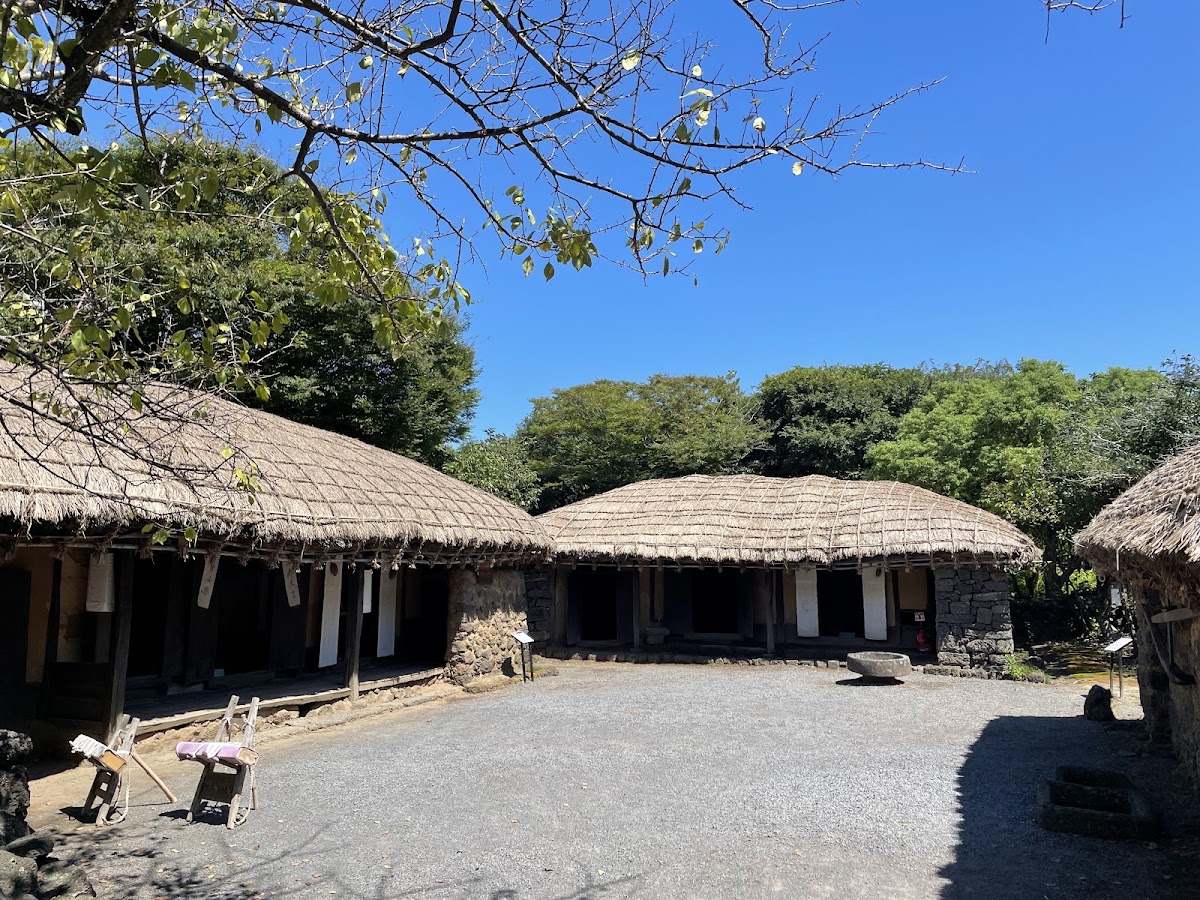
The Jeju Folk Village Museum near Seogwipo is a real preserved settlement, not a theme park. Dozens of original houses were relocated and reassembled here, showing exactly how islanders lived: the thick lava-stone walls that break the wind, the shaman shrines, the fish-drying racks.
Keep an eye out for the dol hareubang, the "stone grandfather" statues carved from porous basalt with bulging eyes and little mushroom hats. They are the symbol of Jeju, originally placed outside village gates for protection. Give yourself an hour or two to wander. It is a quiet, grounding stop before the island's biggest mountain.
Walking Into Hallasan, the Volcano at the Center
Pine forest giving way to open sub-alpine slopes, the air cooling with every switchback, and the dormant crater somewhere up in the cloud.
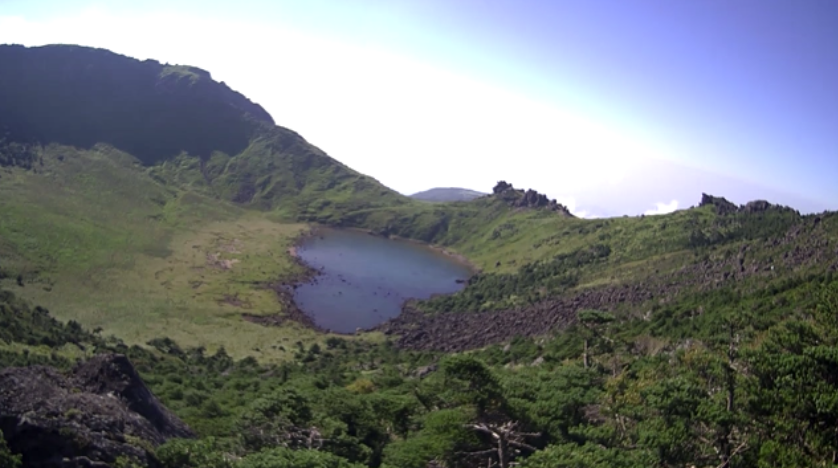
Hallasan is South Korea's highest mountain, a shield volcano whose crater lake sits at 1,947 meters, and the whole island is basically its skirt. The Seongpanak Trail from the eastern entrance is the longer, gentler route to the summit (about 9.6 km each way, 8 to 9 hours round trip), winding through deep forest before breaking out onto the high slopes. You do not have to go all the way up. Even a couple of hours in rewards you with the quiet and the scale of the place.
If you are summiting, you must reserve a free entry permit in advance through the official park system and start early, as the trail gates close in the afternoon. Check conditions at the Hallasan National Park site before you go. For a shorter day, lunch at one of the mountain-side restaurants near the entrance (hearty bracken soup and barley rice) before a roughly one-hour taxi back to Jeju City for your last night.
Ready to book?
Book the rest of Jeju, South Korea
Handpicked partner searches, dates pre-filled. Pricing is identical to going direct — the partner shares a small commission with Tabi so this guide stays free.
Frequently asked
How many days do you need for Jeju?
Four days is the sweet spot to loop the island without rushing, as laid out in the coastal itinerary on this page. It gives you a day around Jeju City, a day for Sunrise Peak and the sea women in the east, a day for Seogwipo's waterfalls and folk history, and a final morning for Hallasan or a relaxed departure. Three days works if you skip the full mountain hike.
Do I need to book a permit to climb Hallasan?
Yes. To reach the summit via the Seongpanak or Gwaneumsa trails you must reserve a free online entry permit in advance through the official Hallasan National Park reservation system, as daily numbers are capped. Shorter walks from the trailheads do not require the summit permit. Always check trail status and closing times before you set out, since gates shut in the afternoon.
What is the best time of year to visit Jeju?
Spring (April to June) brings mild weather and canola flowers across the fields, and autumn (September to November) gives you crisp air and clear views of Hallasan. Summer is warm, green, and busy with Korean holidaymakers, plus a rainy spell in the monsoon. Winter is quiet and cold at altitude but the coast stays mild, and the camellias bloom.
Should I rent a car or use taxis in Jeju?
A rental car is the most flexible way to reach the island's coastal corners, but you need an International Driving Permit alongside your home license, and local traffic moves quickly on narrow roads. If you would rather not drive, taxis are affordable for short hops, and private transfers or a hired driver work well for linking the bigger sights across a day.
What food is Jeju famous for?
Black pork (heukdwaeji) from the island's native pig breed is the signature dish, best grilled at a market like Dongmun in Jeju City. Jeju is also known for ultra-sweet hallabong tangerines, fresh abalone and conch harvested by the haenyeo sea women, and hearty mountain fare like bracken soup near the Hallasan trailheads.
Skip the planning
Your Jeju, South Korea trip, ready to go
Adopt the day-by-day itinerary we built to match this guide. Every stop is a real place, every booking link is validated. Free forever, no card needed.
Open the Jeju, South Korea itinerary