
Kanazawa, Japan
What to Do in Kanazawa in 3 Days: Gardens, Gold Leaf, and Geisha Streets
A slow walk through Japan's old castle town, where samurai lanes, a 300-year-old garden, and sushi off the morning boats all sit within a 20-minute stroll.
TL;DR
Kanazawa is the Kyoto you get to have mostly to yourself, a compact castle town where gold leaf, teahouses, and one of Japan's three great gardens line up along one easy walk.
- Kenroku-en at opening hour, before the tour buses find the plum trees
- Higashi Chaya teahouse lanes glowing under lattice windows at dusk
- Omicho Market sushi, cut from fish landed that morning
- Pressing your own gold leaf square at the Yasue museum workshop
- Nagamachi's earthen samurai walls, still channeling a 400-year-old canal
Have this trip planned in 60 seconds
We built the Kanazawa, Japan itinerary that pairs with this guide, day-by-day with verified venues and one-tap booking links. Free to adopt, edit however you want.
Dropping Your Bags in the Middle of Everything
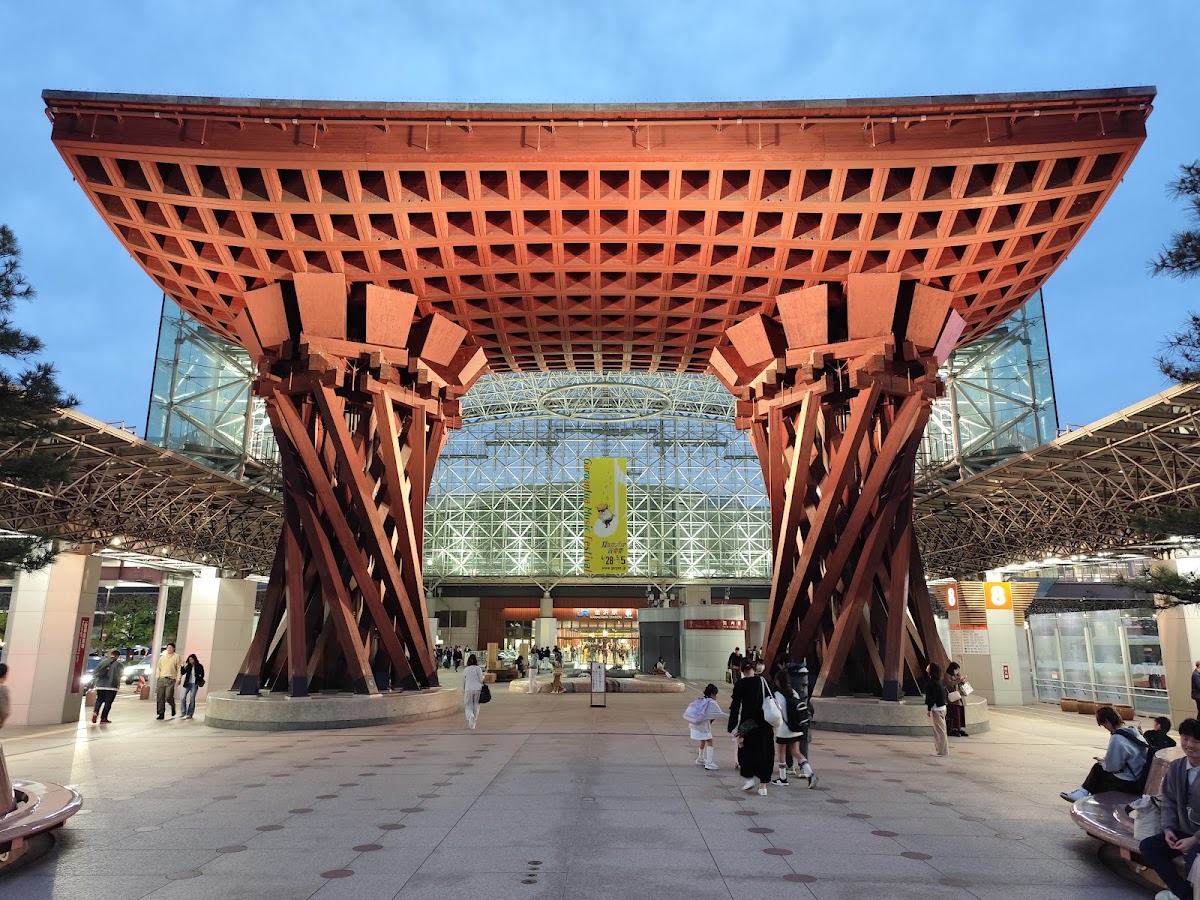
Step off the bullet train and the station's giant wooden Tsuzumi Gate frames the sky like a drum stretched between two posts.
Kanazawa rewards travelers who stay central, and the good news is that central here means a 15-minute walk to almost everything. A boutique hotel between the station and Korinbo puts you within range of the garden, the teahouse streets, and the market without ever needing a taxi.
Drop your bags, grab the little neighborhood map at the front desk, and note the one thing that makes this town so easy: it is roughly circular, with the castle and garden at the center and everything else radiating out. You can walk the whole perimeter in an afternoon.
Resist the urge to rush out. Kanazawa is a place that gets better the slower you move, and you have three days to let it unfold.
Kenroku-en Before the Crowds Arrive
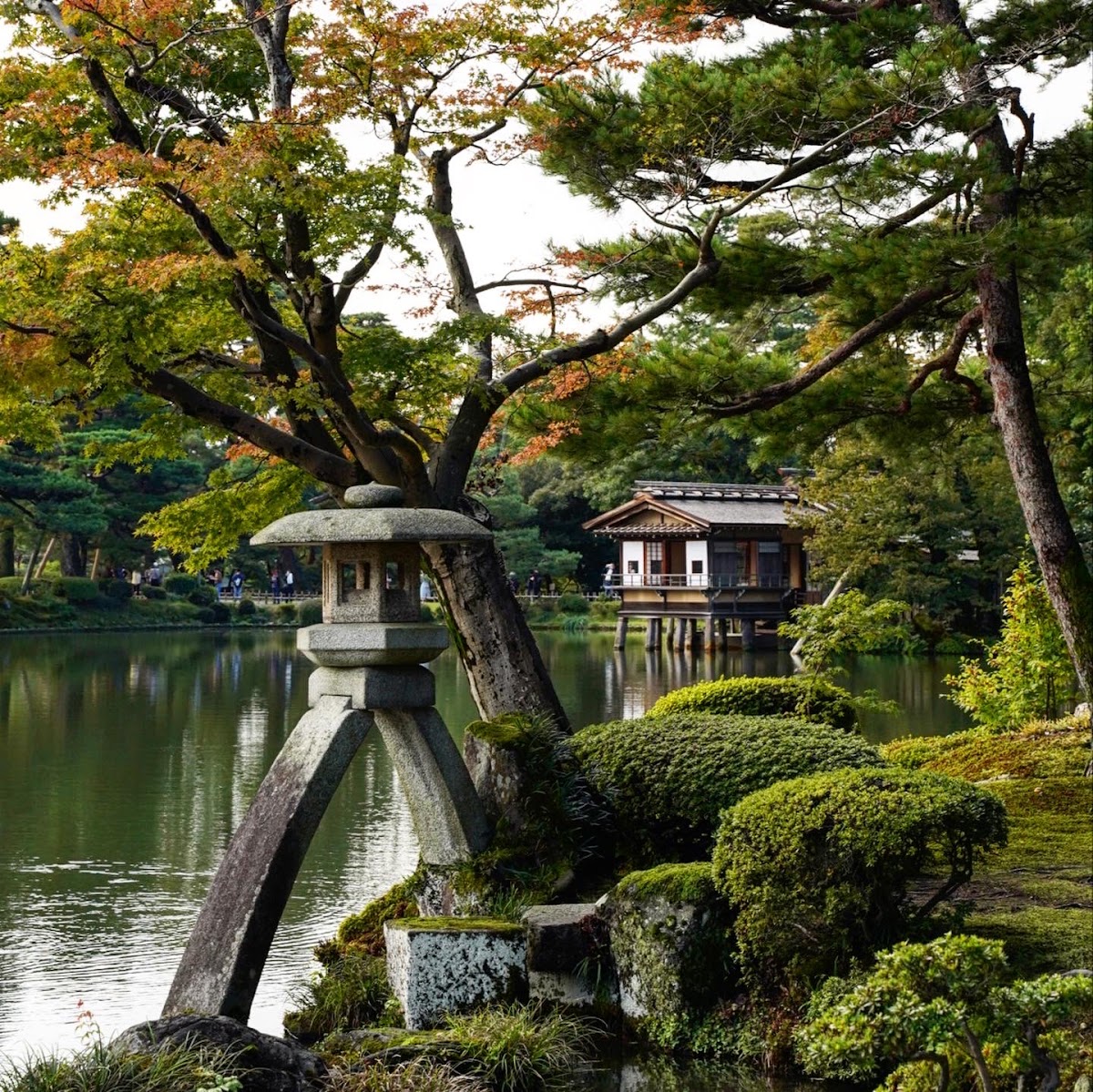
The pond is so still at opening hour it mirrors the two-legged Kotoji stone lantern perfectly, like someone folded the view in half.
Get here right at 7am (the garden opens early) and you will have one of the three great gardens of Japan nearly to yourself. The word Kenroku-en means a garden combining six attributes, the old ideals of a perfect landscape, and after ten minutes of wandering you start to feel how deliberately every rock and water channel was placed over nearly two centuries.
In winter the pine branches are tied up with rope cones called yukitsuri to protect them from heavy snow, and the effect is pure poetry: dark trees wrapped in pale geometric cones against a gray sky. In spring the plum and cherry trees take over.
Entry is 320 yen (around 2 USD). Follow the paths uphill to the oldest fountain in Japan, powered entirely by gravity, then loop back down toward the teahouse where you can sit with matcha and a sweet. Official hours and seasonal notes are on the garden's site: https://www.pref.ishikawa.jp/siro-niwa/kenrokuen/e/
Sushi Cut From This Morning's Catch
Vendors shout over tanks of live crab, and the smell of grilled scallop butter drifts down a covered lane packed shoulder to shoulder.
Omicho Market has fed this city for nearly 300 years, and it is still where locals shop. Snow crab, sweet shrimp, fat scallops the size of your palm: this is Sea of Japan seafood at its peak, and you are eating it maybe hours after it left the water.
For lunch, find one of the small sushi counters tucked between the fish stalls. A kaisendon (a bowl of rice buried under raw seafood) runs roughly 2,000 to 3,500 yen (14 to 24 USD) depending on how much crab and uni you pile on. Sit at the counter, point at what looks good, and let the chef guide you.
Come hungry and come before 1pm, when the best stalls start selling out. The winter crab season (roughly November to March) is the showstopper, but the market delivers year round.
Pressing Your Own Square of Gold
A sheet of gold leaf so thin it floats on your breath drifts down onto black lacquer, and suddenly you understand why 99 percent of Japan's gold leaf comes from this one city.
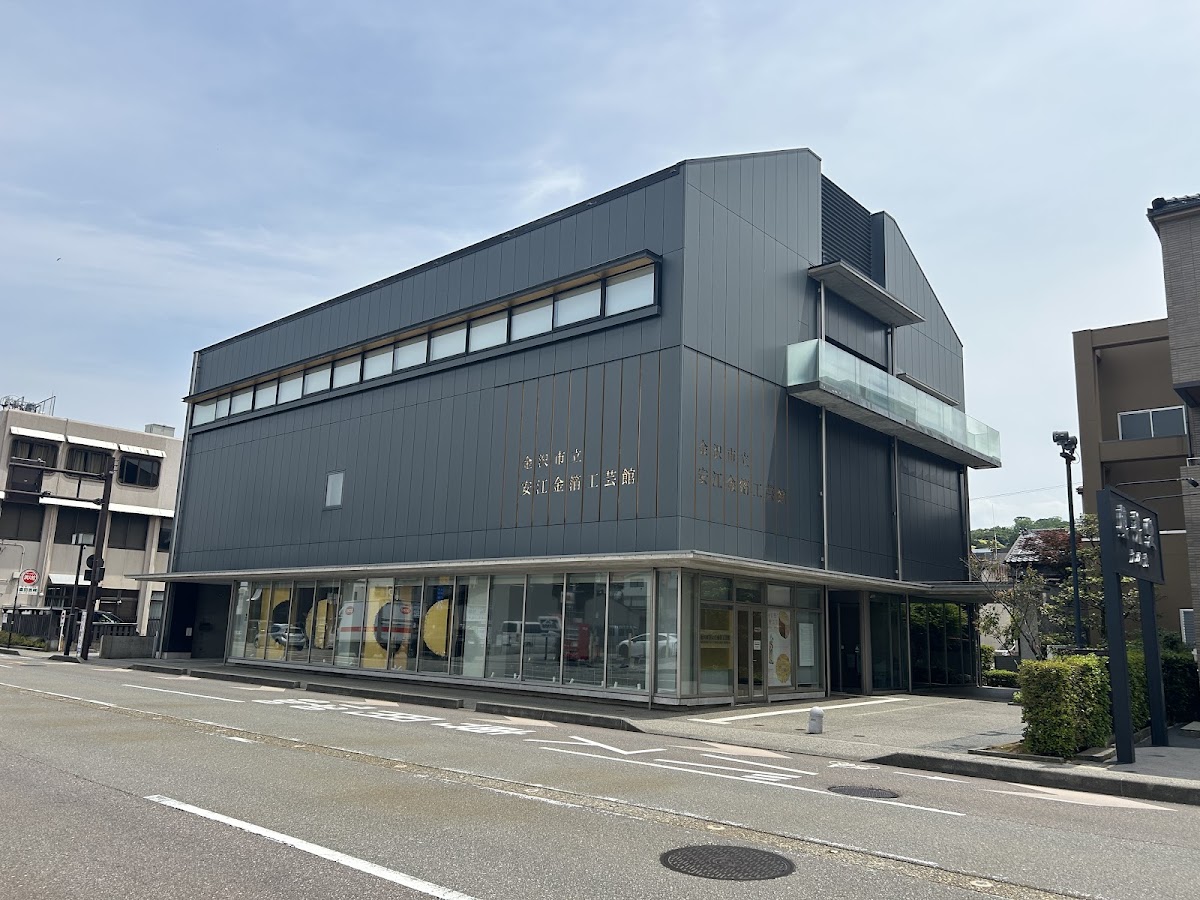
Kanazawa has made gold leaf for centuries, hammering gold into sheets one ten-thousandth of a millimeter thick. At the Yasue Gold Leaf Museum you can see the full craft, then sit down for a hands-on workshop where you press gold leaf onto your own chopsticks, a small plate, or a decorative box.
The workshops run around 1,000 to 2,000 yen (7 to 14 USD) and take 30 to 45 minutes. The real pleasure is watching how impossibly delicate the material is: a draft from an open door can crumple a sheet, so the whole room goes quiet and careful.
You walk out with something you actually made, which beats a souvenir shelf trinket every time. It is also a perfect activity when an afternoon rain rolls in, which it does often on this coast.
Higashi Chaya at Dusk, When the Lanterns Flicker On
The cobbled street turns gold as evening light catches the lattice windows of the old teahouses, and somewhere behind a sliding door a shamisen is being tuned.
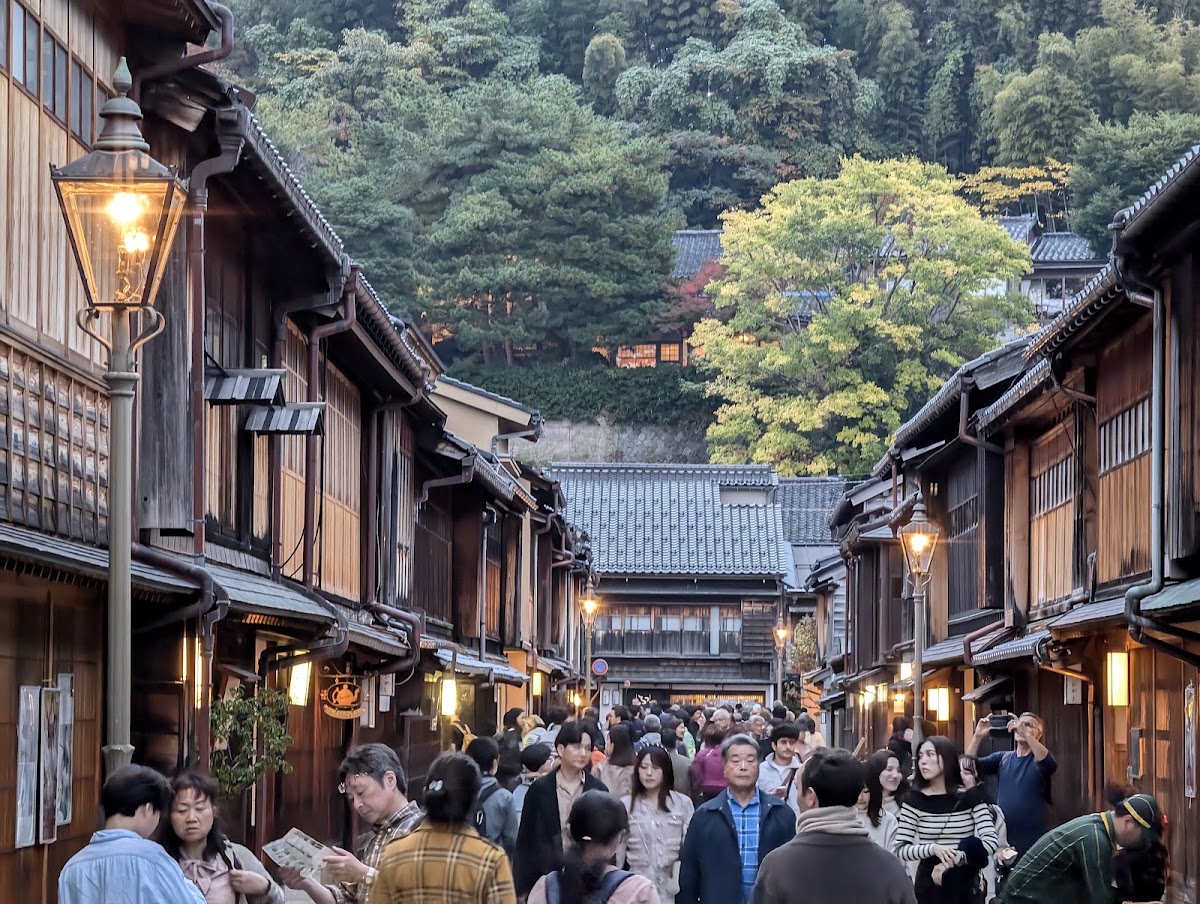
This is the largest and most atmospheric of Kanazawa's three geisha districts, a row of two-story wooden teahouses where geisha (called geiko here) still perform. The wooden lattice fronts, the kimuko-brown walls, the deep eaves: it looks almost exactly as it did in the early 1800s.
Step inside Shima or Kaikaro, two teahouses open to the public, to see the elegant rooms where guests were once entertained. Several shops along the street sell gold-leaf softcream, a soft-serve cone wrapped entirely in a sheet of edible gold, which is as ridiculous and photogenic as it sounds.
Time your visit for late afternoon so you catch the district in daylight, then linger as the lanterns come on. The crowds thin out after dinner and the lanes go quiet and golden.
Dinner in the Lanes of Katamachi
Red lanterns glow down a narrow alley, steam rises from a yakitori grill, and the clink of glasses spills out every time a sliding door opens.
Katamachi is Kanazawa's nightlife heart, a dense warren of izakaya, sake bars, and tiny counter restaurants. After a day of gardens and quiet streets, this is where the city loosens its collar.
Duck into a traditional izakaya and order the local specialties: jibuni (a duck and wheat-gluten stew thickened with the region's cooking), grilled nodoguro (blackthroat seaperch, the prized local fish), and plenty of Ishikawa sake. Most izakaya charge a small table seating fee, usually 300 to 500 yen, which comes with a little starter dish.
The move is to bar-hop. Have a few skewers and a drink at one place, then wander to the next. Half the fun is ducking under a curtain into a six-seat bar you never would have found on a map.
Samurai Walls and a 400-Year-Old Canal in Nagamachi
Earthen walls the color of dried clay line a canal where water has run the same course since the lords of Kaga ruled, and the only sound is your own footsteps on stone.
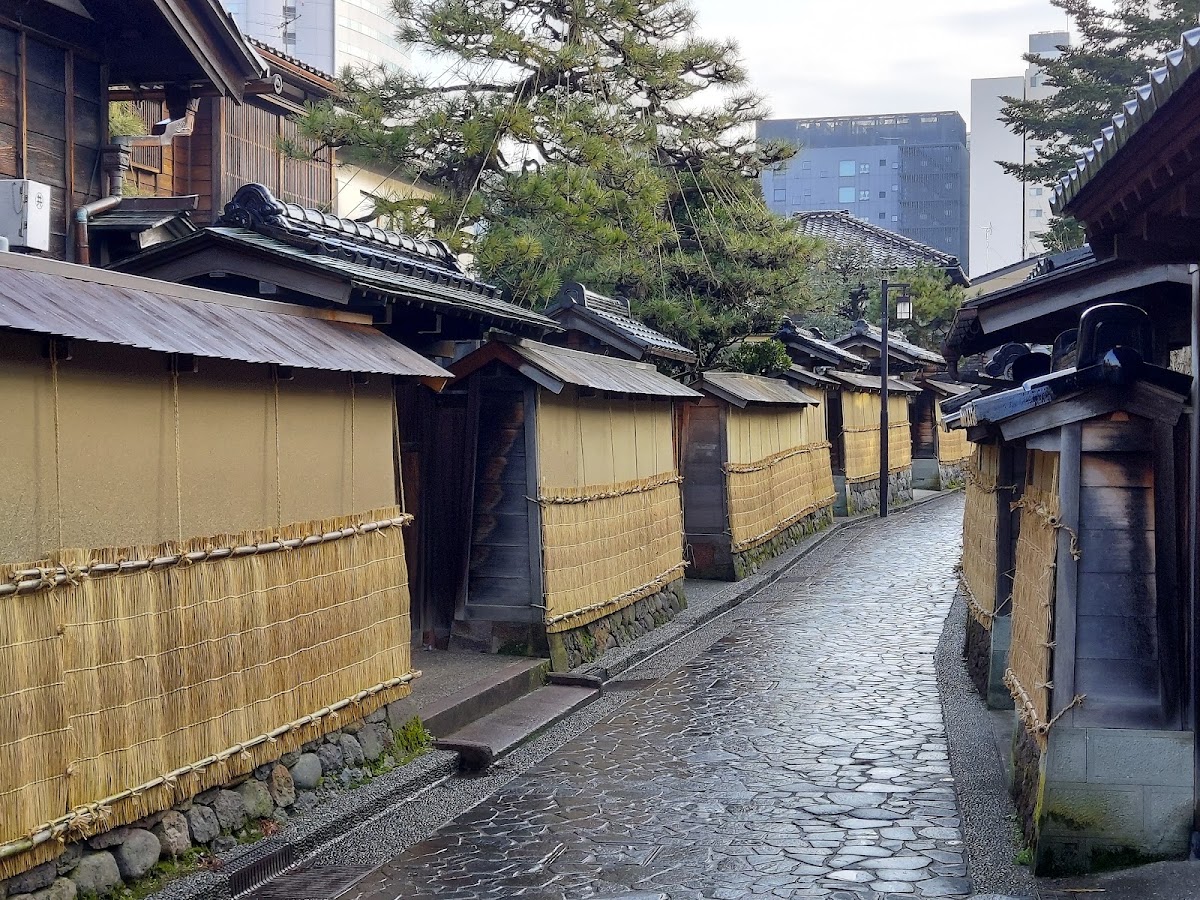
Start your last morning in Nagamachi, where samurai once lived at the foot of the castle. The district has kept its old street plan, narrow lanes winding between ocher-colored mud walls topped with tile, with a small canal threading through it.
Step into the Nomura Samurai House to see a beautifully preserved residence with a tiny inner garden built around a pond, exactly the kind of private world a mid-ranking samurai family would have retreated into. Entry is around 550 yen (4 USD).
In winter, straw mats are hung over the lower walls to protect the clay from frost, a practical touch that makes the whole district feel lived-in rather than staged. Wander slowly, the lanes are made for it.
The Castle Park, Then the Train Home
The vast white-and-lead-gray turrets of Kanazawa Castle rise above a moat, their roofs covered in pale tiles that shine almost silver after rain.
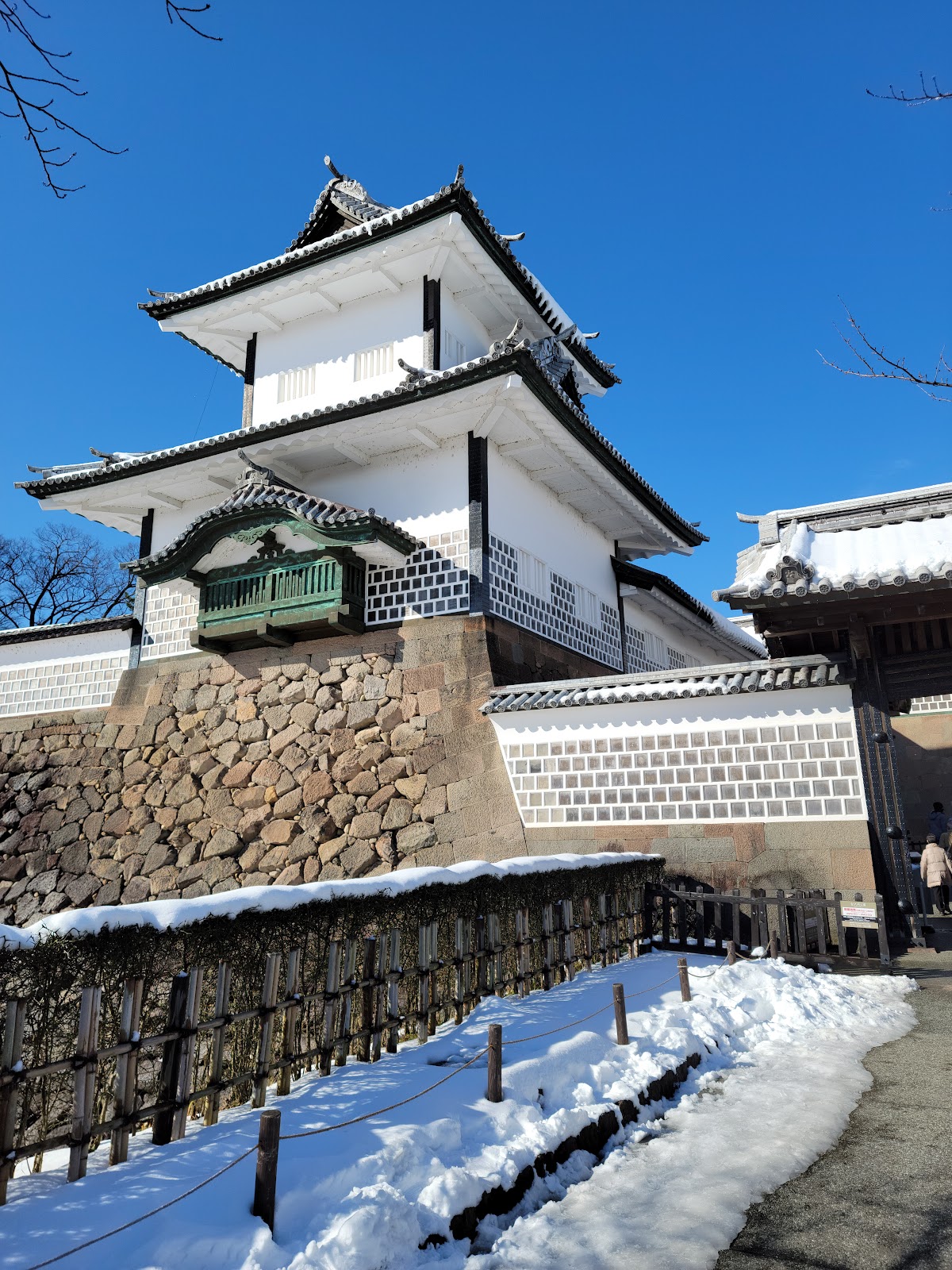
Save the castle for last, because it sits right beside both the garden and the quickest route back to the station. Kanazawa Castle Park is free to enter and enormous, with reconstructed gates and storehouses you can walk through to see the traditional timber joinery up close. The grounds are wide and open, perfect for one last unhurried loop.
From the castle it is a short bus or 20-minute walk back to Kanazawa Station. If you are heading on to Tokyo, the Hokuriku Shinkansen gets you there in about two and a half hours, and the Japan Rail Pass covers the whole ride if you have one. Fares and timetables are on JR-East: https://www.jreast.co.jp/multi/en/pass/eastpass.html
Give yourself a buffer at the station. That striking Tsuzumi Gate out front deserves a proper goodbye photo, and there is excellent last-minute omiyage (gold-dusted sweets, local sake) in the station shopping hall.
Ready to book?
Book the rest of Kanazawa, Japan
Handpicked partner searches, dates pre-filled. Pricing is identical to going direct — the partner shares a small commission with Tabi so this guide stays free.
Frequently asked
How many days do you need in Kanazawa?
Three days is the sweet spot. It gives you a full morning at Kenroku-en, time for the gold leaf workshop and the teahouse districts, an unhurried seafood lunch at Omicho Market, and a final loop through Nagamachi and the castle before you catch your train. Two days is doable but rushed; a fourth day lets you add a side trip to the ceramics town of Nomi or the coast.
When is the best time to visit Kanazawa?
Each season has a strong case. Winter (December to February) brings snow crab at the market and the famous yukitsuri rope cones protecting the garden's pines. Spring (late March to April) delivers plum and cherry blossoms in Kenroku-en. Autumn (November) paints the garden in red and gold. Kanazawa gets real rain and snow year round, so pack a layer and an umbrella whenever you come.
How do you get to Kanazawa from Tokyo?
The Hokuriku Shinkansen runs direct from Tokyo Station to Kanazawa in about two and a half hours. If you hold a Japan Rail Pass, the ride is covered. From Kyoto or Osaka, limited express trains take roughly two to two and a half hours. Once you arrive, almost everything in the city is walkable or a short loop-bus ride from the station.
Is Kanazawa worth visiting if you have already seen Kyoto?
Yes, and arguably more so. Kanazawa offers the same old-Japan atmosphere (geisha districts, samurai houses, a world-class garden) with a fraction of Kyoto's crowds. The compact layout means you walk rather than ride buses, and the Sea of Japan seafood at Omicho Market is a genuine reason to come on its own.
What food is Kanazawa known for?
Seafood tops the list: snow crab, sweet shrimp, and nodoguro (blackthroat seaperch) from the Sea of Japan, best eaten at Omicho Market or in a Katamachi izakaya. The signature local dish is jibuni, a duck stew thickened in the regional style. For dessert, try the gold-leaf softcream, a soft-serve cone wrapped in an edible sheet of the gold leaf the city is famous for.
Skip the planning
Your Kanazawa, Japan trip, ready to go
Adopt the day-by-day itinerary we built to match this guide. Every stop is a real place, every booking link is validated. Free forever, no card needed.
Open the Kanazawa, Japan itinerary