
Kyoto, Japan
What to Do in Kyoto in 5 Days: Temples, Tea, and the Walk You'll Remember
Follow the scent of incense and matcha through Kyoto's most iconic landmarks, from the golden glow of Kinkaku-ji to the endless torii gates of Fushimi Inari.
TL;DR
A 5-day journey through Kyoto that tastes like matcha, smells like incense, and sounds like bamboo clicking in the wind.
- Step off the Haruka Express at Kyoto Station, where the glass roof feels like a spaceship docking in the heart of the old capital.
- Wander the lantern-lit paths of Yasaka Shrine and Maruyama Park, where the evening hum is part temple, part festival.
- Stand on the wooden stage of Kiyomizu-dera as the entire city of Kyoto unfolds beneath you like a painting.
- Get lost in the towering green columns of the Arashiyama Bamboo Grove, light filtering through like stained glass.
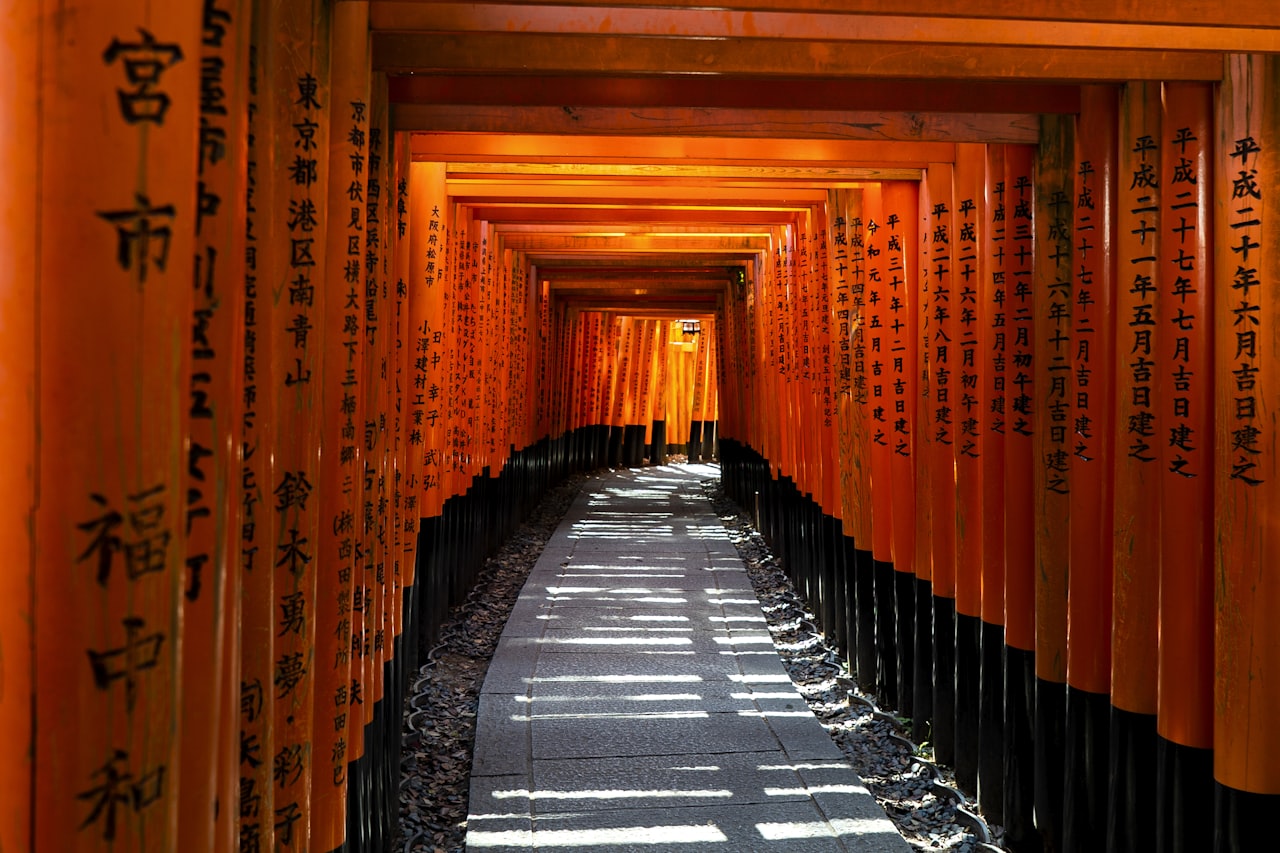
- Hike the endless vermilion torii tunnels of Fushimi Inari, the air thick with cedar and the promise of a mountain summit.
Have this trip planned in 60 seconds
We built the Kyoto, Japan itinerary that pairs with this guide, day-by-day with verified venues and one-tap booking links. Free to adopt, edit however you want.
Arriving Like a Samurai: Kyoto Station
The Haruka Express glides to a stop, and you step out into a cathedral of glass and steel that feels more like a futuristic transport hub than a train station.
Kyoto Station is your first sensory shock. The ceiling is a latticed vault, and the light pours in from the east, casting geometric shadows on the concourse. Grab a coffee at the ground-floor café and watch the flow of people - schoolkids in uniforms, monks in sandals, commuters in suits. From here, the city fans out in all directions.
The station itself is a landmark. Take the escalator up to the 10th-floor skywalk for a view of Kyoto Tower and the surrounding mountains. The tourist information center on the second floor can set you up with day passes and maps.
Lanterns and Weeping Cherries at Yasaka Shrine
As evening falls, the massive lanterns of Yasaka Shrine flicker to life, and the branches of the weeping cherry tree in Maruyama Park are strung with paper lights.
You arrive just before sunset, when the shrine's two-story gate glows gold. Maruyama Park spreads out behind - a leisurely garden with a pond and teahouse. Follow the path past the cherry tree that blooms so heavily it looks like a pink waterfall. Old couples sit on benches, and the air smells of grilled sweet potato from a nearby cart.
This is the perfect first evening in Kyoto. You're just steps from Gion, the geisha district. Stroll the cobblestone lanes after dark, and you might spot a maiko hurrying to an appointment.
Kiyomizu-dera: The Wooden Stage Over Kyoto
Sunlight hits the massive wooden stage jutting out from the main hall, and the entire city of Kyoto unfolds below like a painted scroll.
The walk up to Kiyomizu-dera is part of the experience. The sloping streets are lined with pottery shops and sweet-bean pancake stalls. Inside the temple complex, the main hall's veranda is supported by 140 wooden pillars - no nails. Lean over the edge and you see the hillside forest, the five-story pagoda, and, on a clear day, the far edge of Osaka.
Below the stage, three streams of the Otowa Waterfall cascade into a pool. Visitors line up to drink from one of the channels using a long cup - each stream is said to grant a different wish: health, love, or wisdom.
Arashiyama: Bamboo, Monkeys, and a Temple Garden
The bamboo stalks click and sway overhead, filtering the afternoon light into a thousand green stripes - this is the moment your camera can't do justice.
Start at Tenryu-ji temple's garden. The pond reflects the sky and the surrounding bamboo forest. Then step into the bamboo grove proper. The path is a narrow corridor of towering stalks that arch inward. Stay for 20 minutes after the initial crowd passes; the light shifts and the sound of wind through bamboo becomes a natural symphony.
Climb the hill behind the grove to Iwatayama Monkey Park. It's a 20-minute uphill walk, but at the top you feed wild macaques from a designated deck. The view across Kyoto from the summit - the city sprawled between mountains - is worth the puffing.
Kinkaku-ji: The Golden Pavilion That Doesn't Disappoint
The reflection of the gold-leaf pavilion shimmers on the pond's surface, so perfect you feel like you're staring at a set piece from a dream.
Kinkaku-ji is a single, stunning sight. The pavilion sits at the edge of a mirror-like pond, its top two floors covered in pure gold leaf. You can't enter, but you walk a circuit around the pond, pausing at every angle to watch the light shift across the surface.
The gardens are meticulously raked, and the pine trees are trimmed into perfect shapes. Allow 30 minutes max, then take the bus to your next stop. It's a quick visit, but the image stays with you.
Fushimi Inari: Walking Through the Vermilion Gates
The torii gates stand in dense rows, each one donated by someone who made a wish, and the path narrows into a tunnel of crimson as you climb.
Start at the base of Fushimi Inari Shrine, where the main gate is huge and welcoming. But the real magic begins as you follow the path into the hillside. The gates are packed so close together that the light turns red. The hike up to the summit is 4 kilometers round trip, but you only need to go as far as the first observation point - a 20-minute climb - for the classic photo.
Along the way, find the tiny fox statues. They're messengers of Inari, the god of rice and sake. After the hike, walk to the nearby Fushimi sake district. The Gekkeikan Okura Sake Museum offers tastings for a few hundred yen.
Nishiki Market and Pontocho: A Feast for the Senses
The market aisle hums with the hiss of grilled eel, the sizzle of fried croquettes, and the nasal chant of vendors hawking pickled plums.
Nishiki Market is a single covered street, but it's packed with 130 shops and stalls. Walk the length of it, nibbling as you go: try a skewer of grilled conger eel, a cup of fresh soymilk from the donut shop, or a piece of thick tamago (rolled omelette) from Tanaka Keiran.
As evening turns the sky indigo, head to Pontocho Alley. The narrow street runs parallel to the Kamo River, and in summer restaurants put out wooden decks over the water. Slip into a tiny izakaya - order the skewers and a bottle of local sake. The river breezes and lantern light make this the quintessential Kyoto evening.
The Philosopher's Path to Ginkaku-ji: A Walking Meditation
Cherry petals drift lazily onto the water of the canal as you walk the cobblestone path, the only sounds being bird calls and the soft crunch of gravel.
The Philosopher's Path is a 2-kilometer walk along a canal lined with cherry trees, stone lanterns, and tiny temples. Start at Nanzen-ji temple (massive wooden gate, free grounds) and head north. In spring, the petals turn the canal into a pink stream. In autumn, the maples are crimson. In winter, the bare branches frame the mountains.
End at Ginkaku-ji, the Silver Pavilion. It's not silver - it was never covered in foil - but the garden is a masterpiece of raked white sand that mimics ocean waves. Sit on the veranda and watch the cone-shaped sand sculpture. It's a quiet, satisfying end to Kyoto's highlights.
Ready to book?
Book the rest of Kyoto, Japan
Handpicked partner searches, dates pre-filled. Pricing is identical to going direct — the partner shares a small commission with Tabi so this guide stays free.
Frequently asked
What is the best time of year to visit Kyoto?
Late March to early April for cherry blossoms, or mid-November to early December for autumn foliage. Both are peak season, so book 3-6 months ahead. Summer is hot and humid; winter is cold but less crowded.
How do I get from Kansai Airport to Kyoto Station?
The JR Haruka Express takes 75 minutes direct to Kyoto Station and costs ¥2,350 (about $16). Alternatively, a limousine bus takes 90 minutes and costs ¥2,600. Both are covered by the JR Pass.
Is it worth buying a Kyoto city bus pass?
Yes for a day of temple hopping. The 1-day bus pass costs ¥700 and covers most routes. The subway is ¥210-340 per ride. For 5 days, a Suica or Icoca card on your phone is easiest.
Do I need to book Fushimi Inari in advance?
No, the shrine is free and open 24 hours. Go early (before 8am) or late (after 5pm) to avoid the crowds. The path is always open, but the main hall closes at 6pm.
Can I see geisha in Gion?
Yes, but don't chase them. The best spots are along Shirakawa Canal and Hanami-koji Street around dusk. Never block their path or touch their kimono. They are working professionals.
Skip the planning
Your Kyoto, Japan trip, ready to go
Adopt the day-by-day itinerary we built to match this guide. Every stop is a real place, every booking link is validated. Free forever, no card needed.
Open the Kyoto, Japan itinerary