
Las Vegas, United States
What to Do in Las Vegas in 4 Days: The Strip, the Desert, and the Neon You'll Remember
A picture-first walk through Vegas from the Bellagio fountains to a canyon of red sandstone and a boneyard of dead casino signs.
TL;DR
Four days that swing from dancing fountains to red desert cliffs to a graveyard of glowing casino signs, with a steak in the middle.
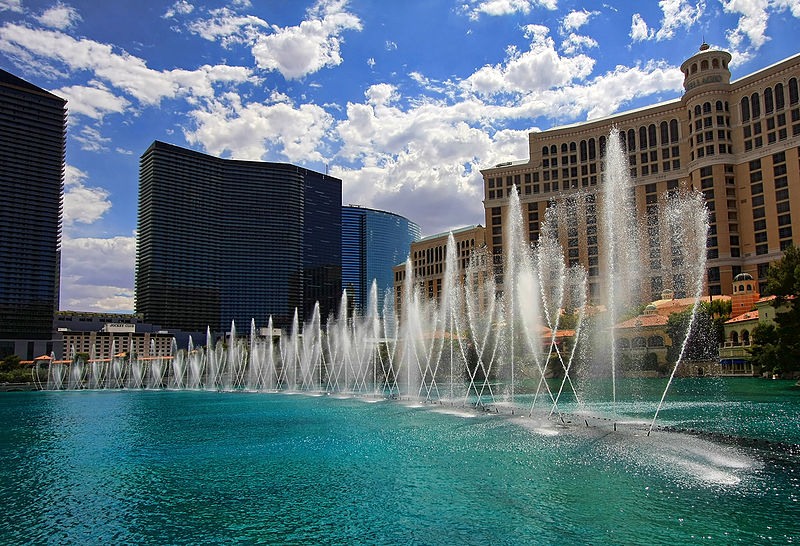
- Bellagio fountains firing 460 feet skyward to Sinatra at dusk
- Red Rock Canyon's sandstone glowing orange 25 minutes off the Strip
- The Neon Museum boneyard where dead casino signs come back to life
- Fremont Street's LED canopy and zip-liners overhead downtown
- Cirque du Soleil's 'O' performed in a 1.5-million-gallon pool
Have this trip planned in 60 seconds
We built the Las Vegas, United States itinerary that pairs with this guide, day-by-day with verified venues and one-tap booking links. Free to adopt, edit however you want.
The Ride In, When the Strip First Lights Up Your Window
Warm desert air, the whine of jets behind you, and then that first wall of light rising out of the flat dark: the Strip, closer than you expected.
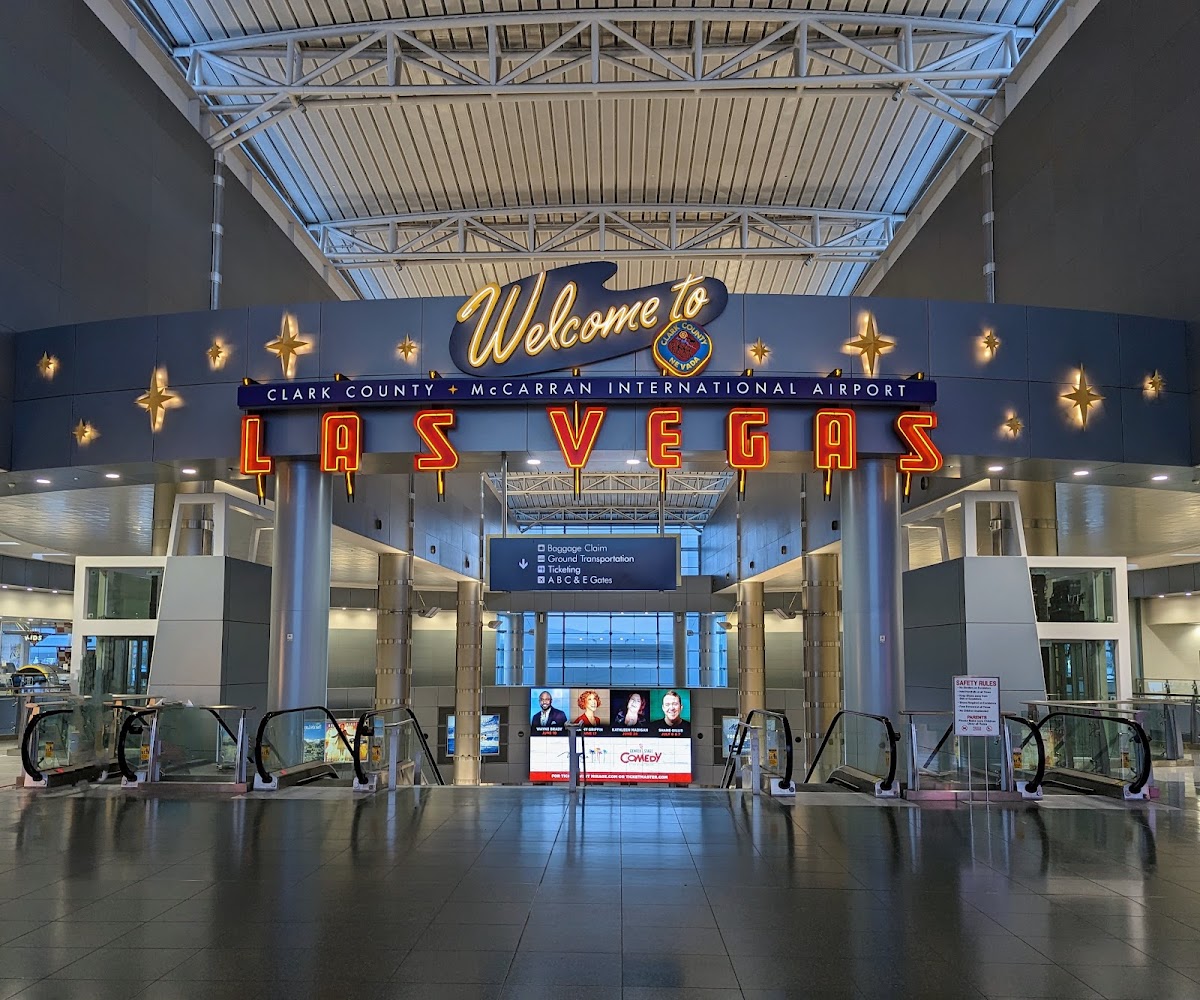
Harry Reid International sits barely two miles from the south end of the Strip, so the drive to your hotel is short and stupidly cinematic. You crest a low rise on Las Vegas Boulevard and suddenly the Luxor's pyramid beam is stabbing straight up into the night.
Skip the taxi line hustle and have a driver waiting at arrivals. It saves you the shuffle after a long flight, and you get to press your face to the window instead of watching a meter.
Check in, drop the bags, and resist the urge to nap. The city is just warming up.
The Fountains That Stop Traffic on the Boulevard
A hush falls over the crowd on the rail, then 460 feet of water launches skyward to Sinatra, and everyone gasps like they didn't know it was coming.
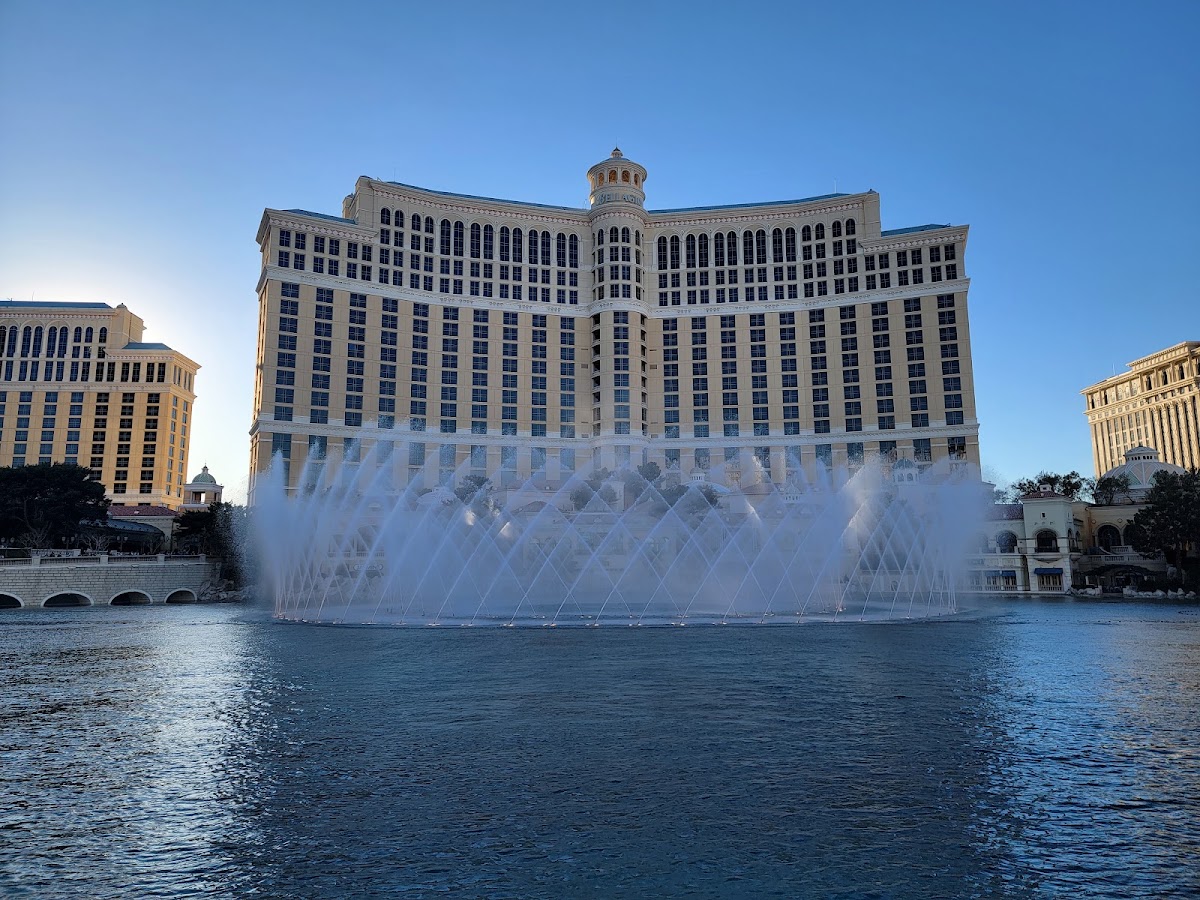
The Bellagio Fountains run every 30 minutes in the afternoon and every 15 after dark, and the after-dark show is the one you want. Grab a spot on the lakefront rail on the Strip side, ideally near the center where the tallest jets fire.
Go inside afterward for the Conservatory, a greenhouse the size of a ballroom that gets completely re-themed five times a year with thousands of live flowers. It is free, it smells incredible, and the ceiling is glass.
The fountain shows are free too. Time your first one for right around sunset when the sky behind the water goes pink.
Red Sandstone, 25 Minutes and a Whole World Away
The neon drops out of the rearview, the desert flattens, and then a wall of Aztec sandstone rears up striped orange, cream, and deep rust.
Red Rock Canyon National Conservation Area is only about 17 miles west of the Strip, and it is the single best antidote to casino overload. A 13-mile one-way scenic loop threads past the biggest cliffs, with pull-offs every few minutes for photos.
Get there early. The morning light does something to that sandstone, and the parking at the popular trailheads (Calico Hills, Ice Box Canyon) fills up fast. Timed entry reservations are required October through May, so book yours at recreation.gov before you drive out (see redrockcanyonlv.org for details).
Bring water, more than you think. This is real desert, and the dry air lies to you about how hot it is.
The Steak That Justifies Getting Dressed Up
The sizzle hits the table before the plate does, a bone-in ribeye still whispering under a crust of char and coarse salt.
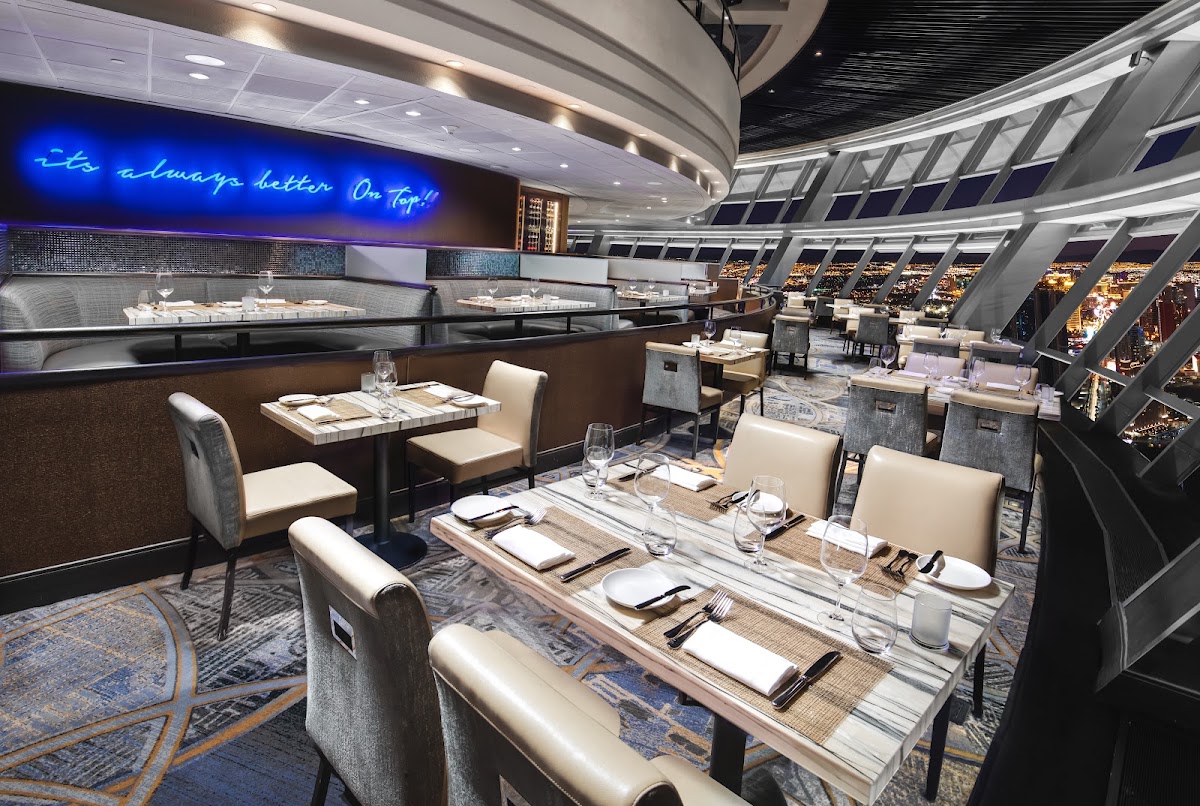
Vegas takes steak seriously, and dinner at one of the Strip's proper steakhouses is a ritual worth building an evening around. Book a reservation, put on the shirt without the wrinkles, and let someone else do the ordering if the wine list scares you.
Expect to pay for it: a marbled cut runs $65 to $95, and that is before the sides land. But the martinis are cold, the rooms are dark and clubby, and the whole thing feels like a scene from a movie you have seen.
Reserve a week ahead for the big names. Walk-ins on a Saturday are a gamble even by local standards.
Gangsters, G-Men, and a Real Wall From the Massacre
Sepia mugshots line the walls of a marble-columned courthouse, and then you turn a corner and there it is: the actual brick wall from the St. Valentine's Day Massacre, bullet holes and all.
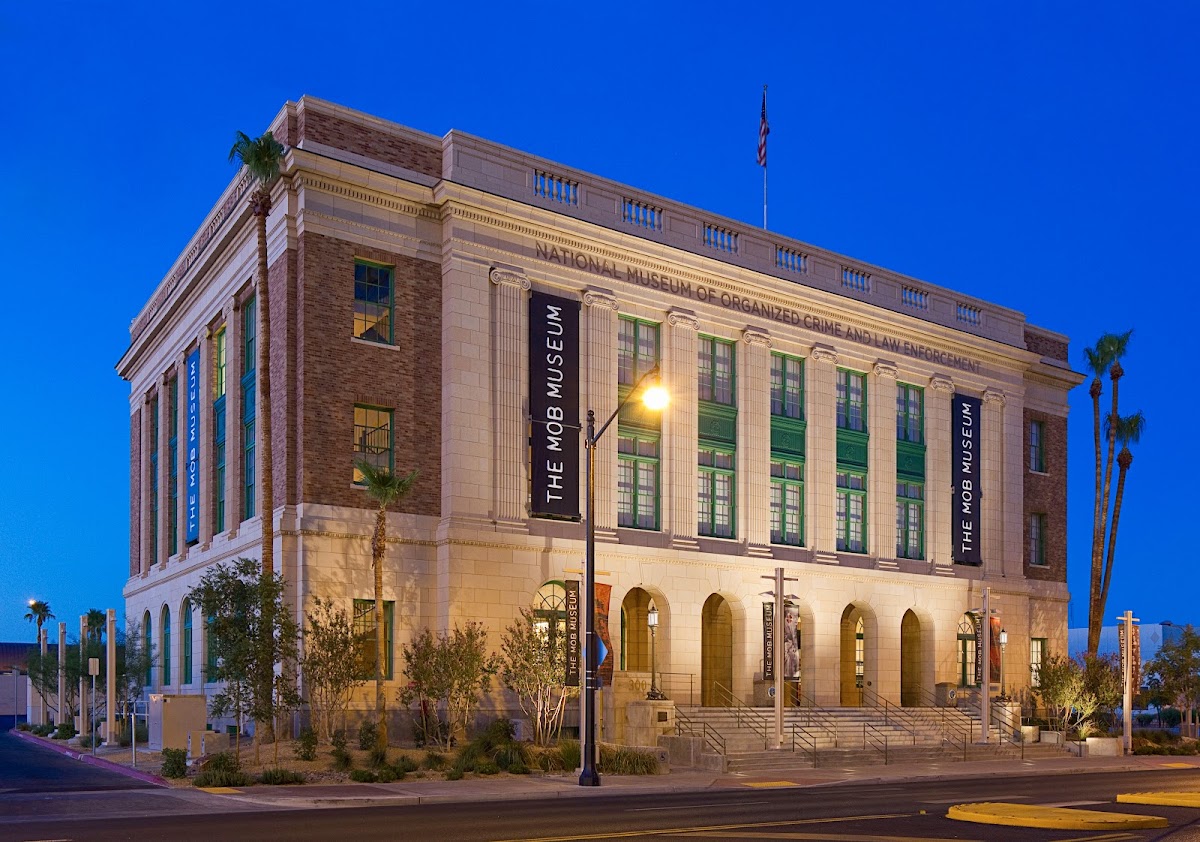
The Mob Museum sits inside a 1933 federal courthouse in downtown Las Vegas, and it earns the field trip. Three floors trace organized crime and the people who chased it, with tommy guns, wiretap recordings, and a genuinely chilling forensics room in the basement.
General admission runs about $34 for adults (themobmuseum.org), and it is worth booking online to skip the counter. Give yourself two hours minimum.
When you spill back out, Fremont Street is a two-minute walk away, and the tone shifts completely.
Standing Under a Ceiling Made of 12 Million Lights
Look up and the whole sky is a screen: a five-block canopy of LEDs pulsing over your head while a zip-liner screams past above the crowd.
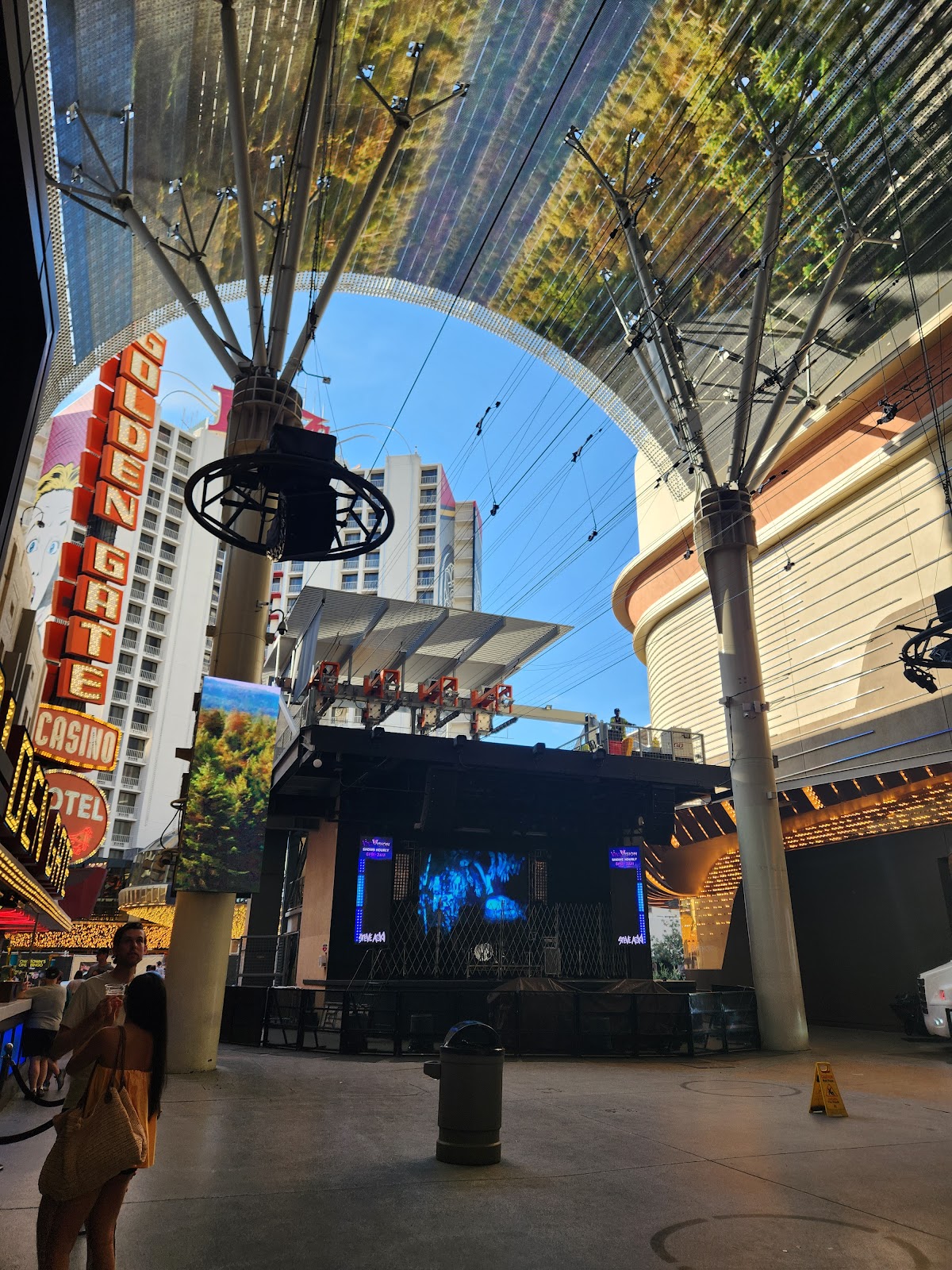
The Fremont Street Experience is old Vegas turned up to eleven. A barrel-vaulted digital canopy stretches over the pedestrian mall and lights up on the hour after dark with music, while cover bands play on outdoor stages and the SlotZilla zip line launches riders straight down the middle.
This is where the vintage neon still lives, the enormous cowboy sign, the flashing marquees, the buzz of the original casinos. It is louder and looser than the Strip, and cheaper for a drink.
Come hungry and grazing. The whole street is basically an open-air food-and-people-watching buffet.
The Boneyard Where Dead Signs Come Back to Life
Row after row of retired casino signs lean against the desert sky, rusted and cracked and impossibly beautiful, and after dark a handful flicker back on.
The Neon Museum is an outdoor lot packed with the salvaged signs of a city that tears itself down every decade: the original Stardust, the Moulin Rouge, a hundred smaller ghosts. Guided and self-guided tours walk you through the history behind each hulking letterform.
Book the after-dark visit if you can. That is when a curated set of the signs is relit, and the whole boneyard glows like a memory (see neonmuseum.org for tour times and tickets, around $28 to $40).
It is the most photogenic hour in Las Vegas, and one you will actually think about later.
Cirque in a Pool, Then Pancakes at 3am
The stage dissolves into a shimmering pool, divers plunge from the rafters, and 1.5 million gallons of water become the whole set.
'O' by Cirque du Soleil at the Bellagio is the show to book if you see one, an aquatic spectacle staged in and above a massive pool with acrobats, synchronized swimmers, and platform divers. Tickets run roughly $109 to $250, and the good seats sell out, so book ahead at cirquedusoleil.com.
If you have an hour left over, the 18b Arts District downtown trades neon for murals and small galleries, an easy, low-key stroll before the trip winds down.
And on the last morning, do the very Vegas thing: breakfast at the Peppermill on the Strip, a 1972 diner with pink neon, giant portions, and a fire pit in the lounge. It is the right way to close the loop before the airport.
Ready to book?
Book the rest of Las Vegas, United States
Handpicked partner searches, dates pre-filled. Pricing is identical to going direct — the partner shares a small commission with Tabi so this guide stays free.
Frequently asked
How many days do you need in Las Vegas?
Four days hits the sweet spot. That gives you two evenings for the Strip and its shows, one day out at Red Rock Canyon, and a full day downtown for the Mob Museum, Fremont Street, and the Neon Museum without feeling rushed. Two days is doable if you skip the desert, but you'll miss the best contrast Vegas offers.
Do you need a car in Las Vegas?
Not for the Strip and downtown, where rideshares and walking cover everything. But if you want to see Red Rock Canyon (and you should), a rental car for a day is the easiest way. It's about a 25-minute drive west, and the 13-mile scenic loop is a self-drive. Alternatively, guided half-day tours run from the Strip.
When is the best time of year to visit Las Vegas?
Spring (March to May) and fall (September to November) are ideal, with warm days and cool evenings that make Red Rock Canyon comfortable to explore. Summer regularly tops 100°F, which turns outdoor time brutal. Winter is mild and quieter, though desert mornings can be genuinely cold.
Do I need a reservation for Red Rock Canyon?
Yes, from October through May a timed-entry reservation is required to drive the scenic loop, and you book it in advance through recreation.gov. Go early in the day for the best light and to beat the trailhead parking crunch. Bring far more water than you think you'll need.
How far in advance should you book Cirque du Soleil and steakhouse dinners?
Book Cirque shows like 'O' at least a week ahead, and further out on weekends, since good seats sell fast. The same goes for the top Strip steakhouses; a Saturday walk-in is a real gamble. Reserving online also lets you skip ticket counters and hostess-stand waits.
Skip the planning
Your Las Vegas, United States trip, ready to go
Adopt the day-by-day itinerary we built to match this guide. Every stop is a real place, every booking link is validated. Free forever, no card needed.
Open the Las Vegas, United States itinerary