
Luang Prabang, Laos
What to Do in Luang Prabang: A 4-Day Log of Temples, Waterfalls, and the Mekong
A slow walk through Laos's old royal capital, from dawn alms to turquoise pools and the river that runs through it all.
TL;DR
Luang Prabang moves at the pace of the Mekong, and four days is just enough to feel its rhythm before you start missing it.
- Climb Mount Phousi for the 355-step sunset over two rivers
- Kneel at dawn for the saffron alms procession on Sisavangvong Road
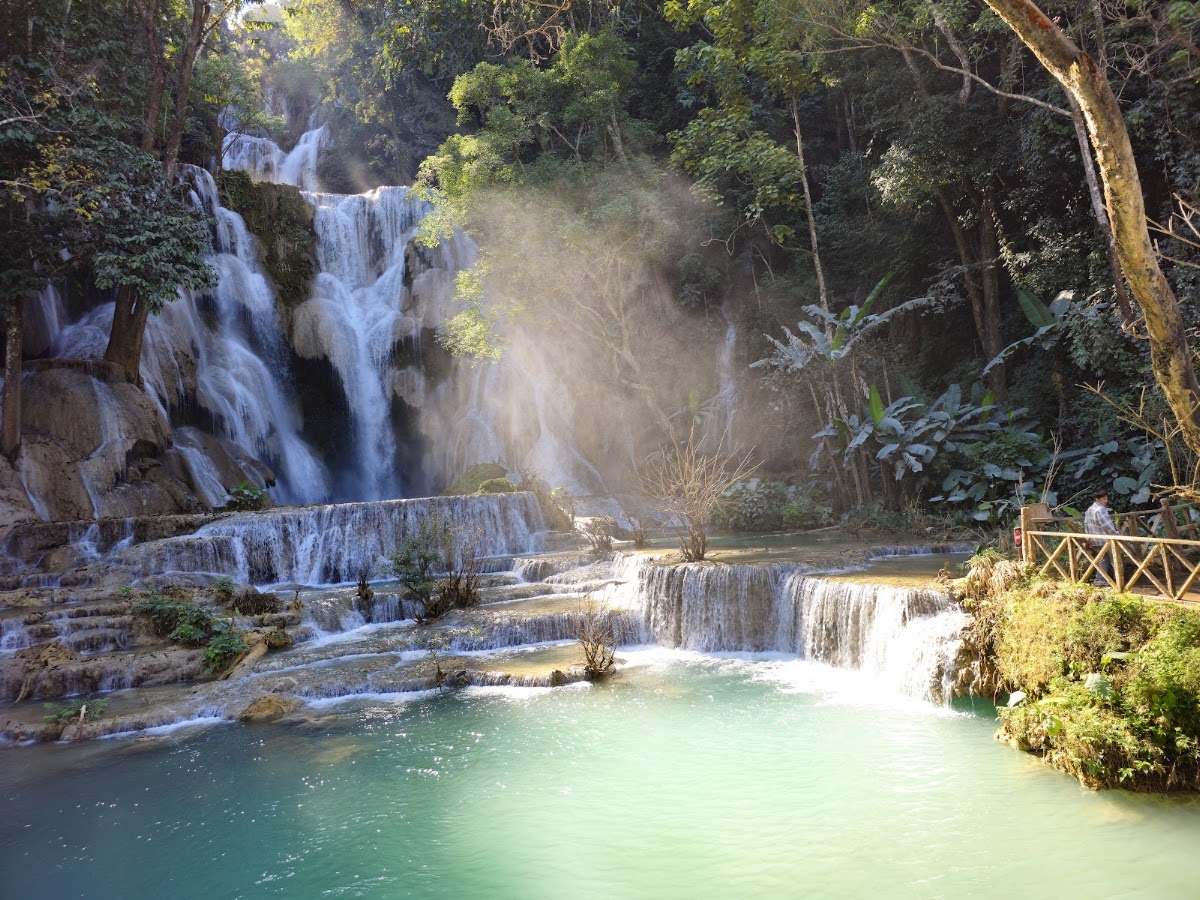
- Swim the milky turquoise tiers of Kuang Si Waterfalls
- Cruise upriver to the 4,000 Buddhas of Pak Ou Caves
- Eat your way through the lantern-lit night market lanes
Have this trip planned in 60 seconds
We built the Luang Prabang, Laos itinerary that pairs with this guide, day-by-day with verified venues and one-tap booking links. Free to adopt, edit however you want.
Landing Where the Mountains Fold In
The plane drops between green ridges and suddenly you are on a runway ringed by jungle, the air thick and warm and smelling faintly of woodsmoke.
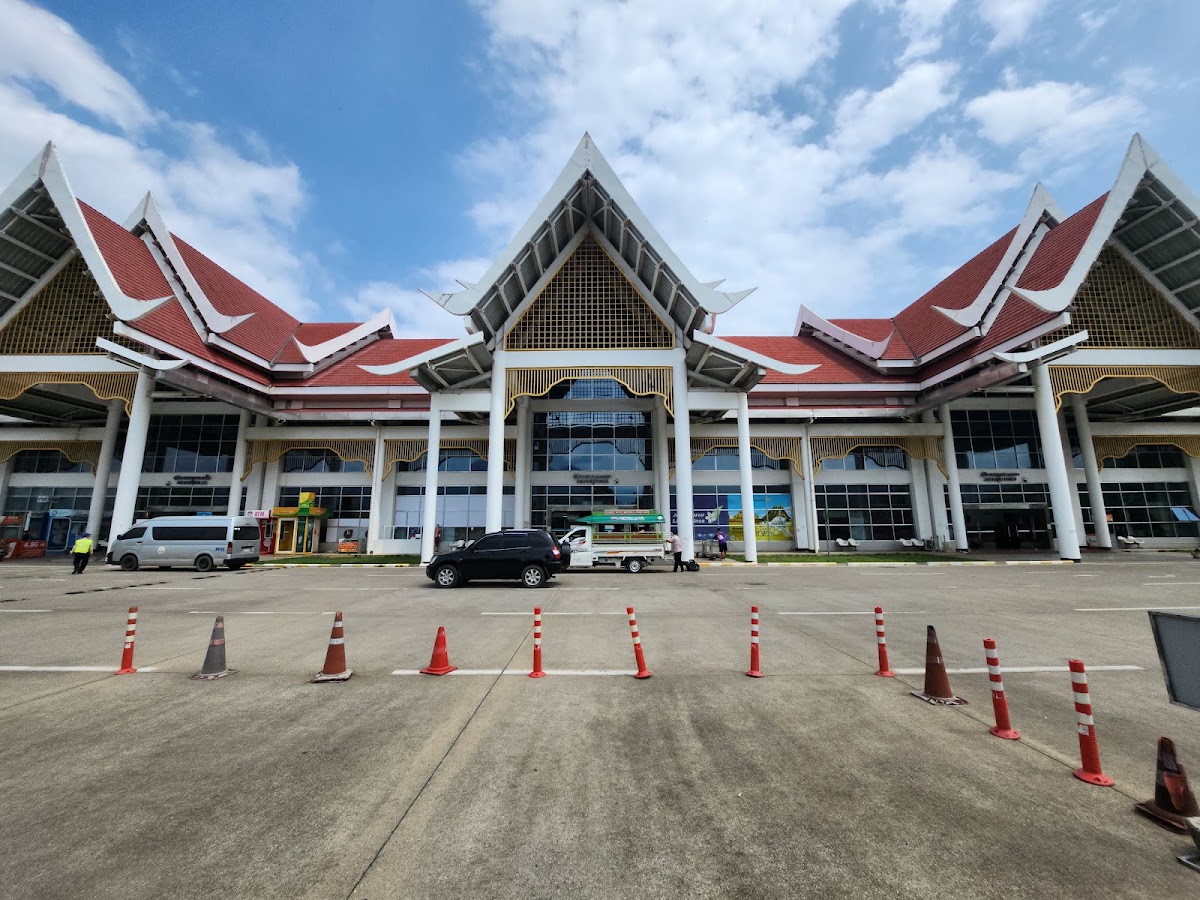
Luang Prabang International Airport is tiny, and that is the first gift. You are through the visa-on-arrival desk (bring USD 30-42 cash depending on your passport, plus a passport photo) and out the door in fifteen minutes. Check the current entry rules on the Lao eVisa portal before you fly so you can skip the queue entirely.
The old town sits about 10 minutes by car to the southeast, cradled in the crook where the Nam Khan meets the Mekong. Have your guesthouse arrange a pickup, or grab a metered van at the desk for roughly 50,000 to 70,000 kip (USD 2.50-3.50).
Drop your bag, resist the urge to nap, and walk toward the river. The whole peninsula is flat, walkable, and small enough that you will have it memorized by tomorrow.
355 Steps to the Best Sunset in Laos
Golden light pours over a horizon of misted hills, two rivers glinting like mercury far below, while the temple bells start their evening call.
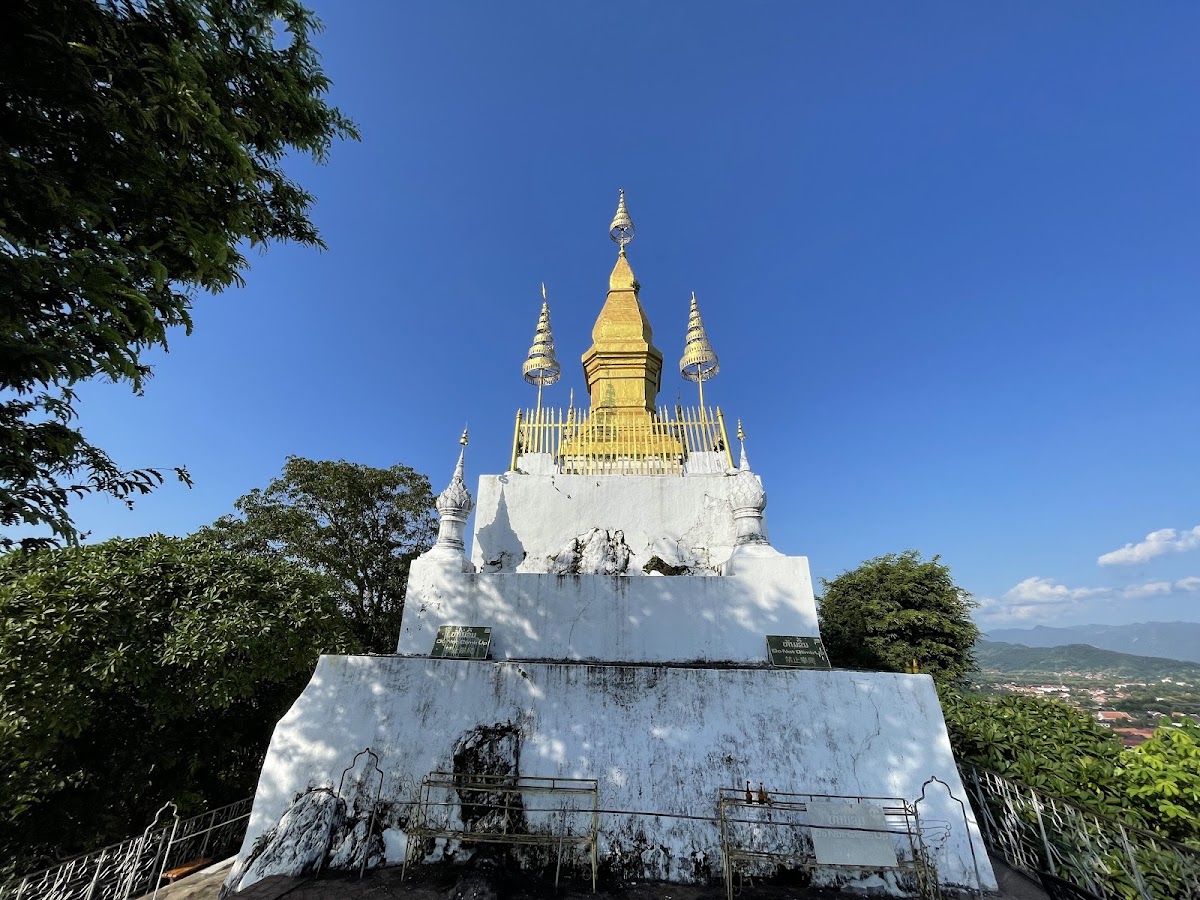
Mount Phousi is the hill that anchors the peninsula, a 100-meter climb up stone steps lined with small shrines and gilded Buddhas. The staircase from Sisavangvong Road is the classic approach, and yes, you will feel every one of the 355 steps in the heat. Go slow, stop at the little viewpoints, buy a caged bird you can release for luck if that is your thing.
Entry is 20,000 kip (about USD 1). Arrive by 5pm to claim a spot on the western railing before the crowd thickens.
At the top, the whole valley opens up: the Mekong on one side, the Nam Khan curling on the other, and the tin-and-tile roofs of the old town glowing between them. This is the photo you came for, and it earns its reputation.
Dawn, Barefoot, and the River of Saffron
Before the sun is fully up, a silent line of orange-robed monks moves through the grey light, and the only sound is bare feet on cool pavement.
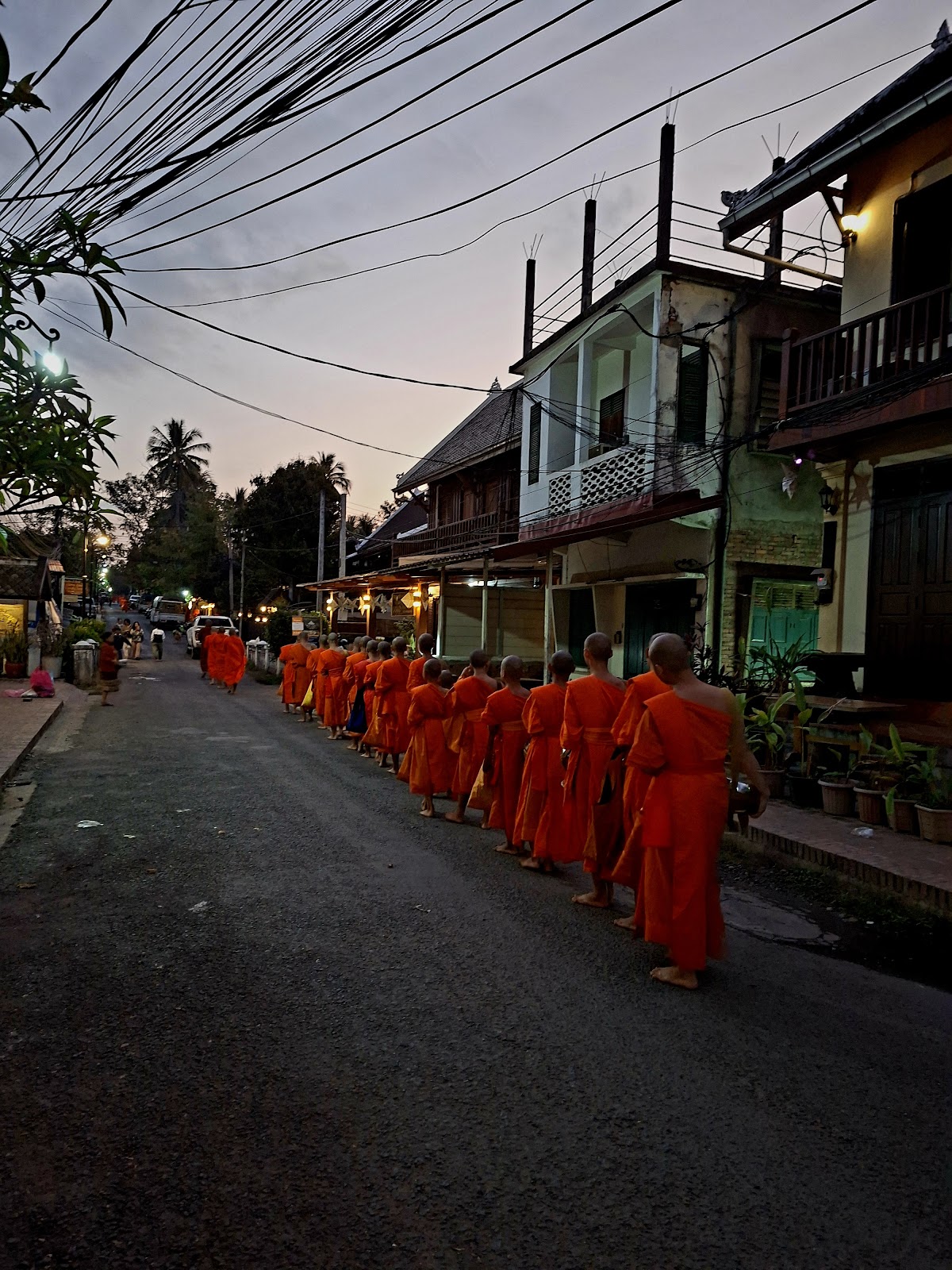
The Tak Bat, the daily alms-giving ceremony, is the soul of Luang Prabang and the one thing you set an alarm for. Around 5:30am, hundreds of monks file out of their temples to receive sticky rice from kneeling residents along Sisavangvong Road. It is quiet, sacred, and centuries old.
If you want to participate, buy your rice from a proper vendor the day before (not the pushy street sellers at dawn), sit lower than the monks, and stay silent. If you only want to watch, keep well back, kill your flash, and do not step into the procession. UNESCO and local monasteries have pleaded for years about tourists crowding the monks, so read the etiquette signs and be the respectful one.
Afterward, the morning market a block west is waking up: bamboo shoots, river weed, buffalo skin, and coffee you will want two of.
The Golden Temple at the Tip of the Peninsula
Sunlight catches a mosaic tree of life in a thousand colored mirrors, and the sweeping roofs almost touch the ground like folded wings.
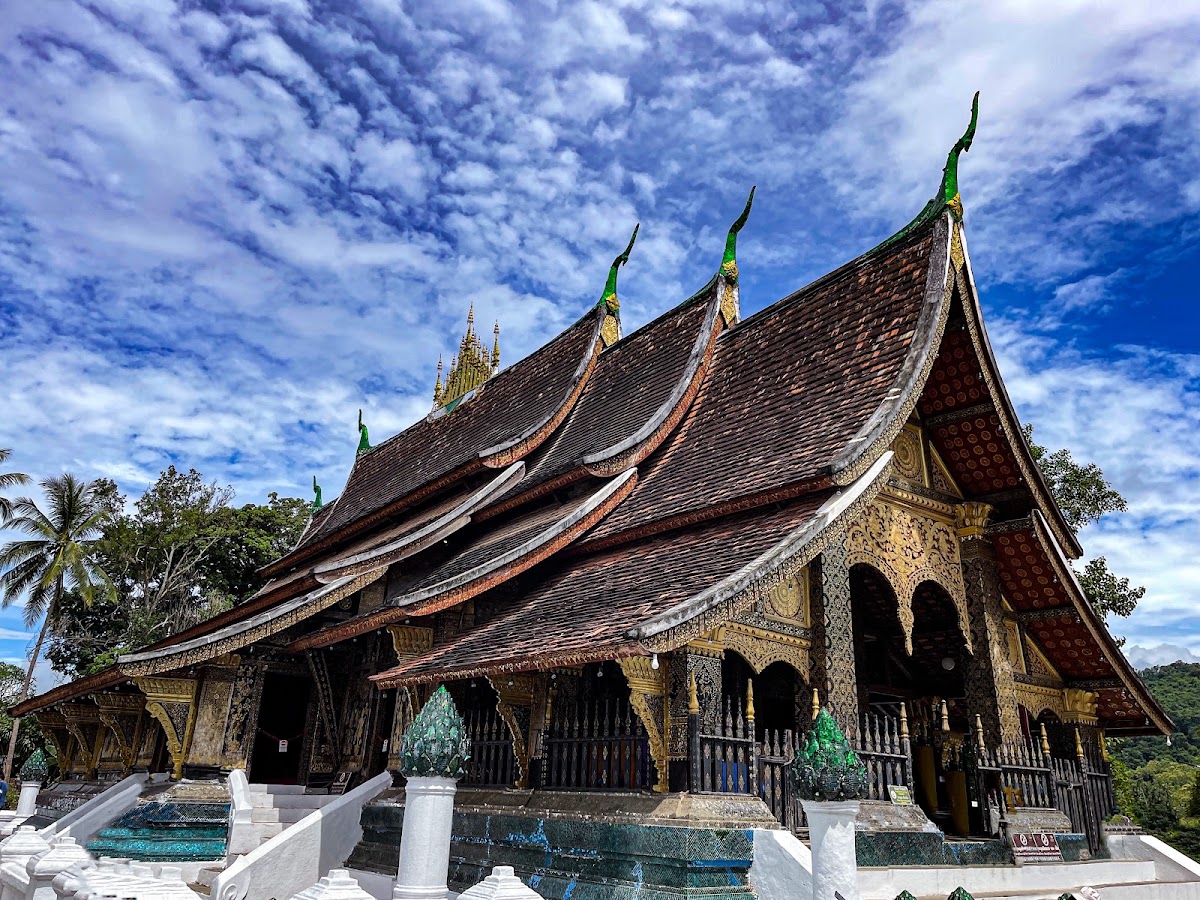
Wat Xieng Thong is the grandest of Luang Prabang's thirty-something temples, built in 1560 and spared by every war since. The main hall's roofline is the classic Luang Prabang silhouette, layered eaves curving low and close to the earth. Around the back, the famous glass-mosaic Tree of Life shimmers across a deep red wall.
Entry is 20,000 kip. Go early, before 9am, and you may have the courtyards nearly to yourself.
A short walk south brings you to the Royal Palace Museum (Haw Kham), the former home of the Lao monarchy until 1975. Inside sits the Pha Bang, the sacred golden Buddha the whole city is named for. Note the modest dress code, covered shoulders and knees, and that photos are not allowed indoors.
Turquoise Pools You Can Actually Swim In
The water is an impossible milky blue-green, spilling over limestone terraces into pool after pool cool enough to make you gasp.
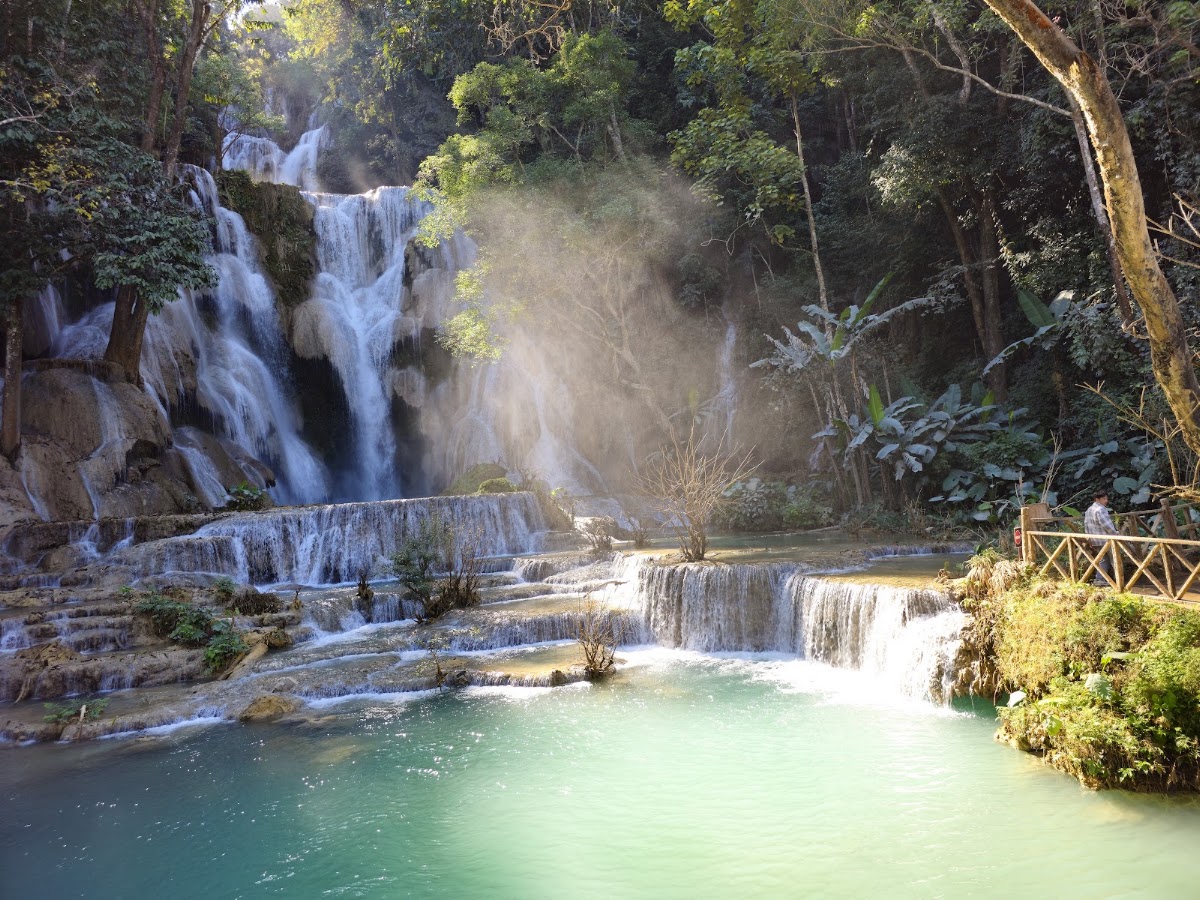
Kuang Si Waterfalls sits about 30km south of town, roughly an hour by tuk-tuk or minivan. It is the single best day trip from Luang Prabang and the reason half of you booked the flight. The main cascade thunders down a multi-tier cliff, but the magic is the string of turquoise bathing pools below it, framed by jungle and wooden footbridges.
Entry is 25,000 kip (about USD 1.25). Bring a swimsuit, wear grippy sandals, and get there before 11am to beat the tour buses.
On the walk in, stop at the Free the Bears sanctuary, where rescued Asiatic black bears doze in forest enclosures. Book a small-group tour if you would rather not negotiate transport, since most bundle in the bears, the falls, and a shared van both ways.
Upriver to a Cave of Four Thousand Buddhas
The longboat chugs against the current, muddy Mekong on both sides, until a black cave mouth appears in a cliff crammed with tiny gold figures.
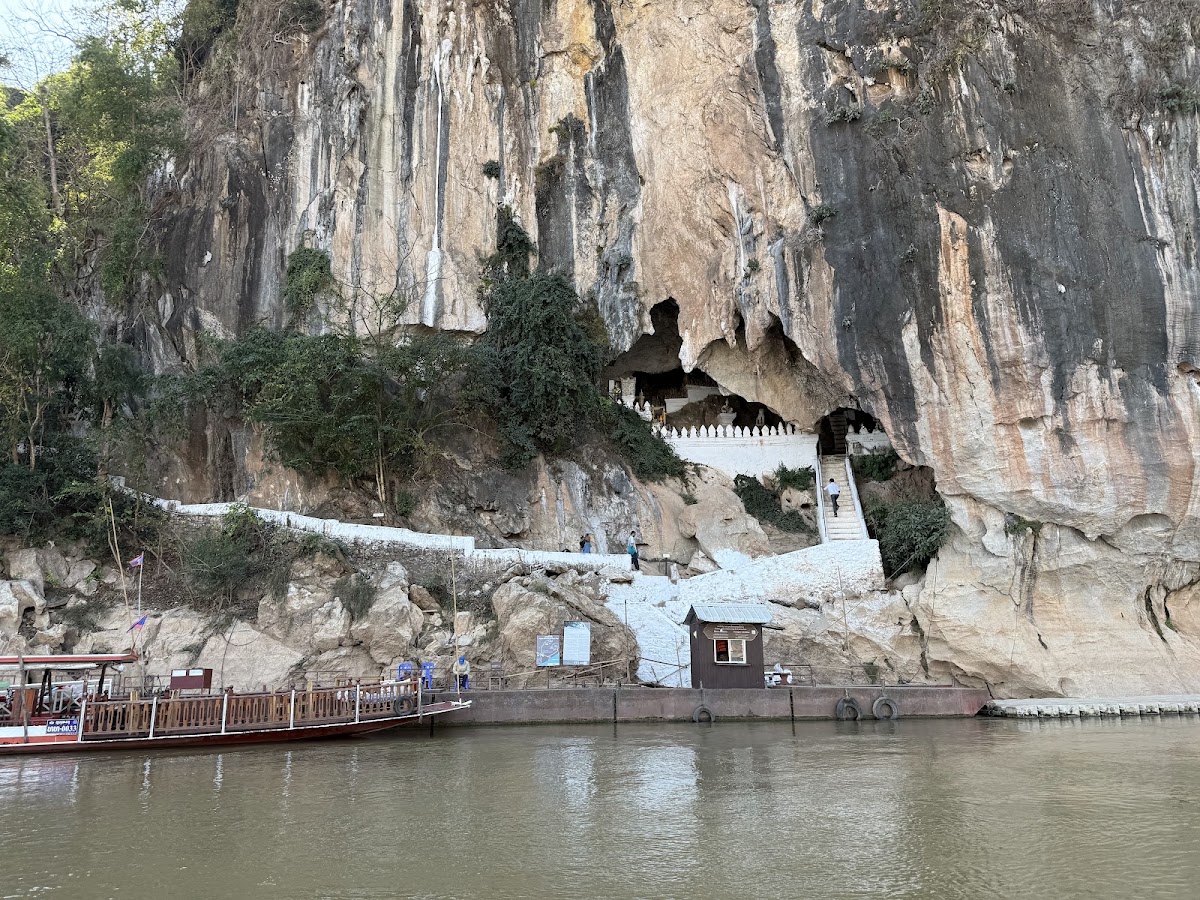
A slow boat up the Mekong is how you should spend a morning here. The two-hour cruise to Pak Ou Caves drifts past fishing villages, water buffalo, and jungle-clad hills, the kind of scenery that makes you put the phone down.
The caves themselves, set into a limestone cliff where the Nam Ou joins the Mekong, hold over 4,000 Buddha statues left by pilgrims across the centuries. The lower cave (Tham Ting) is bright and easy; the upper cave (Tham Phum) needs a torch and a short climb.
Many boats stop en route at Ban Xang Khong, a riverside village of silk weavers and saa-paper makers. Watch the looms clack, buy a scarf straight from the woman who wove it, and the money goes somewhere real. Expect to pay around 150,000-200,000 kip for a shared boat, more to charter your own.
Lanterns, Grilled Fish, and the Night Market Crawl
Red-and-blue silk lanterns glow down a car-free street, smoke curls off skewers of lemongrass fish, and everything smells like garlic and coconut.
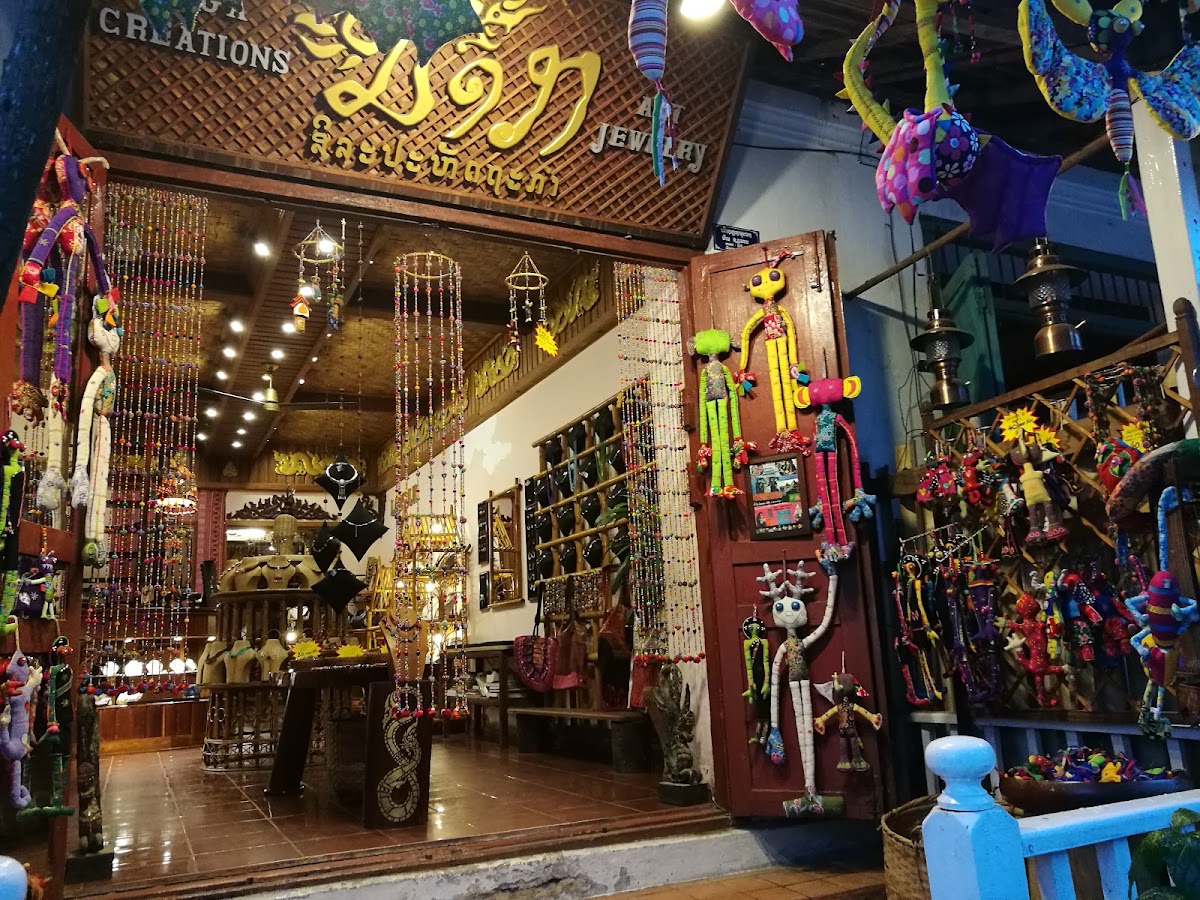
As the sun drops, Sisavangvong Road closes to traffic and the Luang Prabang Night Market unfurls: rows of Hmong textiles, handmade paper, silver, and lanterns spread across the pavement under a canopy of tarps. Prices are gentle and haggling is friendly, not aggressive.
The real prize is the food alley off the north end. For a few dollars you load a plate at a vegetarian buffet, or order a whole grilled Mekong fish stuffed with lemongrass, sticky rice on the side. Wash it down with a Beerlao, the crisp national lager you will end up loving.
For a proper sit-down feast, book a Lao buffet at one of the riverside restaurants: laap (minced meat salad), or lam (a bitter herb stew), jeow (chili dips), and enough sticky rice to roll home on.
One Last Slow Coffee Before You Go
Steam rises off Lao coffee on a wooden balcony, the Mekong sliding past below, and you already know you will be back.
Your last morning is for lingering. Have a proper breakfast at your guesthouse, then take a final walk along the peninsula while the town is still quiet, past the temples you now half-recognize.
If you have an hour to spare, cross the bamboo footbridge over the Nam Khan (rebuilt fresh each dry season) or sink into one last riverside cafe with a book. Luang Prabang rewards doing very little.
The airport is only 10 minutes away, so arrange your transfer for about 90 minutes before your flight and you will not feel rushed. Then it is back between those green folded hills, already plotting a return in the cooler months.
Ready to book?
Book the rest of Luang Prabang, Laos
Handpicked partner searches, dates pre-filled. Pricing is identical to going direct — the partner shares a small commission with Tabi so this guide stays free.
Frequently asked
How many days do you need in Luang Prabang?
Four days is the sweet spot. It gives you time for the sunset climb up Mount Phousi, the dawn alms ceremony, the main temples and Royal Palace, a full day at Kuang Si Waterfalls, a Mekong cruise to Pak Ou Caves, and a couple of slow afternoons in the cafes. Three days works if you skip one of the day trips; a week lets you add trekking or kayaking on the Nam Khan.
What is the best time of year to visit?
The cool, dry season from November to February is ideal, with comfortable temperatures, clear skies, and the turquoise pools at Kuang Si at their bluest. March and April get hazy from agricultural burning and very hot. The green season (May to October) brings lush scenery and fuller waterfalls but also heavy afternoon rain.
Is the alms-giving ceremony okay for tourists to watch?
Yes, but only respectfully. The Tak Bat is a genuine daily religious rite, not a show. Keep well back if you are only watching, never use flash, do not block the monks, and dress modestly. If you want to offer rice, buy it from a proper shop the day before, sit lower than the monks, and stay silent. Many visitors and local monasteries have raised concerns about crowding, so err on the side of invisibility.
How do you get to Kuang Si Waterfalls from town?
Kuang Si is about 30km south, roughly an hour each way. You can hire a shared tuk-tuk or minivan from the old town for a negotiated round-trip fare, rent a scooter if you are confident on rural roads, or book a small-group tour that bundles the falls with the Free the Bears sanctuary and transport. Aim to arrive before 11am to beat the tour buses.
Do I need a visa for Laos, and can I pay by card?
Most nationalities can get a visa on arrival or an eVisa; fees run roughly USD 30-42 and you may need a passport photo, so check the official Lao eVisa portal and your government's travel advisory before you go. Bring US dollars in cash for the visa. In town, the Lao kip is king: card acceptance is limited and often carries fees, so withdraw or exchange cash for markets, tuk-tuks, and temple entries.
Skip the planning
Your Luang Prabang, Laos trip, ready to go
Adopt the day-by-day itinerary we built to match this guide. Every stop is a real place, every booking link is validated. Free forever, no card needed.
Open the Luang Prabang, Laos itinerary