
Madrid, Spain
What to Do in Madrid in 5 Days: Tapas, the Prado, and a Sunset You'll Text a Friend About
A picture-first walk through Madrid, from the tapas lanes of La Latina to the Egyptian temple where the whole city goes to watch the sky burn.
TL;DR
Five days in Madrid, walked the way the city actually flows: eat late, look at extraordinary paintings, then chase the sunset like everyone else does.
- Tiny plates of pulpo down Calle Cava Baja, standing room only
- Velázquez and Goya in one afternoon at the Prado
- Sugar-dusted churros dunked in thick San Ginés chocolate at midnight
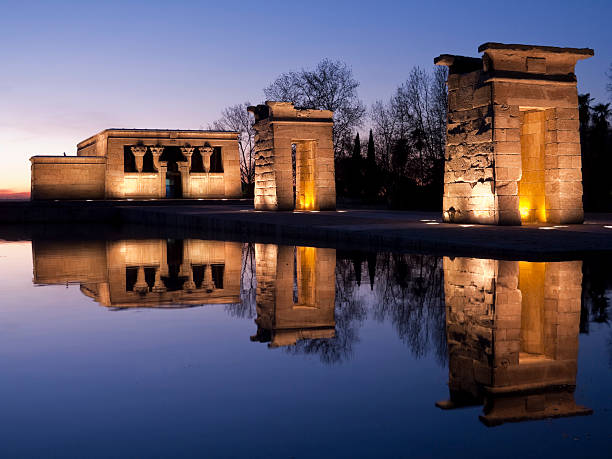
- An Egyptian temple glowing pink at sunset over Templo de Debod
- Rowboats and green shade in Retiro Park on a hot afternoon
Have this trip planned in 60 seconds
We built the Madrid, Spain itinerary that pairs with this guide, day-by-day with verified venues and one-tap booking links. Free to adopt, edit however you want.
Arriving Slow, and Letting Madrid Set the Pace
Warm terracotta light on six-story facades, the clink of glasses drifting up from a corner cafe, and nobody, anywhere, in a hurry.
Here is the first thing Madrid teaches you: do not schedule the afternoon you arrive. The city eats dinner at 9pm and means it, so an early-evening nap is a legitimate strategy, not a failure of willpower.
Drop your bag, then just wander your own neighborhood for an hour. Order a cana (a small draft beer, about 2.50 euros / $2.70) at the nearest terrace and watch how the streets fill up around 8pm as if someone flipped a switch.
The old center is walkable end to end, but a taxi or the airport metro line saves you from dragging luggage over cobbles after a long flight. Give yourself the easy version on day one.
The Tapas Crawl Down Cava Baja
Cured ham hanging from the ceiling, a splash of vermouth on tap, and a plate of blistered padron peppers slid across the counter before you've finished ordering.
Calle Cava Baja in La Latina is the single best tapas street in the city, a narrow lane where you are supposed to eat one thing, pay, and move two doors down. Standing at the bar is the point. Grab a spot, order pulpo a la gallega (octopus with paprika and olive oil) or a slice of tortilla, then chase it with the next place.
Budget maybe 15-25 euros ($16-27) per person if you keep moving and keep it to a drink and a bite at each stop. Sundays are electric here because the El Rastro flea market spills into the neighborhood beforehand.
Don't overthink which bar. If it's crowded with locals holding tiny plates and shouting over each other, it's the right one.
Standing Under Velázquez at the Prado
The hush of a gallery, then the strange jolt of realizing 'Las Meninas' is bigger than you are and the little princess is looking right at you.
The Prado (Paseo del Prado) is the reason a lot of people come to Madrid, and it earns it. This is Velazquez, Goya, and Bosch's nightmarish 'Garden of Earthly Delights' in rooms you could spend a full day in. Don't. Pick a wing, go slow, and leave before your feet quit.
Entry is around 15 euros ($16), and it's free for the last two hours daily, though the crowd for that slot is real. Booking a timed ticket online skips the queue. See the official site for current hours: https://www.museodelprado.es/en.
If you have appetite for more, the Reina Sofia (home to Picasso's 'Guernica') and the Thyssen-Bornemisza sit within a short walk, forming what locals call the Golden Triangle of art. One museum a day is plenty; three in one afternoon is a punishment.
Lunch Where the Whole City Grazes: Mercado de San Miguel
Glass and iron overhead, oysters on crushed ice, croquettes still hissing, and the roar of a hundred conversations bouncing off the tiles.
Mercado de San Miguel (Plaza de San Miguel) is a beautiful early-1900s covered market that has become a gourmet grazing hall. Yes, it's touristy and yes, it's pricier than a neighborhood bar, but the food is genuinely good and the building is stunning.
Go mid-afternoon, order a few small things (a couple of oysters, some jamon, a glass of albarino), and eat standing at one of the tall tables. Expect to spend 20-30 euros ($22-33) grazing.
It sits a two-minute walk from Plaza Mayor, so this pairs naturally with the old-center wander. Come hungry, come curious, and don't try to sit down; there's nowhere comfortable and that's by design.
The Royal Palace, Then Churros at Midnight
A vast white palace throwing shadows across an empty plaza, then, hours later, warm sugar-dusted churros lowered into a cup of chocolate thick enough to stand a spoon in.
The Royal Palace of Madrid (Calle de Bailen) is one of the largest palaces in Western Europe, and the state rooms are pure gilt-and-chandelier excess. Tickets run around 14 euros ($15). Go early to beat the tour groups, and don't skip the view from the plaza and gardens even if you skip the interior.
Here's the ritual that makes it a memory, though: after dinner, walk to Chocolateria San Gines (Pasadizo de San Gines), open since 1894 and still open absurdly late. Order churros con chocolate for about 5 euros ($5.50) and dunk. This is a post-flamenco, past-midnight tradition, and the place hums at 1am.
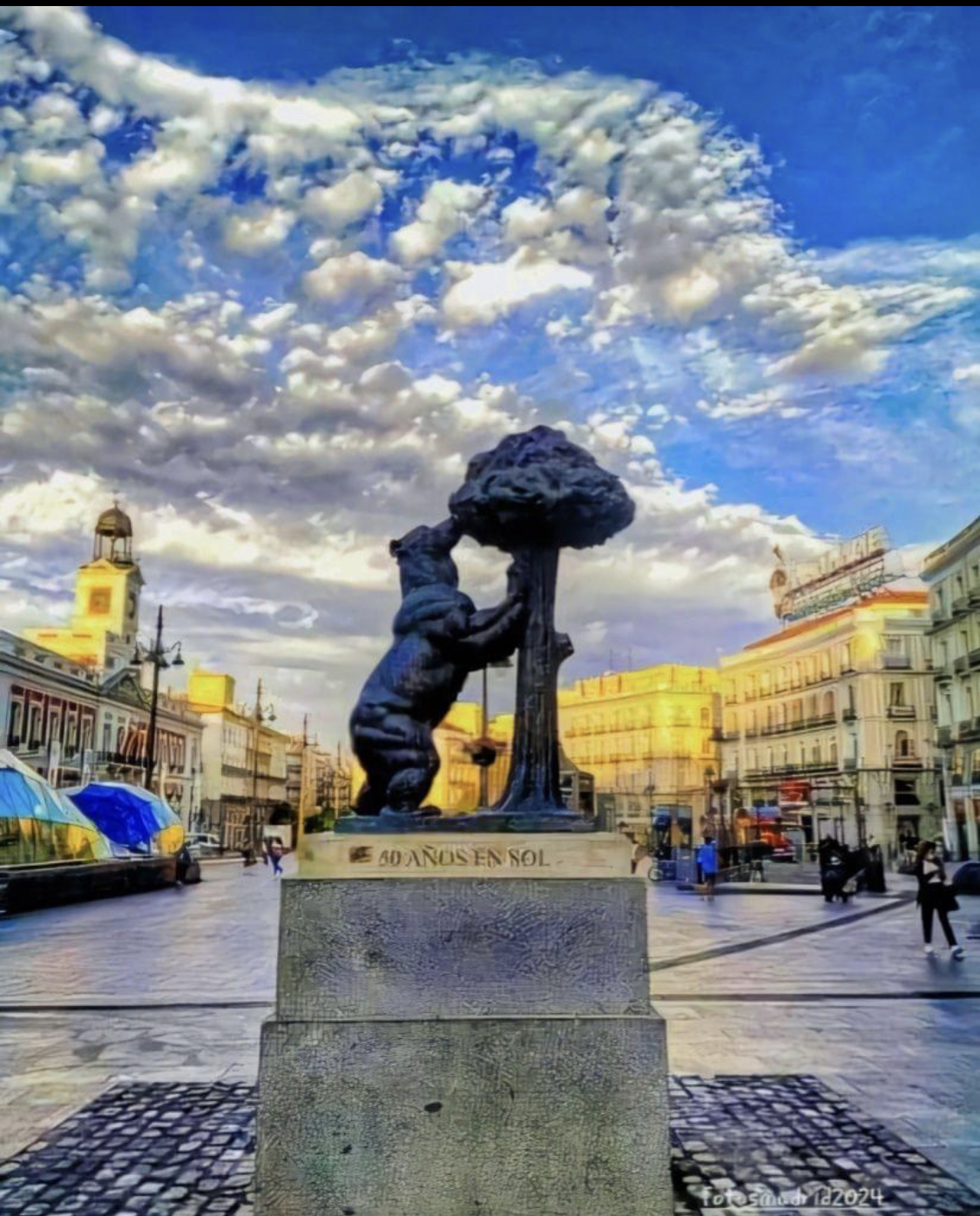
Between palace and churros sit Plaza Mayor and Puerta del Sol, the grand arcaded square and the literal center of Spain (the marker in the pavement is where all the country's roads are measured from). Walk it after dark when the stone glows.
Sunset at the Egyptian Temple Everyone Shows Up For
An actual 2,200-year-old Egyptian temple reflected in a still pool, and the sky behind it going peach, then rose, then deep coral, as half of Madrid sits on the grass to watch.
Templo de Debod (Calle de Ferraz) is the surprise of the trip. Egypt gifted this temple to Spain in the 1960s, and now it sits on a hill west of the center with a reflecting pool that turns into a mirror at golden hour.
This is where Madrid comes to watch the sun go down, so arrive 45 minutes before sunset, find a patch of grass, and just be there for it. It's free, it's outdoors, and it's the most quietly romantic thing in the city.
When the light finally goes, the nearby Malasana neighborhood is where you want dinner: a scruffier, cooler district full of small restaurants and late bars. It's a short walk downhill, so the evening basically plans itself.
Rowboats and Green Shade in Retiro Park
The creak of oars on the lake, dappled light through plane trees, and a busker's guitar carrying across the water on a warm afternoon.
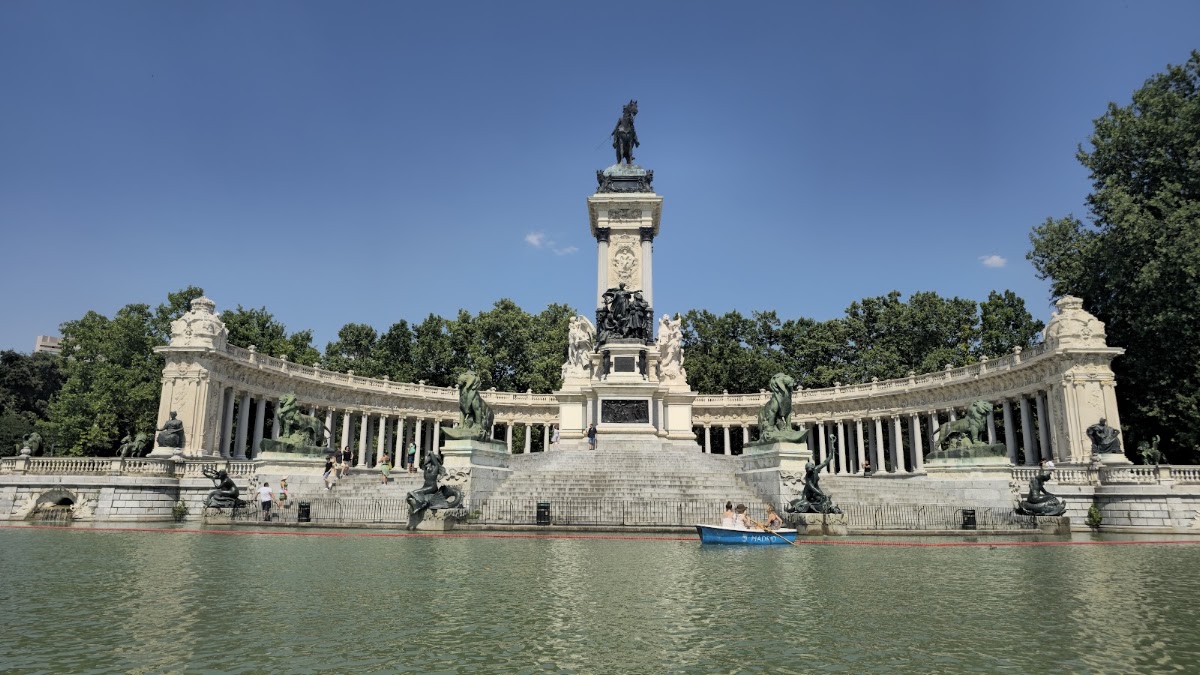
Retiro Park is Madrid's green lung, a former royal garden now open to everyone and busiest on Sunday afternoons. Rent a rowboat on the central lake for around 6 euros ($6.50) for 45 minutes, or just walk the shaded paths with an ice cream.
Don't miss the Palacio de Cristal, a glass-and-iron pavilion tucked among the trees that usually hosts free contemporary art. It's one of the prettiest small buildings in the city and it costs nothing to step inside.
This is the day to slow down before you leave. Grab a coffee, find a bench, and let the city move around you.
One Last Breakfast Facing the Palace
A quiet plaza in the morning, tostada with tomato and olive oil, a cortado in a proper cup, and the Royal Palace glowing across the square.
Cafe de Oriente (Plaza de Oriente) is the graceful way to close a Madrid trip. Grab an outside table facing the palace, order tostada con tomate and a cortado (espresso cut with a little warm milk), and let breakfast take its time. The whole thing runs about 8-10 euros ($9-11).
Then it's the transfer out to Madrid-Barajas Airport, easy by taxi (roughly 30 euros / $33 on the fixed city rate) or the metro if you're traveling light.
If you're still deciding how to string all of this together day by day, the curated five-day Madrid itinerary lays out the exact order that made this walk flow. Take it, tweak it, and eat dinner late.
Ready to book?
Book the rest of Madrid, Spain
Handpicked partner searches, dates pre-filled. Pricing is identical to going direct — the partner shares a small commission with Tabi so this guide stays free.
Frequently asked
How many days do you need in Madrid?
Five days is comfortable and lets you pair one major museum per day with tapas, the Royal Palace, Retiro Park, and a sunset at Templo de Debod without rushing. Three days is enough for the highlights if you move quickly, though you'll skip the slow mornings that make the city fun.
What time do people actually eat dinner in Madrid?
Late. Restaurants often don't fill up until 9pm or later, and many kitchens open at 8:30pm at the earliest. Tapas bars run throughout the evening, so an early graze around 7pm followed by a proper dinner at 9:30pm is completely normal here.
Is the Prado, Reina Sofia, and Thyssen worth doing all three?
Only if you love art and pace yourself to one per day. The Prado is the essential one for Old Masters. Reina Sofia is the place to see Picasso's 'Guernica', and Thyssen fills the gaps with everything from medieval to Pop art. Doing all three in a single afternoon is exhausting and not recommended.
How do you get from Madrid-Barajas Airport into the city?
A taxi to the center runs on a fixed rate of about 30 euros. The metro (Line 8) and the Cercanias train are cheaper at a few euros and connect to the main network, which is easy if you're traveling light. A private transfer is the least stressful option after a long flight.
When is the best time of year to visit Madrid?
Spring (April-June) and autumn (September-October) hit the sweet spot with warm days and mild evenings perfect for terraces. July and August get genuinely hot and many locals leave the city, while winter is cool but rarely freezing and comes with far smaller museum crowds.
Skip the planning
Your Madrid, Spain trip, ready to go
Adopt the day-by-day itinerary we built to match this guide. Every stop is a real place, every booking link is validated. Free forever, no card needed.
Open the Madrid, Spain itinerary