
Marrakech And Atlas, Morocco
What to Do in Marrakech and the Atlas Mountains: Palaces, Souks, and a Sunrise You'll Never Forget
From the chaos of Djemaa el-Fna to the silence of Toubkal, this 6-day journey shows you Morocco at its most vivid.
TL;DR
Spend six days diving into Marrakech's red walls, blue gardens, and the Atlas peaks that rise behind them.
- Watch the sun set over Djemaa el-Fna's snake charmers and smoke plumes.
- Trace the intricate stucco of Bahia Palace before the crowds.
- Lose yourself in Yves Saint Laurent's cobalt-blue oasis, Majorelle Garden.
- Share couscous with a Berber family in a walnut-shaded village above Imlil.
- Stand above the clouds at Toubkal Refuge as the High Atlas turns gold.
Have this trip planned in 60 seconds
We built the Marrakech And Atlas, Morocco itinerary that pairs with this guide, day-by-day with verified venues and one-tap booking links. Free to adopt, edit however you want.
The Square That Comes Alive at Dusk
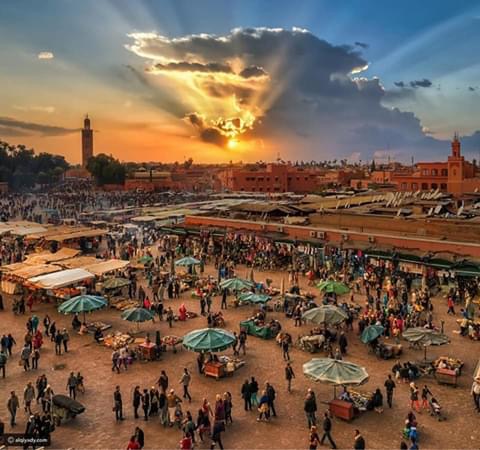
Smoke from charcoal grills curls into the twilight as drummers, snake charmers, and orange juice vendors claim their patches of pavement.
You step out of your riad and follow the murmur of a thousand voices to Djemaa el-Fna. By 6 p.m., the square transforms: storytellers draw circles of locals, henna artists grab your hand, and the smell of grilled merguez mixes with mint. Find a spot on the terrace of Café de France to watch the sun sink behind the Koutoubia Mosque's minaret. The energy is dizzying, beautiful, and entirely unique to Marrakech. Grab a freshly squeezed orange juice (4 dirhams, about 40 cents) and let the chaos wash over you.
The 19th-Century Palace Where Light Pours Through Stained Glass
Sunlight filters through intricate cedar lattice, painting geometric patterns on cool marble floors.
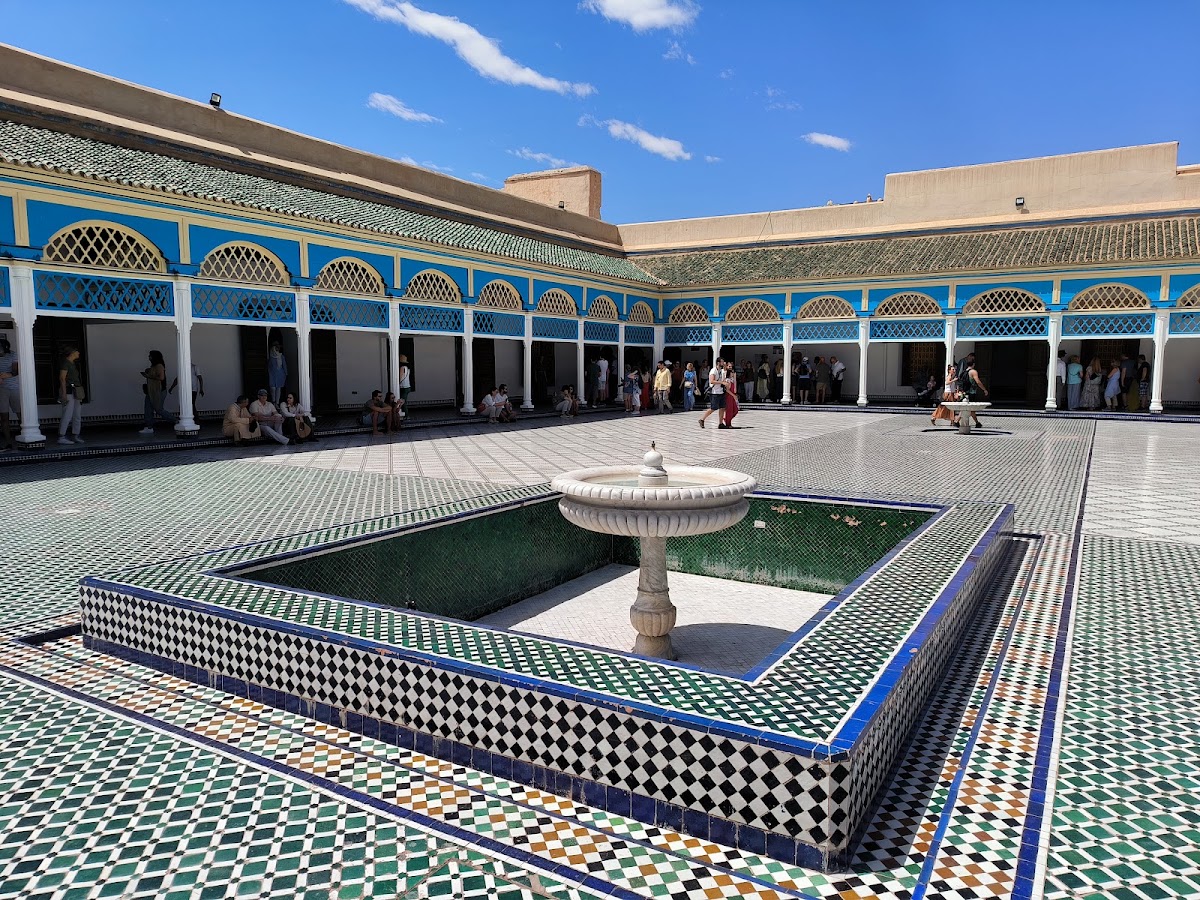
Escape the medina's noise inside Bahia Palace, built in the 1860s by Grand Vizier Si Moussa. You'll wander through courtyards lined with zellij tilework, fountains, and carved stucco. The private apartments open onto gardens where orange trees shade the paths. Just a five-minute walk away, the Saadian Tombs (70 dirhams, about $7) hide behind a wall. Peer down into the mausoleum of Ahmad al-Mansur, where the marble and gold leaf still gleam 400 years later. Visit early (the palaces open at 9 a.m.) before the tour groups arrive.
Yves Saint Laurent's Blue Oasis
A shock of cobalt blue against the dusty red of Marrakech, surrounded by cacti taller than a man.
Majorelle Garden is a five-minute taxi ride from the medina (20 dirhams, about $2). Artist Jacques Majorelle built this villa in the 1920s, and Yves Saint Laurent later saved it from demolition. You'll wind through bamboo groves, past lily ponds, and under bougainvillea arches. The famous blue villa houses the Berber Museum, filled with textiles and jewelry from the Atlas. Spend an hour here, then pop into the café for a mint tea under the shade of a giant yucca. Entry is 180 dirhams (about $18), plus 30 dirhams for the museum.
Couscous with a Family in the High Atlas
The road from Marrakech winds through red canyons, past terraced fields, until the air turns cool and the only sound is a rushing river.
Your driver takes you from the city to Imlil, the gateway to Toubkal National Park, in about 90 minutes. But the real magic happens when you leave the car. A short hike up through walnut groves brings you to a Berber home, where the family welcomes you with tea. You'll sit on cushions in a stone room, watching the mother shape couscous by hand. Lunch is served in clay tajines: tender chicken with preserved lemons, buttery couscous, and vegetables from the garden. The meal lasts two hours, and no one rushes you. Afterward, walk out to the terrace and see the peaks glowing in the afternoon light.
Walking Through Walnut Groves to Tacheddirt
The trail cuts through terraced fields where women in bright scarves work the soil, and the only sound is the clink of goat bells.
From Imlil, your guide leads you up to the Berber village of Tacheddirt, perched at 2,500 meters. It's a four-hour round-trip hike, moderate but rewarding. You pass through cherry orchards (if you go in spring) and cross streams on wobbly stone bridges. At the village, a local family offers you mint tea on their rooftop, with views of the entire valley. The concrete path here is not just a tourist trail; it's the village's lifeline to the market in Imlil. You'll see children walking home from school, donkeys laden with firewood, and men repairing irrigation channels. This is the Atlas you came to see.
Sunrise at Toubkal Refuge
Your breath fogs in the cold dark as stars still hang above the highest peak in North Africa.
If you have the legs for it, an optional sunrise trek to Toubkal Refuge starts at 3 a.m. from Imlil. With a headlamp and a guide, you ascend through boulder fields and past streams frozen at the edges. After two and a half hours, you reach the refuge at 3,207 meters. The sky turns from indigo to peach, then gold, and the range of the High Atlas unfolds beneath you. A hot bowl of oatmeal and mint tea awaits in the stone hut. You don't need to summit Toubkal to feel the triumph; the refuge view alone is worth every step. Descend by 10 a.m. for a late breakfast at your guesthouse.
The Student Mosque Where You Can Hear a Pin Drop
Stepping through the bronze door, the medina's roar disappears into a quiet courtyard of marble and cedar.
Back in Marrakech, Medersa Ben Youssef is a 14th-century Islamic college that once housed 900 students. The courtyard is a masterpiece: a central pool reflects the carved stucco and zellij, and the student dormitories open onto tiny cells with wooden doors worn smooth by centuries. You can climb to the roof for a view of the medina's satellite dishes and minarets. From the medersa, it's a three-minute walk to Souk Semmarine, the main artery of the medina's market. Vendors sell leather pouffes, silver lanterns, and argan oil. Haggle, but keep it friendly; the chaos is part of the charm.
Midnight Lights at Djemaa el-Fna
Under a canopy of lanterns, the square glows with food stalls, each one a constellation of steam and spice.
Your last night in Marrakech ends where it started: Djemaa el-Fna. By 10 p.m., the daytime performers have given way to the night market. Row after row of makeshift kitchens serve snails in broth, lamb skewers, and fried sardines. Take a seat at stall number 3 or 17 (locals have favorites) and order a bowl of harira soup. The photographers cluster here, trying to capture the scene for one last time. Tripods are allowed if you stay off the main walking paths. Shoot from the edge of the square, where the light from the lamps catches the steam rising from the grills. It's a frantic, beautiful farewell.
Ready to book?
Book the rest of Marrakech And Atlas, Morocco
Handpicked partner searches, dates pre-filled. Pricing is identical to going direct — the partner shares a small commission with Tabi so this guide stays free.
Frequently asked
When should I visit Marrakech and the Atlas Mountains?
The best months are March to May and September to November, when daytime temperatures are warm (70-85°F / 21-29°C) and the Atlas trails are dry. Summer (June-August) can be scorching in Marrakech, but the mountains offer cooler escapes. Winter (December-February) brings snow to Toubkal, making the sunrise trek more challenging but stunning.
What should I pack for the Atlas Mountains trek?
For the day hikes and optional Toubkal sunrise trek, bring sturdy walking shoes, layers (a fleece and windproof jacket), sunscreen, a hat, and a reusable water bottle. In winter, add a warm jacket and gloves for the pre-dawn ascent to the refuge. A headlamp is essential if you plan to do the 3 a.m. start.
How do I get from Marrakech to Imlil?
The easiest way is a private transfer (about 90 minutes, 300-400 dirhams / $30-40), which you can arrange through your riad or book online. Shared grand taxis leave from the Bab er-Rob stop in Marrakech for about 50 dirhams per person, but they wait until full. The road is paved and straight forward.
Is it safe to walk through the Marrakech medina at night?
Yes, the medina is generally safe, especially around Djemaa el-Fna, which is well lit and crowded until midnight. Stick to main thoroughfares and stay aware of your belongings (pickpocketing is a risk). Solo female travelers often feel comfortable, but it's wise to keep a phone handy and avoid isolated alleys after dark.
Skip the planning
Your Marrakech And Atlas, Morocco trip, ready to go
Adopt the day-by-day itinerary we built to match this guide. Every stop is a real place, every booking link is validated. Free forever, no card needed.
Open the Marrakech And Atlas, Morocco itinerary