
Munich, Germany
What to Do in Munich in 4 Days: Beer Halls, Castles, and the Walk Home
A picture-first walk through Munich's old town, its greenest park, a fairy-tale castle day, and the Wirtshaus dinners in between.
TL;DR
Munich is beer-hall brass bands, a clock tower that stops the whole square, and a train that drops you at a castle out of a storybook.
- Hofbrauhaus benches where strangers clink liter mugs by 11am
- Marienplatz Glockenspiel: 43 bells, jousting knights, everyone looking up
- Viktualienmarkt cheese stalls under the striped maypole
- Chestnut shade at the Chinese Tower beer garden in the English Garden
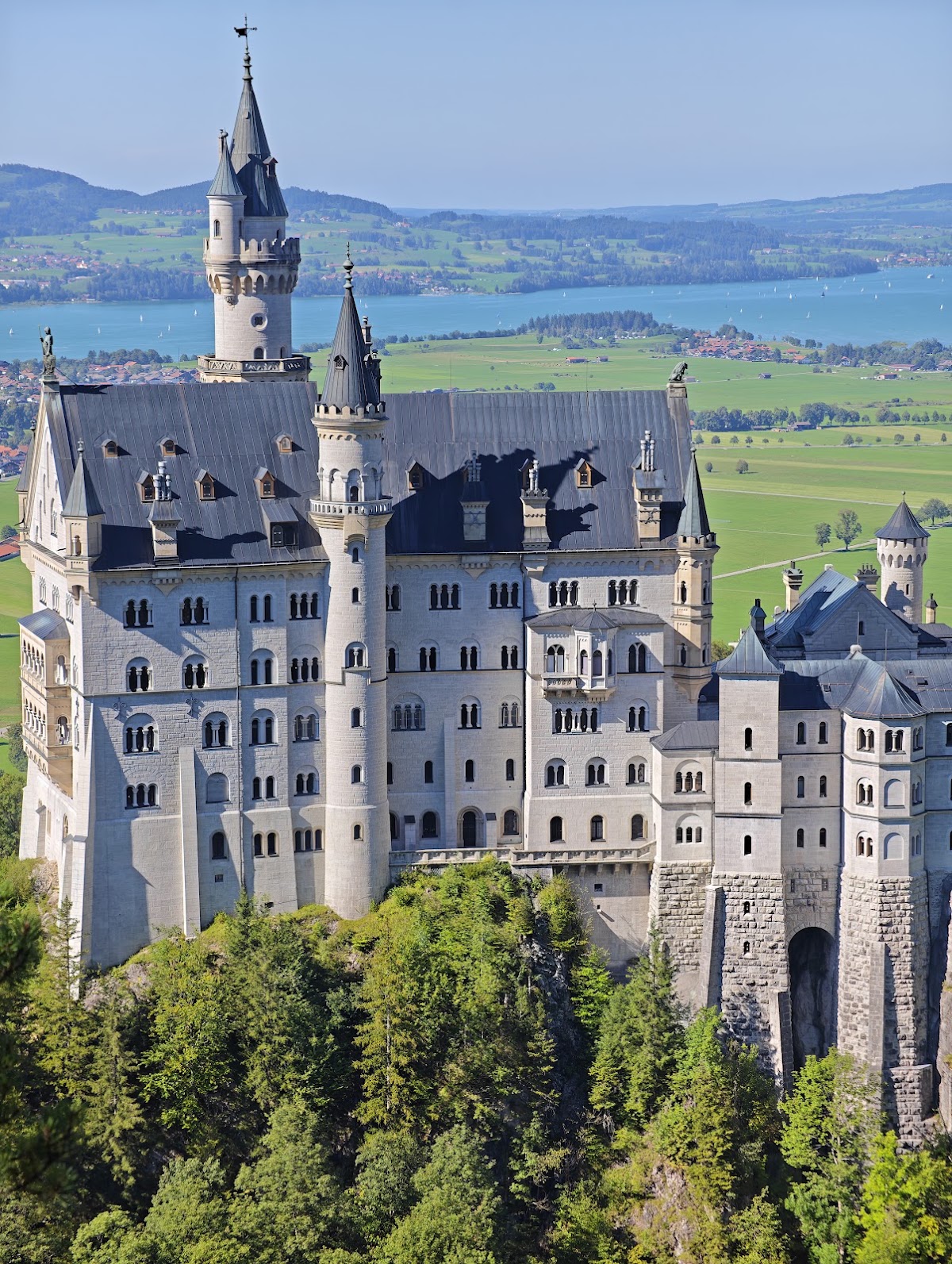
- Neuschwanstein's towers seen from the Marienbrucke footbridge
Have this trip planned in 60 seconds
We built the Munich, Germany itinerary that pairs with this guide, day-by-day with verified venues and one-tap booking links. Free to adopt, edit however you want.
First Liter at the Hofbrauhaus
A brass band in lederhosen, the slap of dumplings hitting plates, and the low roar of a room that has been doing exactly this since 1589.
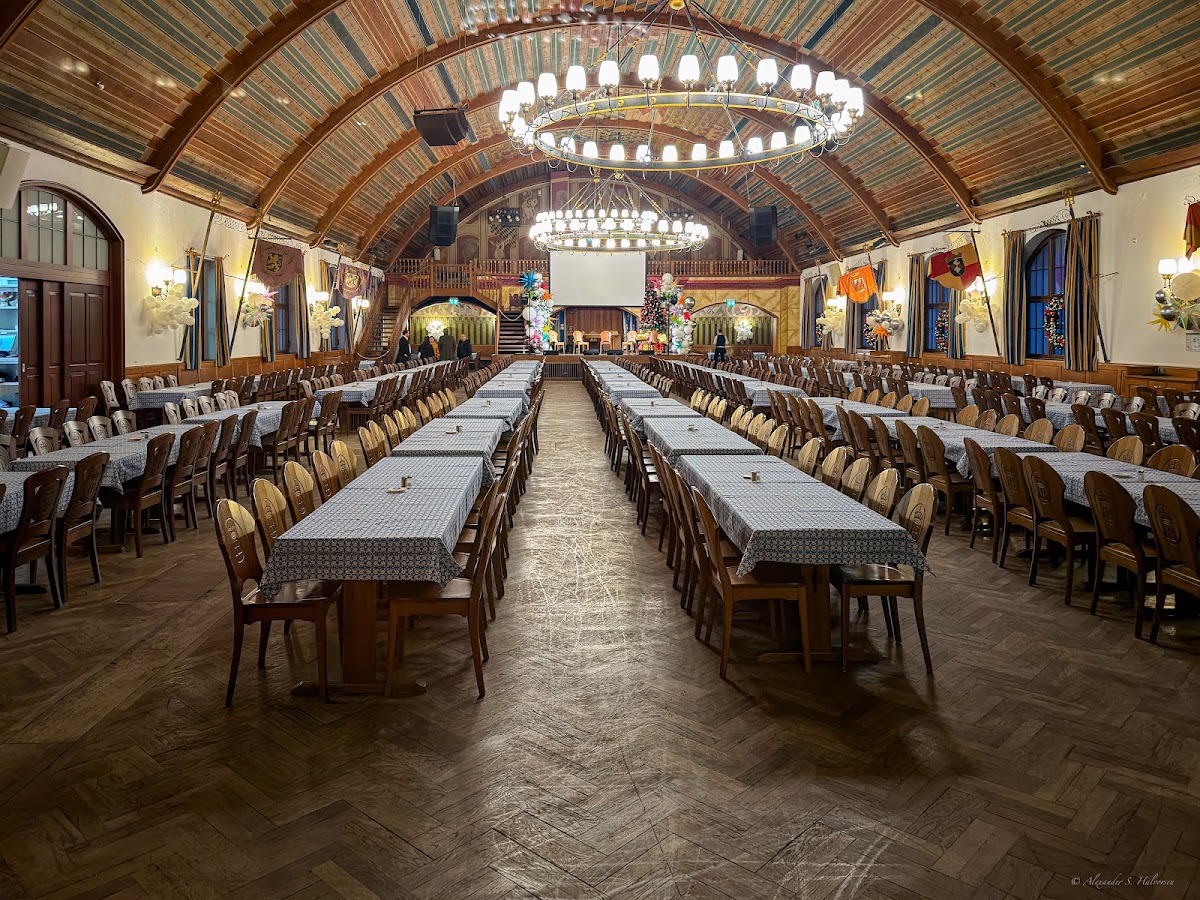
Start where Munich has always started its evenings. The Hofbrauhaus am Platzl sits a two-minute walk east of Marienplatz, and by late morning the ground-floor Schwemme is already loud, its vaulted ceiling painted in green and gold.
Grab a spot on the long shared benches (you will be sitting with strangers, that is the point) and order a Mass, the one-liter mug, of the house Original for around 12 euros, about 13 USD. A pretzel the size of your face and a plate of Weisswurst with sweet mustard rounds it out.
Don't overthink it. This is the warm-up, not the whole day, and you have an old town to see before the light goes.
When the Whole Square Looks Up
At 11am a tune floats out of the New Town Hall tower, and every neck in Marienplatz tilts back at once.
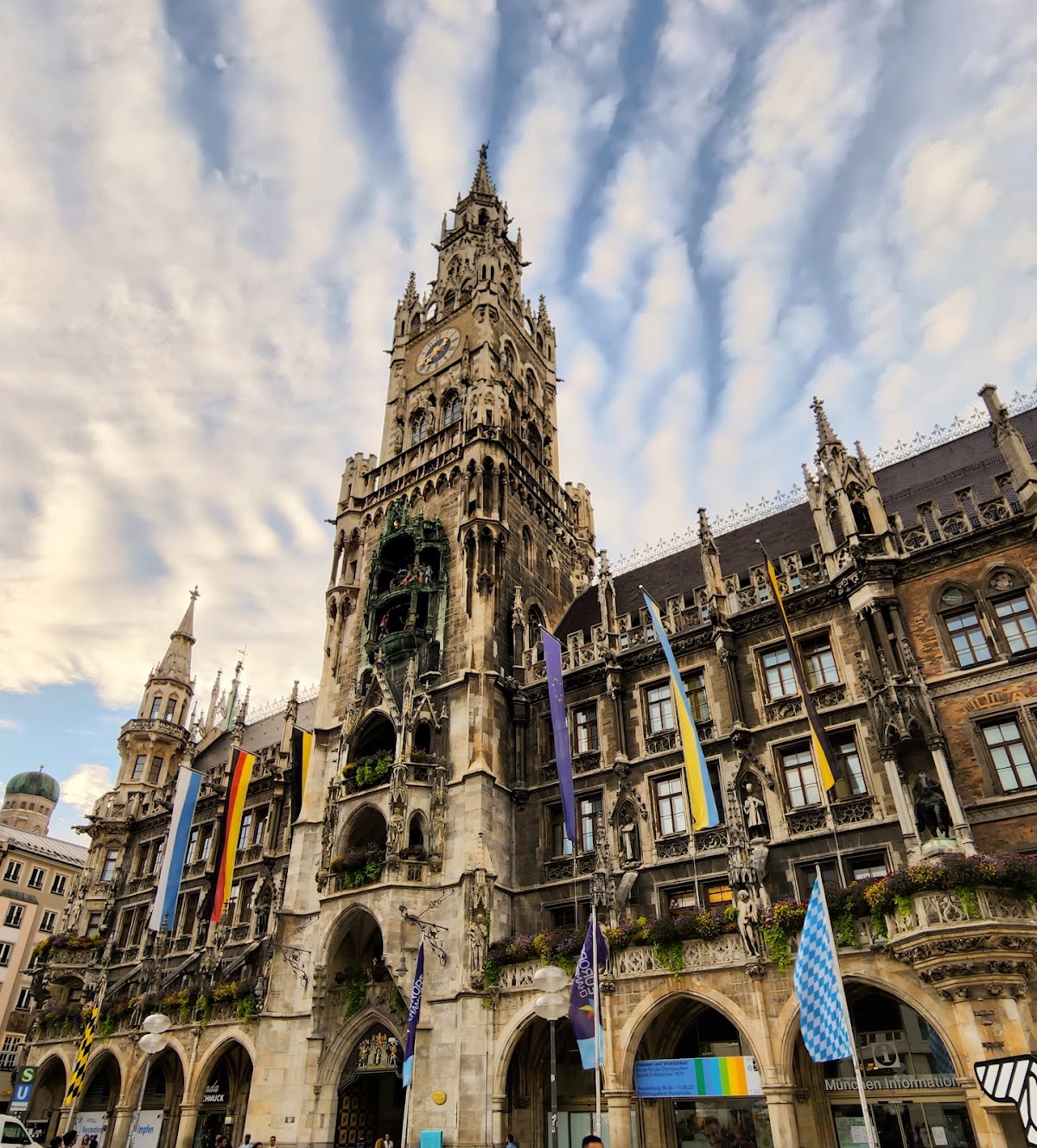
Marienplatz is the beating center of the old town, ringed by the neo-Gothic Neues Rathaus with its lacy stone facade. Time your arrival for the Glockenspiel: 11am daily (also noon, and 5pm in summer), when 43 bells ring and 32 life-sized figures spin through a jousting tournament and a barrel-makers' dance. It runs a full 12 to 15 minutes, so find a coffee and settle in.
Afterward, climb or ride the lift up the Rathaus tower for a rooftop view of terracotta and spires (around 6.50 euros, about 7 USD).
Stand in the middle of the square and you have the golden Mariensaule column above you, cafe tables around you, and the sound of a busker somewhere behind. This is your bearings-point for everything else.
The Twin Domes You Can See From Anywhere
Two green onion domes floating over the rooftops, and a cool hush the second the heavy doors close behind you.
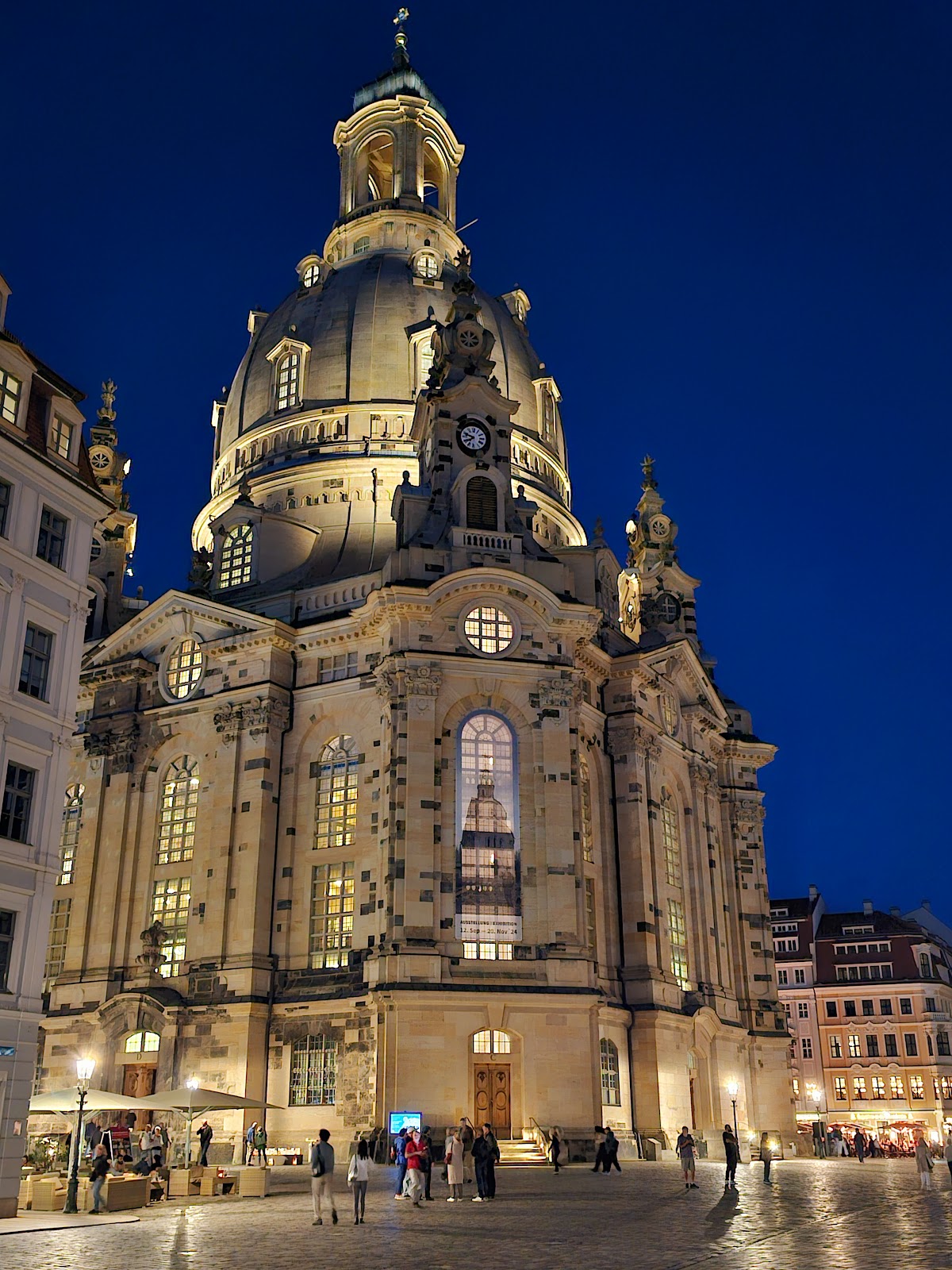
A short walk northwest of Marienplatz brings you to the Frauenkirche, Munich's cathedral, whose two brick towers (each capped with that distinctive Renaissance dome) are the city's protected silhouette. By local rule, nothing in the center is built tall enough to hide them.
Step inside for the sudden quiet, the tall bare-brick nave, and the famous Teufelstritt, the "Devil's Footprint," a dark mark set into the entrance floor with a story attached.
Entry is free. Give yourself ten minutes of calm here before you plunge back into the market crowds.
Lunch at the Market Under the Maypole
Wheels of alpine cheese, buckets of cut flowers, the smell of grilling sausage, and a blue-and-white striped maypole tying it all together.
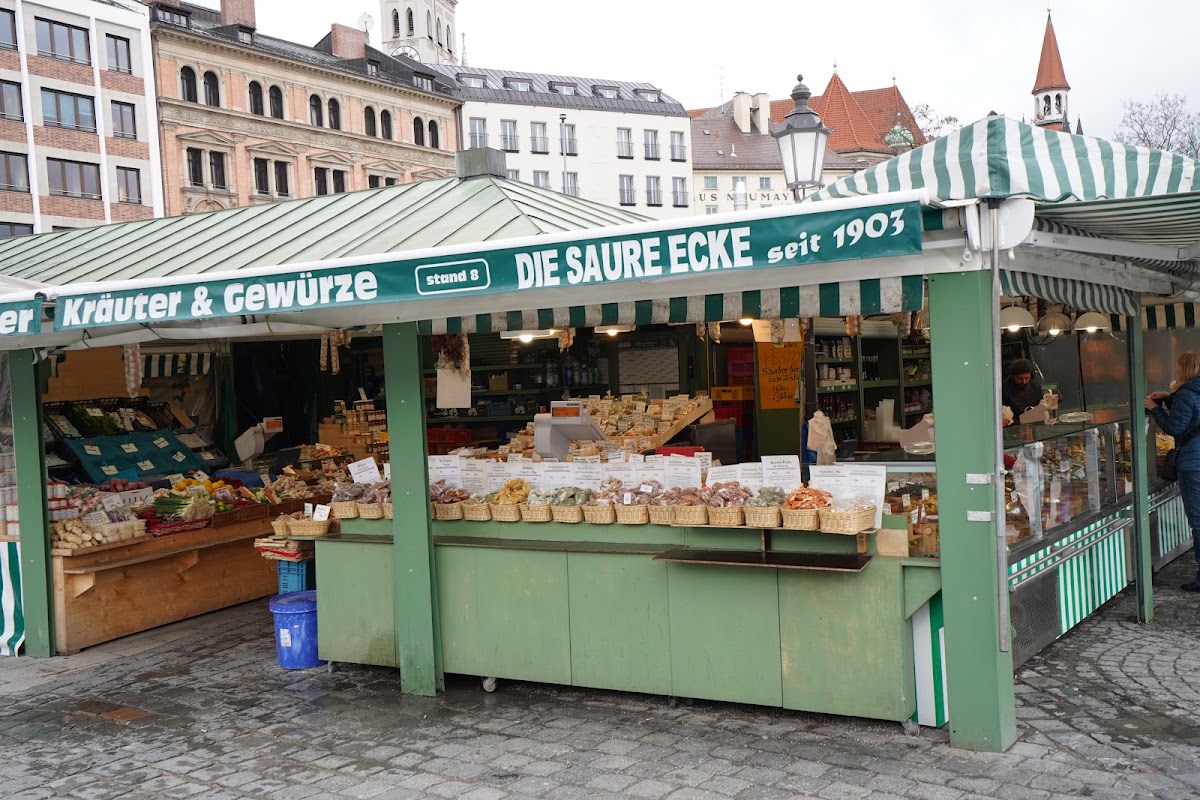
Just south of Marienplatz, Viktualienmarkt has been Munich's open-air food market for over 200 years. Wander the stalls: honey and Bavarian cheese, fresh pretzels, exotic fruit, jars of mustard, and a dozen little stands where you eat standing up.
Grab a Leberkassemmel (a warm meatloaf slice in a roll) or a plate from a fish stall, then take it to the market's own small beer garden in the shade of the maypole. Under Bavarian tradition the beer served here rotates between the city's big breweries.
It is cash-friendly, casual, and the best value lunch in the old town. Elbow room is part of the charm.
Chestnut Shade at the Chinese Tower
A five-story wooden pagoda, gravel crunching underfoot, and a thousand people sharing long tables beneath old chestnut trees.
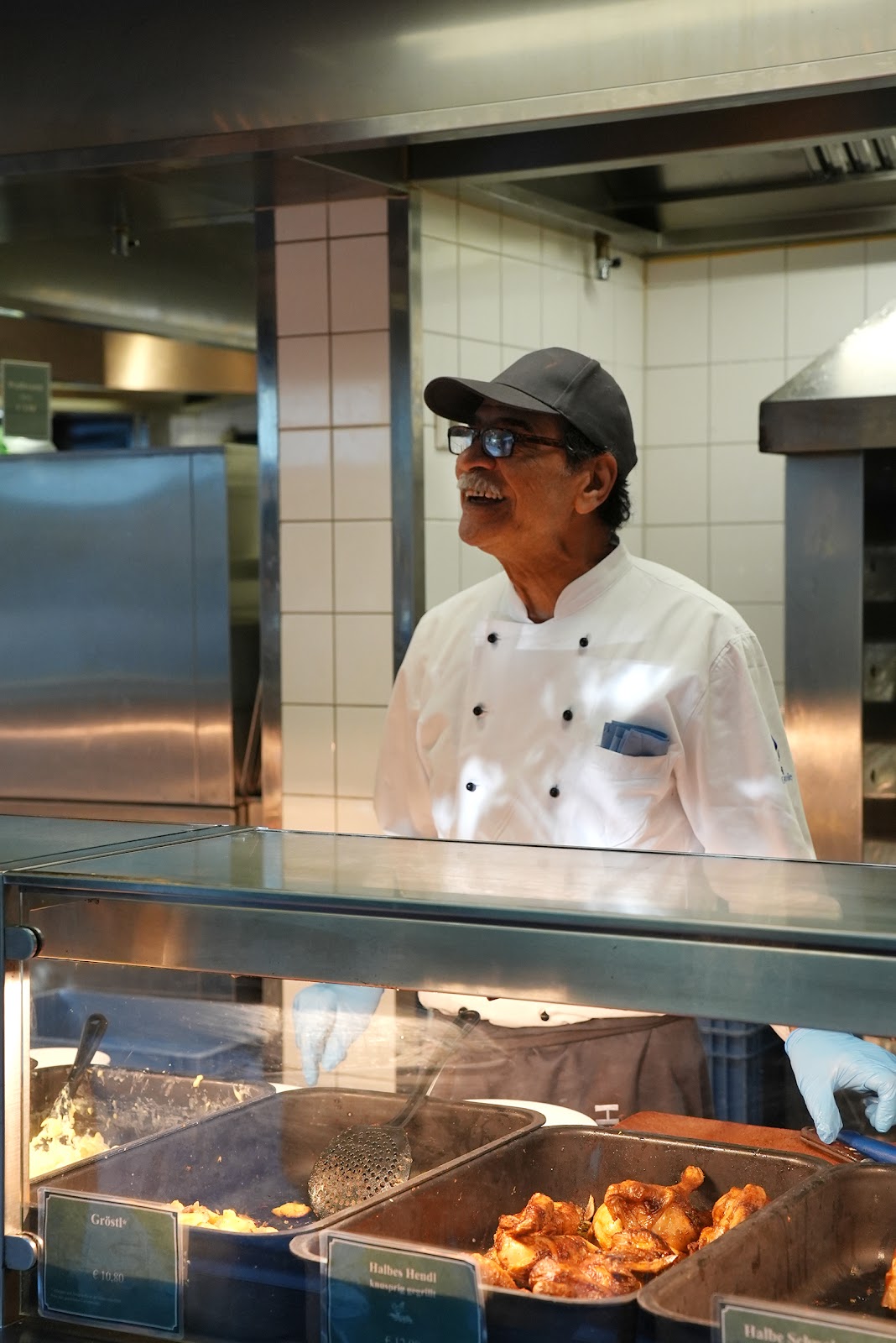
The Englischer Garten is one of the largest city parks in the world, bigger than London's Hyde Park, and it runs for kilometers along the Isar. Walk in from Schwabing and let the paths, meadows, and little streams pull you deeper.
The beer garden at the Chinesischer Turm, the Chinese Tower, is the classic stop: around 7,000 seats under the chestnuts, a brass band that sometimes plays from the pagoda balcony, and self-serve counters for a Mass and a half chicken. A liter runs roughly 11 to 12 euros, about 12 to 13 USD.
On your way, detour to the Eisbach standing wave near the park's south end, where surfers ride a permanent river wave in the middle of the city. It never stops being surreal.
Old Masters, Then a Baroque Palace
Rubens the size of a wall in one hour, and a golden state coach behind glass the next.
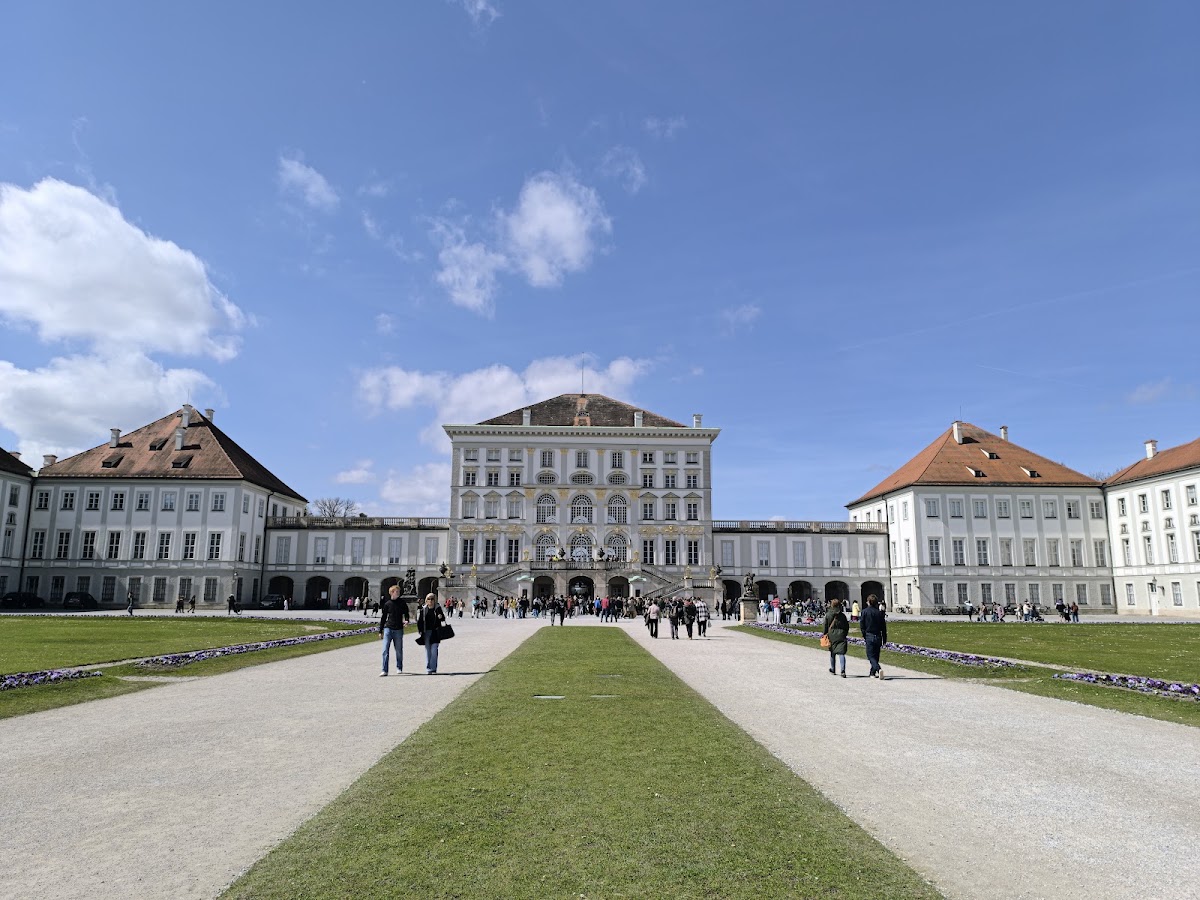
Munich's museum quarter, the Kunstareal in Maxvorstadt, packs centuries into a few walkable blocks. The Alte Pinakothek holds one of Europe's great collections of old masters (Durer, Rembrandt, Rubens), while a few steps away the Pinakothek der Moderne covers modern art, design, and architecture under one huge rotunda. A tip worth knowing: several Bavarian state museums charge just 1 euro for admission on Sundays.
When the galleries are done, ride out to Schloss Nymphenburg on the city's northwest edge. The summer palace of Bavaria's royals stretches wide and white behind a formal canal, with gardens you can walk for hours and, inside, the Gallery of Beauties commissioned by King Ludwig I.
Pace yourself. Pick one gallery and one palace rather than trying to swallow all four in a day.
The Castle Out of a Storybook
White limestone towers rising out of the pine forest, an alpine lake below, and a footbridge that gives you the shot everyone comes for.
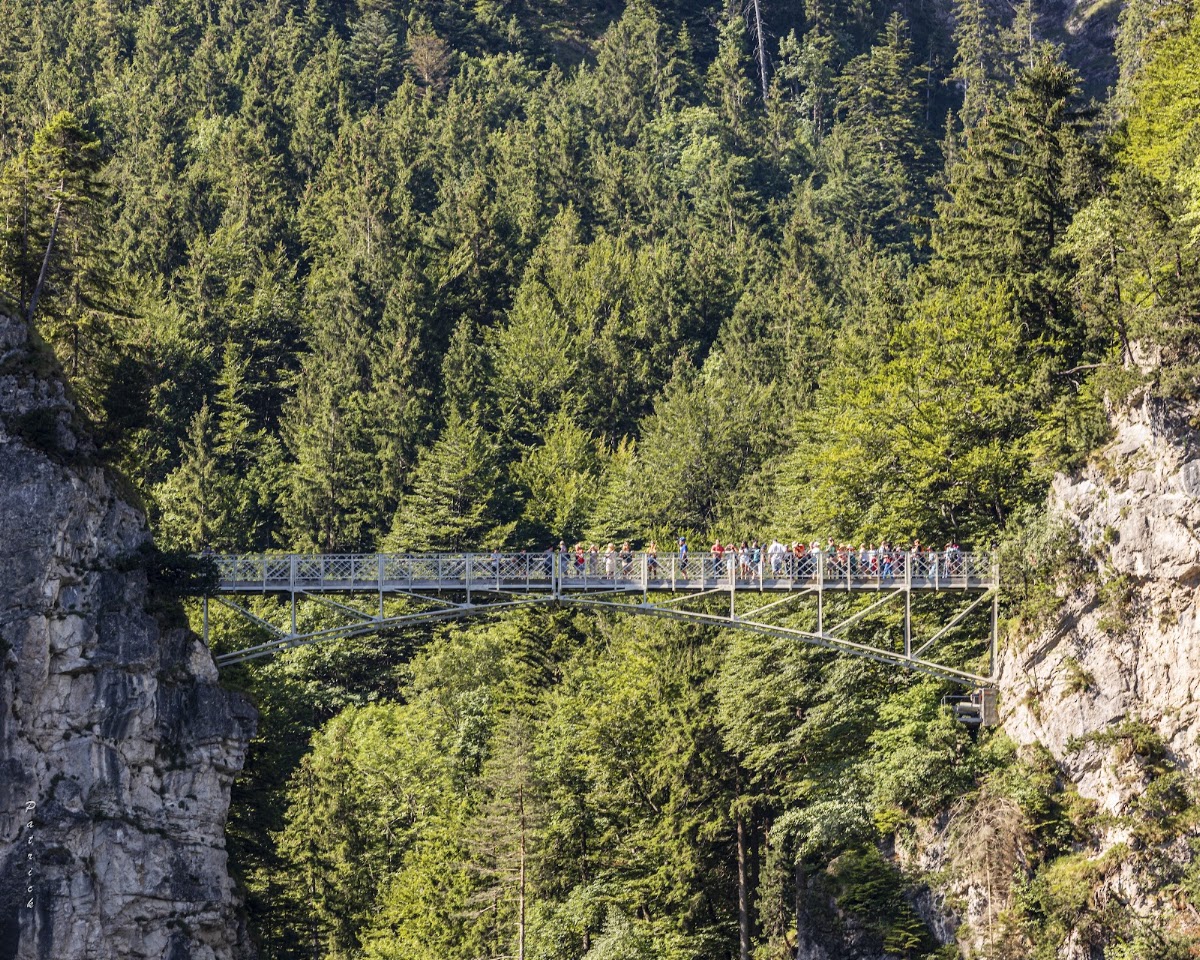
Give a full day to Neuschwanstein, the mad, romantic castle King Ludwig II built into the Bavarian foothills. From Munich Hauptbahnhof, take the train to Fussen (around two hours), then a short bus to Hohenschwangau at the base. Buy your timed castle ticket in advance; entry is by guided tour only and slots sell out.
From the village it is an uphill walk (or a horse-drawn carriage) to the gate. The must-do detour is the Marienbrucke, a slender footbridge strung across a gorge behind the castle. This is where the towers line up perfectly against the mountains, so bring patience for the crowd and a steady grip on your phone.
Back in Munich by evening, aim for a hearty dinner at Augustiner Stammhaus in the Altstadt, where the roast pork and dark beer feel very well earned.
Fast Cars, a Grand Boulevard, and a Last Wirtshaus
The swooping double-cone of a car museum, then the wide sweep of Munich's most elegant street at dusk.
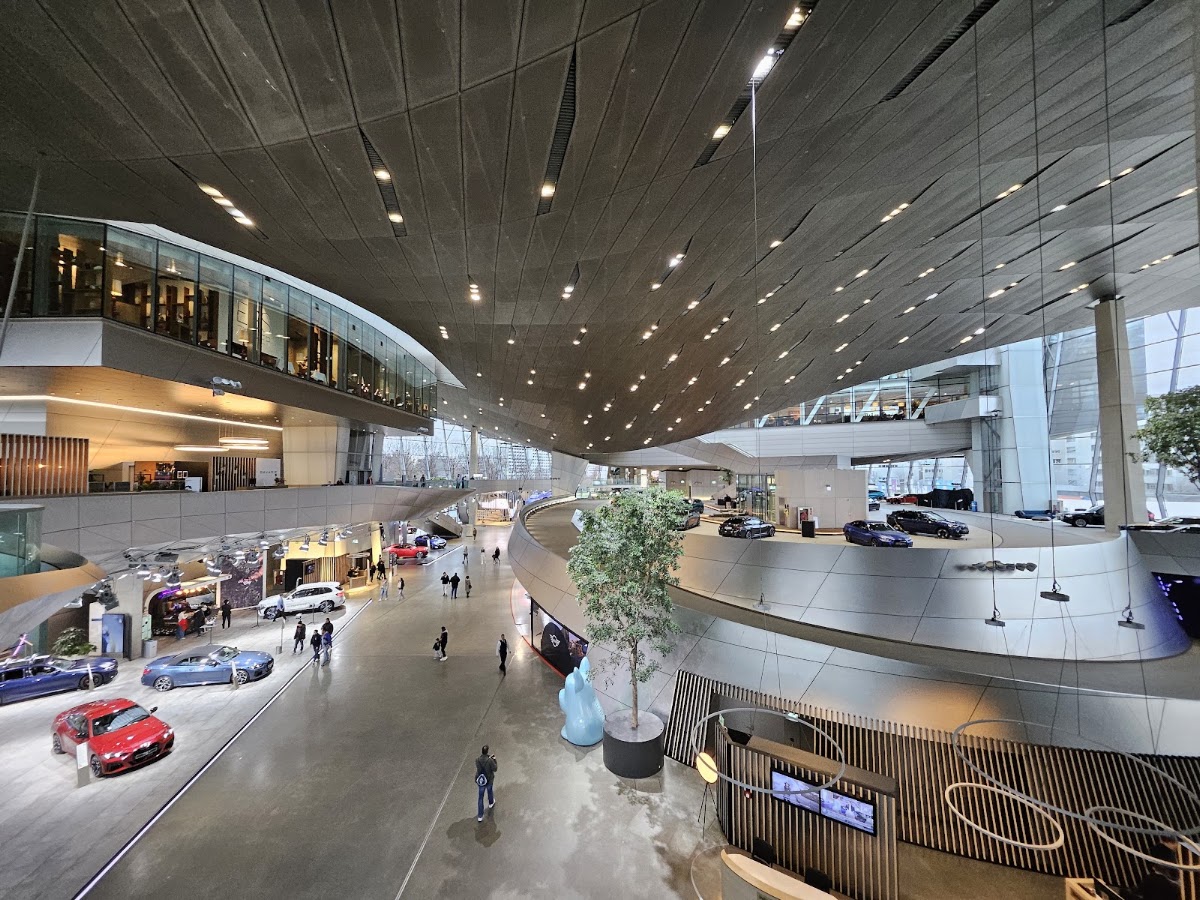
Save the last morning for Munich's modern side. Olympiapark, built for the 1972 Games, spreads out under its famous tent-like canopy; ride up the Olympiaturm (around 13 euros, about 14 USD) for a 190-meter view that reaches the Alps on a clear day. Across the road, BMW Welt is a free, showroom-meets-architecture spectacle, with the museum next door for those who want the full history.
Back in the center, stroll Maximilianstrasse, Munich's grand 19th-century boulevard lined with luxury shops, the opera house, and stately facades. It is made for a slow, window-shopping walk as the afternoon light goes gold.
For your farewell dinner, book a table at Spatenhaus an der Oper facing the opera house: Bavarian classics done a notch more refined, a proper way to raise a last glass before you go.
Ready to book?
Book the rest of Munich, Germany
Handpicked partner searches, dates pre-filled. Pricing is identical to going direct — the partner shares a small commission with Tabi so this guide stays free.
Frequently asked
How many days do you need in Munich?
Four days is the sweet spot: one for the old town (Marienplatz, Hofbrauhaus, Viktualienmarkt, Frauenkirche), one for the English Garden and the museum quarter, a full day out to Neuschwanstein, and a final day for Olympiapark, BMW Welt, and Maximilianstrasse. Three days works if you drop one of the modern-Munich stops.
Is Neuschwanstein doable as a day trip from Munich?
Yes, and it is the classic Munich day trip. Take the train from Munich Hauptbahnhof to Fussen (about two hours), then a short bus to Hohenschwangau. Buy the timed, guided-tour ticket in advance because slots sell out, and budget time for the uphill walk and the Marienbrucke viewpoint. You can be back in the city for dinner.
When is Oktoberfest, and is Munich worth visiting outside it?
Oktoberfest runs roughly mid-September to the first weekend of October on the Theresienwiese. It is spectacular but packed and pricey, with hotels booked out far ahead. Munich is very much worth visiting the rest of the year, since the beer halls and gardens run year-round and spring through early autumn is lovely for the parks and day trips.
How much does a liter of beer cost in Munich?
In a typical beer hall or beer garden, a Mass (one liter) runs about 11 to 13 euros, roughly 12 to 14 USD, depending on the venue. Beer gardens are often self-service and a touch cheaper, and many are cash-preferred, so carry euros.
Do I need a car to see Munich and the castle?
No. The city center is walkable and the U-Bahn and S-Bahn cover everything else, including Nymphenburg and Olympiapark. Neuschwanstein is reachable by train and bus. A car only makes sense if you plan to combine several rural Bavarian sites in one trip.
Skip the planning
Your Munich, Germany trip, ready to go
Adopt the day-by-day itinerary we built to match this guide. Every stop is a real place, every booking link is validated. Free forever, no card needed.
Open the Munich, Germany itinerary