
Muscat, Oman
What to Do in Muscat in 5 Days: Souqs, Wadis, and a Sea Full of Reefs
A picture-first walk through Muscat, from frankincense-scented souqs to the turquoise swim at the end of Wadi Shab.
TL;DR
Five days where white forts meet black mountains and the sea glows like a swimming pool, with a souq you'll smell before you see it.
- Mutrah Souq at dusk: frankincense smoke, silver khanjars, lantern light
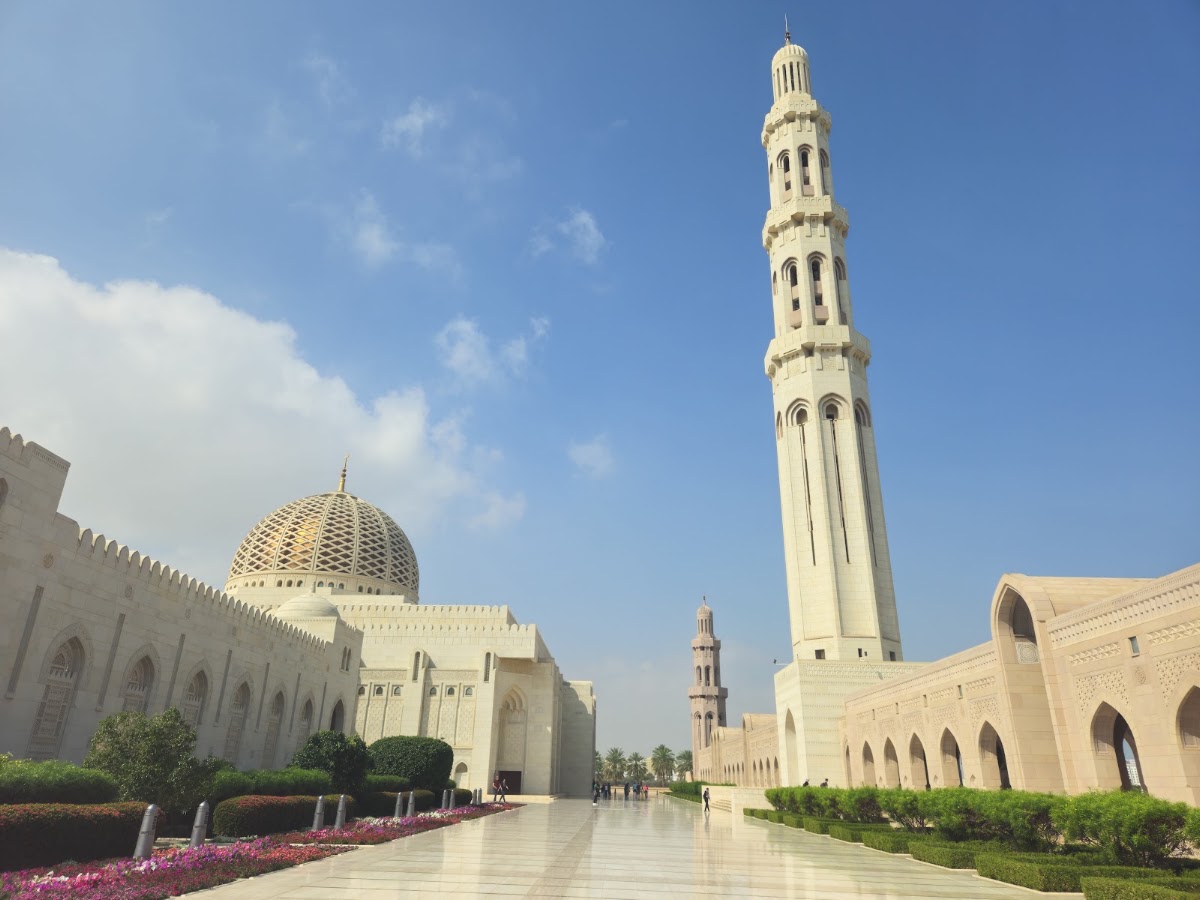
- Sultan Qaboos Grand Mosque: the world's second-largest hand-woven carpet underfoot
- Daymaniyat Islands: snorkelling over turtles in glass-clear water
- Wadi Shab: a 45-minute canyon walk to a swim inside a cave
- Bimmah Sinkhole: diving into impossibly blue water between two seas
Have this trip planned in 60 seconds
We built the Muscat, Oman itinerary that pairs with this guide, day-by-day with verified venues and one-tap booking links. Free to adopt, edit however you want.
The Drive In, When the Mountains Turn the Color of Rust
You land, step outside, and the heat wraps around you like a warm towel. Then the taxi climbs a ridge and the Hajar Mountains roll out, jagged and the color of old copper.
Muscat International sits about 30 to 40 minutes from the old-town hotels near Mutrah, longer if you're staying out toward the beach resorts in Qurum or Al Mouj. The road hugs the coast, so your first real view of Oman is the Gulf of Oman on one side and bare rock cliffs on the other.
Grab water and a local SIM before you leave arrivals; mobile data makes everything here (maps, booking the Wadi Shab car, checking tide times for snorkelling) far easier. The airport has Omantel and Ooredoo counters, but setting up an eSIM before you fly means you're online the second you land.
Don't over-plan day one. Drop your bags, splash cold water on your face, and head straight for Mutrah while the light goes gold.
Mutrah Souq at Dusk, Where You Smell It Before You See It
Frankincense smoke curls out of a doorway and hangs in the warm air. Silver daggers catch the lantern light, and somewhere a shopkeeper is pouring cardamom coffee into a tiny cup for you.
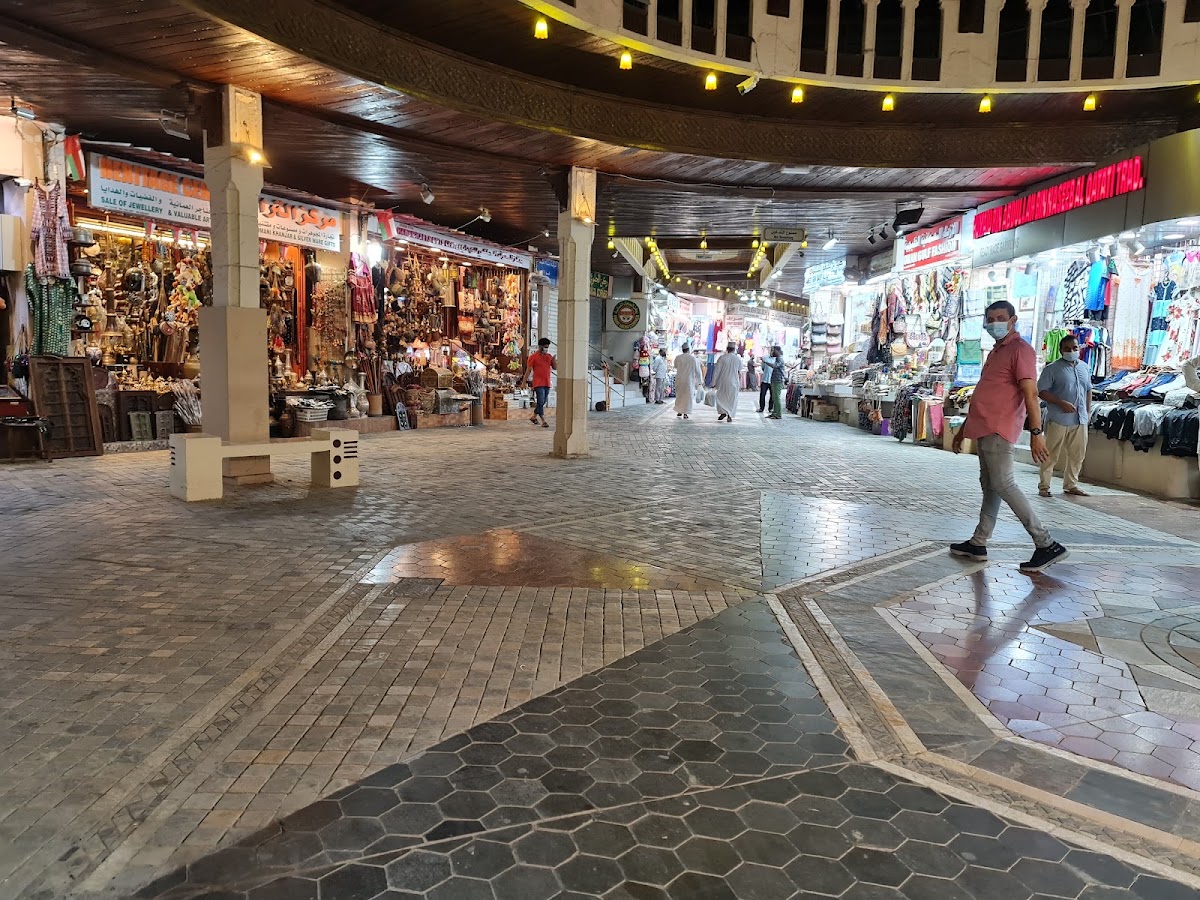
Start on the Mutrah Corniche, the curved waterfront where fishing dhows bob against a backdrop of whitewashed houses and a hillside watchtower. Walk it slowly, then duck into the Souq through the carved wooden entrance.
Inside, the alleys twist under a high timber ceiling. You'll pass piles of frankincense resin, coils of silver khanjars (the curved ceremonial daggers), stacks of pashminas, and little trays of dates offered for free. Prices aren't fixed, so a friendly back-and-forth is expected. A small bag of good-quality frankincense runs around 2 to 5 OMR (roughly 5 to 13 USD).
Come back out to the Corniche after dark. The forts on the headland light up, the air finally cools, and families stroll the promenade eating ice cream. This is the Muscat people fall for.
The Carpet You Could Get Lost In
You slip off your shoes, step onto a carpet the size of a football pitch, and look up at a chandelier dripping with Swarovski crystal. The marble under your feet is cool even in August.
The Sultan Qaboos Grand Mosque is the quiet showstopper of any Muscat trip. The main prayer hall holds one of the largest single-piece hand-woven carpets in the world, made by hundreds of weavers over years, and a chandelier that seems to pour light down from the dome.
Timing matters: non-Muslim visitors are welcome in the mornings only, generally around 8am to 11am, Saturday through Thursday (closed to tourists on Fridays). Dress is strict and worth getting right: long trousers or skirts, covered shoulders, and a headscarf for women. Entry is free. Check the official visitor hours before you go, as they shift with prayer times and Ramadan (ask your hotel or see the Ministry of Awqaf guidance).
Go early. The morning light through the arches is soft, the crowds are thin, and you'll have room to just stand and take it in.
Old Muscat: A Palace in Blue and Gold, Framed by Two Forts
Turn a corner in Old Muscat and there it is: Al Alam Palace, with its flared columns painted royal blue and glinting gold, hemmed in by bare brown cliffs.
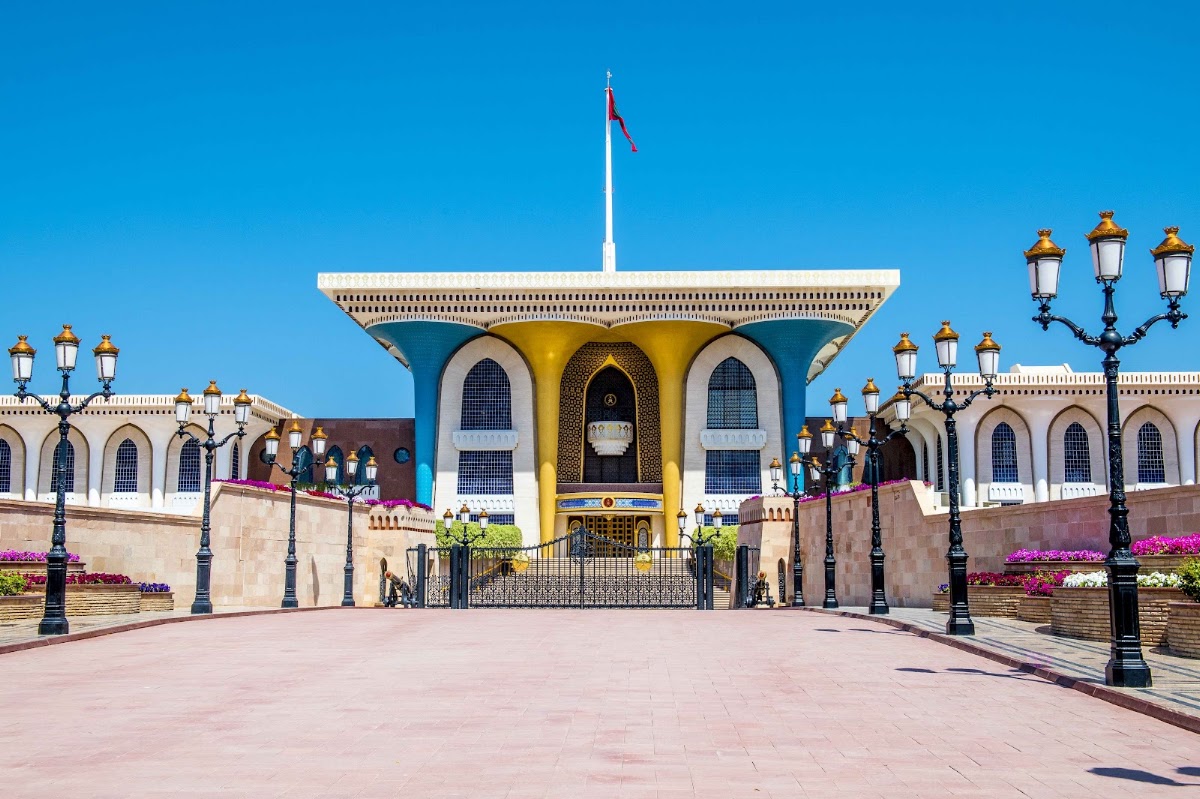
You can't go inside the palace (it's a ceremonial royal residence), but the photo from the gate, with the twin Portuguese-era forts of Al Jalali and Al Mirani standing guard on the rocky headlands above, is the classic Muscat shot.
While you're in this pocket of the old town, give an hour to the Bait Al Zubair Museum. It's a well-told walk through Omani life: khanjars, silver jewellery, weaponry, old photographs, traditional dress, and a courtyard with a reconstructed village. Entry is around 2 OMR (about 5 USD), and it does more to explain what you're seeing in the souq than any guidebook.
The whole quarter is compact and walkable. Early morning or late afternoon spares you the midday glare off the white walls.
An Evening at the Opera House, Even If You Don't Catch a Show
Pale stone archways glow against the night sky, and marble corridors open onto chandeliers and carved wooden screens. It feels less like a theatre and more like a palace that happened to put on a concert.
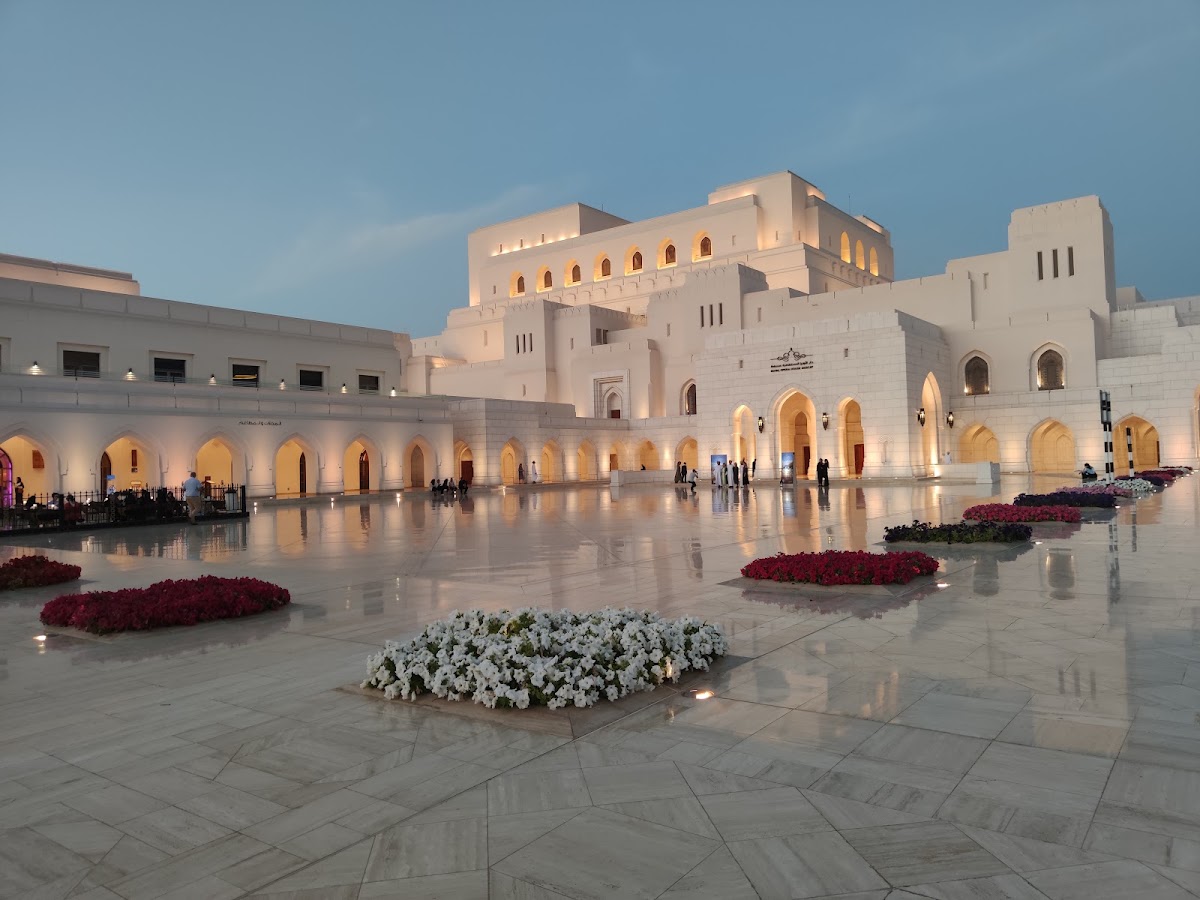
The Royal Opera House Muscat is one of the most beautiful modern buildings in the Gulf, blending Omani craftsmanship with world-class acoustics. Even the daytime guided tour (usually mid-morning, check the schedule) lets you wander the auditorium and the luminous public halls.
If your dates line up with a performance, book ahead; the programme runs from opera and ballet to Arabic concerts and orchestras. Dress smartly (no shorts or flip-flops). Tickets vary widely by show and seat, so check the official Royal Opera House Muscat website for the current calendar.
It pairs perfectly with a seaside seafood dinner nearby: grilled hammour, prawns, and saffron rice, with the Gulf air coming off the water.
The Daymaniyat Islands, Where the Water Looks Fake
The boat cuts the engine, the sea goes glass-still, and you look straight down through electric-blue water to a reef where a turtle is calmly chewing on sea grass.
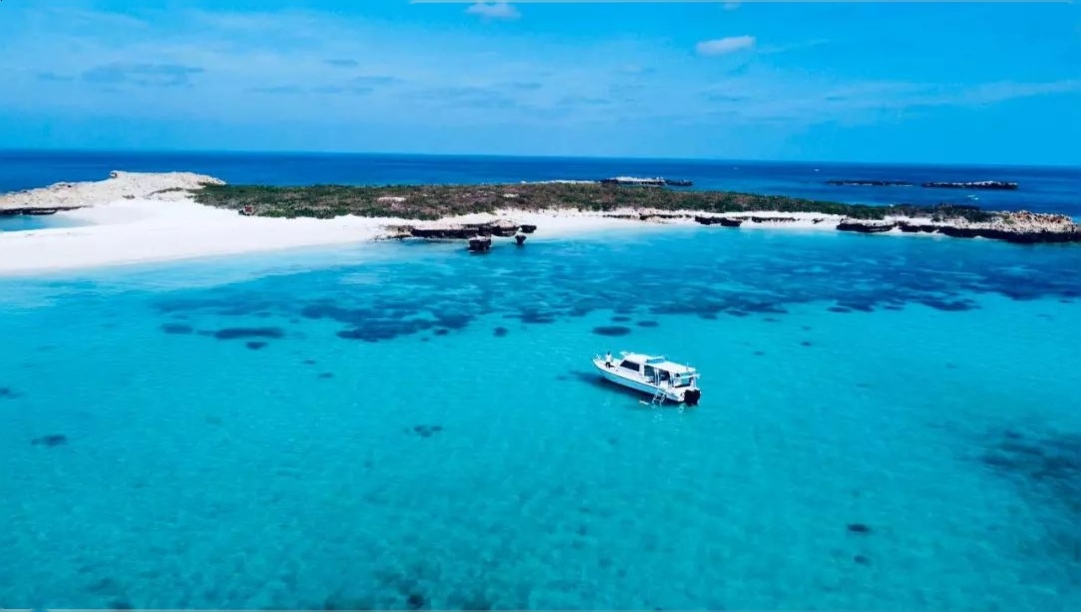
The Daymaniyat Islands are a protected nature reserve about an hour's boat ride off the coast northwest of Muscat, and they're the best snorkelling in reach of the city. Expect coral gardens, reef sharks, rays, turtles, and clouds of fish in water that stays warm most of the year.
You go with a licensed operator; independent landing isn't allowed, and there's a small marine reserve permit fee bundled into most tours. Trips usually leave early from the Al Mouj or Seeb marinas, so it's a morning affair. The islands close to visitors during the seabird nesting season (roughly May to October landings are restricted), though snorkelling from the boat often still runs, so confirm when you book.
Bring reef-safe sunscreen, a rash guard, and motion-sickness tablets if open water isn't your friend. The crossing can be bumpy; the reward is unforgettable in the honest sense of the word.
Wadi Shab: The Canyon Walk That Ends in a Secret Cave
A tiny boatman ferries you across an emerald pool for a few hundred baisa, and then you're walking into a gorge where the rock soars up and the water glows jade green between the boulders.
Wadi Shab sits about 1.5 hours south of Muscat along the coastal road, and it's the day everyone remembers. From the car park, a short boat ride gets you over the first pool, then it's a 40 to 45 minute walk along the canyon floor, part shaded, part scrambling over rocks, past date palms and still green pools.
At the end you reach a series of swimming holes. Leave your bag on a dry ledge, swim through the last pool, and squeeze through a narrow gap in the rock into a hidden cavern with a waterfall tumbling inside. It's genuinely magic, and genuinely requires you to be comfortable swimming. Wear sturdy sandals you can walk and swim in, carry water, and start early to beat both the heat and the crowds.
Hiring a private car with a driver for the day is the easy way to do this; it also lets you fold in a stop at Bimmah on the way back.
Bimmah Sinkhole, a Pool of Blue Dropped Into the Rock
You walk up to what looks like ordinary scrubland, then the ground simply opens into a deep limestone bowl filled with water so blue and clear it hardly looks real.
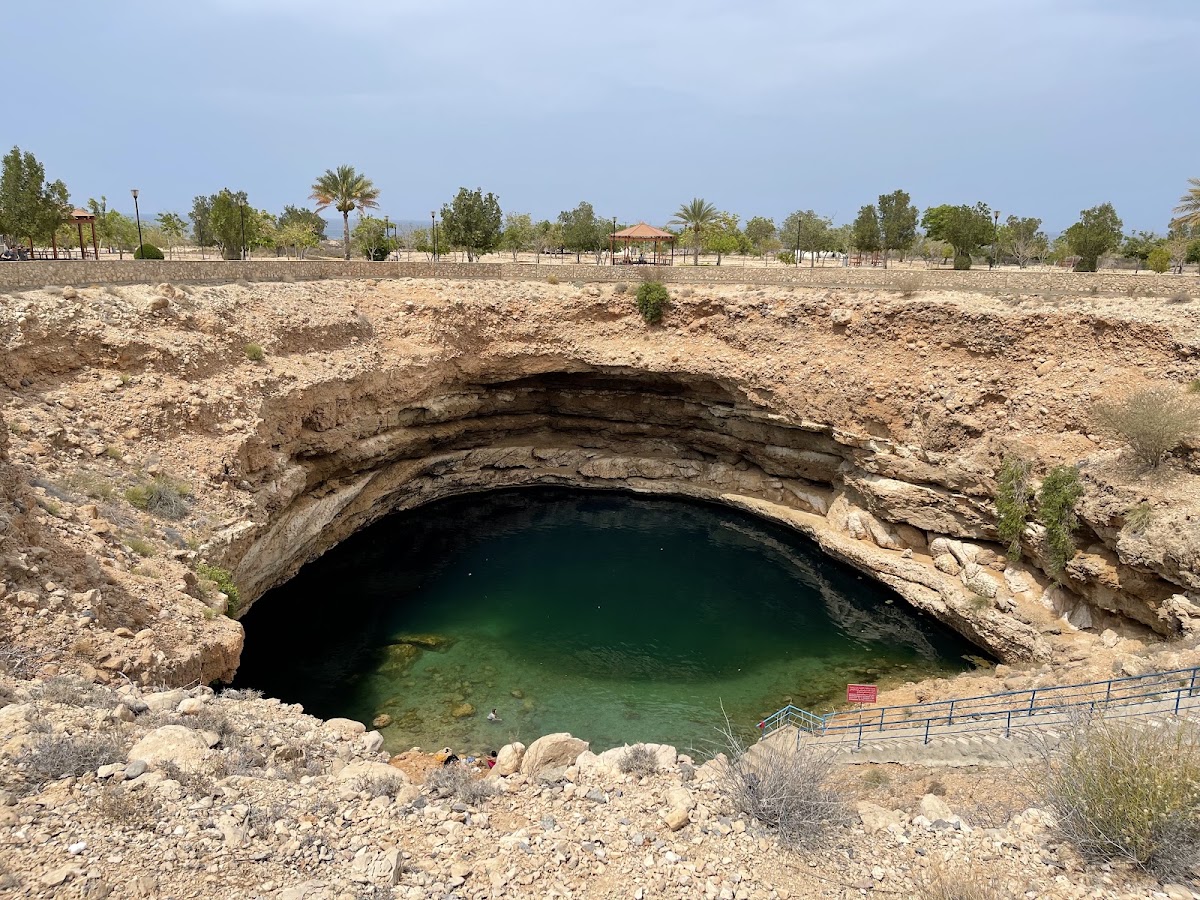
On the drive back from Wadi Shab, pull into Hawiyat Najm Park to see the Bimmah Sinkhole. Local legend says it was formed by a falling star; geology says it's a collapsed limestone cavern fed by a mix of fresh and seawater. Either way, the color is extraordinary.
Stone steps lead down to the edge. The water is cool and deep, and a swim here is the perfect rinse after a dusty canyon hike. Tiny fish will nibble at your feet while you float. It's free to enter, there are basic changing facilities and shaded picnic tables, and it takes 30 to 45 minutes, just enough to break the drive.
From here it's another hour-ish back to Muscat, usually arriving as the light softens over the sea, the ideal end to a day that packed in a canyon, a cave, and a star-shaped pool.
Ready to book?
Book the rest of Muscat, Oman
Handpicked partner searches, dates pre-filled. Pricing is identical to going direct — the partner shares a small commission with Tabi so this guide stays free.
Frequently asked
When is the best time to visit Muscat?
October to April, when daytime temperatures are pleasant and the sea is ideal for snorkelling. June to September is extremely hot, often above 40C, which makes midday sightseeing and canyon hikes tough. The Daymaniyat Islands also have seasonal landing restrictions during the May-to-October seabird nesting period, so confirm boat access if you're travelling in summer.
What should I wear at the Sultan Qaboos Grand Mosque?
Both men and women need covered shoulders and long trousers or a long skirt reaching the ankles. Women also need to cover their hair with a scarf. The mosque welcomes non-Muslim visitors in the mornings only (roughly 8am to 11am, Saturday to Thursday, closed Fridays), and entry is free. Dress modestly across Oman generally, but the mosque enforces it strictly.
Do I need a car to explore Muscat and the wadis?
For the city itself, taxis and ride apps are fine. For Wadi Shab, Bimmah Sinkhole, and the coast, a rental car or a hired driver makes life far easier, since public transport to these spots is limited. Many visitors book a private car with a driver for the Wadi Shab day, which also lets you add the sinkhole on the way back.
Is Wadi Shab suitable if I'm not a strong swimmer?
The walk in is doable for most reasonably fit people (about 40 to 45 minutes over uneven rock), but reaching the hidden waterfall cave at the end requires swimming through deep pools and squeezing through a narrow gap. If you're not a confident swimmer, you can still enjoy the canyon walk and the shallower pools; just skip the final cave section. Wear sandals you can both walk and swim in.
Can I buy alcohol in Muscat?
Alcohol is available but restricted. You can buy it in licensed hotel bars and some restaurants, and it's served discreetly rather than openly. It is not sold in supermarkets. Public drinking is not acceptable, and being visibly drunk in public is taken seriously. Plan to enjoy a drink within licensed venues.
Skip the planning
Your Muscat, Oman trip, ready to go
Adopt the day-by-day itinerary we built to match this guide. Every stop is a real place, every booking link is validated. Free forever, no card needed.
Open the Muscat, Oman itinerary