
New Delhi, India
What to Do in New Delhi in 5 Days: Old City Bazaars, Mughal Tombs, and Rooftop Nights
A photo-first walking log through Delhi's loudest lanes, quietest gardens, and the domes that outlive empires.
TL;DR
Delhi hits you all at once, so this log walks you through it slowly, one landmark and one plate of food at a time, from Old City chaos to garden calm.
- Rickshaw through Chandni Chowk to jalebi frying in ghee at dawn
- India Gate glowing amber while families picnic on the lawns
- Humayun's Tomb, the red-sandstone rehearsal for the Taj Mahal
- Free langar lunch under the golden dome of Bangla Sahib
- Dilli Haat stalls stacked with block-print scarves and clay cups of chai
Have this trip planned in 60 seconds
We built the New Delhi, India itinerary that pairs with this guide, day-by-day with verified venues and one-tap booking links. Free to adopt, edit however you want.
Landing, and the Rooftop Where Delhi Finally Makes Sense
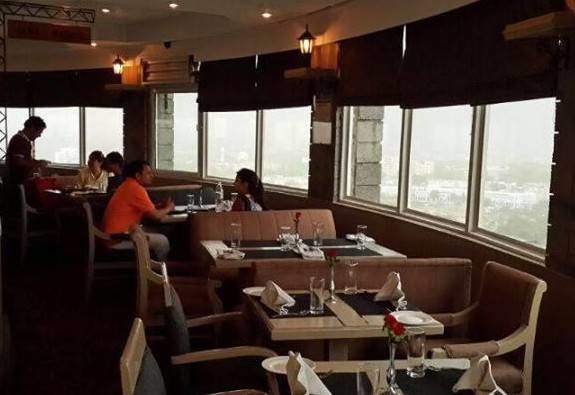
Warm air thick with jet fuel and marigold, then a lift ride up to a table where the whole city hums orange below you.
Indira Gandhi International is slick and cool, but the second the sliding doors open the heat and horns rush in. Do yourself a favor and pre-book a transfer so you are not haggling at the curb at midnight. The ride into central Delhi takes 45 to 60 minutes depending on traffic, which here is a personality, not a condition.
Drop your bags and head straight up. Delhi is a low-rise sprawl, so a rooftop restaurant is where it clicks: string lights, the call to prayer drifting from one direction, temple bells from another, and a first plate of dal makhani that will ruin the version back home for you.
Order something North Indian and rich, a Kingfisher or a fresh lime soda, and just watch the streets. Tomorrow you go down into them.
Dawn in Old Delhi, Before the Lanes Fill Up
Jalebis spiraling into a vat of ghee, the hiss of the first kachoris, and a chai wallah pouring from a great height into tiny glasses.
Get to Chandni Chowk early, ideally by 8am, when the shutters are half up and the light is soft. This is Old Delhi, laid out by the Mughals in the 1600s, and the main spine still runs arrow-straight from the Red Fort. Take a cycle rickshaw down the side galis; a short ride is around 100 to 150 rupees (roughly 1.50 to 2 USD), and it is the only way to feel the scale of the crush.
A guided street-food walk is worth it here, less for safety than for knowing which stall has fried the freshest batch. Expect old-city classics: crisp aloo tikki, dahi bhalla drowned in yogurt, and paranthe from the famous fried-bread lane, Paranthe Wali Gali.
Go hungry. Skip breakfast at the hotel. You will eat five small things before 10am and regret none of them.
The Courtyard That Holds Twenty-Five Thousand People
Cool sandstone under bare feet, a vast red-and-white courtyard, and pigeons lifting off the minarets all at once.
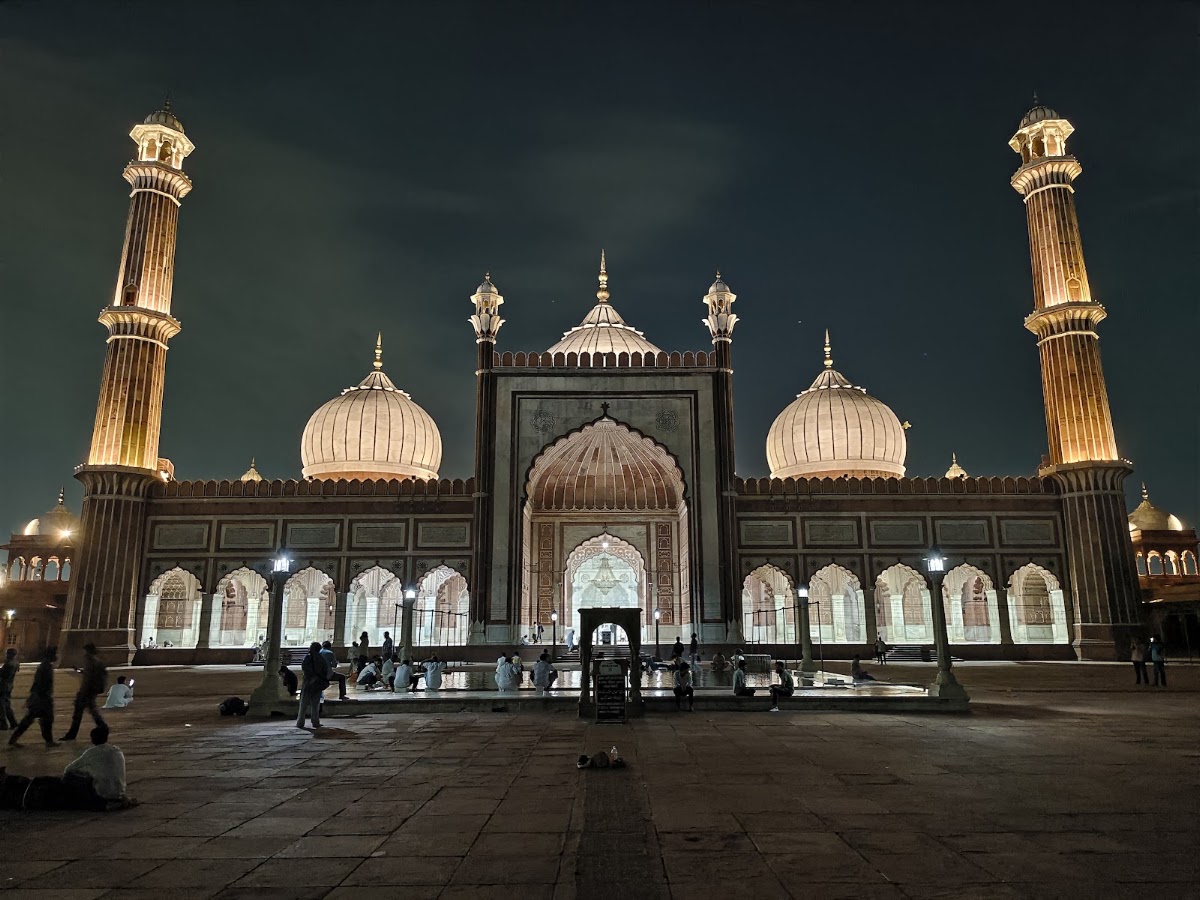
A few minutes from the food lanes, Jama Masjid rises out of the rooftops. Finished in 1656 under Shah Jahan (the same emperor who built the Taj Mahal), it is one of India's largest mosques, and the courtyard alone can hold a staggering crowd on a Friday.
Entry to the mosque is free. You will pay a small camera fee if you carry a phone or camera (around 300 rupees, about 3.50 USD), and there is a charge to climb the southern minaret for a rooftop view over Old Delhi. Cover your shoulders and knees; robes are lent at the gate if you need one.
Sit for a while on the warm stone. From up here the tangle of lanes you just walked suddenly reads like a map.
Behind the Red Walls of the Mughal Empire
A soaring sandstone gateway, then long lawns opening onto marble pavilions where an emperor once held court.
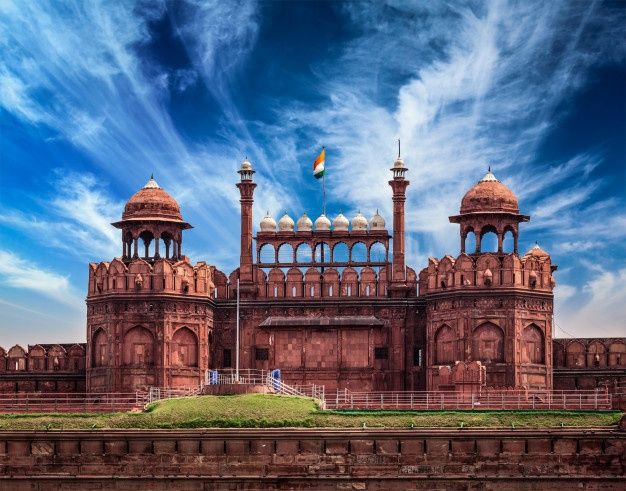
The Red Fort, or Lal Qila, was the seat of Mughal power for nearly 200 years, and its walls run for over two kilometers along the edge of Old Delhi. Enter through the Lahori Gate and walk the covered bazaar of Chatta Chowk before the grounds open up.
Inside, look for the Diwan-i-Aam (the hall of public audience) and the marble Diwan-i-Khas beyond it, where the fabled Peacock Throne once stood. Tickets for foreign visitors are around 600 rupees (about 7 USD); the fort is closed on Mondays, so plan around that.
Come mid-morning after Jama Masjid and give it a couple of hours. The Archaeological Survey of India maintains it as a UNESCO World Heritage site, and the audio detail rewards a slow loop. Details and timings are on the official listing at asi.nic.in.
India Gate at Golden Hour, With Half of Delhi
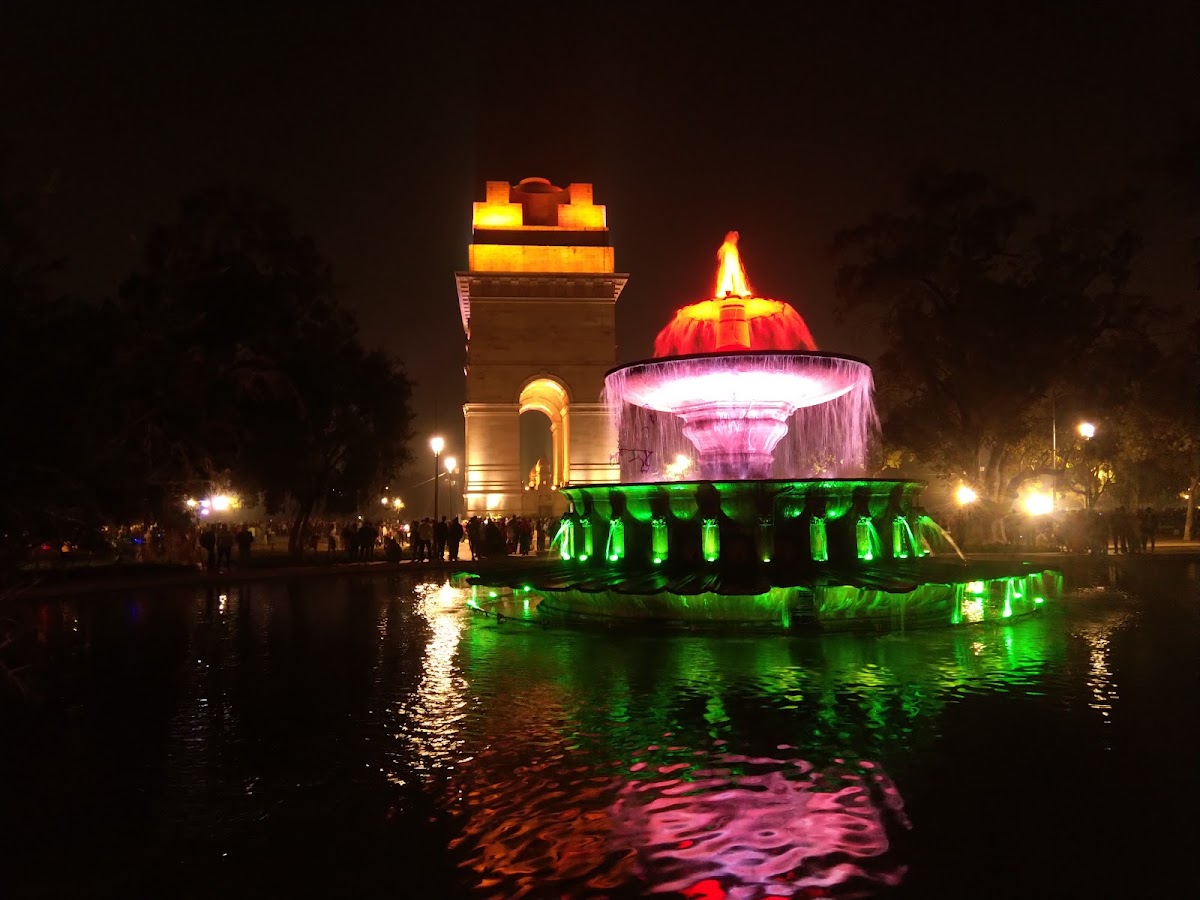
A 42-meter arch turning amber, kids chasing bubbles, and the smell of roasted peanuts and chaat from a hundred carts.
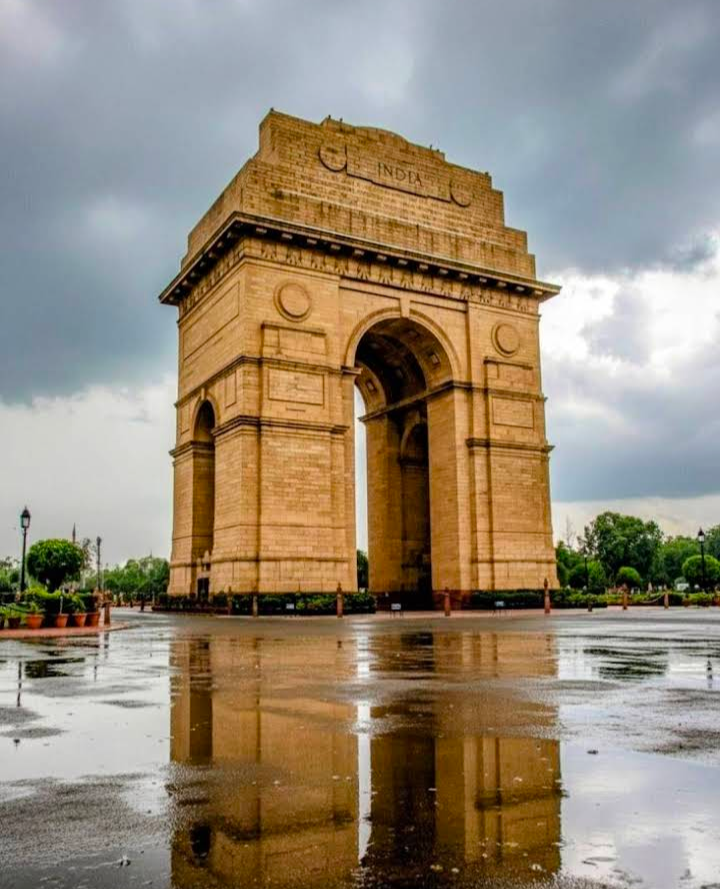
Come the late afternoon, point yourself toward the wide ceremonial avenue now called Kartavya Path (the old Rajpath), which runs from the presidential palace to India Gate. The arch is a war memorial honoring the Indian soldiers who died in the First World War, and its base carries thousands of their names.
This is where Delhi comes to exhale. Families spread out on the lawns, couples share ice cream, and the whole avenue glows as the sun drops. It is free, always open, and one of the best people-watching spots in the city.
Buy a paper cone of masala peanuts from a vendor, find a patch of grass, and just stay until the arch lights up. No agenda required.
The Tomb That Rehearsed the Taj Mahal
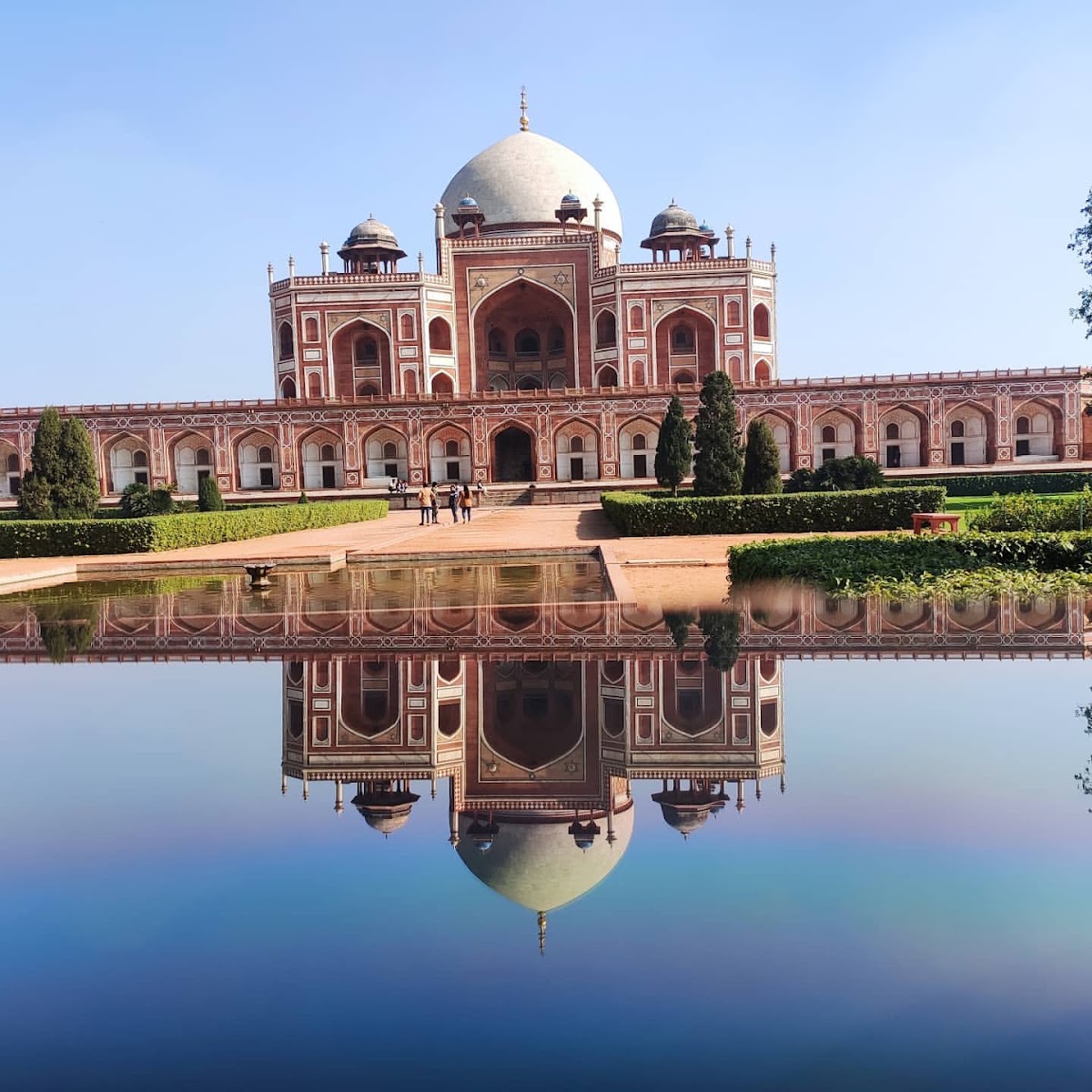
Perfect symmetry in red sandstone and white marble, mirrored in still water channels, framed by clipped Persian gardens.
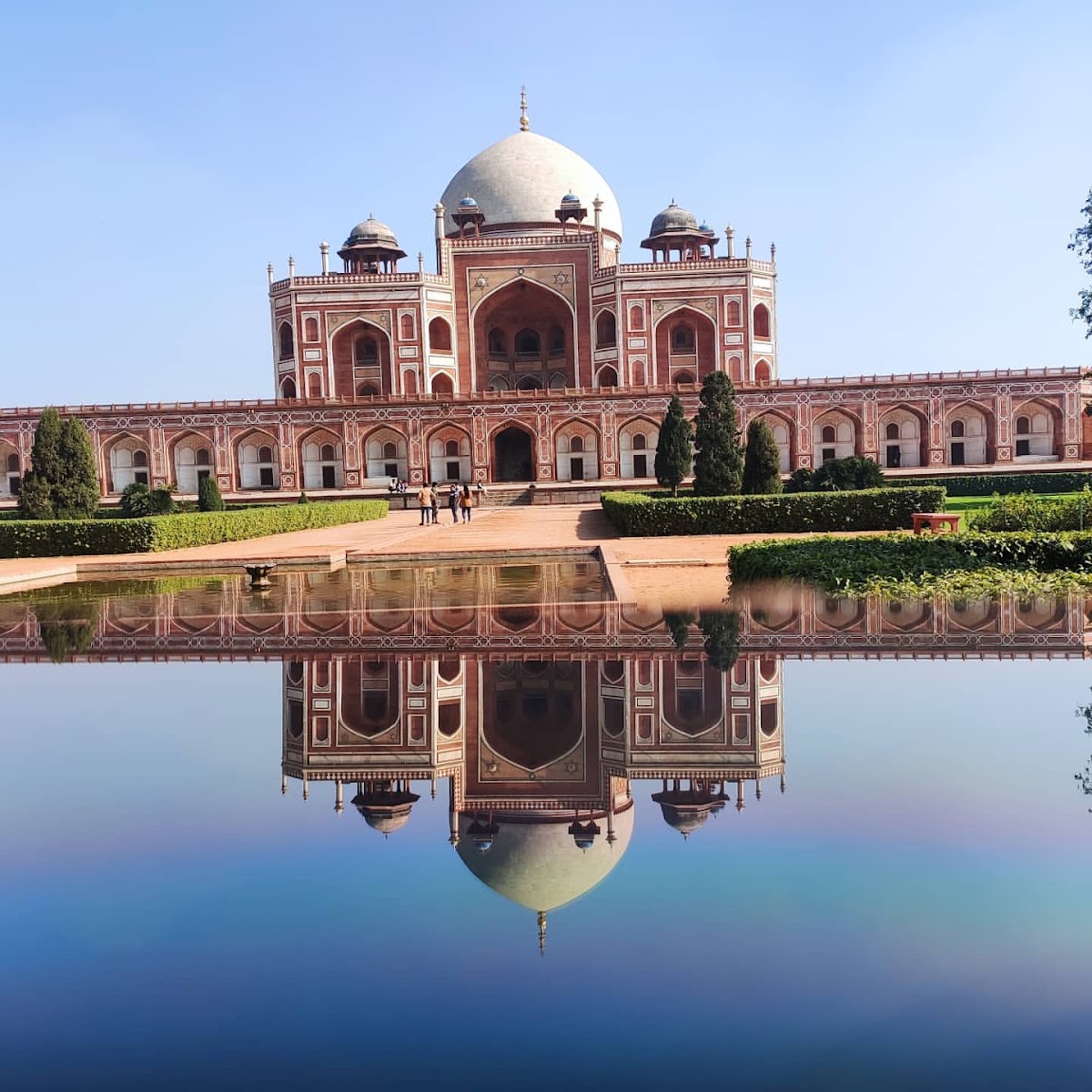
If you see one Mughal monument in Delhi, make it Humayun's Tomb. Built in the 1560s for the second Mughal emperor, it was the first great garden-tomb on the subcontinent and the clear blueprint for the Taj Mahal that followed nearly a century later.
The genius is the setting: the mausoleum sits dead center in a formal charbagh garden, quartered by walkways and water channels, so every approach lines up into perfect symmetry. Foreign entry runs around 600 rupees (about 7 USD), and early morning or the hour before closing gives you the softest light and the fewest crowds.
Walk the full garden, not just the central platform. The smaller tombs and the tiled Isa Khan enclosure near the entrance are often quiet and just as beautiful.
A Lotus in Concrete and a Tower That Predates It All
Twenty-seven marble petals folding open like a bloom, then across town, a fluted red tower stabbing 73 meters into the haze.
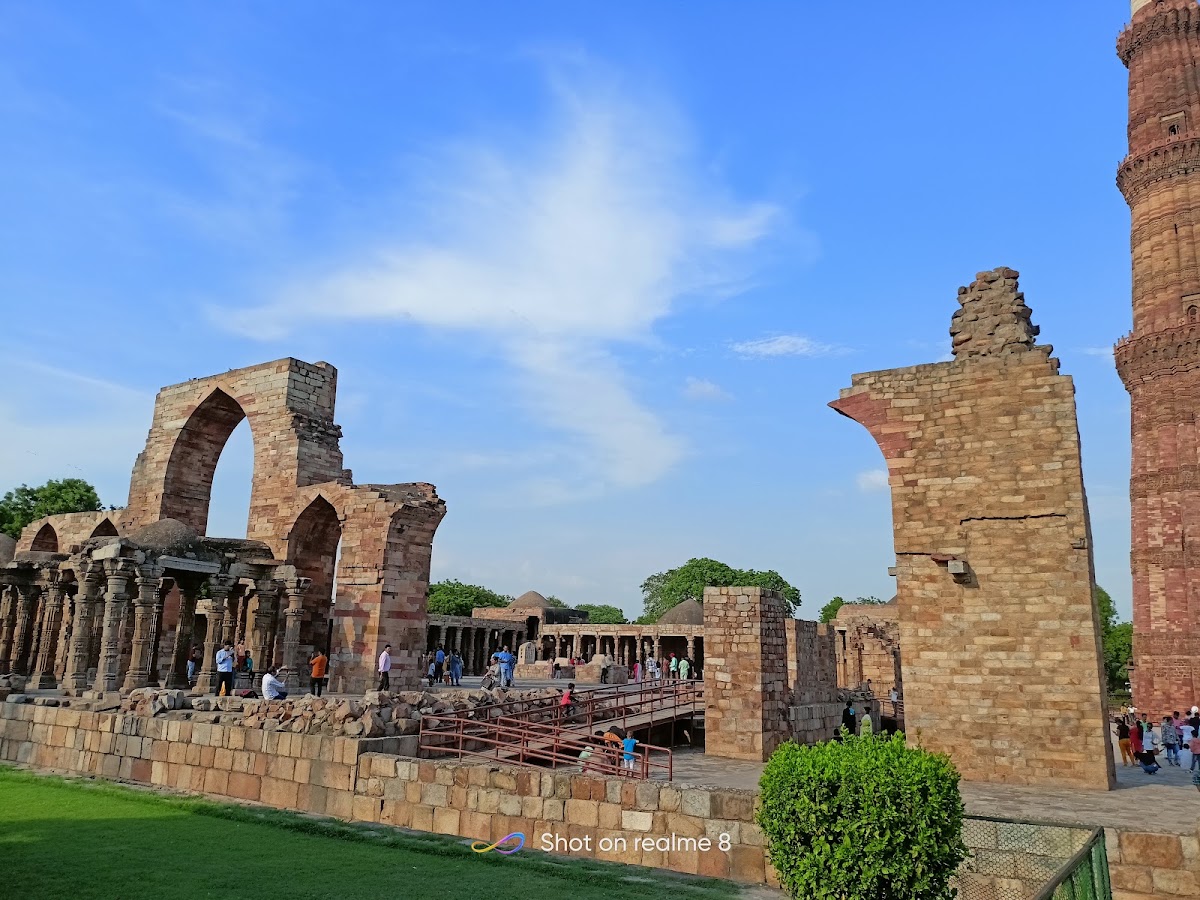
Two very different landmarks anchor South Delhi. The Lotus Temple is a Bahá'í house of worship shaped like an unfolding flower, completed in 1986 and open to people of every faith. Entry is free, phones and cameras are fine outside, and the interior asks for silence: no talking, no photos, just a huge quiet hall. Skip it on Mondays when it closes.
A short ride away in Mehrauli stands Qutub Minar, a soaring victory tower begun in 1193 and the tallest brick minaret in the world. Around its base lie the ruins of Delhi's earliest Islamic complex, including a mysterious 1,600-year-old iron pillar that stubbornly refuses to rust. Foreign entry is about 600 rupees (roughly 7 USD).
Do the Lotus Temple for calm and Qutub for age. Between them you have jumped nearly a thousand years of Delhi.
Golden Domes, a Free Lunch, and One Last Bazaar
The clang of steel plates in a communal kitchen, hymns floating over a sacred tank, and the smell of chai from clay cups nearby.
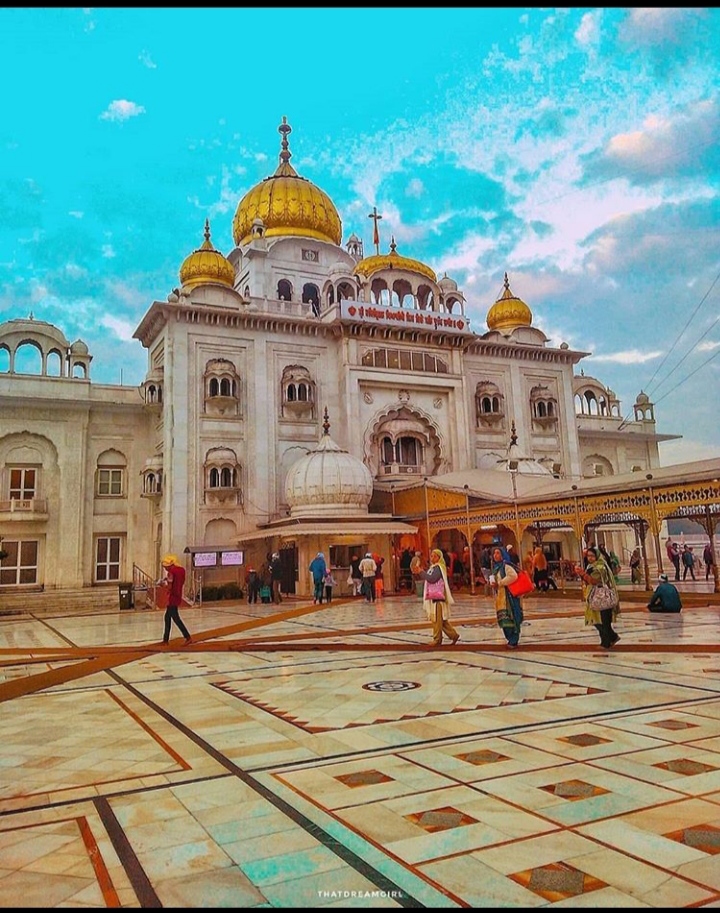
Spend your last full morning where locals actually live their days. Gurudwara Bangla Sahib is a Sikh temple crowned in gold, wrapped around a large holy water tank called the sarovar. Cover your head (scarves are provided), leave your shoes at the counter, and step into the langar, the free community kitchen that feeds thousands every single day regardless of who they are. It is one of the most moving things you can do in the city, and it costs nothing.
From there, drift to Dilli Haat near INA, an open-air craft market where artisans from across India sell block-print textiles, brass, and regional street food from every state. Prices are fixed-ish, so a little polite bargaining is fair game.
Finish with a slow loop of Connaught Place, the white colonial arcade at the city's center, for a coffee and any last gifts. Then it is one final rooftop dinner before the morning transfer back to the airport.
Ready to book?
Book the rest of New Delhi, India
Handpicked partner searches, dates pre-filled. Pricing is identical to going direct — the partner shares a small commission with Tabi so this guide stays free.
Frequently asked
How many days do you need in New Delhi?
Five days is the sweet spot. That lets you cover Old Delhi (Red Fort, Jama Masjid, Chandni Chowk), the central monuments (India Gate, Humayun's Tomb, National Museum), South Delhi (Qutub Minar, Lotus Temple), and the living markets and temples (Bangla Sahib, Dilli Haat, Connaught Place) without cramming. Three days is possible but rushed; a week lets you add a day trip to Agra for the Taj Mahal.
What is the best time of year to visit Delhi?
October to March is the comfortable window, with cool, dry days ideal for walking. December and January can be genuinely chilly in the mornings and occasionally foggy. Avoid April to June, when temperatures regularly push past 40C, and be aware that July to September brings the monsoon and, in late autumn, air quality can dip sharply.
Is Delhi safe for tourists, and how should women travel?
Delhi is manageable with normal city caution. Stick to registered taxis or ride-hailing apps at night, keep valuables close in crowded markets, and agree on rickshaw fares in advance. Solo women travelers should favor pre-booked transport after dark and dress modestly, especially at religious sites. Check your government travel advisory before you go; for many nationalities that is your foreign ministry or MOFA equivalent.
How do you get around New Delhi?
The Delhi Metro is the fastest, cheapest, and most comfortable option for longer distances, with air-conditioned trains and English signage. For short hops in the old city, cycle and auto rickshaws are cheap and fun (negotiate first). Ride-hailing apps work well citywide. Traffic is heavy, so build in buffer time and lean on the metro whenever your route allows.
What should you eat in Delhi, and is street food safe?
Delhi is one of India's great food cities. Chase chaat, aloo tikki, dahi bhalla, and paranthe in Chandni Chowk, dal makhani and butter chicken at proper North Indian restaurants, and a free langar meal at Gurudwara Bangla Sahib. Street food is safe if you pick busy stalls with high turnover, eat freshly cooked hot items, and stick to bottled or filtered water. A guided food walk on your first day teaches you which stalls to trust.
Skip the planning
Your New Delhi, India trip, ready to go
Adopt the day-by-day itinerary we built to match this guide. Every stop is a real place, every booking link is validated. Free forever, no card needed.
Open the New Delhi, India itinerary