
New Orleans, United States
What to Do in New Orleans in 4 Days: Jazz, Beignets, and the Slow River
A picture-first walk through the French Quarter, Frenchmen Street, and the Garden District, in the order you'll actually feel the city.
TL;DR
New Orleans hits you in the ears and the nose before your eyes catch up, and this log walks you through it landmark by landmark.
- Jackson Square at golden hour, St. Louis Cathedral glowing white
- Frenchmen Street brass spilling out of open bar doors after dark
- Powdered-sugar beignets and chicory coffee at Café Du Monde
- Oak-shaded Garden District mansions and a dripping po' boy
- The Steamboat NATCHEZ churning slow up the muddy Mississippi
Have this trip planned in 60 seconds
We built the New Orleans, United States itinerary that pairs with this guide, day-by-day with verified venues and one-tap booking links. Free to adopt, edit however you want.
Your First Creole Dinner in the Quarter
The smell of butter, garlic, and something faintly smoky drifts out onto the sidewalk before you even find the door. A ceiling fan turns slow overhead.
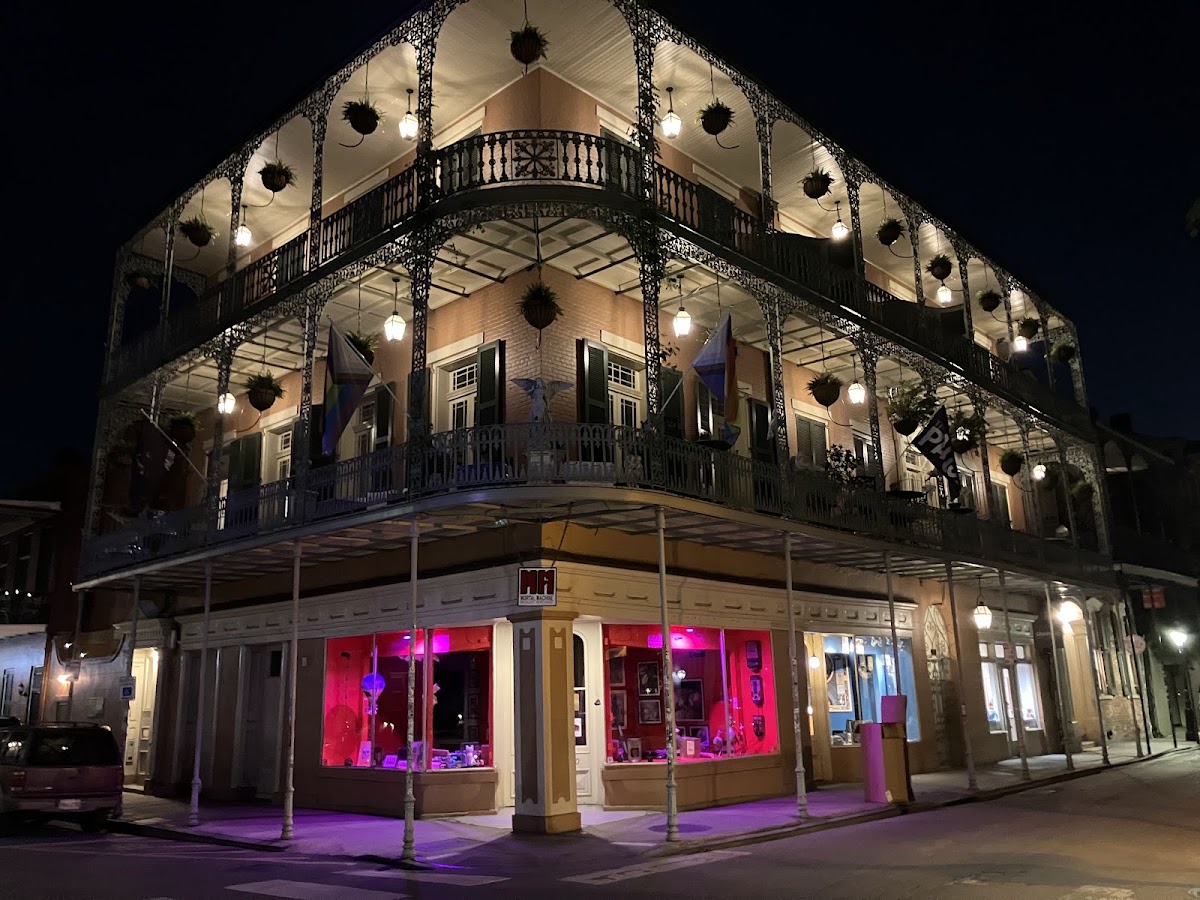
Start where the city wants you to start: at a linen-topped table in the French Quarter, with a bowl of gumbo the color of dark caramel in front of you. The roux is nearly black, the andouille has a low heat, and the rice mound in the middle is the only thing keeping it civilized.
Order the shrimp remoulade to share, then something Creole and saucy for the main. This is your orientation meal, the one that resets your palate for everything ahead. Expect to spend around 45 to 70 USD a head with a cocktail.
Walk it off afterward. The Quarter at night, with its gas lamps and wrought-iron balconies, is doing half the storytelling for you.
Jackson Square at Golden Hour
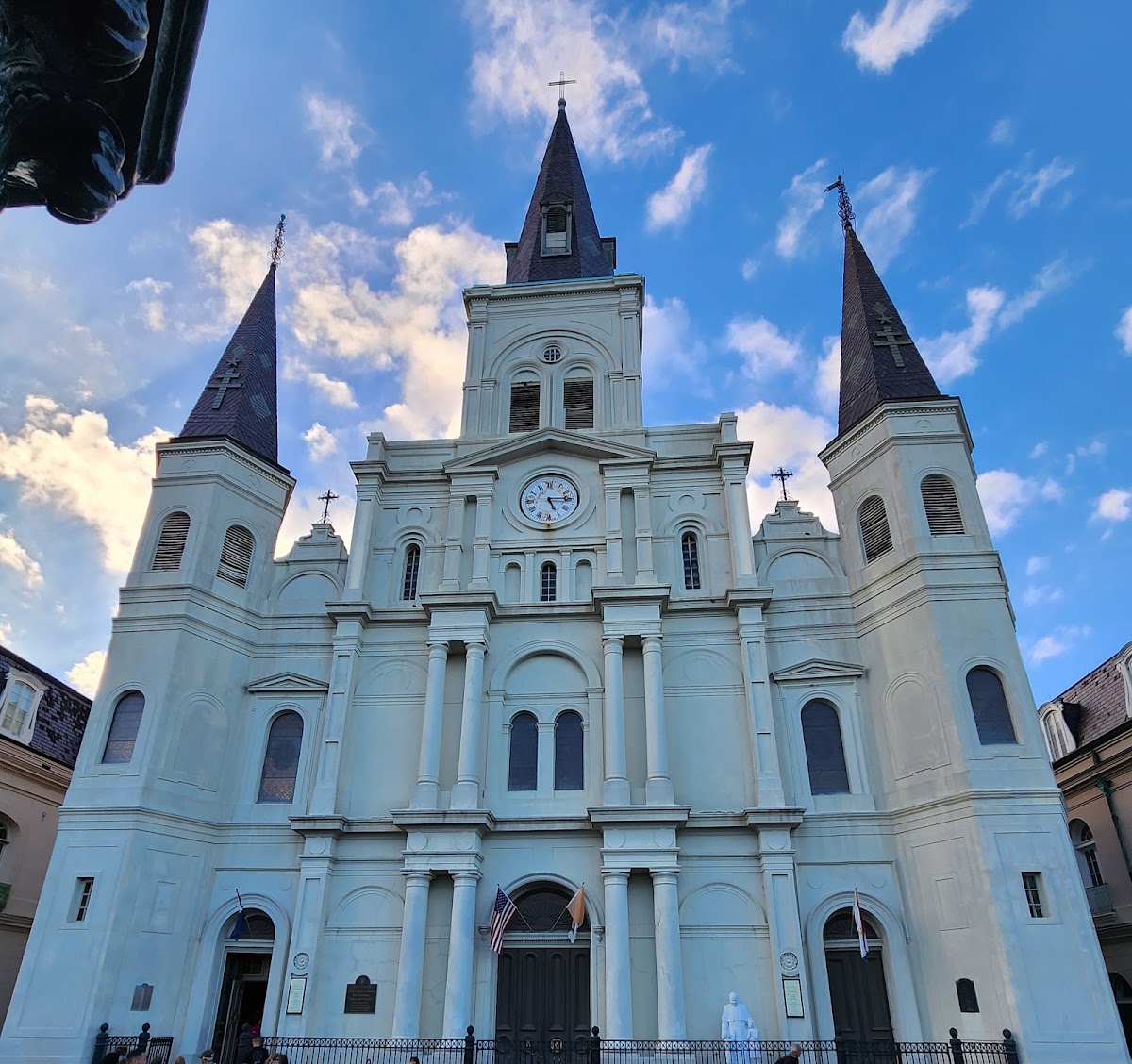
Three white spires of St. Louis Cathedral catch the last orange light while a saxophone plays somewhere behind the iron fence. Tarot readers fold up their tables.
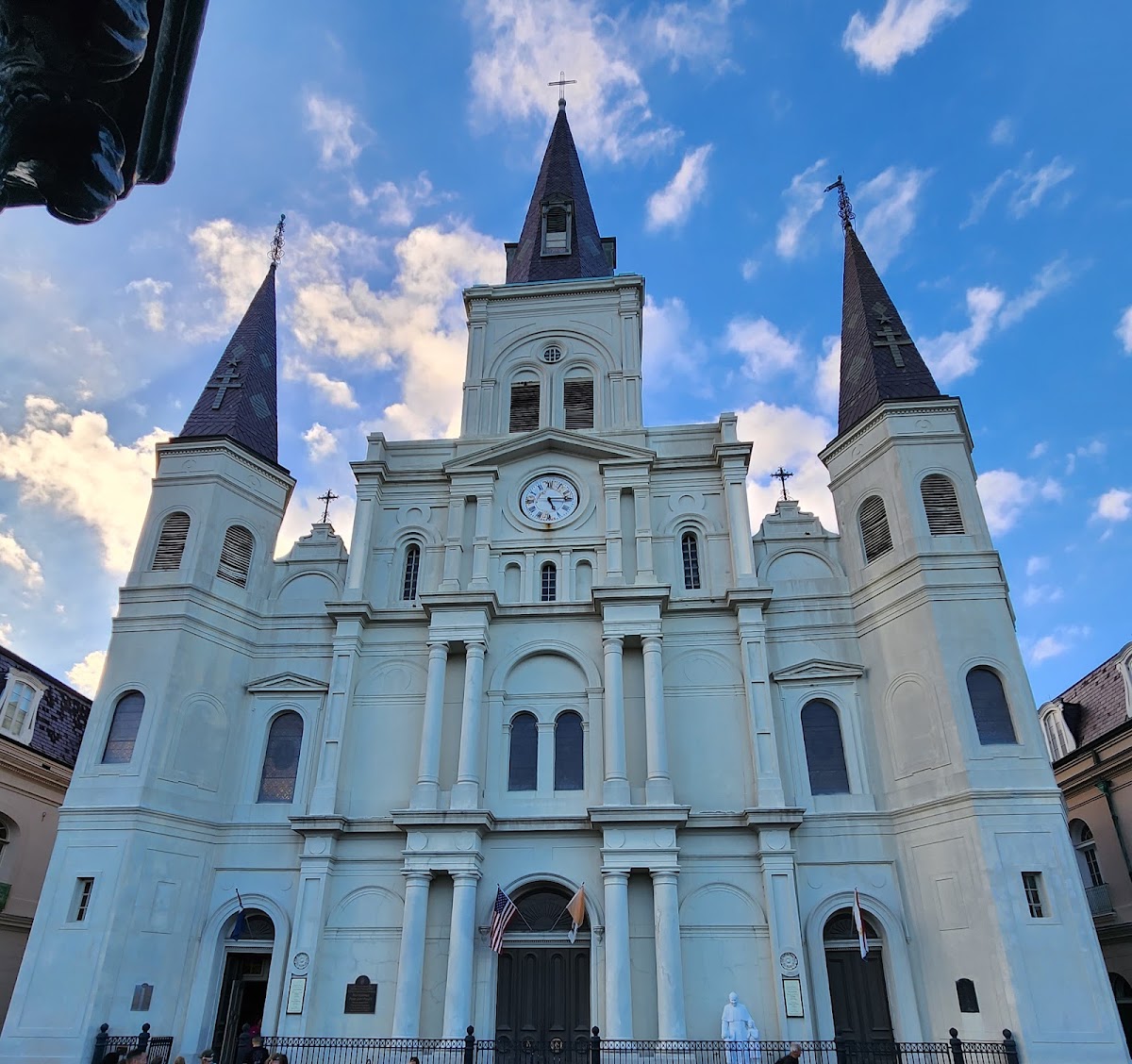
This is the postcard, and it earns it. Jackson Square sits at the river end of the Quarter, a tidy green with General Jackson on a rearing bronze horse in the middle and the oldest continuously active cathedral in the country as its backdrop.
Come late in the afternoon when the light turns the cathedral facade gold, then pink. Artists hang their canvases on the fence along the perimeter, and street performers set up near the flagstones by Decatur Street.
Step inside the cathedral if the doors are open; entry is free and it takes ten quiet minutes. Then find a bench, watch the mule carriages clop by, and let the pace of the city sink in.
The City of the Dead on Basin Street
Whitewashed tombs stand shoulder to shoulder above the ground, some cracked, some freshly painted, all of them warm to the touch in the afternoon sun.
St. Louis Cemetery No. 1 is the oldest in the city, and because New Orleans sits below sea level, the dead rest above ground in stacked stone vaults that look like a miniature marble town. It is haunting and beautiful in equal measure.
You can only enter with a licensed guide now, which is honestly for the better; a good one turns the rows of tombs into 250 years of stories, from voodoo priestess Marie Laveau's reputed resting place to the strange pyramid tomb a Hollywood actor built for himself. Tours run around 25 to 30 USD and last under an hour.
Dress for heat and wear closed shoes. The paths between tombs are uneven and there is almost no shade.
Oak Trees, Mansions, and a Dripping Po' Boy
Live oaks arch clear over the street, their roots buckling the sidewalk, and every house behind the iron gates looks like it has a hundred years of stories.
Hop the historic St. Charles streetcar out of the Quarter (a couple of dollars, exact change or a Jazzy Pass) and step off in the Garden District. This is where 19th-century cotton money built columned mansions, and the whole neighborhood feels like a slow exhale after the buzz of the Quarter.
Walk Prytania and First Streets on foot. You will pass wedding-cake Greek Revival homes, a house or two owned by names you'll recognize, and gardens dripping with jasmine and banana leaf. A guided walk fills in which mansion belonged to whom.
Stop for lunch at a corner po' boy shop before you leave. Get the fried shrimp version, dressed, meaning lettuce, tomato, pickle, and mayo on crackly French bread. Around 12 to 16 USD and worth every messy bite.
Where World War II Comes Back to Life
A restored C-47 hangs from the ceiling, and a soldier's letter home is projected life-size on the wall beside his dog tags.

The National WWII Museum is consistently ranked among the best museums in the entire country, and after an hour inside you'll understand why. It tells the story of the American experience in the war through oral histories, restored aircraft, and immersive galleries that follow real people from enlistment to homecoming.
Give it at least half a day. The tank displays, the D-Day gallery, and the reflective final hall each deserve time, and there's a 4D theater experience narrated by Tom Hanks. General admission runs around 35 USD, a little more with the theater add-on.
It sits in the Warehouse District, an easy walk or short ride from the Garden District, so it pairs naturally with your afternoon there.
Brass Bands Until Late on Frenchmen Street
Push through a swinging door and a seven-piece brass band is right there, trombone slide nearly in your face, the whole room stomping in time.
Forget Bourbon Street's neon and daiquiri buckets. The real music lives three blocks past the Quarter on Frenchmen Street, in the Marigny, where locals go to hear jazz played the way it's meant to be heard.
Clubs sit door to door here, and the beauty is you can bar-hop. One room has a swinging trad-jazz band, the next a funk group, the one after that a solo pianist working through standards. Covers are low or free, drinks are the deal, so tip the band and keep moving until something makes you stay.
Step outside between sets to browse the nighttime art market on the corner, then follow your ears back to whichever horn is loudest.
The Mississippi from a Real Steamboat
A red paddlewheel churns the brown water into foam, the steam calliope wheezes out a tune, and the skyline of the Quarter slides slowly past the rail.
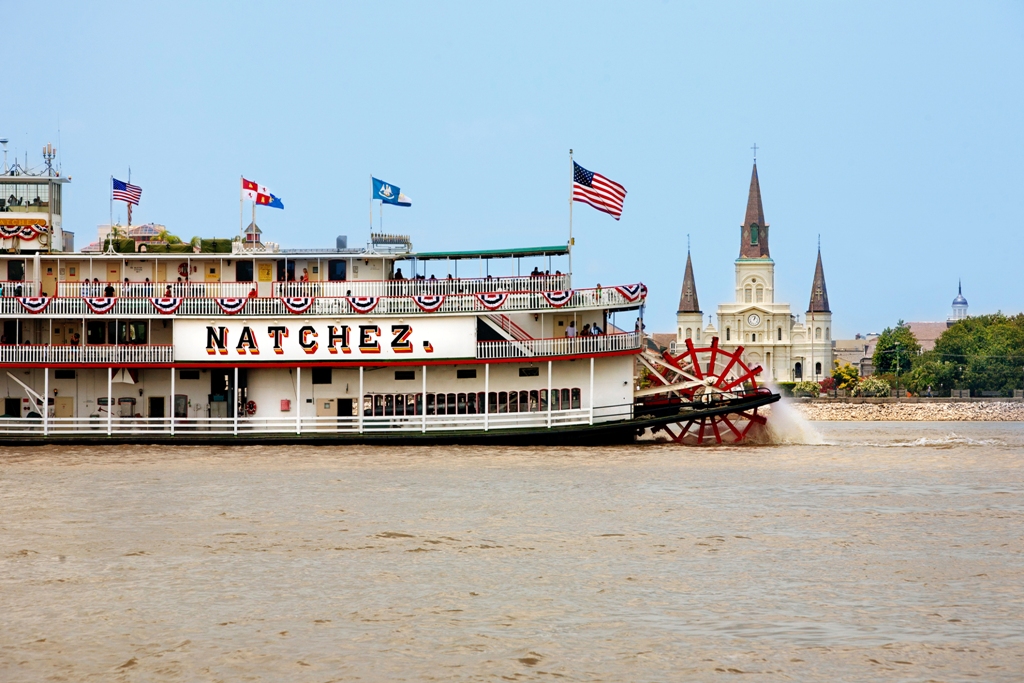
The Steamboat NATCHEZ is the last authentic steam-powered sternwheeler on the Mississippi, and a two-hour cruise is the best way to see how completely this city is shaped by its river. You board near Jackson Square and chug upstream past the port, the bridges, and the low green levees.
Go down to the engine room to watch the original steam engine work, then come back up top for the live jazz band and a plate of Creole food if you booked the lunch or dinner option. Day cruises start around 45 USD, more with a meal.
The river breeze is the only reliable cool air in the city on a hot day, which is reason enough on its own.
Powdered Sugar and Chicory at Café Du Monde
A cloud of powdered sugar rises off the plate the second it lands, and you already know your dark shirt was a mistake. The coffee is thick and faintly bitter with chicory.
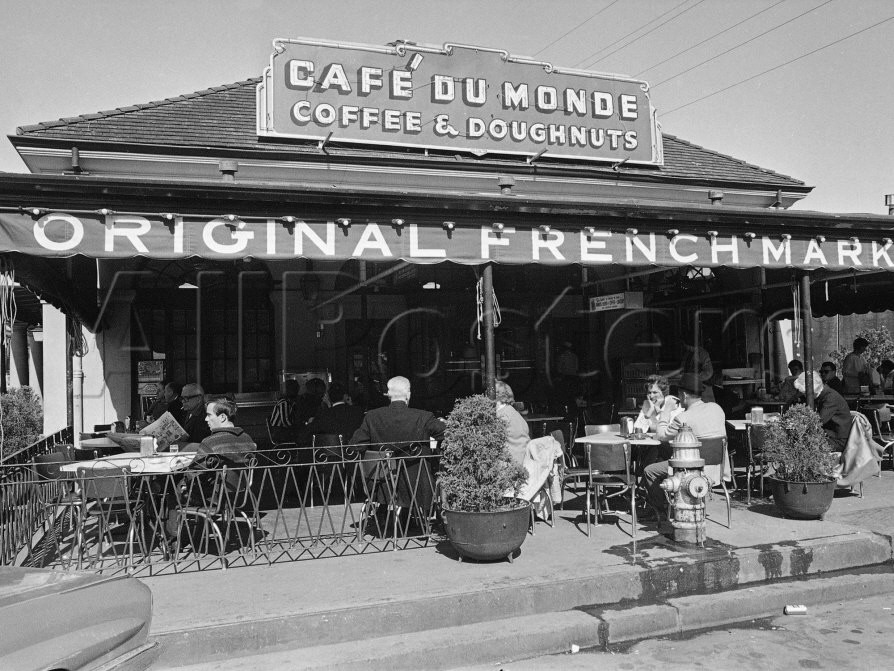
You cannot leave without this. Café Du Monde has been slinging beignets, square French doughnuts buried in powdered sugar, since 1862, and it never closes. Order a trio (three to a plate) and a café au lait, half coffee, half hot milk, and accept that you'll wear some of it home.
The original stand sits right by the river at the edge of the Quarter, under a green-and-white awning. It's cash-friendly, fast, and gloriously chaotic. A plate and a coffee runs under 10 USD.
Save this for your last morning. It's a five-minute walk from most of the Quarter, an easy final stop before you gather your bags. From here it's roughly a 25-minute ride out to Louis Armstrong International, so book your transfer with a little buffer for traffic on the highway.
Ready to book?
Book the rest of New Orleans, United States
Handpicked partner searches, dates pre-filled. Pricing is identical to going direct — the partner shares a small commission with Tabi so this guide stays free.
Frequently asked
When is the best time of year to visit New Orleans?
Late October through early December and February through April bring the most comfortable weather, warm days and cool evenings. Summer is hot and very humid with afternoon thunderstorms. Mardi Gras (usually February or early March) and Jazz Fest (late April into May) are spectacular but crowded, and hotel prices spike hard around both.
Do I need a car in New Orleans?
No. The French Quarter, Marigny, and Warehouse District are all walkable, and the historic St. Charles streetcar handles the Garden District for a couple of dollars. Rideshares cover everything else cheaply. A car is only worth it if you plan day trips out to the plantations or swamp tours, and even those often include pickup.
Is it safe to walk around at night?
The main tourist areas of the Quarter, Frenchmen Street, and the Garden District are busy and generally fine in the evening, but stay on well-lit, populated streets and avoid wandering into quiet residential blocks alone late at night. Use a rideshare rather than walking long distances after dark, and keep an eye on your belongings in crowded bars.
How much should I budget per day?
A comfortable mid-range day runs roughly 150 to 250 USD per person once you factor in a nice dinner, a couple of activities like a cemetery tour or river cruise, drinks, and casual meals. You can do it for less by leaning on po' boys and free music, or a lot more if you chase fine dining and premium jazz clubs.
What food should I not miss?
Gumbo, jambalaya, a fried shrimp or roast beef po' boy, chargrilled oysters, and beignets with chicory coffee are the essentials. If you can, try étouffée and a muffuletta sandwich too. New Orleans takes its food seriously, so even a casual corner shop can turn out something memorable.
Skip the planning
Your New Orleans, United States trip, ready to go
Adopt the day-by-day itinerary we built to match this guide. Every stop is a real place, every booking link is validated. Free forever, no card needed.
Open the New Orleans, United States itinerary