
Oslo, Norway
What to Do in Oslo in 4 Days: Fjords, Vikings, and the Opera House You'll Remember
Your Oslo adventure starts with a fortress overlooking the fjord, weaves through Viking ships and modernist art, and ends on the roof of one of the world's most striking buildings.
TL;DR
Oslo is a city where Viking ships meet modernist opera houses, all within steps of the fjord.
- Akershus Fortress ramparts with sweeping views of the Oslofjord
- The preserved Oseberg ship at the Viking Ship Museum (you can almost smell the oak)
- A quick ferry ride to the quiet island of Hovedøya, with wildflower meadows
- The emotional gut-punch of The Scream at the Munch Museum
- Walking the sloped marble roof of the Oslo Opera House as the sun sets
Have this trip planned in 60 seconds
We built the Oslo, Norway itinerary that pairs with this guide, day-by-day with verified venues and one-tap booking links. Free to adopt, edit however you want.
Ramparts, Cobblestones, and a Sea Breeze
From the old stone walls of Akershus, the fjord stretches out like a silver ribbon, and the modern Opera House glints on the other side of the harbour.

You start at the fortress that has guarded Oslo since 1299. Walk the ramparts first thing in the morning, when the cruise ships haven't yet docked and you can hear the seagulls over the water. The view frames the city's entire story: medieval stone, 19th-century brick, and the sharp white line of the Opera House.
After the fortress, follow the waterfront into Aker Brygge. The old shipyard has been turned into a promenade of restaurants and shops. Grab a cinnamon bun from a cafe and sit on the edge of the pier. The masts of sailboats bob against the grey-blue fjord.
The Viking Ships That Still Smell of the Sea
Inside the dim hall, the Oseberg ship curves upward like a dragon's spine, its carved oak still holding the scent of a thousand-year-old voyage.

The Viking Ship Museum on Bygdøy is a single room built around three astonishing ships. The best is the Oseberg: 21.5 meters of blackened oak, excavated from a burial mound. You can circle it slowly, noticing the intricate animal carvings along the bow. The soft lighting makes the wood look almost alive.
Smaller exhibits hold everyday objects: sledges, textiles, tools. The silence in the room amplifies the scale of what these people built with only axes and ropes.
A Whole Old Village Under Open Sky
You step through the gates and into a Norwegian countryside that no longer exists: log cabins, hay-roofed barns, and a stave church that has stood since 1200.

The Norwegian Museum of Cultural History is an open-air museum right next to the Viking ships. More than 150 historic buildings have been moved here from all over Norway. The 13th-century stave church is the highlight: dragon-headed, tar-blackened, and impossibly vertical.
Walk the dirt paths between the houses. In summer, staff in folk costumes tend to the animals and bake flatbread over open fires. It feels less like a museum and more like a time warp.
Chugging Out to Hovedøya's Quiet Meadows
The ferry pulls away from the city with a low horn, and ten minutes later you step onto an island where wildflowers grow right up to the shore.

From Rådhusbryggen you take the little ferry across the fjord to Hovedøya. It's a 10-minute crossing, and you can already see the island's low silhouettes. Once ashore, you'll find the ruins of a 12th-century Cistercian monastery, wild apple trees, and a ring of small beaches.
Hike the short trail to the eastern tip. The grass is soft, the water is the colour of sage, and the only sounds are the waves and the occasional ferry horn. Bring a picnic and a book. This is Oslo's escape hatch.
Candlelight and Reindeer: A Norwegian Dinner
Inside a timber-walled restaurant, the candles flicker off the glasses of aquavit, and the waiter brings a plate of smoked reindeer with lingonberries.

Dinner tonight is at a traditional Norwegian restaurant in the city centre. The menu is short and rooted in the seasons: cured salmon, fish soup, reindeer steak, or a lamb stew that tastes of the mountains. Order a shot of aquavit (the caraway one, not the dill) and sip it slowly between bites of buttery potatoes.
The room is warm and wooden, with folk music playing just loud enough to feel alive. This is the meal that finally makes sense of all those Viking stories about feasting halls.
Confronting The Scream in a New Light
The gallery is quiet except for the rustle of coats, and then you turn the corner and there he is: the wavy-faced figure screaming against a blood-red sky.

The Munch Museum holds the world's largest collection of Edvard Munch's work, including two versions of The Scream. One is pastel on cardboard, the other painted. Stand in front of either and the anxiety is almost physical. Munch's brushwork is raw, impulsive, nothing like the polished paintings of his contemporaries.
Beyond The Scream, the museum has rooms of landscapes, portraits, and self-portraits that track Munch's own descent and recovery. Give yourself two hours minimum: this is the sort of museum where you walk out feeling like you've had a conversation with the artist.
Stone Men, Granite Babies, and a Marble Roof at Sunset
In Vigeland Park, 121 bronze and granite figures crowd the bridge, locked in a frozen ballet of human emotion. And then you walk to the Opera House to walk on its roof.

Vigeland Sculpture Park is the world's largest sculpture complex by a single artist. Gustav Vigeland spent 20 years filling this park with naked human figures: the angry baby, the lovers, the old man wrestling with angels. Walk the full length of the bridge and up the granite monolith.
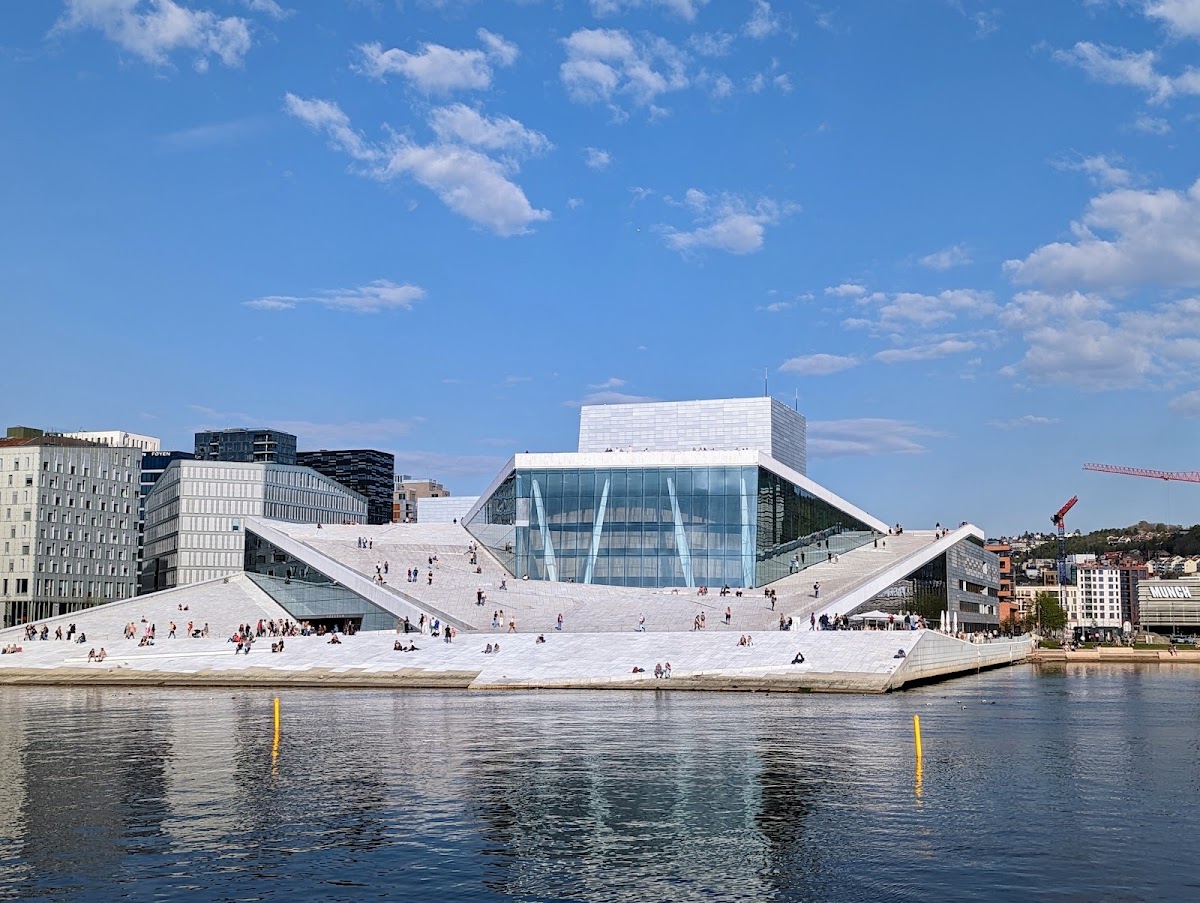
A 20-minute walk east brings you to the Oslo Opera House. Its angled white roof slopes down to the water, and you can walk right up to the top. The view at sunset is a panorama of the fjord and the city's low skyline. Sit on the warm marble, dangle your feet over the edge, and watch the light fade on the water.
Flat Whites and Street Art in Grünerløkka
The coffee is strong, the mural is a giant octopus wrapped around a brick wall, and the morning light filters through the linden trees onto the tables.

Grünerløkka is Oslo's hipster heart, and the best way to spend your last morning is at a sidewalk cafe on Thorvald Meyers gate. Order a cortado and a cardamom bun. Watch the locals bike past with kids in cargo trailers.
After coffee, wander the side streets. The neighbourhood is full of street art, vintage shops, and small galleries. The Akerselva river runs through the district, and a short walk along its banks reveals waterfalls, old industrial buildings, and a dozen tiny bridges. It's a calm, unhurried ending to a city that knows how to balance history with everyday life.
Ready to book?
Book the rest of Oslo, Norway
Handpicked partner searches, dates pre-filled. Pricing is identical to going direct — the partner shares a small commission with Tabi so this guide stays free.
Frequently asked
How many days do I need in Oslo?
Four days is ideal. It gives you time to cover the Bygdøy museums, a fjord island, the city centre landmarks, and a neighbourhood like Grünerløkka. If you have only two days, focus on the Viking Ship Museum, Vigeland Park, the Opera House, and an afternoon ferry.
Is Oslo expensive? How can I save money?
Oslo is one of the priciest cities in Europe. Save by buying the Oslo Pass (free entry to most museums, plus public transport), eating lunch at cafes instead of dinner restaurants, and packing a picnic for Hovedøya. Beer is very expensive; stick to tap water (it's excellent).
What's the best way to get from Oslo Airport (Gardermoen) to the city?
The Flytoget airport express train runs every 10 minutes and takes 22 minutes to Oslo Central Station. It costs about 230 NOK (roughly $21 USD). Alternative: the regional train (Vy) is slower but cheaper at 120 NOK. Both accept contactless payment.
When is the best time to visit Oslo?
May through September offers the warmest weather, long daylight hours, and outdoor cafe culture. July is peak season (crowded, higher prices). October can be grey and rainy. December is dark but magical with Christmas markets and the Nobel Peace Prize ceremony.
Can I see the Northern Lights in Oslo?
Rarely. Oslo is too far south and suffers from light pollution. You need to head north of the Arctic Circle (Tromsø, Kirkenes) for reliable aurora viewing. But you might spot faint green glows on very clear winter nights far from the city centre.
Skip the planning
Your Oslo, Norway trip, ready to go
Adopt the day-by-day itinerary we built to match this guide. Every stop is a real place, every booking link is validated. Free forever, no card needed.
Open the Oslo, Norway itinerary