
Penang, Malaysia
What to Do in Penang: A 4-Day Walking Log Through George Town
A picture-first journey from the murals of Armenian Street to the stilt houses of the clan jetties, with every bowl of noodles you'll want in between.
TL;DR
You could eat your way across George Town for a week and still miss half of it, so here is the walk that gets you the good stuff fast.
- Breakfast on Armenian Street, where the famous bicycle mural waits at a corner
- Char kway teow and ais kacang under the lights at Gurney Drive
- The electric-blue Cheong Fatt Tze Mansion, cool and quiet inside
- Penang Hill at dusk, with the whole city glowing below you
- Chew Jetty's wooden walkway stretching out over the water at low tide
Have this trip planned in 60 seconds
We built the Penang, Malaysia itinerary that pairs with this guide, day-by-day with verified venues and one-tap booking links. Free to adopt, edit however you want.
Breakfast on Armenian Street, Where the Walls Talk Back
Kopi so sweet it coats your teeth, a motorbike buzzing past, and two kids painted onto a brick wall riding a very real bicycle.
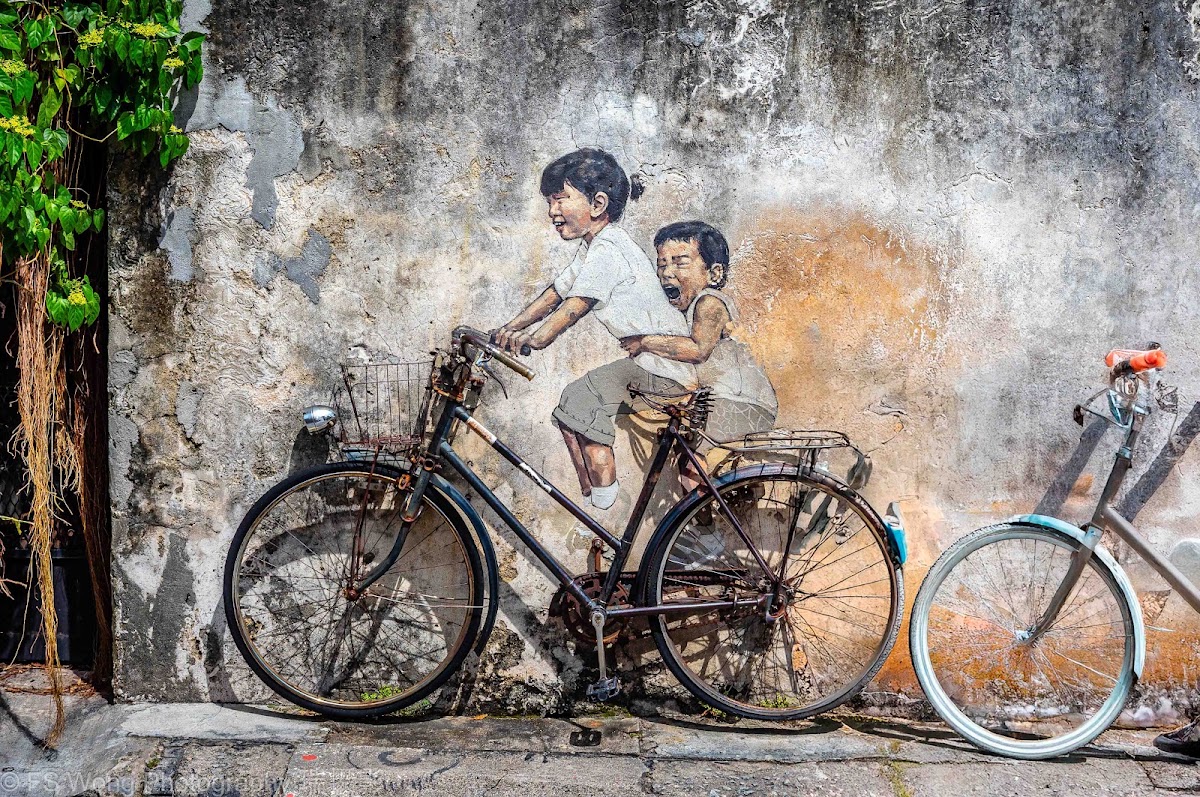
Start where everyone starts, because Armenian Street earns it. The lane is narrow and the shophouses lean in close, their shutters flaking in that particular George Town way where you cannot tell if it is decay or decor. Somewhere in the first hundred meters you will find "Kids on a Bicycle", the Ernest Zacharevic mural that put this street on every phone screen in Asia. Queue politely, take your shot, then keep walking.
The real pleasure is the hunt. Zacharevic left a whole scavenger trail of murals and the Sculpture at Work people bolted witty wrought-iron cartoons to the walls explaining the street names. You will backtrack. You will get lost between a clan temple and a cendol stall. That is the point.
Duck into a corner kopitiam before the heat builds. A glass of kopi peng (iced coffee) runs about RM3, roughly 65 cents, and buys you a seat to watch the street wake up. Go early, before 9am, and the light is soft and the tour groups are still at breakfast.
Dinner Under the Lights at Gurney Drive
A wall of woks all firing at once, the hiss and clang of char kway teow, and the sweet coconut smell of ais kacang cutting through the smoke.
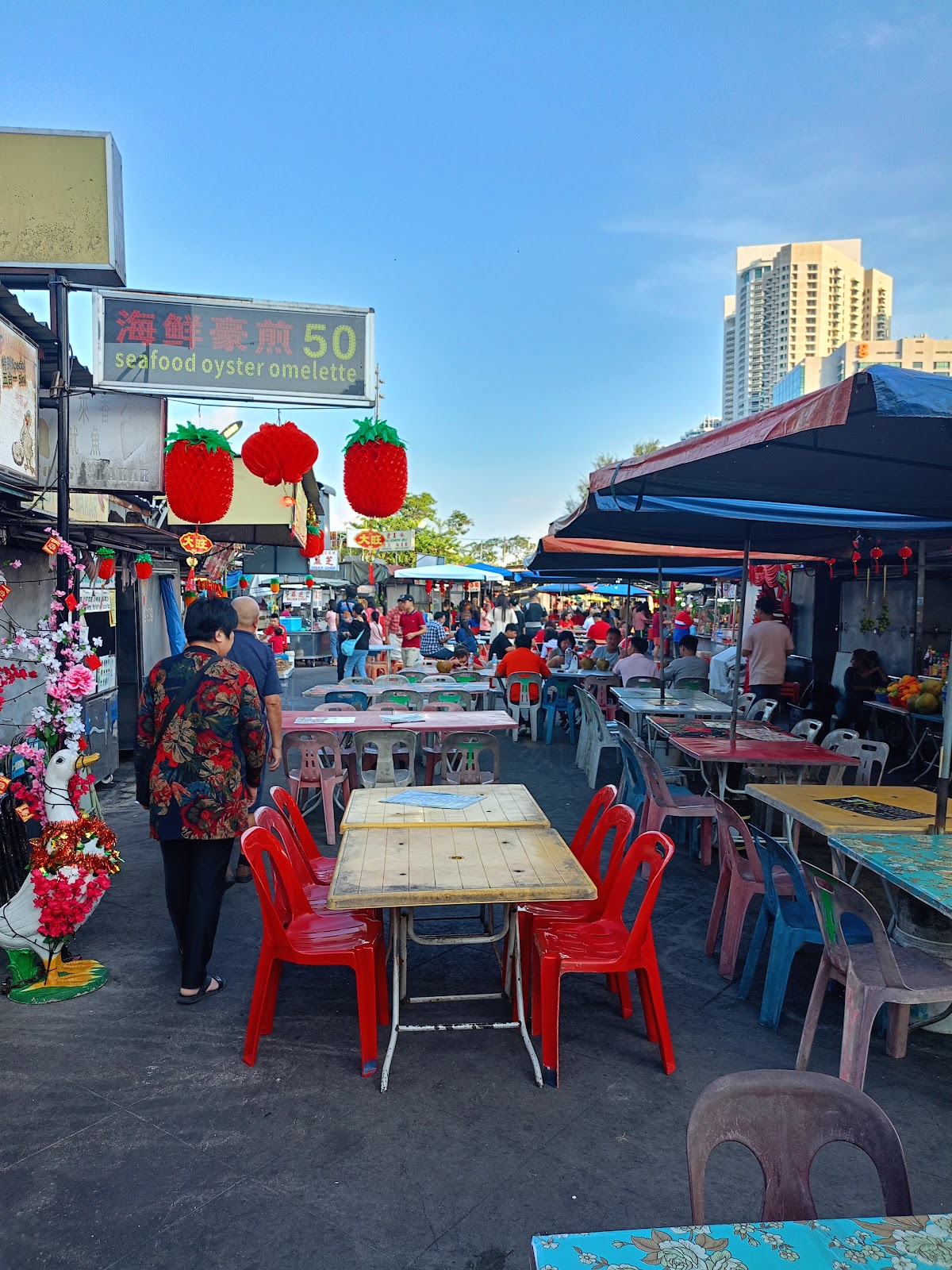
When the sun drops, head to Gurney Drive. The seafront hawker center is loud, bright, and gloriously chaotic, a grid of numbered stalls where you grab a plastic table, send one person to hold it, and scatter to order.
Go for the char kway teow, flat rice noodles fried hard over flame with prawns and cockles and a smoky char the locals call "wok hei". Add rojak, that strange wonderful salad of fruit and dough fritters drowned in dark prawn paste. Finish with ais kacach, shaved ice over red beans and jelly and a slick of palm sugar. Most dishes land between RM6 and RM12, so about 1.50 to 3 dollars, and a full table feast rarely troubles your wallet.
The trick here is to order from several stalls and share everything. Pay each vendor as your food arrives. Bring cash; many of the old-timers still wave away cards.
Inside the Blue Mansion, Where the Walls Are Indigo and Cool
Step off the hot street into a courtyard the color of deep ocean, cool air pooling around the carved screens, light falling through a lattice onto the tiles.
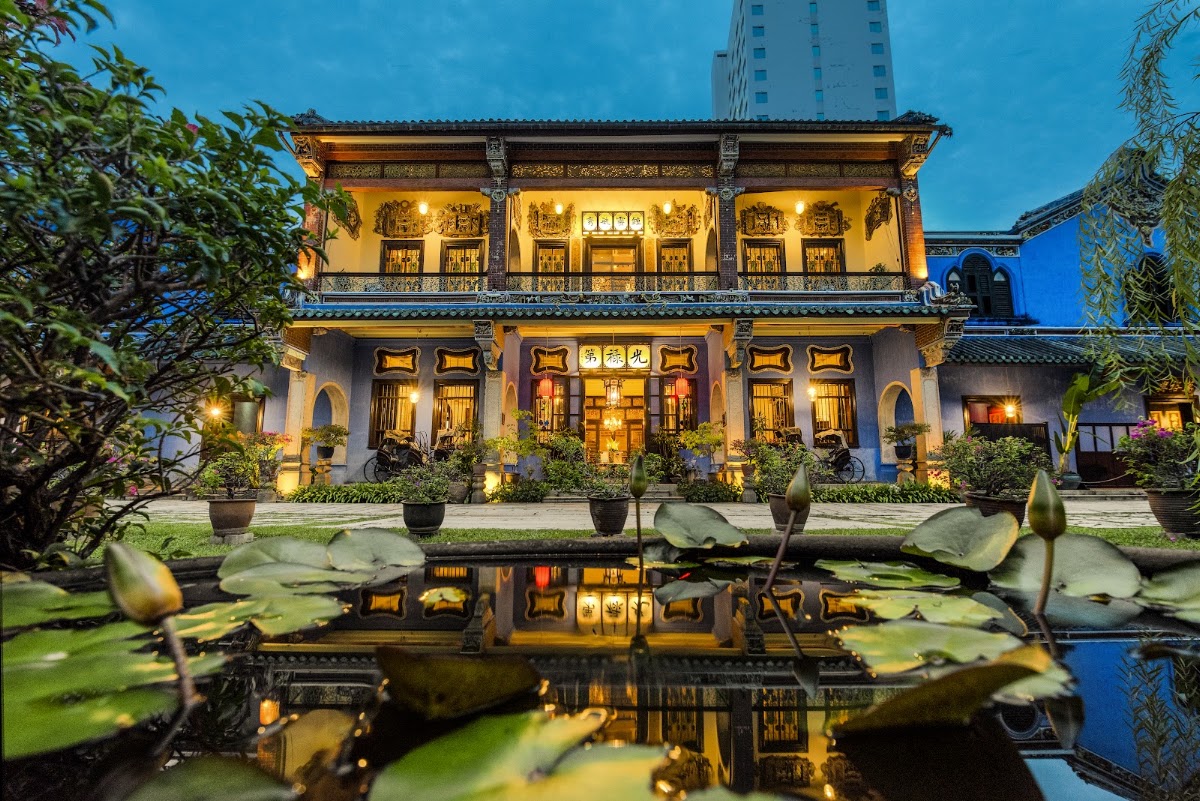
The Cheong Fatt Tze Mansion is the bluest building you will ever walk into. That indigo is not paint-store blue; it is traditional lime wash tinted with natural indigo dye, and in the Penang humidity it seems to breathe. Locals just call it the Blue Mansion.
The only honest way to see it is on a guided tour (sessions run a few times daily, around RM25, roughly 5.50 dollars). The guides walk you through feng shui so precise it borders on obsession: the courtyard that catches rain and funnels it inward as a symbol of wealth flowing home, the cast-iron work shipped from Glasgow, the Art Nouveau glass from Stoke-on-Trent. Cheong Fatt Tze was a penniless migrant who became one of the richest men in Southeast Asia, and the house is his whole life story told in architecture.
Check tour times on the official site (thebluemansion.com.my) before you go. Part of the building is a boutique hotel, so photography is limited to tour areas, and worth every careful frame.
Nyonya Dinner, the Cuisine That Took Two Cultures and Married Them
A clay pot of curry so fragrant it stops conversation, candlenut and lemongrass and tamarind all arguing happily in one spoonful.
Penang's soul food is Nyonya, the Peranakan cooking born when Chinese settlers married into Malay families generations ago. It is slower, more layered, more perfumed than the hawker fare, and a proper sit-down Nyonya dinner is the right way to spend a second evening.
Order assam laksa if you want the dish Penang is most famous for, a sour mackerel and tamarind soup topped with mint, pineapple, and a dark dollop of shrimp paste. Then branch out: kapitan chicken curry, otak-otak (spiced fish steamed in banana leaf), kerabu salads bright with lime. A good meal for two sits around RM80 to RM120, so roughly 18 to 27 dollars, which for this depth of flavor is a steal.
George Town has a cluster of beloved Nyonya kitchens in and around the heritage core. Book ahead on weekends; the best ones are small and fill fast.
Penang Hill at Dusk, When the Whole City Switches On
The funicular tilts up through jungle, the air drops a few degrees with every meter, and then the Straits open up below you in a wash of gold and neon.
Take the funicular railway up Penang Hill (Bukit Bendera) in the late afternoon. The climb is steep enough that the carriage feels like a gentle roller coaster, and the temperature falls noticeably by the top; this hill was the colonial escape from the lowland heat for a reason.
Time it for the hour before sunset. From the viewing decks you look straight down over George Town, across the water to the mainland, with the bridges stringing the two together. As the light goes, the whole grid lights up and the evening call to prayer drifts up from somewhere far below.
Buy a return funicular ticket (around RM30 for foreign visitors, roughly 6.50 dollars) and consider the fast-lane option if you are visiting on a weekend, when the queues at the base station can swallow an hour. Bring a light layer. It is genuinely cool up there after dark.
Kek Lok Si, the Temple That Climbs a Whole Hillside
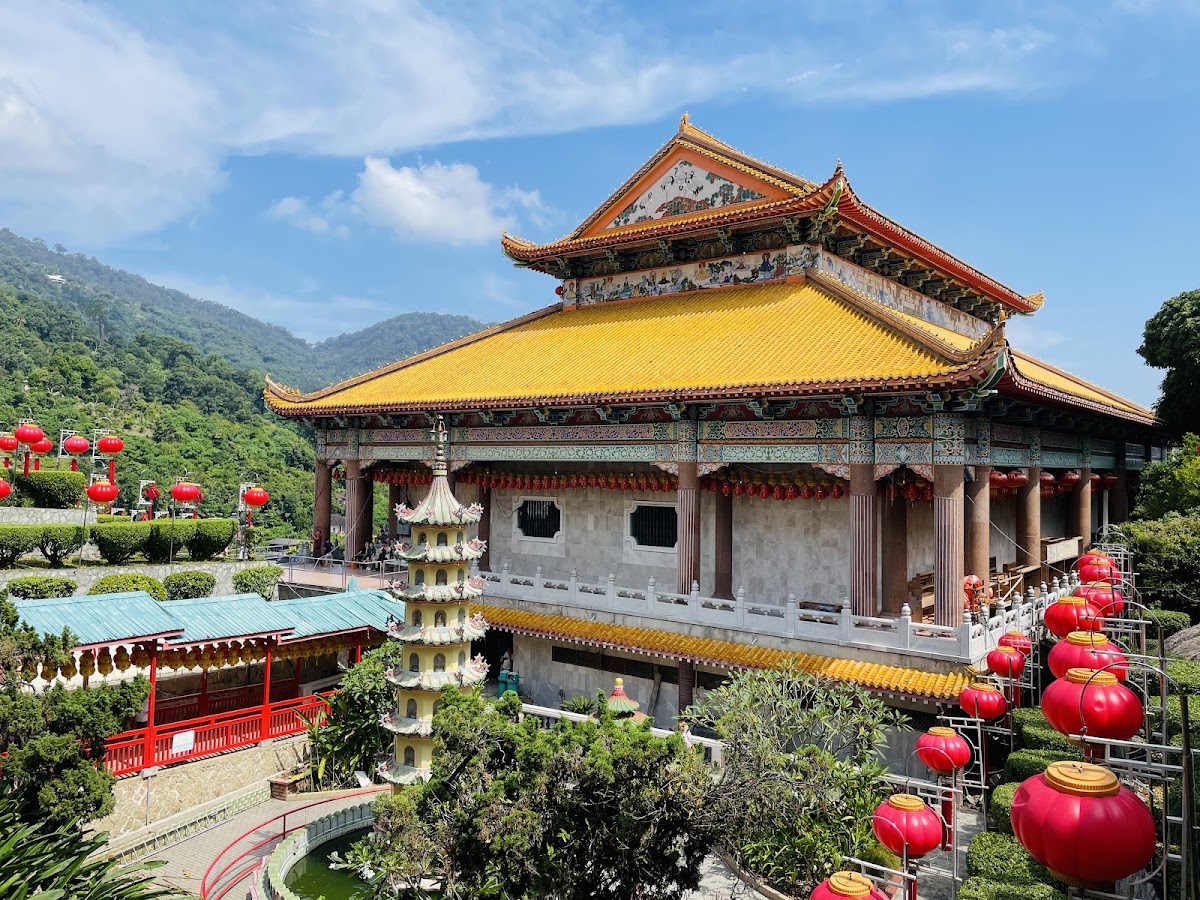
Incense coils of smoke, the flutter of ten thousand prayer ribbons, and a seven-story pagoda stacking Chinese, Thai, and Burmese rooftops one atop the other.
Up in Air Itam, Kek Lok Si spills down the hill in tiers of temples, gardens, and shrines. It is one of the largest Buddhist temple complexes in Southeast Asia and it rewards slow wandering. Climb past the turtle pond and the wishing trees hung with red ribbons to the Pagoda of Ten Thousand Buddhas, whose three architectural styles honor three Buddhist traditions in a single tower.
Keep going (or take the little inclined lift) to the towering bronze statue of Kuan Yin, the Goddess of Mercy, sheltered under her own pavilion with the city laid out behind her. Entry to the grounds is free, with small charges of a ringgit or two for the pagoda and the lift.
If you are here in the weeks around Chinese New Year, come back after dark. The entire complex is draped in lanterns and strings of light, and it glows like something out of a dream above Air Itam.
Supper on Chulia Street, Where George Town Eats Late
Plastic stools spilling into the road, the clatter of a wonton mee man tossing noodles, and the slow sweet steam off a cup of herbal tea.
For your last proper night, skip the fancy and go back to the street. After dark, Chulia Street turns into a run of hawker stalls and five-foot-way kitchens that have been feeding travelers and locals for decades. This is unpretentious, pay-at-the-stall, eat-elbow-to-elbow food, and it is some of the best in the city.
Hunt down char koay kak (fried radish cake with egg and preserved radish), a bowl of wonton mee, or a plate of Hokkien char. Wash it down with a glass of chrysanthemum or herbal tea from one of the roving drink carts. You will struggle to spend more than RM15, around 3.50 dollars, on a full supper.
The stalls set up through the evening and keep going late, so this works beautifully as a wander after an early-evening drink in the heritage streets nearby.
The Clan Jetties, a Village Built on Stilts Above the Sea
Weathered planks underfoot, the slap of water between the boards, and a whole floating neighborhood of wooden houses reaching out into the Straits.
Save the clan jetties for a calm final morning. For over a century, Chinese clan communities have lived in wooden houses built on stilts over the water here, each jetty belonging to a different family surname. Chew Jetty is the largest and most walkable, a long timber boardwalk lined with homes, tiny temples, and a few stalls selling drinks and souvenirs.
Walk out to the end, where the boardwalk hovers above open water and the city falls away behind you. People still live here, so tread gently and keep to the main walkway; this is someone's front porch, not a stage set. Come early and you will have the gentle light and the quiet mostly to yourself.
From here it is an easy run south to Penang International Airport in Bayan Lepas, about 30 to 40 minutes by taxi or ride-hail depending on traffic, which makes the jetties a fitting last image to carry home: George Town, still living on the water, exactly as it has for generations.
Ready to book?
Book the rest of Penang, Malaysia
Handpicked partner searches, dates pre-filled. Pricing is identical to going direct — the partner shares a small commission with Tabi so this guide stays free.
Frequently asked
How many days do you need in Penang?
Four days is the sweet spot for George Town and the hills. That gives you a full day for street art and hawker food, a day split between heritage sights and Penang Hill, a day for Kek Lok Si and the night stalls, and a relaxed final morning at the clan jetties. Three days works if you move briskly; a week lets you add the beaches at Batu Ferringhi and day trips.
What food is Penang actually famous for?
Assam laksa (a sour tamarind and mackerel noodle soup), char kway teow (smoky fried flat noodles with prawns and cockles), Hokkien prawn mee, cendol, and the whole world of Nyonya Peranakan cooking. Penang is widely considered the street food capital of Malaysia, so plan to eat little and often across many stalls rather than big sit-down meals.
Is George Town walkable, and how do you get around?
The heritage core is very walkable, which is the best way to catch the murals and shophouses. For Penang Hill, Kek Lok Si, and the airport you will want a taxi or a ride-hail app, which is cheap and easy. There is also a free central shuttle bus loop around George Town. Distances are short; it is the heat, not the distance, that slows you down.
When is the best time to visit Penang?
December to April is the drier, more comfortable stretch. Penang is tropical and warm year-round, with short heavy downpours possible any month. If you can time a visit around Chinese New Year, the Kek Lok Si light display is spectacular, though the city is busier and some family-run stalls close for the holiday.
Do I need to book Penang Hill and the Blue Mansion in advance?
For the Blue Mansion (Cheong Fatt Tze Mansion), yes, check the guided tour times on the official site and arrive a little early, as sessions are limited. For Penang Hill, you can buy funicular tickets on arrival, but on weekends and holidays the queue can be long, so the fast-lane ticket is worth it. Weekday mornings are quietest for both.
Skip the planning
Your Penang, Malaysia trip, ready to go
Adopt the day-by-day itinerary we built to match this guide. Every stop is a real place, every booking link is validated. Free forever, no card needed.
Open the Penang, Malaysia itinerary