
Petra, Jordan
What to Do in Petra in 4 Days: The Siq, the Monastery, and the Climb Worth It
A walking log through Jordan's rose-red Nabataean city, from candlelit canyon to the 800-step view everyone skips.
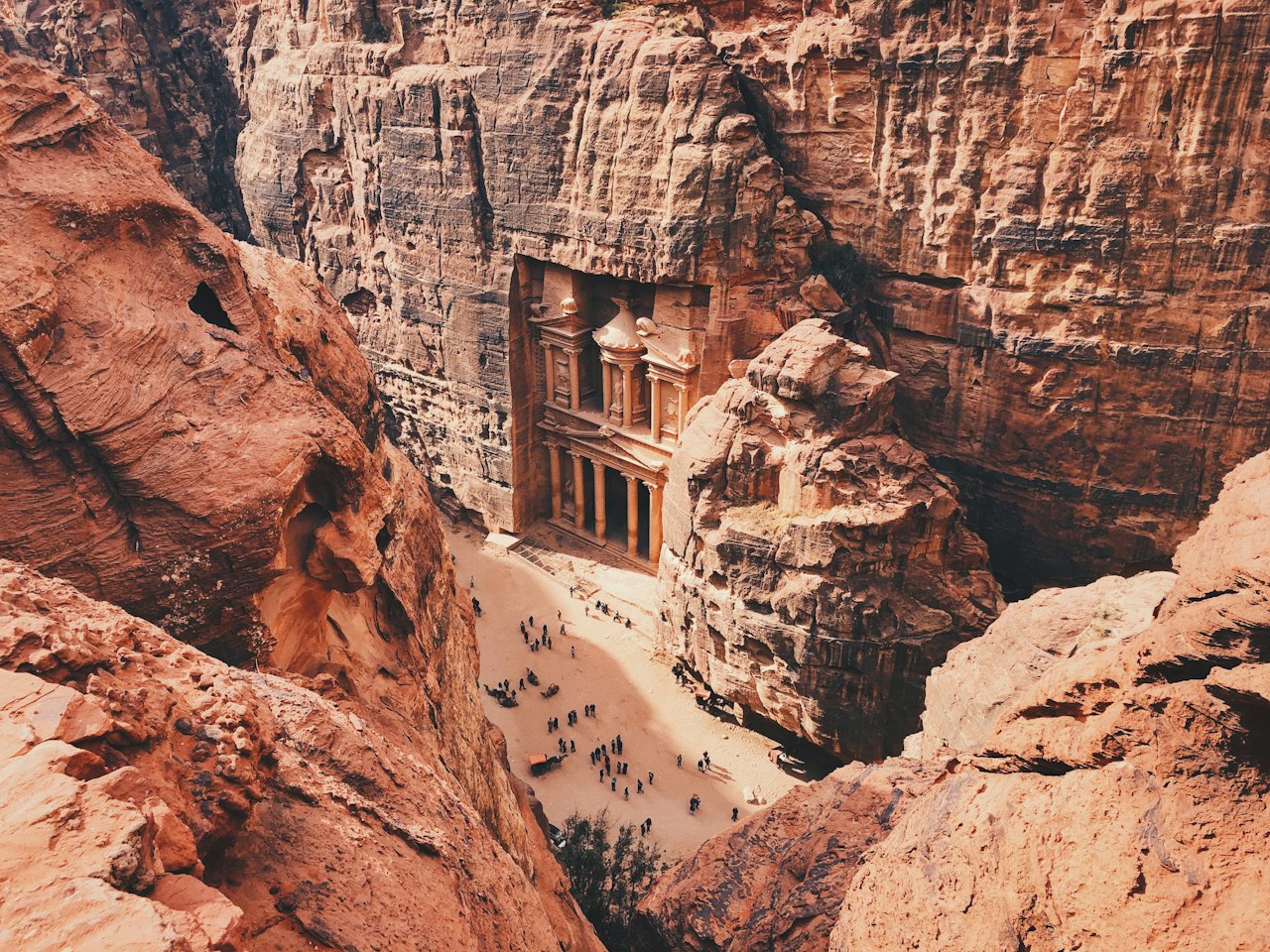
Photo by Alex Vasey on Unsplash
TL;DR
Four days to walk Petra properly: the famous shots, the long climbs, and the quiet corners the day-trippers never reach.
- Candlelit Siq by night, 1,500 lanterns to the Treasury glow
- The Treasury hits as the canyon finally splits open
- 800 rock-cut steps up to the giant Monastery facade
- Little Petra's painted ceiling, almost nobody around
- Rolling flatbread over flame in a Bedouin family kitchen
Have this trip planned in 60 seconds
We built the Petra, Jordan itinerary that pairs with this guide, day-by-day with verified venues and one-tap booking links. Free to adopt, edit however you want.
The Drive South, and Why You Leave Amman Early
Desert the color of toast rolls past the window, then the King's Highway starts climbing into hills dotted with black goat-hair tents.
The run from Amman to Wadi Musa is about 240 km and takes a little over three hours on the Desert Highway, longer if you take the slower King's Highway for the canyon views. Book a private transfer and you can stop at Shobak Castle or a roadside viewpoint without negotiating.
Aim to arrive by mid-afternoon. You want time to check in, eat something, and still catch Petra by Night, which only runs on select evenings (usually Monday, Wednesday, Thursday). Confirm the schedule before you commit to a date, because it does not run daily and tickets sell at the Visitor Center.
Wadi Musa is the town that sits above the ruins. Everything you need, hotels, ATMs, the trailhead, clusters within a short drive of the Petra gate.
The Siq by Candlelight, Before You See It by Day
No flashlights allowed. Just 1,500 paper lanterns lining the canyon floor, and the sound of your own footsteps on 2,000-year-old paving stones.
Doing Petra by Night first is a quiet power move. You walk the 1.2 km Siq in near-dark, the sandstone walls narrowing above you, and when the canyon finally opens the Treasury is lit by candles with a Bedouin musician playing in front of it.
It is atmospheric rather than informative, and yes, it gets busy, so hang back from the crowd near the front and let the groups thin out. The entry is a separate ticket from your main Petra pass (around 17 JOD, roughly 24 USD) and the walk takes a slow hour each way.
Seeing the canyon in the dark first means that when you return in daylight, you already know the shape of the walk. The reveal lands twice.
The Moment the Canyon Splits and the Treasury Appears
You turn the final bend in the Siq and a sliver of carved rose-pink facade appears between the walls, forty meters tall and impossibly sharp.
This is the shot you have seen a hundred times, and it still stops you. The Treasury (Al-Khazneh) was carved straight into the cliff by the Nabataeans around the first century BCE, probably as a royal tomb despite the name. Start early from the Petra Visitor Center, ideally by 7am, to walk the Siq while the light is soft and the crowds are thin.
Stand to the left for the classic framed view through the canyon crack. The square in front fills with camels and vendors by mid-morning, so your early start pays off in clean photos.
From here the main trail widens into the Nabataean city proper. Do not rush. The best of Petra is still ahead and above you.
The Street of Facades and the Tombs Carved for Kings
The valley opens wide and the cliffs on both sides are honeycombed with doorways, columns, and weathered pediments cut straight into the rock.
Past the Treasury the trail becomes the Street of Facades, a run of tomb fronts that gets grander as you reach the Royal Tombs set into the eastern cliff. Climb the steps up to the Urn Tomb for the colonnaded terrace and the view back over the whole basin.
The sandstone here does something strange in late light, the mineral banding turns the walls into swirls of rust, violet, and cream. Mid-afternoon sun on the Royal Tombs is when they glow hardest.
This stretch is flatter and easy to underestimate in scale. Give it a couple of unhurried hours and bring more water than you think you need.
800 Steps Up to the Monastery (and the Climb Is the Point)
The stone staircase keeps turning upward past tea stalls and drops, and then the trees part and the Monastery stands there, even bigger than the Treasury.
Ad-Deir, the Monastery, is the climb almost everyone threatens to skip and then raves about. It is roughly 800 rock-cut steps from the basin, around 45 minutes to an hour of steady ascent, with shaded Bedouin tea stops along the way where you can catch your breath.
The facade at the top is nearly 50 meters wide. Walk past it to the viewpoints on the ridge and the land falls away toward Wadi Araba. Break for lunch beforehand at the Basin, where a Bedouin-run restaurant does a solid buffet that refuels you for the stairs.
Go in the afternoon and the Monastery sits in good light with fewer people. Wear real shoes. The steps are uneven and warm sandstone gets slick underfoot.
Little Petra, Where You Might Have the Place to Yourself
A short siq, barely a few hundred meters, opens into a cluster of carved rooms, and above one of them survives a painted ceiling of vines and birds.
Little Petra (Siq al-Barid, the cold canyon) sits about 15 minutes by car north of the main site and asks for no ticket. It was a Nabataean trading suburb, a spot where caravans rested, and the scale is intimate rather than monumental. Climb the stairs inside the Painted House to see faded frescoes, some of the only Nabataean interior painting left.
Right beside it is Al-Beidha, a Neolithic village roughly 9,000 years old, among the earliest settled sites anywhere. It is subtle, low stone foundations rather than grand facades, but standing there with context is quietly astonishing.
Come in the morning and you may wander both with almost nobody around. It is the calm counterweight to the main valley.
Flatbread Over Flame in a Bedouin Family Kitchen
Cardamom coffee, dough slapped thin over a dome of hot metal, and the smell of maqluba, upside-down rice and chicken, filling a courtyard in Wadi Musa.
After days of walking, an afternoon cooking class with a local family is the softest landing. You will usually help with staples like galayet bandora (a tomato and chili skillet), stuffed vine leaves, and the famous maqluba that gets flipped out of the pot at the table.
It is as much about the hospitality as the food, endless sweet tea, stories about life on the edge of the desert, and tips on where locals actually eat. A relaxed free afternoon in Wadi Musa pairs well with it: browse the small shops, rest your legs, watch the light change on the hills.
Then a quiet hotel breakfast and a private transfer back to Queen Alia airport, about three and a half hours north. Leave a generous buffer before your flight.
Ready to book?
Book the rest of Petra, Jordan
Handpicked partner searches, dates pre-filled. Pricing is identical to going direct — the partner shares a small commission with Tabi so this guide stays free.
Frequently asked
How many days do you really need in Petra?
Two days covers the headline sights (the Siq, Treasury, Royal Tombs, and the Monastery climb) at a reasonable pace. Four days lets you add Petra by Night, Little Petra, Al-Beidha, and a cooking class without feeling rushed, plus travel time to and from Amman. One day is possible but you will miss the climbs and the quieter corners.
Is the Monastery hike hard?
It is a steady climb of roughly 800 uneven rock-cut steps, around 45 minutes to an hour up, with shaded tea stalls to rest at. Most reasonably fit people manage it fine if they go slowly, carry water, and wear proper shoes. Afternoon tends to have better light and fewer crowds.
When is the best time of year to visit Petra?
Spring (March to May) and autumn (September to November) are ideal, with warm days and cool evenings. Summer midday heat can be intense, so start at opening and rest in the afternoon. Winter is quieter and cooler, with occasional rain that can briefly affect the Siq.
Do I need a guide, or can I walk Petra on my own?
The main trail is well marked and easy to follow solo. A licensed guide, hired at the Visitor Center, adds a lot of history and can point out carvings and side routes you would otherwise walk past. For Little Petra and Al-Beidha, context from a guide is especially rewarding.
How do I get from Amman to Petra?
It is about 240 km, roughly three to three and a half hours by road. A private transfer is the simplest option and lets you stop for photos or at Shobak Castle. There are also daily JETT buses from Amman to Wadi Musa if you prefer a budget option; book the bus in advance in high season.
Skip the planning
Your Petra, Jordan trip, ready to go
Adopt the day-by-day itinerary we built to match this guide. Every stop is a real place, every booking link is validated. Free forever, no card needed.
Open the Petra, Jordan itinerary