
Phnom Penh, Cambodia
What to Do in Phnom Penh in 3 Days: River, Palace, and the History You Need to Face
A journey log through Cambodia's capital, from the golden spires of the Royal Palace to the quiet gravity of Choeung Ek.
TL;DR
Three days where a golden river sunset and a plate of fish amok sit beside two places that will ask something of you, and the city is better for holding both.
- Sunset cruise where the Mekong and Tonlé Sap meet in gold
- Tuol Sleng's silent classrooms turned S-21 prison
- Choeung Ek's memorial stupa and the orchard beyond it
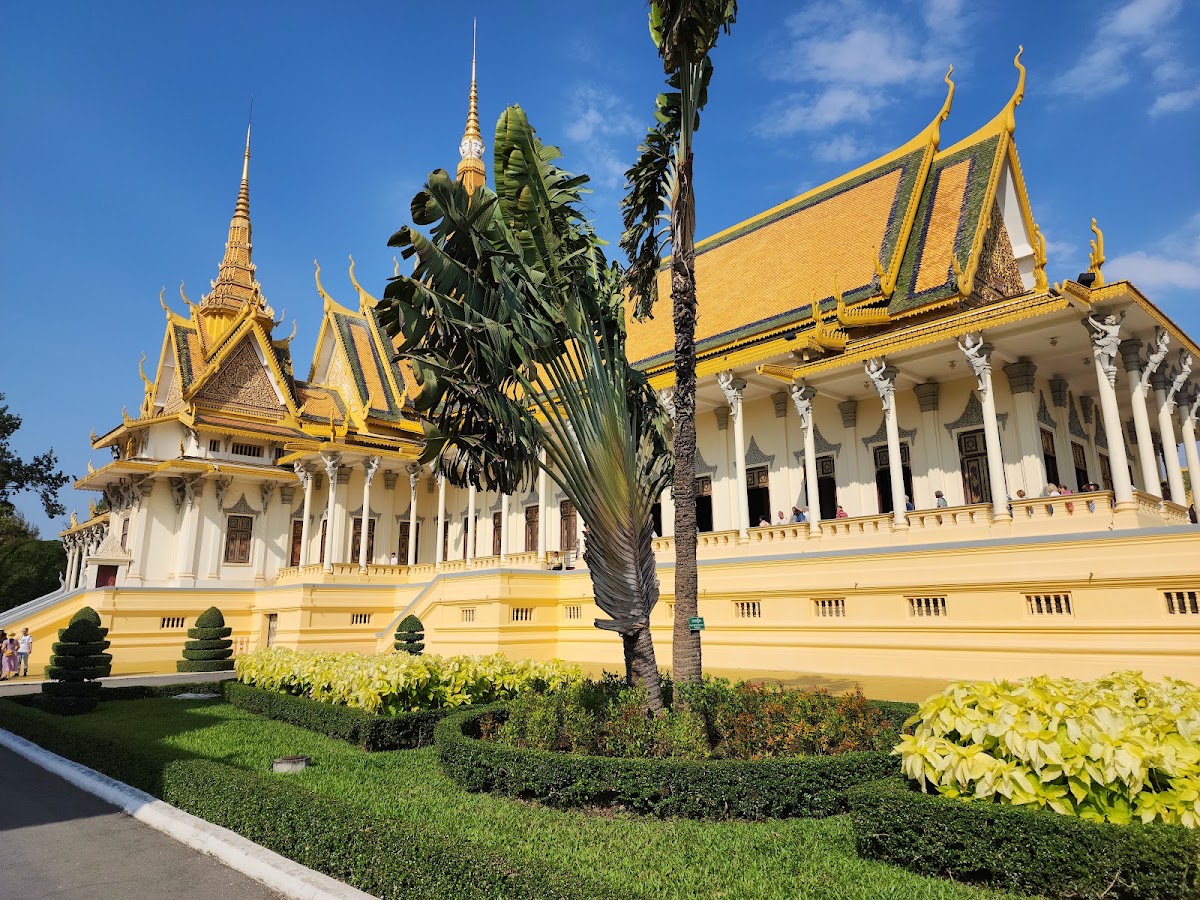
- Royal Palace spires and the Silver Pagoda's 5,000 tiles
- Central Market's cream art-deco dome stuffed with stalls
- Sisowath Quay at night, fairy lights and grilled skewers
Have this trip planned in 60 seconds
We built the Phnom Penh, Cambodia itinerary that pairs with this guide, day-by-day with verified venues and one-tap booking links. Free to adopt, edit however you want.
Arriving, and the Drive That Tells You You're Here
Scooters stacked three-deep at the lights, a whole family on one seat, the warm smell of charcoal and petrol drifting through the open car window.
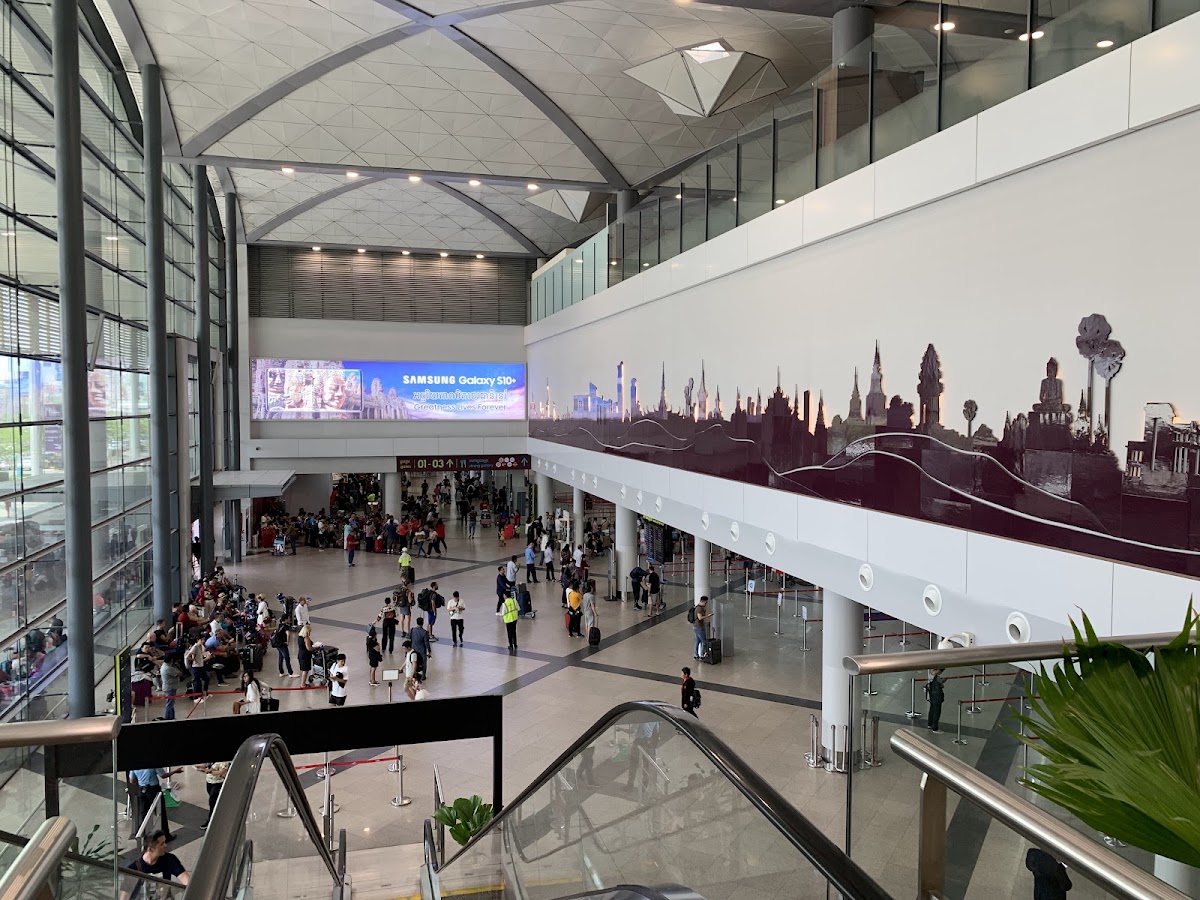
You land at Phnom Penh International Airport, about 10 km west of the river. The ride into town takes 30 to 45 minutes depending on how the afternoon traffic is feeling, and it is your first proper look at the city: tangled power lines, gold-trimmed temple roofs poking up between concrete, street vendors frying banana fritters on the corner.
Sort a transfer before you fly so you're not negotiating fares after a long flight. A private car to the riverside is cheap by most standards, around 12 to 15 USD, and worth it for the air-conditioning alone.
Base yourself near Sisowath Quay. You'll be walking to the river, the Royal Palace, and the night market from there, which saves you a lot of tuk-tuk haggling over the next few days.
Gold on the Water as the Sun Drops
The exact spot where the muddy Tonlé Sap pours into the broad Mekong, both rivers turning molten orange as the boat eases out from the dock.
Start soft. A late-afternoon cruise from the Phnom Penh River Cruise Dock on Sisowath Quay puts you on the water right as the light goes golden. You pass the spires of the Royal Palace lit up on the bank, fishing skiffs heading home, kids waving from the stilted houses across the confluence.
Most boats run 60 to 90 minutes and cost somewhere around 10 to 18 USD, often with a drink in hand. It's slow, it's quiet, and it gives you the whole shape of the city from the one angle that makes sense of it: Phnom Penh grew up facing these rivers.
Go on your first evening. It sets the tone before the heavier days ahead.
The Classrooms That Became S-21
A former high school, four plain concrete buildings around a grassy yard, and the sudden wrongness of iron bed frames still bolted to tiled floors.
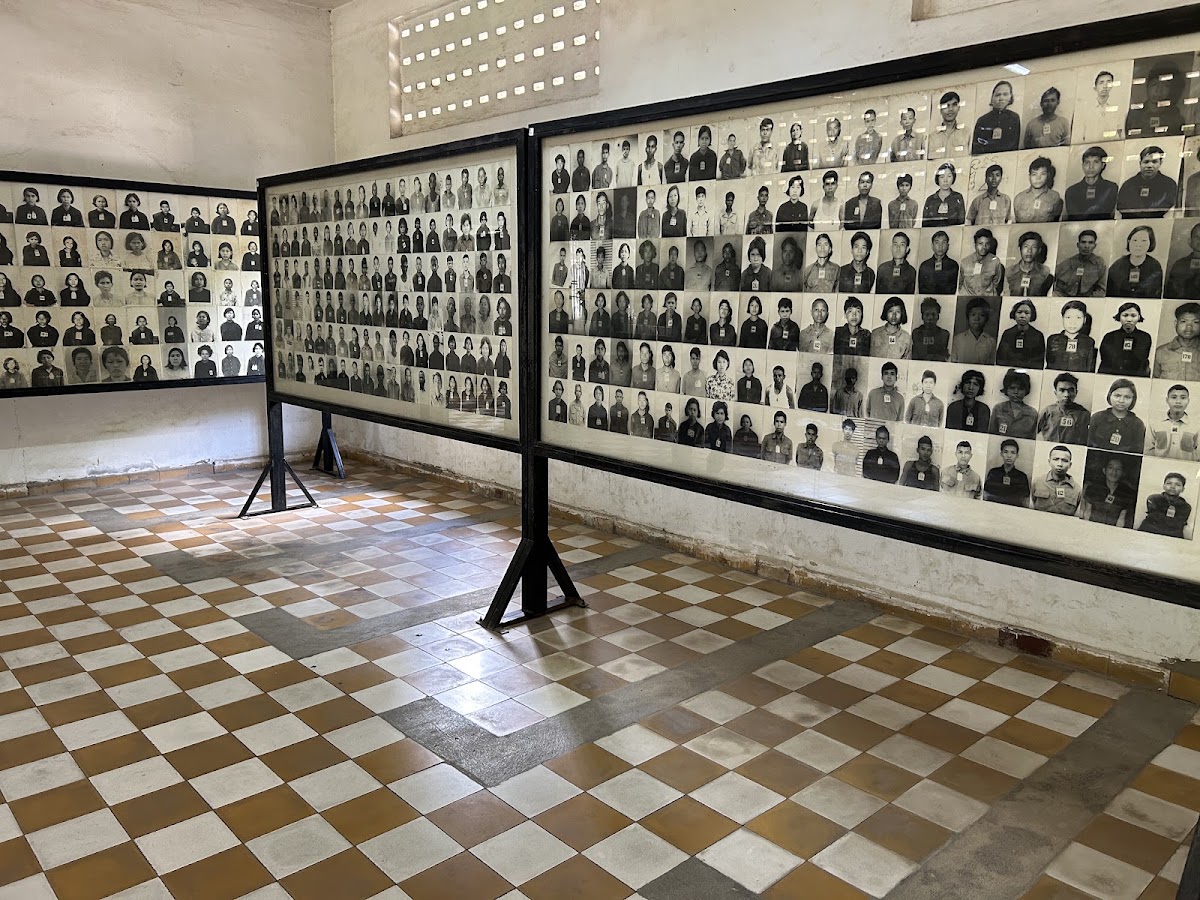
Tuol Sleng Genocide Museum is not an easy morning, and it is not meant to be. Between 1975 and 1979 the Khmer Rouge turned this school into Security Prison 21, where thousands were held, interrogated, and sent to their deaths. The walls are lined with the regime's own photographs of the people who passed through here.
Take the audio guide. It's narrated in part by survivors, and it carries you through the rooms with a steadiness you'll be grateful for. Give yourself two hours and don't rush it.
Entry is about 5 USD, plus a few dollars for the audio. Go early, when the yard is still cool and quiet, before the midday heat and the crowds. Then sit in the shade of the courtyard frangipani for a while before you move on.
Choeung Ek, and the Orchard Beyond the Stupa
A tall white memorial stupa rising over quiet fields, filled floor to roof with skulls, and a breeze moving through the surrounding trees like nothing ever happened here.
The prisoners of S-21 were brought 15 km south to Choeung Ek, one of the Killing Fields. Today it is a peaceful stretch of grass, water, and shade trees, which is exactly what makes it so hard. The audio guide walks you path by path, past the shallow depressions where mass graves were found and the memorial stupa at the centre.
This is the second half of a difficult day, and it belongs right after Tuol Sleng. The two places explain each other. Many visitors fall silent for the drive back.
Admission including the audio guide is around 6 USD. A tuk-tuk from the city, waiting while you visit, runs roughly 15 USD round trip. Dress respectfully, cover your shoulders, and bring water.
Lunch by the River, Fish Amok and Shade
A plate of fish amok arrives steaming in its banana-leaf cup, coconut and lemongrass and a hum of fresh chili, with a ceiling fan turning slow overhead.
After a morning like that, you need to sit down with good food and a cold drink. The riverside Khmer restaurants along and just off Sisowath Quay do exactly this. Order the amok, Cambodia's signature curried fish steamed in banana leaf, and maybe a lok lak, stir-fried beef with a lime-and-pepper dip.
A proper sit-down lunch for two with drinks lands around 12 to 20 USD, which goes a long way here. Grab a table with a river view if you can and let the afternoon heat pass over you.
Take your time. The palace is a short walk away and keeps better in the late afternoon anyway.
The Royal Palace and a Floor Made of Silver
Spires sheathed in gold catching the low sun, and inside the pagoda, more than 5,000 silver tiles underfoot, each one laid by hand.
The Royal Palace complex, still the residence of Cambodia's king, is all steep golden roofs and manicured gardens. The showpiece is the Silver Pagoda, named for the solid silver floor tiles and home to a life-sized gold Buddha studded with thousands of diamonds.
Dress code is strict and enforced: shoulders and knees covered for everyone. Bring a scarf or a light layer. Entry is about 10 USD, and late afternoon gives you the kindest light on all that gilding.
Give yourself 90 minutes to wander the throne hall, the murals, and the quiet corners of the grounds. It's the gentle counterweight the day has been building toward.
The Quay After Dark
Fairy lights strung between palm trees, smoke curling off skewer grills, and families out walking as the river goes black and glossy beside them.
When the sun's gone, Sisowath Quay turns into the city's living room. The riverside promenade fills with evening strollers, street-food carts, and a night market tucked just back from the water where you can dig through racks of silk scarves and knock-off football shirts.
Graze your way along: grilled corn, fresh spring rolls, a fruit shake blended to order for about a dollar. Sit on the grass with the crowd, watch the boats drift past, and let the day settle.
It's an easy, happy end to a heavy day, and everything's within a short walk of the riverside hotels.
Central Market, Then the Road Out
A huge cream-coloured art-deco dome rising over four radiating wings, every aisle packed with silver, gemstones, watches, and the chatter of a hundred vendors.
Spend your last morning at Central Market, known locally as Phsar Thmey. The 1930s building alone is worth the trip, a pale yellow dome that looks like something from another century, with sun pouring down into the hall. The wings fan out into jewellery, electronics, fabric, and a wet-and-dry market of fruit and flowers at the edges.
Bargain gently and with a smile, it's expected, and you'll leave with a scarf or a souvenir for a fraction of the first price. It's a good spot for a final iced coffee too.
Then it's time to head for the airport. Leave a generous buffer, as midday traffic can be slow, and pre-book your car so the last hour in the city is calm rather than a scramble. If you have one more night and the itch to see the temples, this is the moment to plan a hop onward.
Ready to book?
Book the rest of Phnom Penh, Cambodia
Handpicked partner searches, dates pre-filled. Pricing is identical to going direct — the partner shares a small commission with Tabi so this guide stays free.
Frequently asked
Can you see Tuol Sleng and Choeung Ek in one day?
Yes, and most visitors do them together because they tell one connected story. Start at Tuol Sleng (S-21) early while it's cool, break for lunch, then take a tuk-tuk 15 km south to Choeung Ek in the afternoon. Both have excellent audio guides. It is an emotionally heavy day, so build in quiet time afterward, which is why a gentle Royal Palace visit works well as an evening counterweight.
Is three days enough for Phnom Penh?
Three days comfortably covers the city's main sites: a river sunset cruise, the Tuol Sleng and Choeung Ek memorials, the Royal Palace and Silver Pagoda, Sisowath Quay, and Central Market. It's an ideal length if you're also planning to continue to Siem Reap for Angkor Wat or down to the coast, as many travelers do.
What should I wear to the Royal Palace and the genocide memorials?
The Royal Palace enforces a dress code: shoulders and knees covered for all visitors, so bring a scarf or light layer. At Tuol Sleng and Choeung Ek there's no strict rule, but modest dress is respectful given what these places commemorate. Light, breathable clothing plus a cover-up handles both in the heat.
How do I get around Phnom Penh?
Tuk-tuks are the backbone of getting around, and ride-hailing apps like Grab and PassApp work well for fixed, fair prices. The riverside core around Sisowath Quay, including the Royal Palace and night market, is walkable. For the Killing Fields at Choeung Ek, hire a tuk-tuk for the round trip and have it wait; expect roughly 15 USD.
When is the best time to visit Phnom Penh?
The dry season from November to February is the most pleasant, with cooler mornings that make the outdoor sites more comfortable. March to May gets very hot, and the wet season from June to October brings afternoon downpours that are usually short but heavy. A river sunset cruise is good year-round.
Skip the planning
Your Phnom Penh, Cambodia trip, ready to go
Adopt the day-by-day itinerary we built to match this guide. Every stop is a real place, every booking link is validated. Free forever, no card needed.
Open the Phnom Penh, Cambodia itinerary