
Phuket, Thailand
What to Do in Phuket in 5 Days: Beaches, Big Buddha, and the Boat Day You'll Keep Talking About
A five-day walk through Phuket's loudest sunsets, quietest shrines, and the limestone lagoon that looks fake until you're floating in it.
TL;DR
Picture five days that start with your feet in warm Andaman sand and end with you squinting at a sunset everyone around you has gone quiet for.
- Patong Beach at golden hour, longtails glowing, grilled satay on the breeze
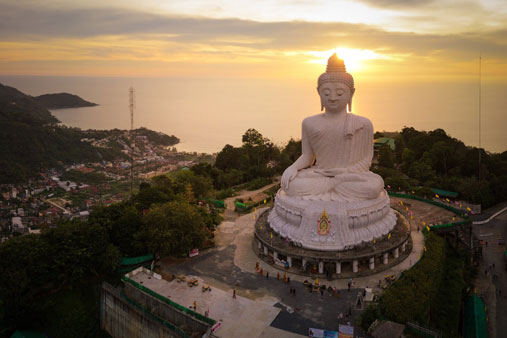
- The 45-meter white marble Big Buddha watching over the whole island
- Wat Chalong's gilded shrine, incense smoke curling through the heat
- Pileh Lagoon's glass-green water ringed by sheer limestone walls
- Promthep Cape, where the sun drops into the sea and the crowd hushes
Have this trip planned in 60 seconds
We built the Phuket, Thailand itinerary that pairs with this guide, day-by-day with verified venues and one-tap booking links. Free to adopt, edit however you want.
Touchdown, and the First Thing You Smell Is the Heat
Warm, wet air hits you the second the plane door opens, thick with jet fuel, frangipani, and something frying somewhere.
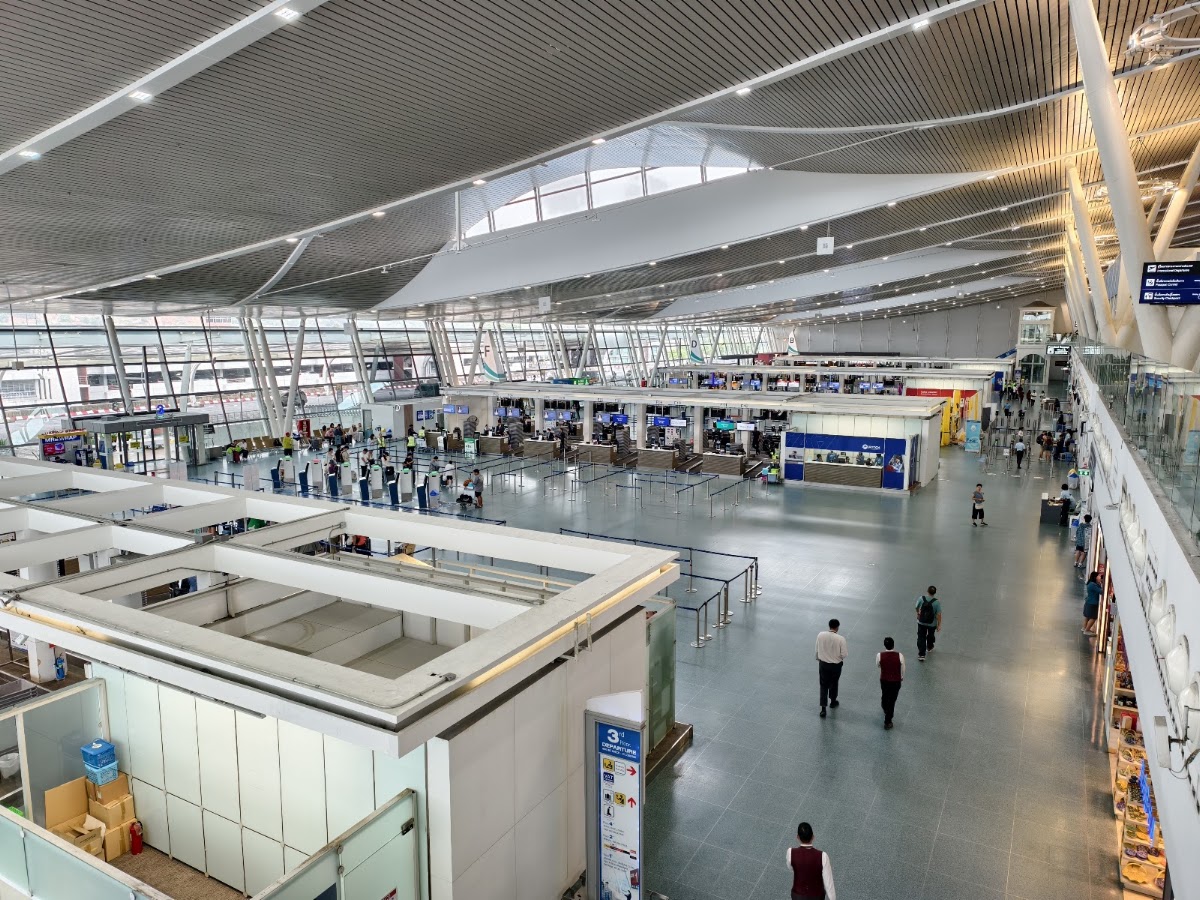
Phuket International sits up at the island's northern tip, and your hotel is almost certainly down south in Patong, Kata, or Rawai. That is a 45 to 60 minute drive, longer if you land in the late-afternoon crush, so getting the transfer sorted before you fly beats haggling at the curb with a backpack sticking to your spine.
The road south opens up fast: rubber plantations, a few big green hills, then the first flash of sea on your right. Keep your phone handy for the view when the road crests near Kamala.
Drop your bags, splash cold water on your face, and head straight for the beach. You did not fly all this way to unpack neatly.
Sunset on Patong Beach, Loud in the Best Way
Longtail boats bob in a line, their paint catching the last orange light, while somebody three towels over cracks open a cold Singha.
Patong is the island's party heart, and at 6pm it is exactly as busy as you'd expect. But walk the sand toward the quieter southern end and the volume drops. The sky goes pink, then that electric tangerine the Andaman does so well, and the whole crescent of beach seems to pause for it.
Stalls near the beach road grill chicken satay and sweet corn; grab a skewer for 20 to 40 baht (under a dollar) and eat it with your toes in the water.
When the light's gone, Bangla Road fires up a block inland if you want the neon. If you don't, the beachfront seafood spots are just as happy to feed you.
The 45-Meter Buddha You Can See From Half the Island
White Burmese marble, almost too bright to look at, sitting cross-legged on a hilltop with the wind carrying temple bells across the lookout.
The Big Buddha sits on the Nakkerd Hills above Chalong, and the drive up is a tight ribbon of switchbacks that rewards you with one of the widest views on Phuket: Chalong Bay, Kata, Rawai, the sea stretching out blue and endless.
Entry is free; a sarong to cover your knees and shoulders is required and lent at the gate if you arrive in shorts. Little brass bells line the terrace, and visitors ring them for luck as they pass.
Go in the morning before the heat peaks and the tour buses stack up. It is quieter, cooler, and the light on the marble is softer for photos.
Incense and Gold at Wat Chalong
Smoke from a hundred incense sticks hangs in the air, and gilded spires throw hot gold against a hard blue sky.
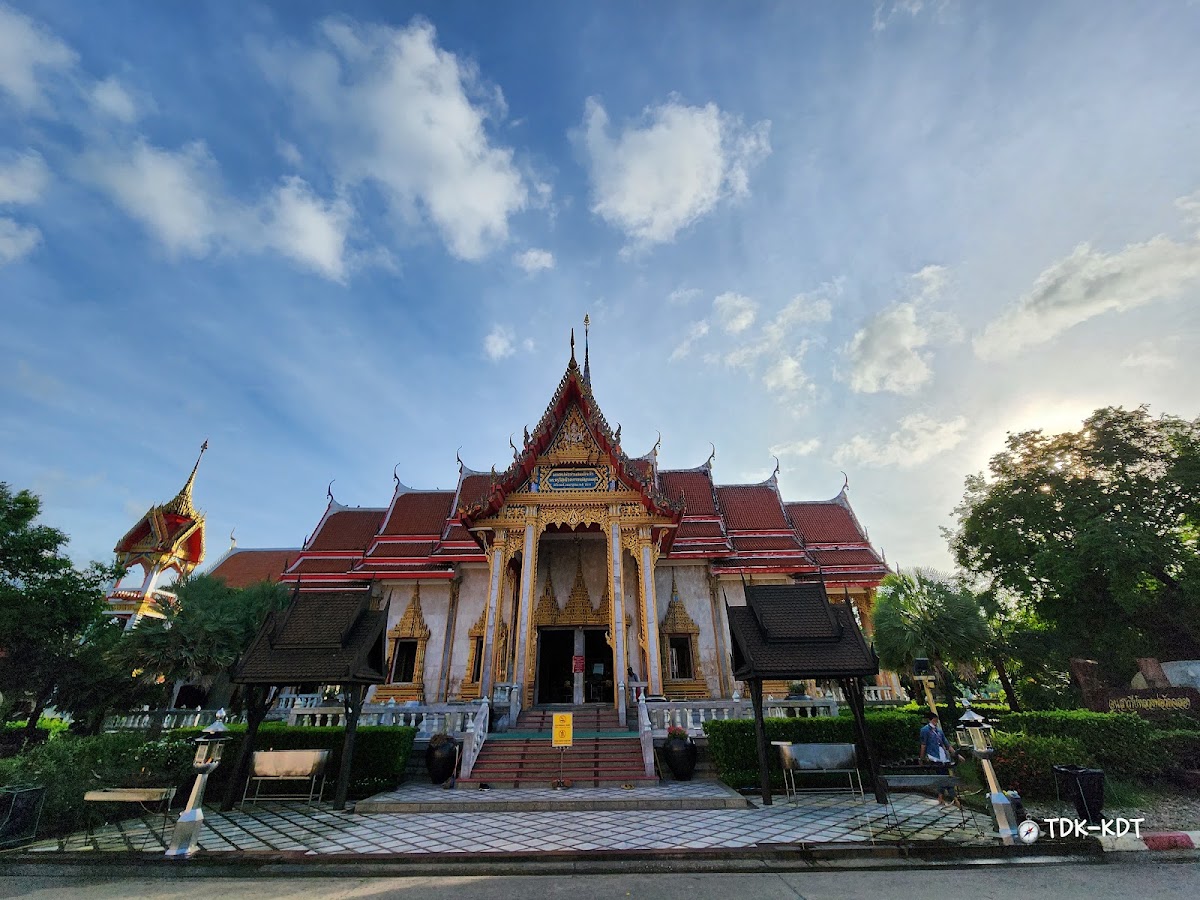
A short drive down the hill from the Big Buddha, Wat Chalong is Phuket's most revered temple, dedicated to two monk-healers who treated the sick during a 19th-century uprising. The main hall glitters with gold leaf, mirror work, and a relic enshrined in the tall white chedi.
Step inside the chedi and climb; each level opens onto a balcony with more carved Buddhas and a breeze that is genuinely welcome. Same dress code as the Big Buddha applies: shoulders and knees covered.
Lunch afterward is the move. Chalong and Rawai have unassuming family-run spots where a plate of pad kaprao or a bowl of tom yum runs 60 to 120 baht and tastes nothing like the version back home.
Phuket Old Town, Where the Walls Are Pastel and the Coffee Is Serious
Faded shophouses in mint, saffron, and rose line Thalang Road, shutters flung open, a motorbike idling outside a cafe that smells of roasting beans.
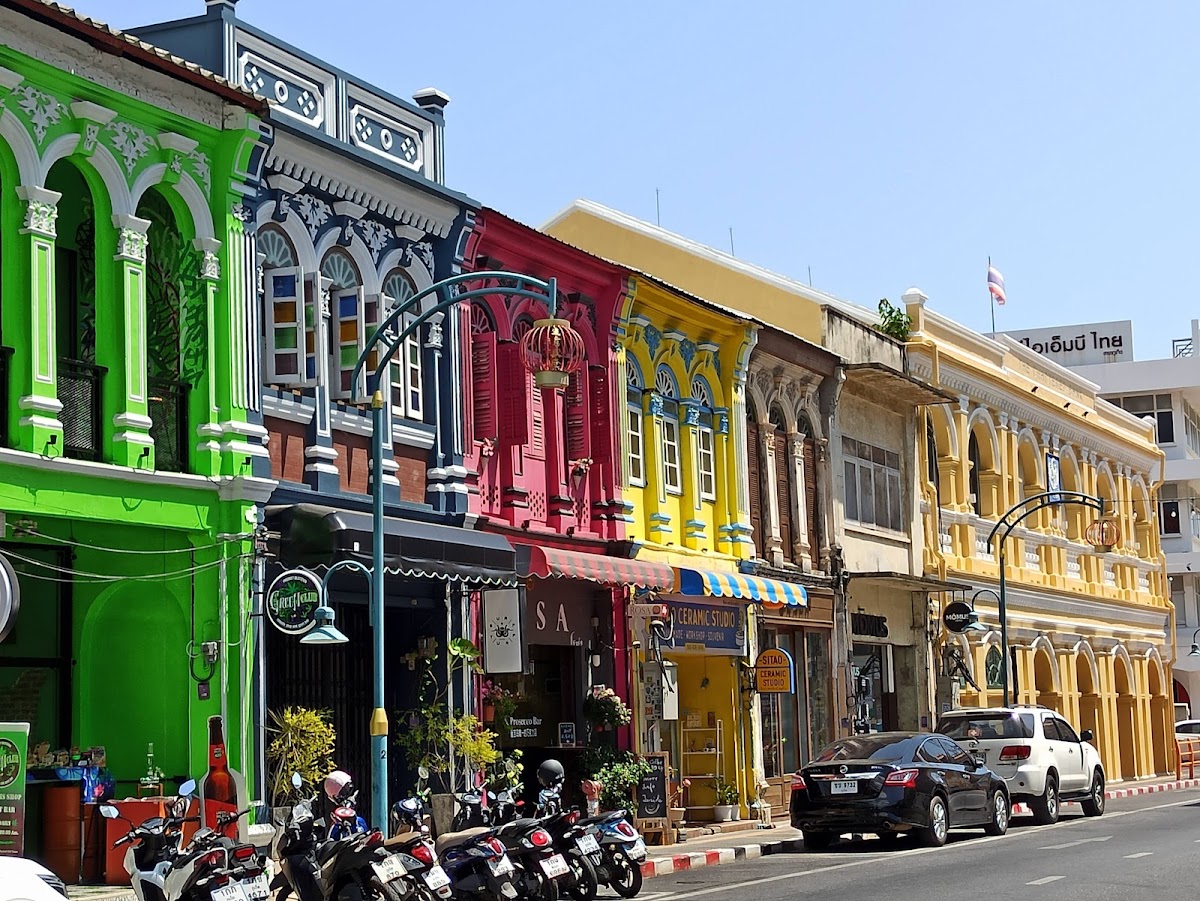
This is the Phuket most people drive past on their way to a beach, and it is the best couple of hours in the city. The Sino-Portuguese shophouses on Thalang, Dibuk, and Soi Romanee go back to the tin-mining boom, and they've been lovingly repainted into a grid of pastel photo backdrops.
Duck into the side lanes for street-art murals, independent cafes, and tiny museums tucked behind original tilework. Hok Nguan Kung shrine and the old post office anchor the ends if you want a route.
If you're here on a Sunday evening, the Walking Street night market takes over Thalang with food carts, local snacks, and live music. Come hungry.
The Boat Day: Maya Bay and a Lagoon That Looks Edited
The speedboat slows, the engine drops to a burble, and the water turns a green so clear you can count fish ten feet down.
This is the day you'll replay on the flight home. A speedboat out of Phuket runs roughly 50 minutes to the Phi Phi Islands, and the first stop that stops your breath is Pileh Lagoon, a flooded basin ringed by sheer limestone cliffs. Slip off the back of the boat with a mask and the snorkelling is right there.
Then Maya Bay, the beach made famous by the film, closed for years to let the reef recover and now reopened with visitor limits and a boardwalk approach. The sand is impossibly fine, the cliffs tower, and yes, it really does look like that.
Lunch lands on Phi Phi Don, the bigger inhabited island, before the boat turns back. Book a small-group tour that leaves early; the first boats out get the lagoons before the fleet arrives. Reef-safe sunscreen and a dry bag for your phone are both non-negotiable.
A Slow Morning and a Swim at Kata
Soft, pale sand underfoot, gentle surf, and a line of casuarina trees throwing shade right down to where the waves break.
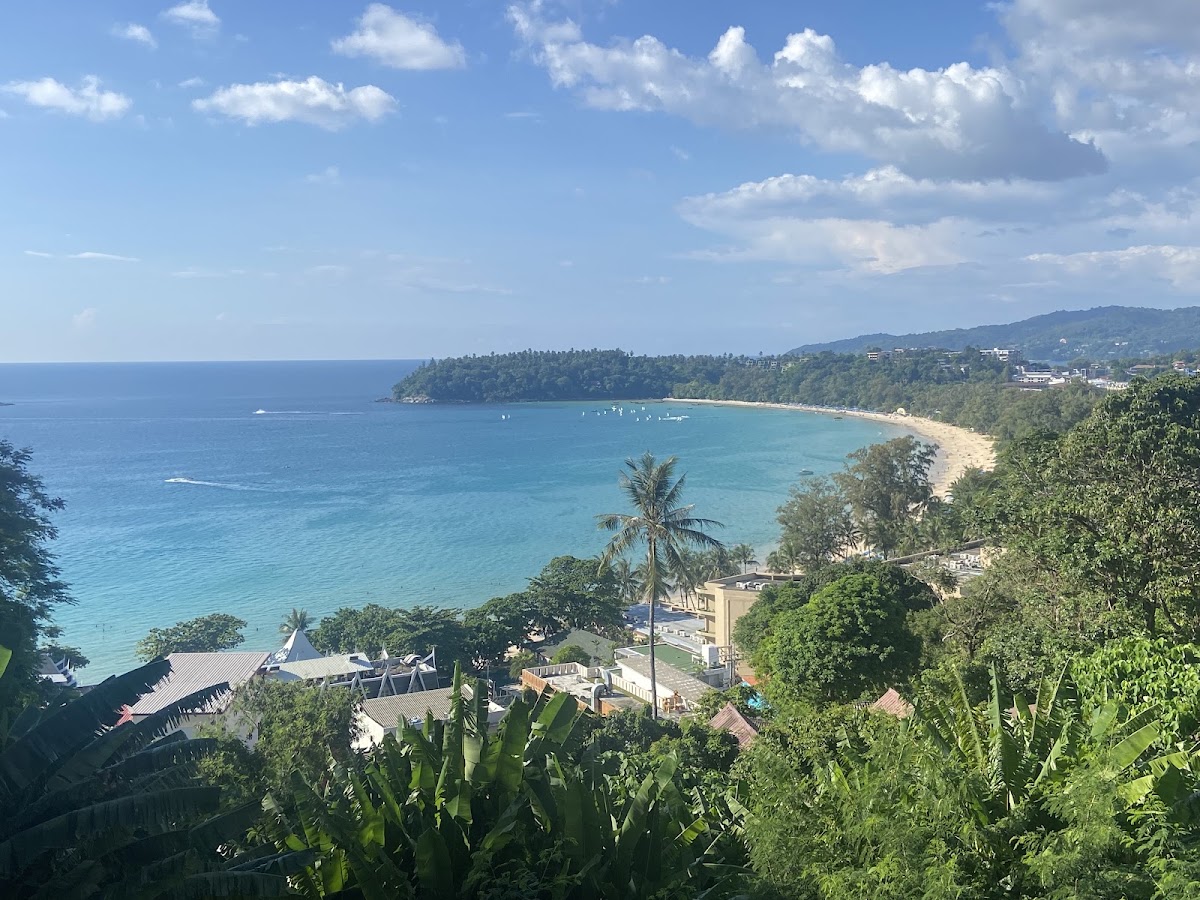
After the boat day, you've earned a lie-in. Kata Beach is the mellow counterpoint to Patong: cleaner water, an easy swimmable bay, and enough trees for a shaded afternoon without renting a thing. From roughly May to October the surf picks up and local shops rent longboards for beginners.
Spend the morning doing precisely nothing. Swim, read, order a fresh coconut from the vendor working the sand (around 60 to 80 baht), repeat.
Keep the late afternoon free. There's one last view to catch, and it's the one you'll want to end on.
Last Light at Promthep Cape
A headland of windblown grass drops straight into the sea, the sun hangs huge and gold over the water, and the whole crowd goes quiet at once.
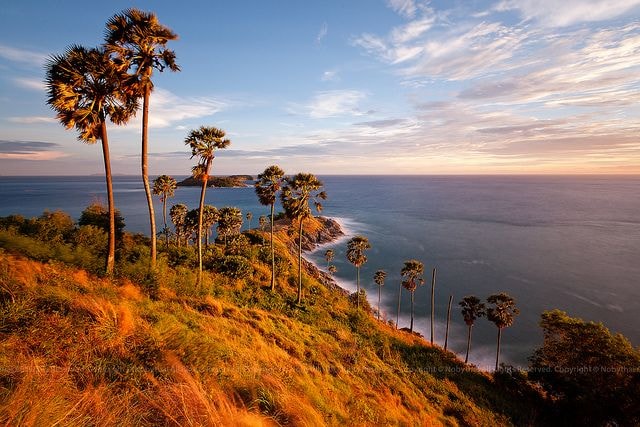
Promthep Cape, at Phuket's far southern tip near Rawai, is the island's classic sunset spot, and for once the hype is earned. A rocky promontory juts into the Andaman, a small shrine and a lighthouse sit up top, and there is nothing between you and the horizon.
Arrive 30 to 40 minutes before sundown to claim a spot on the viewing terrace. As the light fades, the sea turns copper then violet, and the islands offshore become black silhouettes.
It's the right place to end the trip: a beachfront dinner nearby in Rawai, grilled fish and a cold drink, and an easy early night before the morning transfer back to the airport. Five days, and you'll already be planning the next ones.
Ready to book?
Book the rest of Phuket, Thailand
Handpicked partner searches, dates pre-filled. Pricing is identical to going direct — the partner shares a small commission with Tabi so this guide stays free.
Frequently asked
How many days do you really need in Phuket?
Five is the sweet spot. It gives you a full beach day, a culture day covering Big Buddha, Wat Chalong, and the Old Town, a full-day boat trip to the Phi Phi Islands, and a slow final day without feeling rushed. Three days works if you skip either the culture or the islands, but you'd be cutting the best bits.
When is the best time to visit Phuket?
November to April is the dry season with calm seas, the best stretch for boat trips and snorkelling. May to October is the monsoon: cheaper, greener, and often still sunny in the mornings, but the Andaman gets rougher and some island tours are cancelled on rough days. For the Phi Phi boat day, aim for the dry months.
Is Maya Bay open again, and can you still visit?
Yes. Maya Bay reopened after a multi-year closure to let its reef and beach recover, and it's now managed with daily visitor caps, a set approach via a boardwalk on the island's rear, and no boats anchoring in the bay itself. Most Phi Phi speedboat tours from Phuket include it; book an early departure to beat the crowds.
How do you get around Phuket?
There's no real public transport worth relying on. Most travelers use Grab (the local ride-hailing app), pre-booked transfers, or rent a scooter if they're confident riding in heavy traffic. Metered taxis are scarce and local tuk-tuks negotiate hard, so agree a price before you get in. For day trips, tours include hotel pickup.
What should you wear to Big Buddha and Wat Chalong?
Both are active religious sites, so shoulders and knees must be covered for men and women. If you turn up in a tank top or shorts, sarongs are lent at the entrance, usually free or for a small deposit. Slip-on shoes help since you'll remove them to enter the main halls.
Skip the planning
Your Phuket, Thailand trip, ready to go
Adopt the day-by-day itinerary we built to match this guide. Every stop is a real place, every booking link is validated. Free forever, no card needed.
Open the Phuket, Thailand itinerary