
Porto, Portugal
What to Do in Porto in 4 Days: The River, the Port, and the Douro You'll Miss
A walking log from the Ribeira's tiled alleys to the terraced vineyards of the Douro, in the order you'd actually do it.
TL;DR
Follow the river down to the port cellars, then let the train carry you into the terraced valley where all of it begins.
- Ribeira's cracked-tile houses stacked above the Douro at golden hour
- Livraria Lello's crimson staircase, best before the doors open
- Taylor's cellars in Gaia, cool and smelling of oak and dried fig
- Quinta do Crasto's infinity pool over the vineyard terraces
- A rabelo boat drifting past Pinhao's stone-walled slopes
- Warm pastel de nata and a bica before the flight home
Have this trip planned in 60 seconds
We built the Porto, Portugal itinerary that pairs with this guide, day-by-day with verified venues and one-tap booking links. Free to adopt, edit however you want.
Landing Where the Metro Actually Reaches the Old Town
You step off the plane and, unusually for a European city, the airport is not a problem. The Metro station sits right under the terminal.
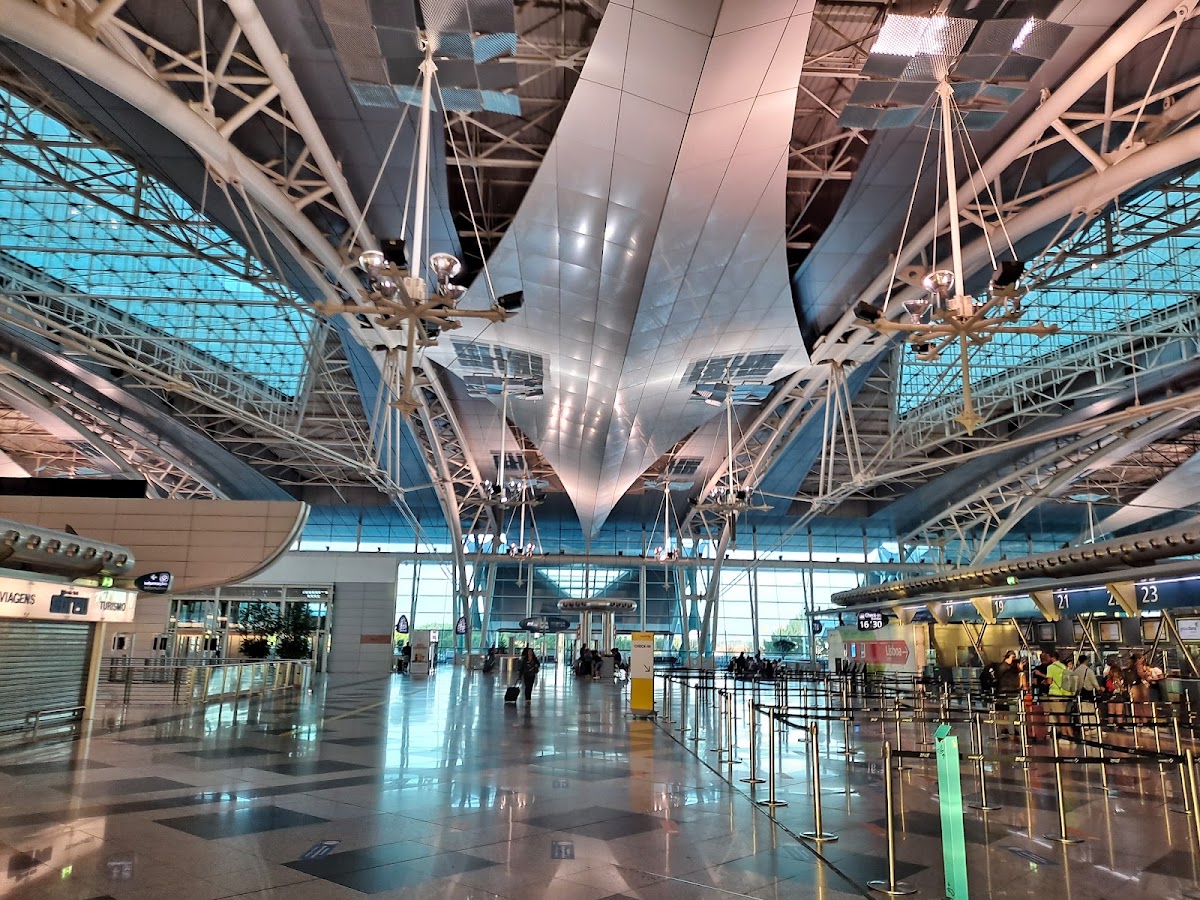
Francisco Sa Carneiro is small, bright, and calm after a long flight. The purple Line E runs straight into the center in about 35 minutes, and a single ticket is around 2.50 EUR (roughly 2.70 USD) plus a one-time 0.60 EUR for the reusable Andante card.
If you are carrying a wine haul home later, or arriving late, a door-to-door pickup is worth it. A prearranged transfer takes about 25 minutes to the historic core and drops you at your door instead of a metro exit two blocks and a hill away.
Drop your bags, then walk. Porto rewards people who wander downhill toward the water on their first afternoon.
Your First Night on the Cobbles, Above the Water
The smell of grilled sardines drifts up a stone staircase, and somewhere below, a busker's guitar bounces off the tile.
Base yourself in the central belt between Aliados and the river. A boutique hotel in this zone puts Sao Bento station, the Clerigos tower, and the Ribeira all within a 10 to 15 minute walk, which matters because Porto is steep and you will not want to cross town twice.
Expect to pay somewhere around 120 to 200 EUR (about 130 to 215 USD) a night in the shoulder seasons for a small, well-run place with proper double glazing. That last detail is not a joke: the old streets echo, and the good sleep is worth it.
Unpack lightly. You are about to spend the evening downhill.
Sunset on the Ribeira, When the Tiles Go Gold
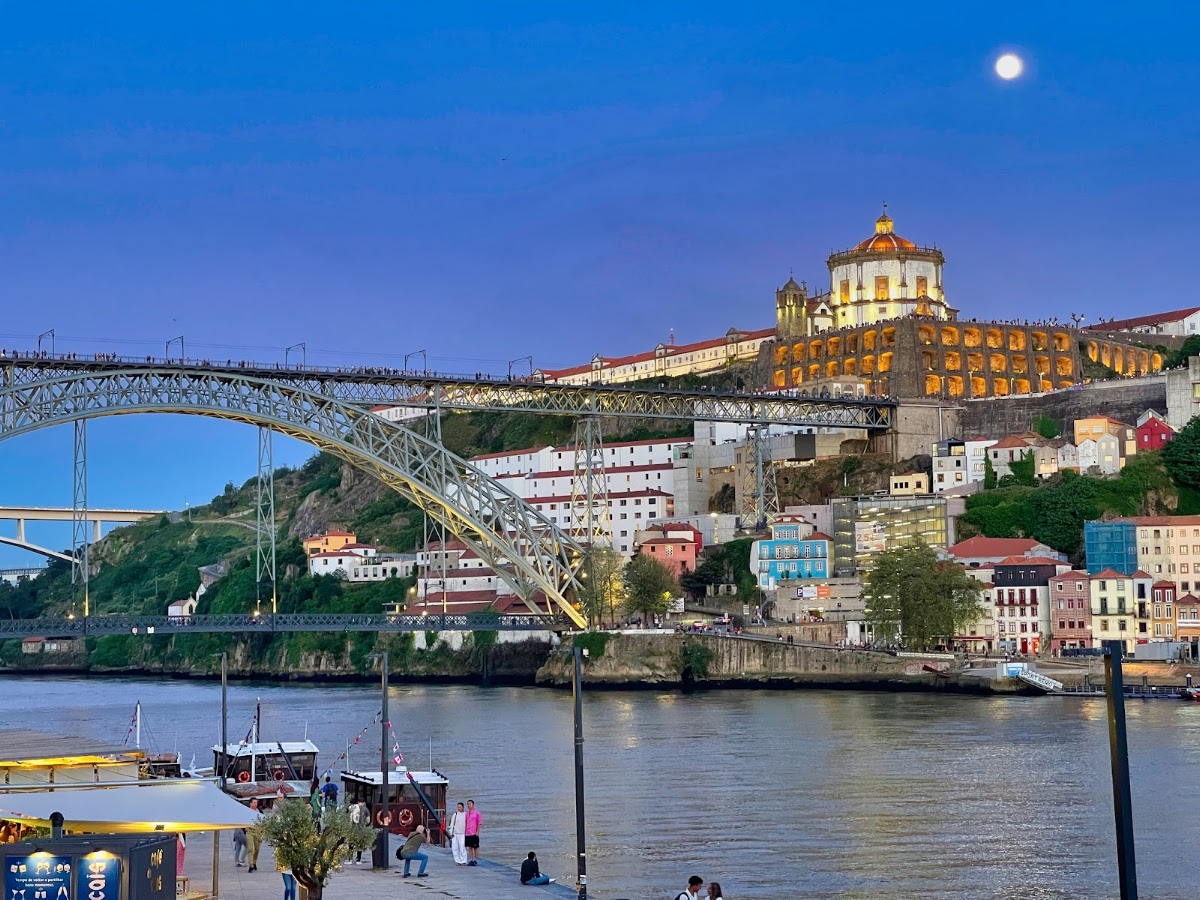
Six-story houses in ochre, mint, and faded blue lean over the waterfront, their laundry lines strung between windows, the Douro glowing bronze below the arched bridge.
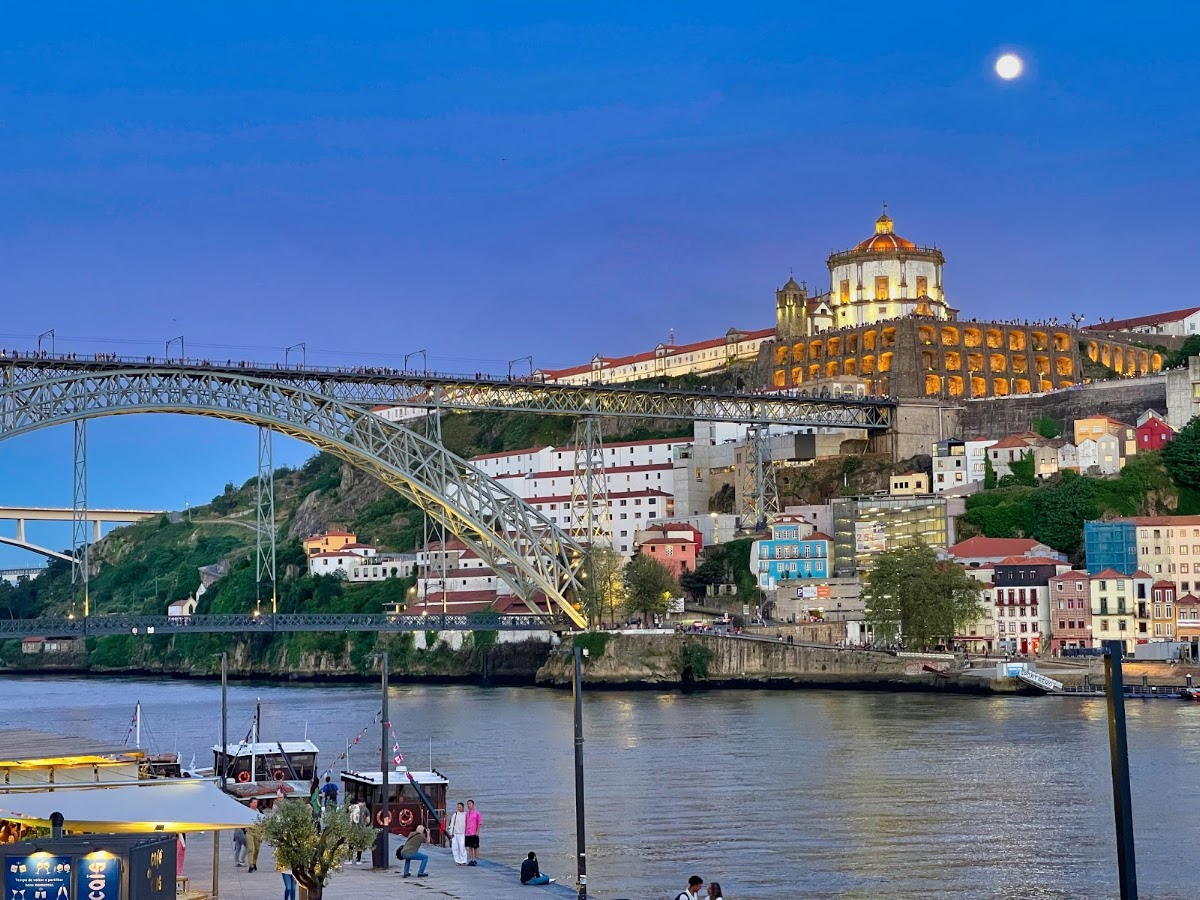
The Ribeira is the postcard, and for once the postcard undersells it. Walk the riverfront promenade slowly, then peel off into the alleys behind it: they are barely wider than your shoulders, hung with paper lanterns and the sound of clattering kitchens.
Sit at a riverside tasca as the light drops and order what the table next to you is having. A plate of polvo (octopus) with olive oil and potatoes, a carafe of vinho verde, maybe grilled bacalhau. Dinner for two with wine runs around 40 to 55 EUR (about 43 to 60 USD) at an honest place, more if you chase the view.
Across the water, the port lodges of Gaia are already lit. You will be over there tomorrow.
The Bookshop with the Crimson Staircase, and the Tower You Climb After
A curling scarlet staircase spills down the center of a room paneled in dark carved wood, stained glass glowing overhead like a chapel that decided to sell novels.
Livraria Lello is tiny and famous, so timing is everything. Book the first entry slot of the morning online (the ticket is around 8 EUR, about 8.60 USD, and is redeemable against a book). Arrive before the doors open and you get a few clear minutes on that staircase before the crowd fills it.
Five minutes uphill stands the Clerigos Tower, thin and baroque and 75 meters tall. The 240-odd steps are narrow and spiral tight, but the payoff is the whole city laid out below you: red roofs tumbling to the river, Gaia across the water, the sea a pale line to the west. Entry is roughly 8 EUR (about 8.60 USD).
Have lunch at a proper tasca nearby before the afternoon. Order the francesinha only if you are very hungry; it is a sandwich the size of a small building, drowned in beer-and-tomato sauce.
Crossing to Gaia for the Port Cellars
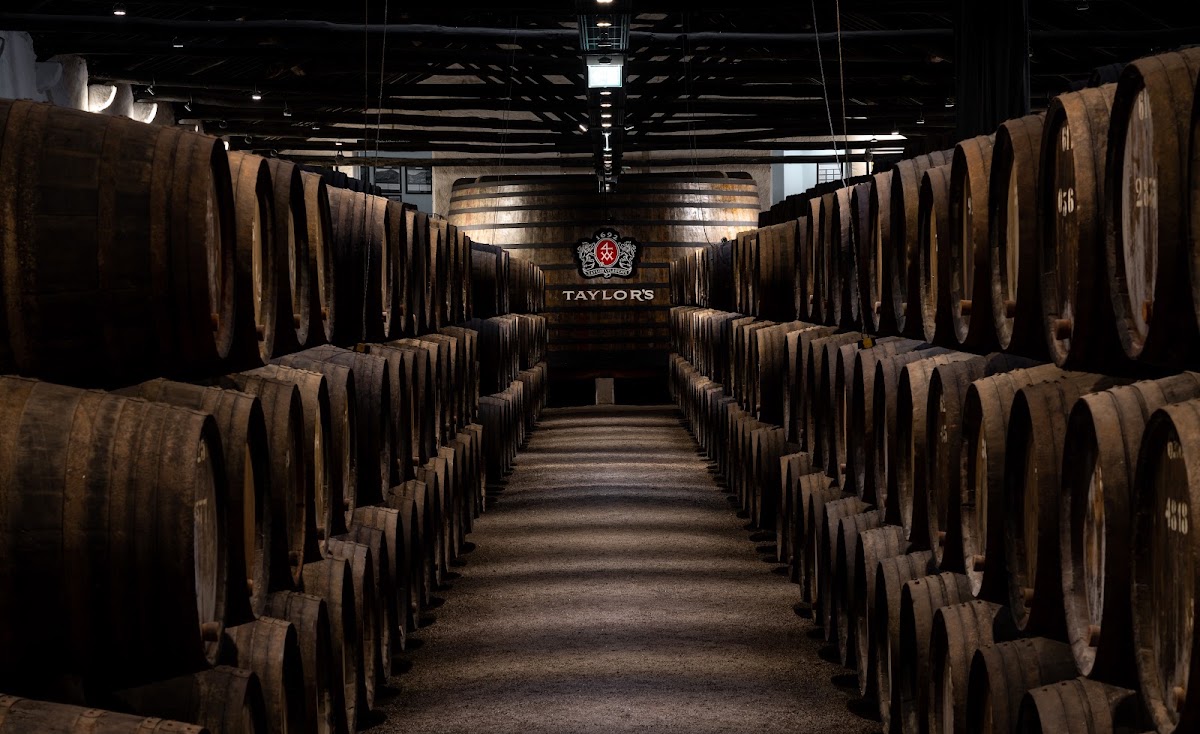
You walk the upper deck of the iron bridge, wind pulling at you, then descend into a cool dark warehouse where thousands of oak barrels breathe out a smell of dried fig and caramel.
Cross the Dom Luis I bridge on foot (the upper level gives the better view, the lower one the shorter walk) into Vila Nova de Gaia, where the port lodges have aged wine along the riverbank for centuries.
Taylor's is a good first cellar: the self-guided audio tour winds through the cellars and gardens, ends in a tasting of a white, a ruby, and an aged tawny, and costs around 20 EUR (about 22 USD). Take your time with the tawny. It tastes like the barrels smelled.
Why port lives here and not in Porto proper is a fun bit of history: for centuries the wine was aged on the Gaia side under strict rules. The Instituto dos Vinhos do Douro e do Porto still governs the whole system. You can read the official version at https://www.ivdp.pt.
The Train Into the Douro, and Why You Take the Slow One
For the last hour the track hugs the river so closely you feel you could dip a hand in it, and the hillsides rise in stone-walled terraces of vines, one shelf above another, all the way to the sky.
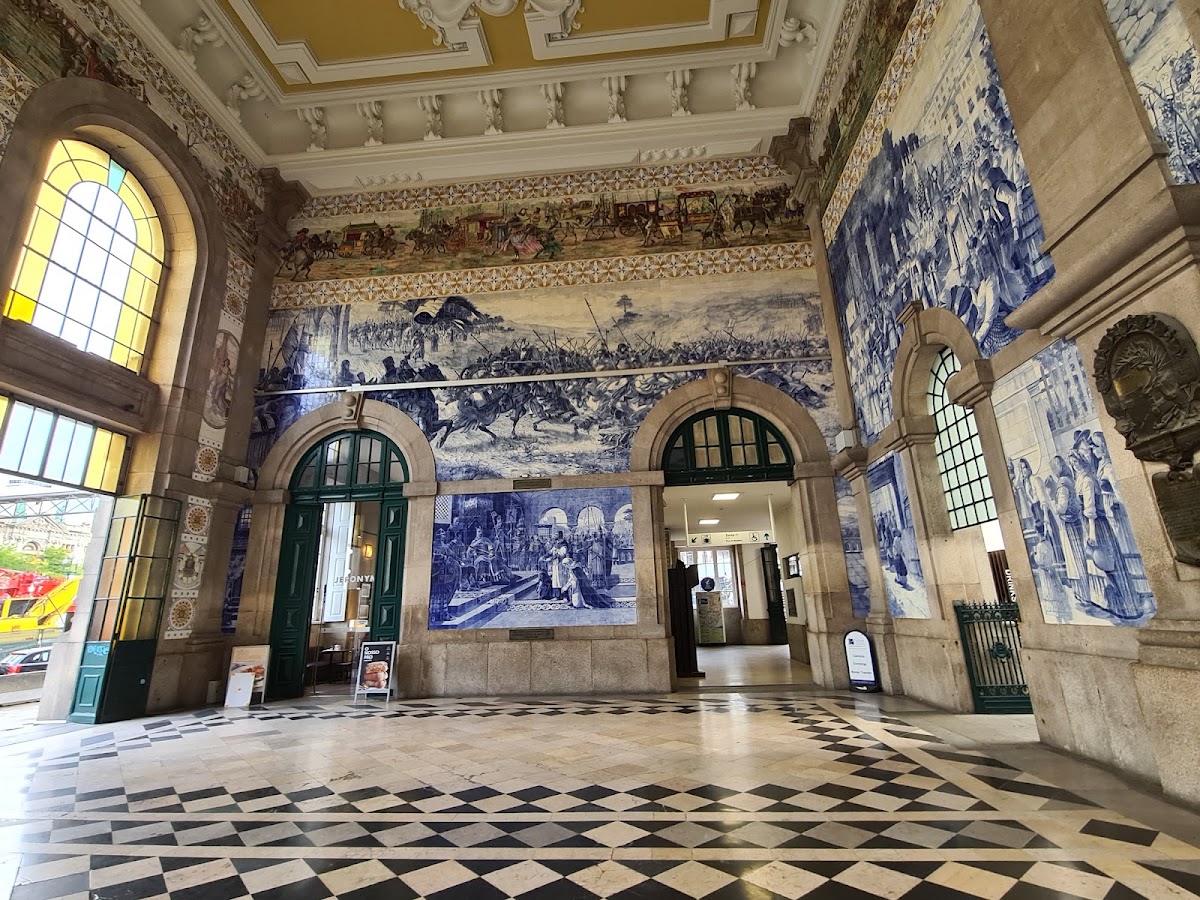
Start at Sao Bento station, which is worth arriving early for on its own: the entrance hall is lined with 20,000 blue-and-white azulejo tiles telling scenes of Portuguese history. Then board the regional line to Pinhao.
The ride takes about two hours and costs only around 15 EUR (about 16 USD) each way, which is one of Europe's great transport bargains. Sit on the right side heading out for the river views. Book the day itself at https://www.cp.pt.
At Quinta do Crasto, high above a bend in the river, the tasting room opens onto an infinity pool that seems to pour straight off the terrace into the vineyards. Lunch here, long and slow, with the estate's own reds, is the meal you will describe to people back home. Booking ahead is essential.
A Rabelo Boat Down the Douro Bend
The little wooden boat, flat-bottomed and once used to haul port barrels downriver, drifts under a sky so clear the terraced slopes double perfectly in the water.
From Pinhao's small quay, a rabelo cruise (the traditional flat boat, now carrying visitors instead of barrels) takes you along the calmest, prettiest stretch of the valley. An hour on the water runs around 15 to 20 EUR (about 16 to 22 USD) per person.
This is the slow reward for the whole day: no walking, no climbing, just the vineyards sliding past and the occasional white quinta tucked into a fold of the hills. Bring the wine you did not finish at lunch.
Catch the late-afternoon train back so you return to Porto in the dark, tired and a little wine-warm, the city lights waiting on the far bank as you cross into town.
One Last Bica, and a Garden Before the Airport
A warm pastel de nata cracks under your fork, the custard still soft, cinnamon dusted over the top, and the espresso beside it is short, dark, and gone in two sips.
Start the last morning at a pastelaria the way locals do: a bica (the Porto espresso) and a pastel de nata, standing at the counter, for well under 3 EUR (about 3.20 USD). It is the cheapest good thing you will eat all trip.
Then give yourself the calm counterpoint to all that stone and tile. The Serralves grounds pair a stark white modernist museum with 18 hectares of gardens, a rose garden, and a pink art deco villa. Entry is around 20 EUR (about 22 USD), and it is a 10-minute cab ride out toward the coast. Walk it slowly.
From Serralves the airport is a short transfer away, which makes it a natural last stop. Fly out with a bag heavier than it arrived, which is the point.
Ready to book?
Book the rest of Porto, Portugal
Handpicked partner searches, dates pre-filled. Pricing is identical to going direct — the partner shares a small commission with Tabi so this guide stays free.
Frequently asked
How many days do you need in Porto?
Four is the sweet spot: two days for the old town and the port cellars, one full day out to the Douro Valley by train, and a relaxed final morning for pastries and the Serralves gardens before flying. Three works if you skip the valley, but the Douro is the highlight, so protect that day.
Is the Douro Valley worth a day trip from Porto?
Absolutely, and the train makes it easy. The regional line from Sao Bento to Pinhao runs along the river for the last hour through terraced vineyards, costs only around 15 EUR each way, and drops you steps from the quintas and boat quays. Book an estate lunch and a rabelo cruise ahead and you have a full, unhurried day.
How do I get from Porto airport to the city center?
The Metro purple Line E runs directly from under the terminal into the center in about 35 minutes for roughly 2.50 EUR plus a 0.60 EUR reusable card. It is cheap and reliable. If you land late or are hauling wine home, a prearranged door-to-door transfer takes about 25 minutes and skips the walk from the metro exit.
Why is port wine aged in Gaia and not in Porto itself?
For centuries the wine was shipped downriver and aged along the cooler riverbank in Vila Nova de Gaia, across the water from Porto, under strict trade rules. The port lodges (Taylor's, Grahams, and others) are still concentrated there, a short walk over the Dom Luis I bridge. The trade is governed by the IVDP; see ivdp.pt for the official history.
Do I need to book Livraria Lello in advance?
Yes. The bookshop is small and extremely popular, so buy a timed ticket online (around 8 EUR, redeemable against a book) and take the first slot of the day. Arriving right at opening gives you a few clear minutes on the famous red staircase before the room fills.
Skip the planning
Your Porto, Portugal trip, ready to go
Adopt the day-by-day itinerary we built to match this guide. Every stop is a real place, every booking link is validated. Free forever, no card needed.
Open the Porto, Portugal itinerary