
Quito, Ecuador
What to Do in Quito in 5 Days: Old Town, the Equator, and the Cable Car Above the Clouds
A walking log through Ecuador's Andean capital, from gilded churches to the line where the world splits in two.
TL;DR
Quito sits on a ridge 2,850 meters up, and every square, market, and mountaintop feels like it's leaning into the sky.
- Golden light pouring through the Basilica del Voto Nacional's stained glass
- Standing with one foot in each hemisphere at Mitad del Mundo
- The TelefériQo gliding you to 3,945 meters above the city
- Fresh hornado and hot canelazo at Mercado Central
- Guitar music and lantern light on cobbled La Ronda at dusk
Have this trip planned in 60 seconds
We built the Quito, Ecuador itinerary that pairs with this guide, day-by-day with verified venues and one-tap booking links. Free to adopt, edit however you want.
Rolling Into a City That Smells Like Rain and Eucalyptus
You step off the plane and the air is thin, cool, and green. Quito's airport sits in a valley, and the drive up to the city climbs through hills stitched with eucalyptus.
Mariscal Sucre airport is about 45 minutes from the historic center, and the road winds up so steeply your ears pop twice. Watch out the window as the valley opens: terracotta rooftops climbing toward volcanoes, laundry strung between houses, roadside stalls selling grilled corn.
You're arriving at 2,850 meters, which is high enough that you'll feel it in your first flight of stairs. Take it slow the first evening. Drink water, skip the heavy dinner, and let your lungs catch up.
Book a fixed-rate airport transfer ahead of time so you're not haggling on the curb while dizzy from the altitude. Your driver drops you at the door, and you can collapse into a courtyard hotel in the old town before the light fades.
Morning in the Plaza Where Quito Started
Church bells, shoe-shiners setting up their wooden boxes, pigeons scattering off the palm trees. The Plaza de la Independencia wakes up slowly, and you should too.
This is the beating square of the old town, ringed by the Presidential Palace with its blue-painted balconies, the Archbishop's arcades, and the pale grey Cathedral of Quito. Grab a bench, get a coffee from a cart, and just watch the city do its morning business.
The Cathedral is worth stepping inside (entry is a few dollars). It's older and plainer than Quito's showstopper churches, but that's the point: this is where the city's story literally begins, on the ground where the Spanish laid out the first grid in 1534.
Quito's historic center was one of the very first UNESCO World Heritage sites, listed back in 1978, and you feel the weight of it walking these narrow streets. Everything from here is within an easy stroll, so wear shoes that grip cobblestones.
Climbing the Gothic Towers Nobody Told You You Could Climb
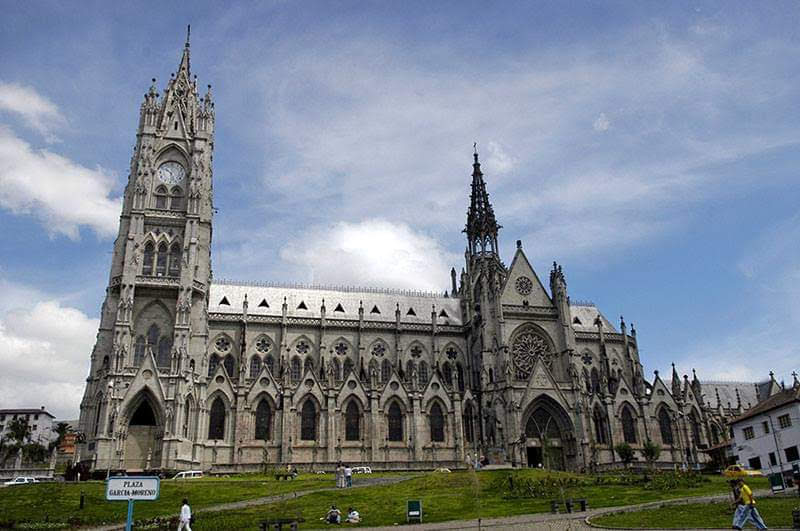
From the street the Basilica del Voto Nacional looks like a Parisian cathedral got lost in the Andes. Then you notice the gargoyles are iguanas, tortoises, and Galapagos condors.
This is the segment you'll be telling people about. For a few dollars you can climb the Basilica's towers, and it is not a polite museum climb. You cross a wooden plank walkway high above the nave, then scramble up steep metal ladders and a spiral staircase into the open air.
The reward: the whole of Quito laid out below, the Virgin of El Panecillo watching from her hill, the volcanoes ringing the horizon. Hold the railing. The wind up there is real.
Back at ground level, sit for a moment in the nave and look up. The stained glass throws colored light across the stone, and it's quiet in a way the busy streets outside are not. The building is technically still unfinished, and local legend says the world will end when it's completed, so nobody's in a hurry.
Lunch at the Market Where the Locals Actually Eat
The smell hits first: roast pork, simmering broth, and something sweet steaming in a pot. Mercado Central is loud, cheap, and exactly where you want to be at noon.
Head upstairs to the food stalls and pick a counter. The move here is hornado, slow-roasted pork served with hominy, potato cakes, and pickled onions, all for a few dollars. If you're feeling brave, try the locro de papa, a thick potato-and-cheese soup topped with avocado.
Don't leave without a canelazo, a hot cinnamon drink (sometimes spiked with sugarcane liquor) that warms you right up in the mountain cool. The vendors are friendly and used to visitors pointing at whatever looks good on the next plate over.
Across the street you'll find the Museo del Carmen Alto, a still-active Carmelite convent where cloistered nuns once passed sweets and herbal remedies to the public through a wooden turntable. It's a strange, beautiful little detour after a big lunch.
Riding a Cable Car to 3,945 Meters
You board at the edge of the city and within minutes the streets shrink to a grid below your feet. Up here the air is thin enough to make you laugh out loud.
The TelefériQo is one of the highest cable cars in the world, hauling you up the flank of Pichincha volcano to nearly 4,000 meters. The ride takes about 20 minutes and the temperature drops fast, so bring a jacket even if it was warm in town.
At the top there's a viewing platform where, on a clear day, you can see the snowcapped cone of Cotopaxi floating in the distance. If you've got energy and good lungs, a trail leads further up toward Rucu Pichincha, but even the short walk near the station leaves you breathless at this altitude.
Go in the morning before the clouds roll in. Quito's afternoons often turn misty, and you want that view while it lasts.
Standing on the Middle of the World
A yellow line runs across a stone plaza, and a giant monument marks the spot where French scientists once decided the world splits in two. You'll want the photo with a foot on each side.
Mitad del Mundo, in San Antonio de Pichincha, is about a 45-minute drive north of the old town. The centerpiece is a 30-meter monument built where an 18th-century expedition measured the shape of the Earth and helped define the metric system. It's touristy, and gloriously so.
The real fun is next door at the Intiñan Solar Museum, which sits closer to the true GPS equator. Guides here run the classic equator party tricks: balancing an egg on a nail, watching water swirl differently on either side of the line. Take it with a grain of salt and enjoy the show.
Stop for lunch at one of the local restaurants near the monument. Order fritada or a bowl of ceviche and let the driver wait; you've earned the slow meal after a morning at altitude.
Gold, Shamans, and the Art Made Before Columbus
Dim rooms, spotlit ceramics, the low hush of a museum that takes its treasures seriously. Casa del Alabado holds pieces made thousands of years before Spain arrived.
The Casa del Alabado, tucked in a whitewashed colonial house in the old town, is Quito's finest small museum. Its collection of pre-Columbian art is arranged around themes of shamans, ancestors, and the spirit world rather than dry dates, and it's genuinely moving to see the craftsmanship in a clay figure from 2000 BC.
If you've got the appetite for more, the Museo Nacional del Ecuador (MuNa) up in the newer part of town holds the country's big national collection, including the famous gold sun mask. Between the two you'll leave with a real sense of the civilizations that came long before the plazas outside.
Save a little morning time for the Mercado Artesanal La Mariscal, a covered warren of stalls selling alpaca sweaters, Panama hats (which are actually Ecuadorian), and woven textiles. Haggle gently and cheerfully.
Guitars and Lantern Light on La Ronda
As the sun drops the cobbles of La Ronda glow amber, guitar music spills from open doorways, and the smell of empanadas drifts down the narrow lane.
End your trip on this one small street. La Ronda is the oldest lane in Quito, a curving cobbled alley of restored colonial houses now filled with tiny bars, artisan workshops, and canelazo joints. In the evening it comes alive.
Duck into a hole-in-the-wall for an empanada de viento (a puffy fried pastry dusted with sugar) and another hot canelazo. Musicians play traditional Andean tunes, and courtyards open up behind the facades if you go looking.
It's the kind of place where a quick drink turns into a long, happy evening. A good last night before the morning transfer back to the airport, and the flight home from a city that sits closer to the sun than almost anywhere you'll go.
Ready to book?
Book the rest of Quito, Ecuador
Handpicked partner searches, dates pre-filled. Pricing is identical to going direct — the partner shares a small commission with Tabi so this guide stays free.
Frequently asked
How many days do you need in Quito?
Five days is comfortable: one to arrive and adjust to the altitude, two for the historic center's churches, markets, and museums, one for the Mitad del Mundo and TelefériQo day trip, and a relaxed final morning before your transfer. If you're tight on time you can see the highlights in three full days, but the extra buffer helps with the elevation.
Is the altitude in Quito a problem?
Quito sits at about 2,850 meters, and most people feel it as slight breathlessness on stairs and hills for the first day or two. Take the first afternoon slow, drink plenty of water, go easy on alcohol and heavy meals, and save strenuous stops like the TelefériQo climb (which reaches nearly 4,000 meters) for after you've acclimatized.
How do you get from Quito airport to the old town?
Mariscal Sucre airport is roughly 45 minutes from the historic center. The easiest option is a pre-booked fixed-rate transfer that meets you at arrivals, which saves you negotiating at the curb while adjusting to the altitude. Official airport taxis and rideshares are also available.
When is the best time to visit Quito?
Quito sits on the equator, so temperatures stay mild year-round, hovering around 15 to 20 degrees Celsius by day. The drier months run roughly June to September and again in December and January. Even in the dry season, expect clear mornings and cloudier, sometimes rainy afternoons, so plan viewpoints early in the day.
Is it worth visiting Mitad del Mundo?
Yes, especially paired with the nearby Intiñan Solar Museum. The main monument is touristy but iconic, and it's about a 45-minute drive north of the city. The Intiñan museum sits closer to the true equator line and runs the fun balancing-egg and swirling-water demonstrations. Together they make an easy, enjoyable half-day trip.
Skip the planning
Your Quito, Ecuador trip, ready to go
Adopt the day-by-day itinerary we built to match this guide. Every stop is a real place, every booking link is validated. Free forever, no card needed.
Open the Quito, Ecuador itinerary