
San Pedro De Atacama, Chile
San Pedro de Atacama in 5 Days: Geysers, Salt Flats, and the Clearest Skies on Earth
From the moon-like Valle de la Luna to the steaming Geysers del Tatio at sunrise, here's how to experience the Atacama Desert's otherworldly beauty.
TL;DR
The Atacama Desert feels less like Earth and more like the surface of Mars, with salt flats, flamingos, and skies so clear you can see the Milky Way with your naked eye.
- Watch the sunrise over Geysers del Tatio, where steam rises 10 meters into the freezing morning air
- Float in Laguna Cejar, a turquoise salt lake so buoyant you can't sink
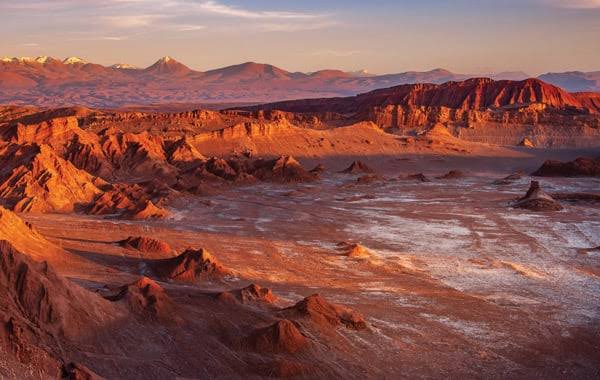
- Walk through Valle de la Luna at golden hour, where the sand dunes look like a lunar surface
- Spot flamingos at Chaxa Lagoon against the blinding white of Salar de Atacama
- Stargaze with a professional astronomer who points out galaxies through a telescope just outside town
Have this trip planned in 60 seconds
We built the San Pedro De Atacama, Chile itinerary that pairs with this guide, day-by-day with verified venues and one-tap booking links. Free to adopt, edit however you want.
The Desert Arrives Before You Do
The two-lane road from Calama Airport cuts straight through a plain of cracked earth, with the Andes rising purple on the horizon.
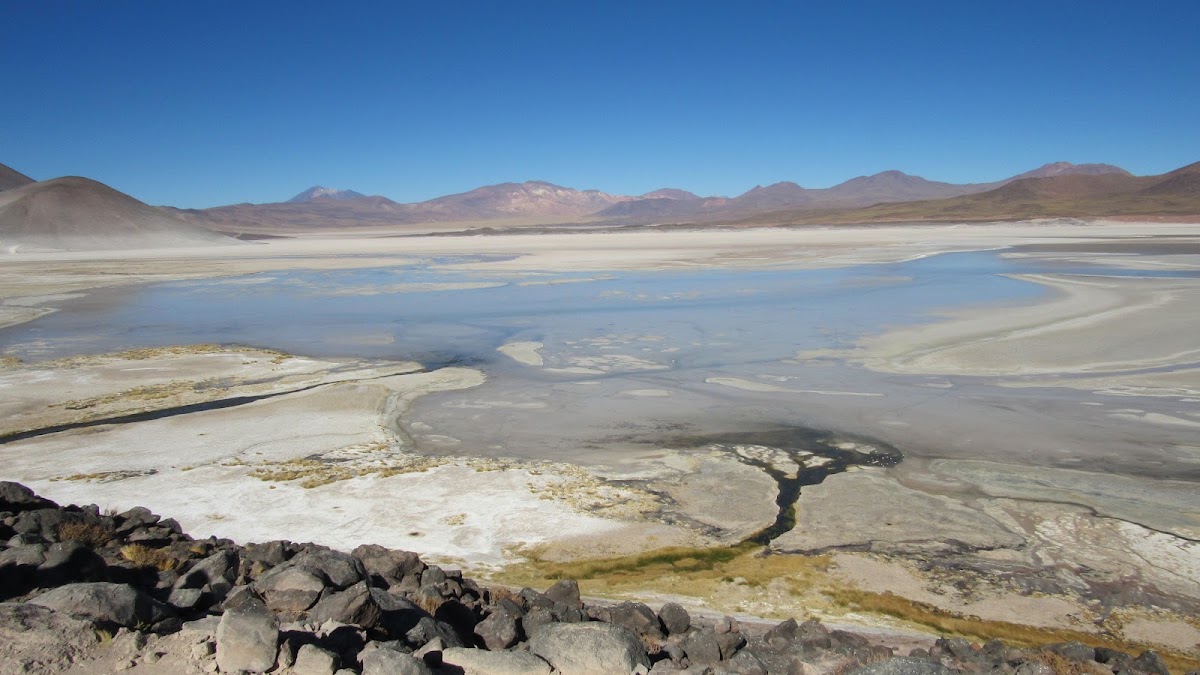
Your first glimpse of the Atacama happens from the window of a private transfer. The sky is a pale, endless blue. The air gets thinner with every kilometer. After an hour, the adobe buildings of San Pedro de Atacama appear like a mirage.
Book a Welcome Pickups transfer ahead so you don't waste time negotiating at the airport. The driver knows the road and will point out llama herds and abandoned salt mines along the way.
The Sky Opens After Dark
The Milky Way spills across the sky like powdered sugar, so bright you can see your shadow in the starlight.
At 9 PM, a van picks you up from your hotel and drives 20 minutes into the desert. No flashlights allowed. Atacama Astronomy sets up telescopes on a private plateau, and your guide, an actual astrophysicist, points out the Magellanic Clouds and the Southern Cross. You'll peer through a 14-inch Dobsonian scope at Jupiter's moons and the rings of Saturn.
The tour includes hot chocolate and empanadas, but the real fuel is the silence. Not a plane, not a car. Just the crackle of the universe.
Valle de la Luna at Golden Hour
The sand dunes here are the color of rust and cinnamon, and the silence is broken only by the crunch of your boots.
You enter Valle de la Luna as the sun starts its descent. The park looks like a lunar landscape: sharp ridges, dry salt crusts, and a giant dune you can climb barefoot. From the top, the entire valley stretches out, with the Licancabur volcano framed in the distance.
The colors shift from orange to deep violet as the light fades. You'll have about two hours before the park closes. Bring a windbreaker; the temperature drops fast after sunset.
Floating in the Sky at Laguna Cejar
The water is so salty your body pops to the surface like cork, and the surrounding salt crystals sparkle like crushed diamonds.
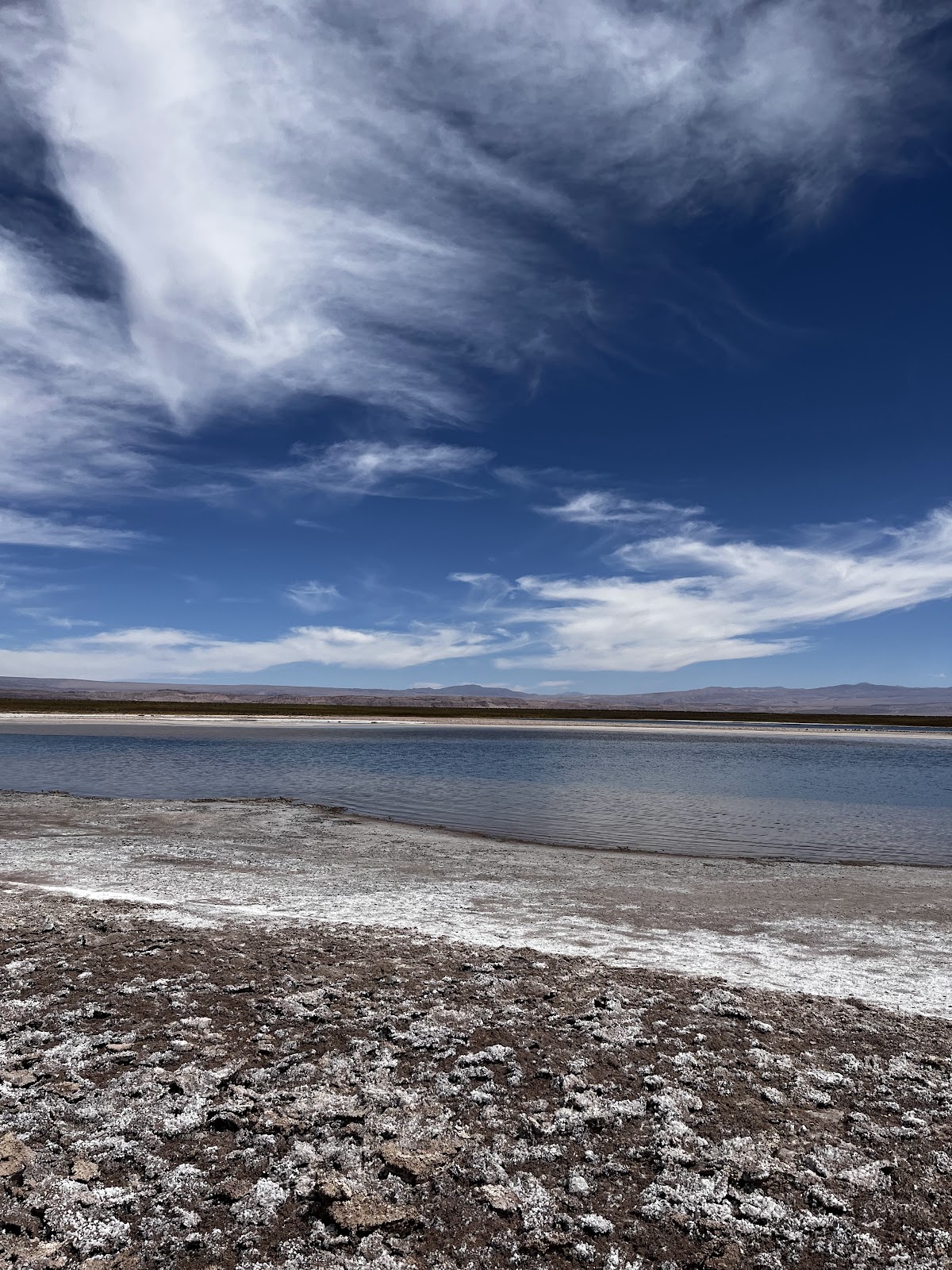
Laguna Cejar sits at 2,300 meters, a brilliant turquoise pool ringed by white salt crust. You wade in carefully, then let yourself fall backward. You can't sink. You can sit on the water and read a book (someone always tries).
The lagoon is part of Los Flamencos National Reserve, so after floating, you walk to a nearby lagoon where flamingos wade in the shallows. The sun is intense; bring sunscreen and a hat. The water temperature is pleasantly cool, not freezing.
Geysers del Tatio at Dawn
Steam billows from the earth as the sun hits the mountains, turning the geysers into silver pillars against a pink sky.
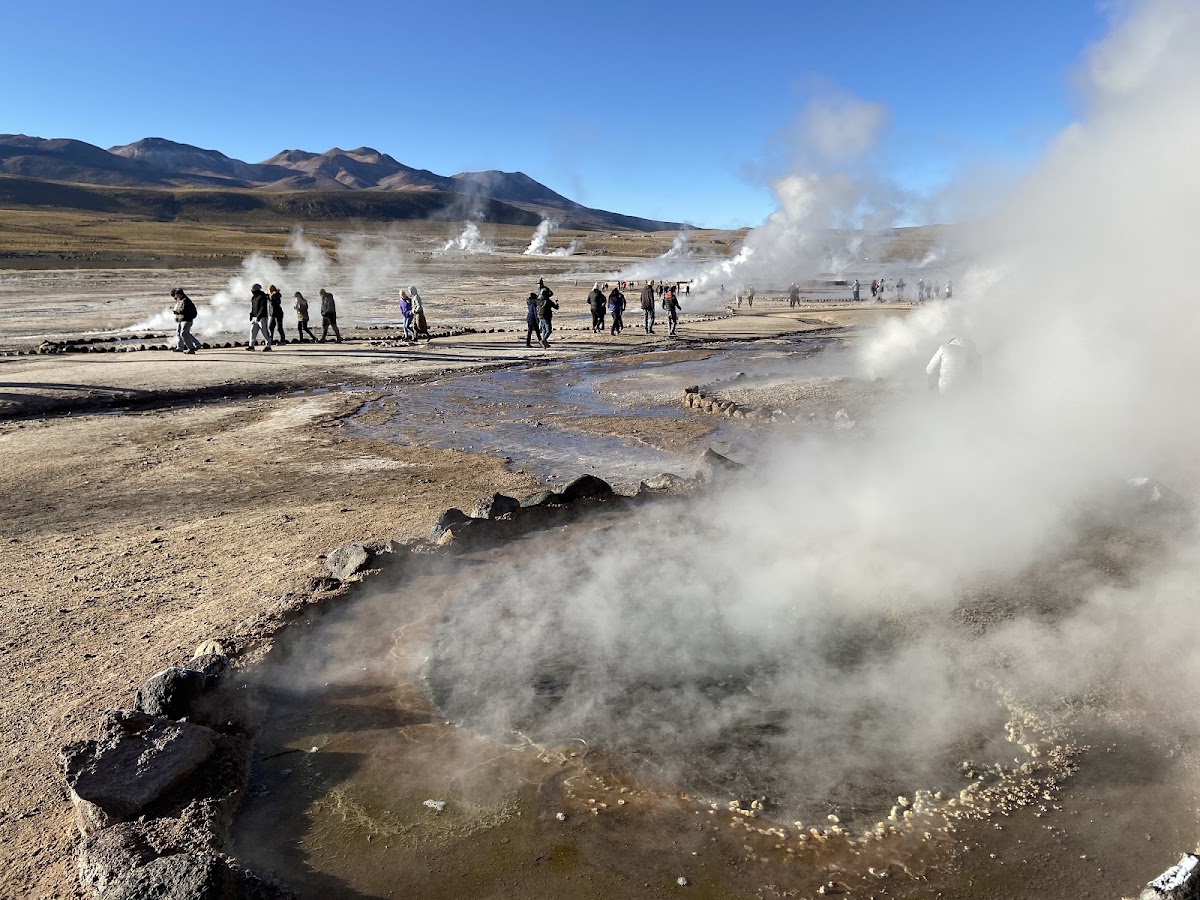
You leave San Pedro at 4 AM, bundled in every layer you brought. The van climbs to 4,320 meters, and the cold bites your cheeks. But when you step out at Geysers del Tatio, the geothermal field is alive. Columns of steam rise from dozens of vents, some as tall as 10 meters. The air smells of sulfur and wet earth.
Breakfast is served at the site: bread, cheese, and coca tea. Don't run or walk fast; the altitude will leave you breathless. The best photos come just after sunrise, when the steam catches the golden light.
The High-Altitude Lakes of Miscanti and Miñiques
Two lakes sit side by side, one deep blue and one emerald, with the Andes reflected so perfectly you can't tell where the water ends.
After the geysers, the tour drives south to the Altiplánico lakes. Laguna Miscanti and Laguna Miñiques are nestled at 4,200 meters, surrounded by volcanic peaks and golden grasses. The wind whips across the surface, making ripples that blur the reflection.
You'll have time to walk along the shore and take a hundred photos. The light changes every minute. Pack a scarf; the wind is relentless. There's a small visitor center with restrooms, but no food.
Flamingos at Salar de Atacama
The salt flat stretches to the horizon, white and blinding, and in the middle of it all, a flock of flamingos stands on pink legs.
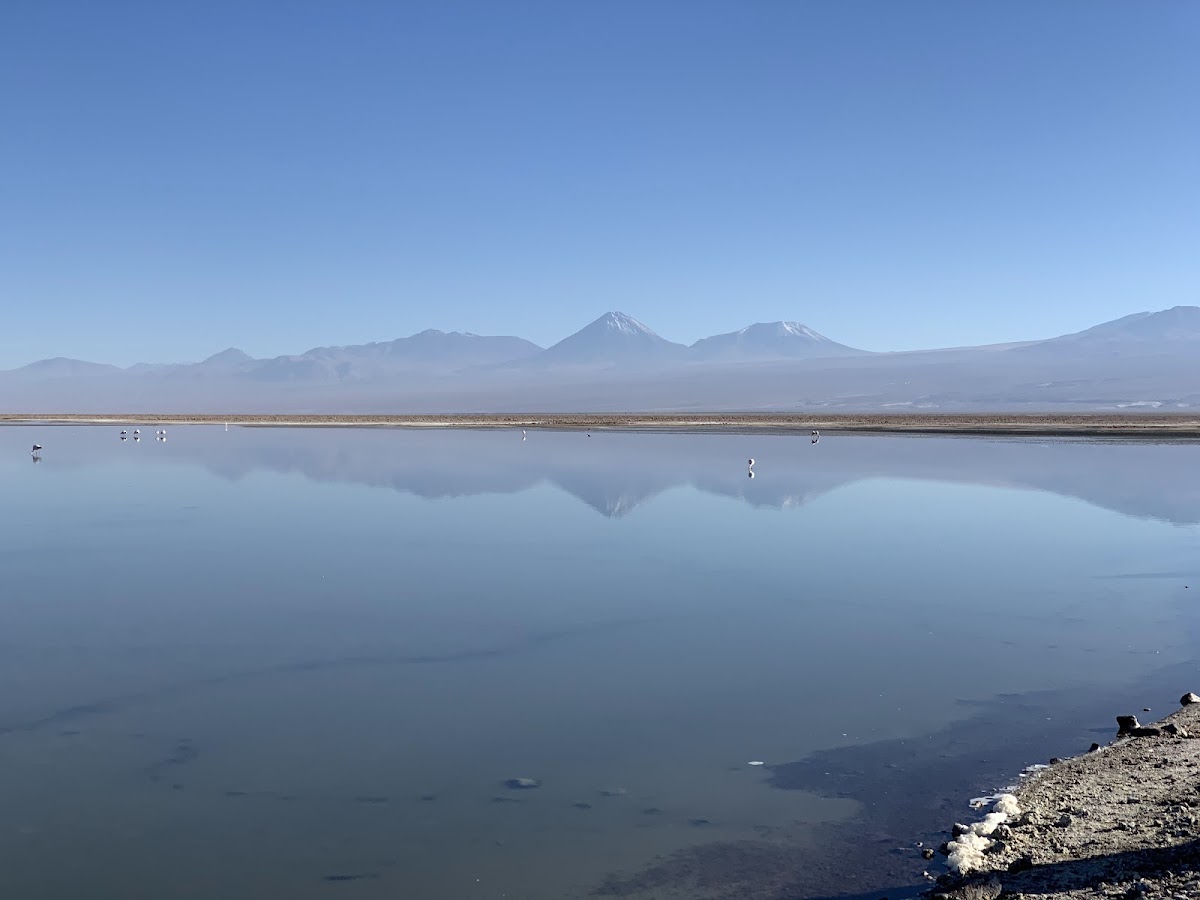
Salar de Atacama is Chile's largest salt flat, and Chaxa Lagoon is its heart. You walk a wooden boardwalk out over the shallow water, where three species of flamingos feed on brine shrimp. The air is still and hot. The salt crust crunches under your feet.
After the lagoon, continue to Piedras Rojas, a field of iron-red rock formations that look like they belong in the American Southwest. The contrast between the red stone and the blue sky is surreal. You'll spend an hour here just wandering among the boulders.
Ready to book?
Book the rest of San Pedro De Atacama, Chile
Handpicked partner searches, dates pre-filled. Pricing is identical to going direct — the partner shares a small commission with Tabi so this guide stays free.
Frequently asked
How do I get to San Pedro de Atacama?
Most visitors fly into Calama (CJC) and take a private transfer (1.5 hours). The road is paved and scenic. Alternatively, you can take a bus from Calama, but a private transfer is more convenient and not much more expensive.
What is the best time of year to visit?
March through November offers clear skies and mild days. December to February is the rainy season in the altiplano, which can make some roads muddy and geyser visits less dramatic.
How do I handle the altitude (2,400, 4,300 m)?
Spend your first day acclimating in San Pedro. Avoid alcohol, drink lots of water, and chew coca leaves or drink coca tea. Most tours include oxygen if needed. Move slowly and rest if you feel dizzy.
Do I need a tour to visit the sites?
You can rent a car and drive yourself, but tours are highly recommended because they handle logistics, permits, and timing. Geysers del Tatio and the high lakes are reached by rugged roads that are easier in a guided vehicle.
Skip the planning
Your San Pedro De Atacama, Chile trip, ready to go
Adopt the day-by-day itinerary we built to match this guide. Every stop is a real place, every booking link is validated. Free forever, no card needed.
Open the San Pedro De Atacama, Chile itinerary