
Sapporo, Japan
What to Do in Sapporo in 5 Days: Ramen, Snow Peaks, and a Day in Otaru
A picture-first walk through Sapporo and Otaru, from steamy Susukino ramen counters to the night view off Mount Moiwa.
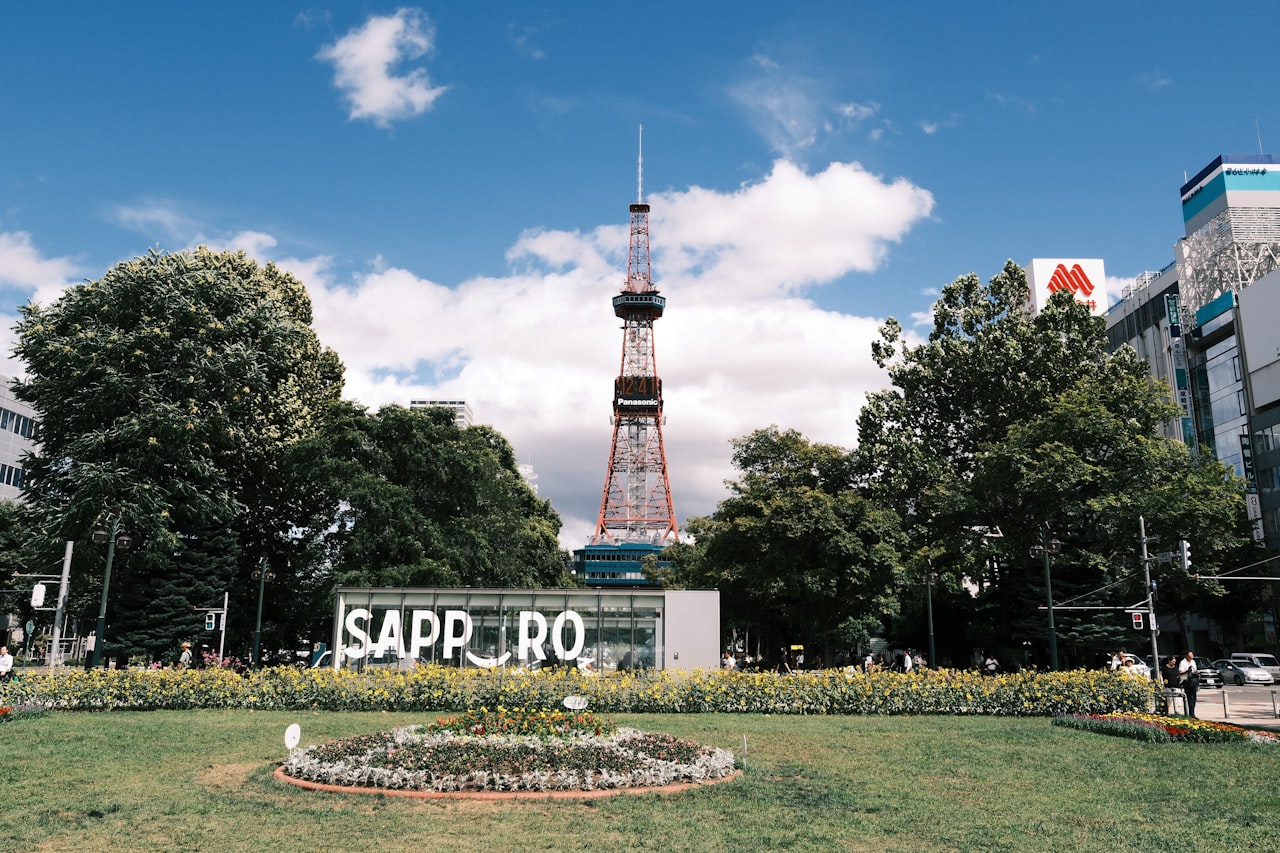
Photo by Tunafish on Unsplash
TL;DR
Sapporo is the city where you eat your way from a snowy park to a beer hall, then take a 45-minute train to a canal town that smells like woodsmoke and grilled scallops.
- Ramen slurped elbow-to-elbow at a tiny Susukino counter past midnight
- Sapporo TV Tower lighting up over the spine of Odori Park
- Otaru Canal glowing gold as the gas lamps flick on
- Mount Moiwa Ropeway to a night view that spills to the sea
- Soup curry so deep-spiced you will chase it the next day
Have this trip planned in 60 seconds
We built the Sapporo, Japan itinerary that pairs with this guide, day-by-day with verified venues and one-tap booking links. Free to adopt, edit however you want.
Landing at New Chitose and the First Cold Breath
The doors slide open at the terminal and the air hits you clean and sharp, colder than you expected, carrying a faint sweetness from the bakery stalls near arrivals.
New Chitose is Hokkaido's front door, and it is a genuinely fun airport to be stuck in, all soft-serve counters and a chocolate factory upstairs. But your bed is in central Sapporo, about 40 km north.
The cheapest, most reliable move is the JR Rapid Airport train straight to Sapporo Station, roughly 37 minutes for around 1,150 yen (about 8 USD). It runs every 15 minutes or so and drops you right in the middle of everything.
If you are hauling ski bags or arriving late with tired kids, a private transfer takes the guesswork out. You walk out, someone is holding your name, and you are watching the snow blur past the window in minutes.
Up the TV Tower for Your First Look at the Grid
From 90 meters up, Sapporo lays itself out in a tidy lit grid, and the green ribbon of Odori Park runs straight through the center like someone drew it with a ruler.
Start high so the rest of the city makes sense. The Sapporo TV Tower stands at the east end of Odori Park, and its observation deck is the fastest way to understand how walkable this place is.
Go up near sunset. You get the mountains going pink to the west, then the streetlights switching on block by block, and Susukino's neon warming up to the south where you will be eating later. Tickets run about 1,000 yen (roughly 7 USD).
This is a short stop, maybe 30 minutes. It is here to orient you, and to give you that first photo that says: yes, you are actually in Sapporo now.
Walking the Length of Odori Park
In winter the whole park is packed snow underfoot, benches wearing white caps, and the crunch of your boots is the loudest sound around.
Odori Park is a long green (or white) corridor slicing across central Sapporo, about 1.5 km end to end. It is where the city gathers: the Snow Festival in February, beer gardens in summer, and just everyday strolling the rest of the year.
Walk it in the morning with a coffee. You pass fountains, sculptures, and the TV Tower framing one end. In February the snow sculptures here are genuinely jaw-dropping, some the size of buildings, carved by teams working through freezing nights.
It is free, it is open all the time, and it connects you on foot to almost everything else in this log. Give it an unhurried hour.
Ramen After Dark in Susukino
Push aside the fabric curtain and the heat and steam roll over you, a wall of pork-and-miso richness, ten stools, a cook working two burners, no room for hesitation.
Sapporo is the birthplace of miso ramen, and Susukino is where you go to eat it properly. This is Japan's biggest nightlife district north of Tokyo, a dense grid of neon signs stacked six floors high.
Duck into one of the tiny counter shops, ideally one with a short line of locals. A bowl of butter-corn miso ramen runs around 900 to 1,200 yen (7 to 9 USD). The broth is thick enough to coat the spoon, the noodles springy, the corn sweet against the salt.
Eat it fast, the way it is meant to be eaten, then wander the neon streets to walk it off. Susukino is loud and bright and completely alive after dark.
The Red-Brick Beer Museum and Hokkaido University
The old brewery's red brick and ivy look almost European, and inside, a spiral of copper kettles glows under warm light while the whole hall smells faintly of malt.
The Sapporo Beer Museum sits in a handsome 19th-century brick brewhouse in Higashi-ku. Entry to the museum is free, and for a few hundred yen you can sample flights of the original Sapporo lager in the tasting hall, best paired with a Genghis Khan mutton barbecue next door.
Earlier in the day, wander the campus of Hokkaido University, one of the prettiest in Japan. The gingko avenue turns fully gold in autumn, and the small university museum is free, low-key, and genuinely interesting on the region's natural history.
Together they make an easy afternoon: one part science and history, one part cold beer earned on your feet.
A Day Trip to Otaru's Canal and Sankaku Market
The canal water sits still and dark, stone warehouses lined up along it, and as dusk falls the old gas lamps flick on one by one and everything turns amber.
Take the JR train from Sapporo Station to Otaru, about 45 minutes for roughly 750 yen (5 USD), and you land in a port town frozen in its herring-boom heyday. The Otaru Canal is the postcard, and it earns it, especially in the blue hour.
Start with lunch at Sankaku Market, a tight covered lane of seafood counters near the station. Point at a bowl of uni, ikura, and crab over rice, or let a stallholder build you a kaisendon. It is as fresh as it gets, straight off Hokkaido's coast.
Then work your way down toward the canal. Along the main street you will pass the Otaru Music Box Museum, its steam clock chiming out front, and glass workshops where you can watch (or try) hand-blown glassmaking. It is a slow, browsing sort of day.
Night View From Mount Moiwa
The ropeway car lifts off the slope and the city drops away beneath you, then the whole grid ignites at once, a bowl of light with the black sea at its far edge.
Mount Moiwa rises just southwest of the center, and its ropeway carries you to one of the finest night views in Japan. Go up as the light fades so you catch the transition from dusk to full sparkle.
The combined ropeway plus mini-cable-car ride runs about 2,100 yen (roughly 14 USD) return. At the top there is a lookout deck, a small cafe, and on clear nights, a view that runs from the mountains to the Sea of Japan.
Bundle up. It is meaningfully colder at the summit, and you will want to linger. This is the shot you show people back home.
Ski Jumps, Maruyama, and One Last Bowl of Soup Curry
At the base of the Okurayama jump you tilt your head back and the slope looks impossibly steep, a ribbon of white shooting up into the sky where the jumpers launch into nothing.
For your last full day, head to Okurayama Ski Jump, a venue from the 1972 Winter Olympics. A chairlift takes you to the top of the jump for a slightly terrifying, thrilling view down the in-run. The attached Sapporo Winter Sports Museum has jump and bobsled simulators that are genuinely fun to fail at.
Afterward, drift into the leafy Maruyama neighborhood near Maruyama Park, all quiet cafes and a big shrine tucked among the trees. It is the calm counterweight to Susukino.
End with soup curry, Sapporo's other great local dish. A place like Garaku serves a deep, spice-layered broth with a whole roasted chicken leg and vegetables, around 1,300 yen (9 USD). You choose your spice level and your rice size. Do not skip it: this is the flavor you will crave once you are home.
Ready to book?
Book the rest of Sapporo, Japan
Handpicked partner searches, dates pre-filled. Pricing is identical to going direct — the partner shares a small commission with Tabi so this guide stays free.
Frequently asked
How do I get from New Chitose Airport into Sapporo?
The JR Rapid Airport train runs directly to Sapporo Station in about 37 minutes for roughly 1,150 yen (8 USD), departing every 15 minutes or so. A private transfer is a good call if you have ski gear or arrive late.
Is Otaru worth a day trip from Sapporo?
Yes. It is only about 45 minutes by JR train (around 750 yen), and the canal, Sankaku seafood market, music box museum, and glass workshops easily fill a relaxed day. Aim to see the canal near dusk when the gas lamps light up.
What food should I not leave Sapporo without trying?
Miso ramen (Sapporo invented it), soup curry, Genghis Khan grilled mutton, and a fresh seafood bowl in Otaru. Wash it down with a Sapporo lager at the Beer Museum's tasting hall.
When is the best time to visit Sapporo?
February for the Snow Festival and skiing is the headline draw, but autumn brings golden gingko avenues at Hokkaido University, and summer has beer gardens in Odori Park. Just pack warm layers for roughly October through April.
Is Sapporo easy to get around without a car?
Very. The center is walkable, there is a subway and streetcar network, and JR trains handle day trips to Otaru. You only really need a car if you are chasing far-flung ski resorts or the wider Hokkaido countryside.
Skip the planning
Your Sapporo, Japan trip, ready to go
Adopt the day-by-day itinerary we built to match this guide. Every stop is a real place, every booking link is validated. Free forever, no card needed.
Open the Sapporo, Japan itinerary