
Siem Reap, Cambodia
What to Do in Siem Reap in 4 Days: Sunrise Temples, Jungle Ruins, and a Floating Village
A picture-first walk through Angkor's greatest views and the quieter Cambodia just past the temple gates.
TL;DR
Four days that start with a tuk-tuk rumbling toward Angkor at dawn and end with your feet up over a lake at sunset, temples in between.
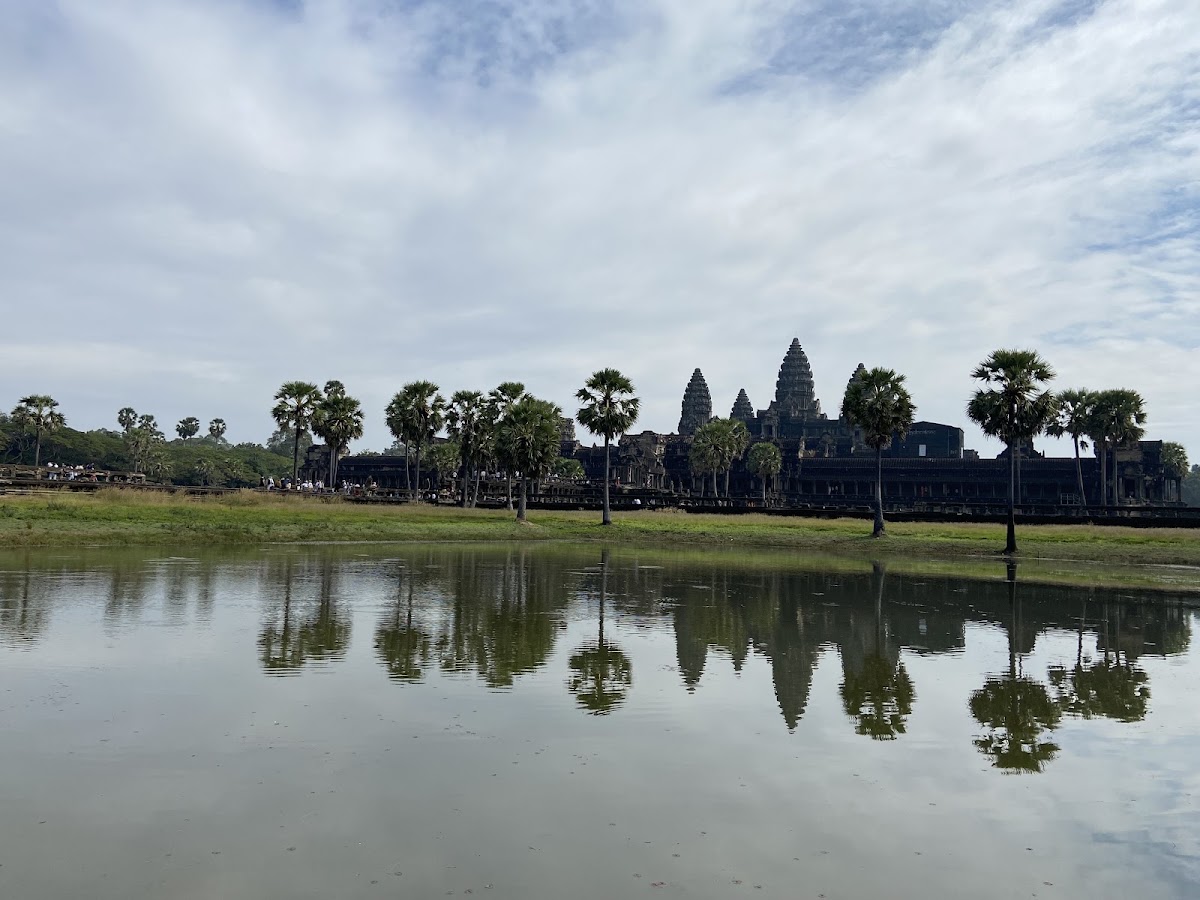
- Angkor Wat's five towers turning gold as the sun clears the moat
- Ta Prohm's stone corridors half-swallowed by silk-cotton tree roots
- Bayon's 200-odd carved faces watching you from every angle
- Kampong Phluk's stilt houses standing ten meters over Tonle Sap
- Marum's crispy tree-ant beef, served by trainee chefs off the street
Have this trip planned in 60 seconds
We built the Siem Reap, Cambodia itinerary that pairs with this guide, day-by-day with verified venues and one-tap booking links. Free to adopt, edit however you want.
Landing at Dusk and the Tuk-Tuk That Meets You
Warm air, the smell of frangipani and warm asphalt, and a driver holding a sign with your name slightly misspelled. Welcome to Cambodia.
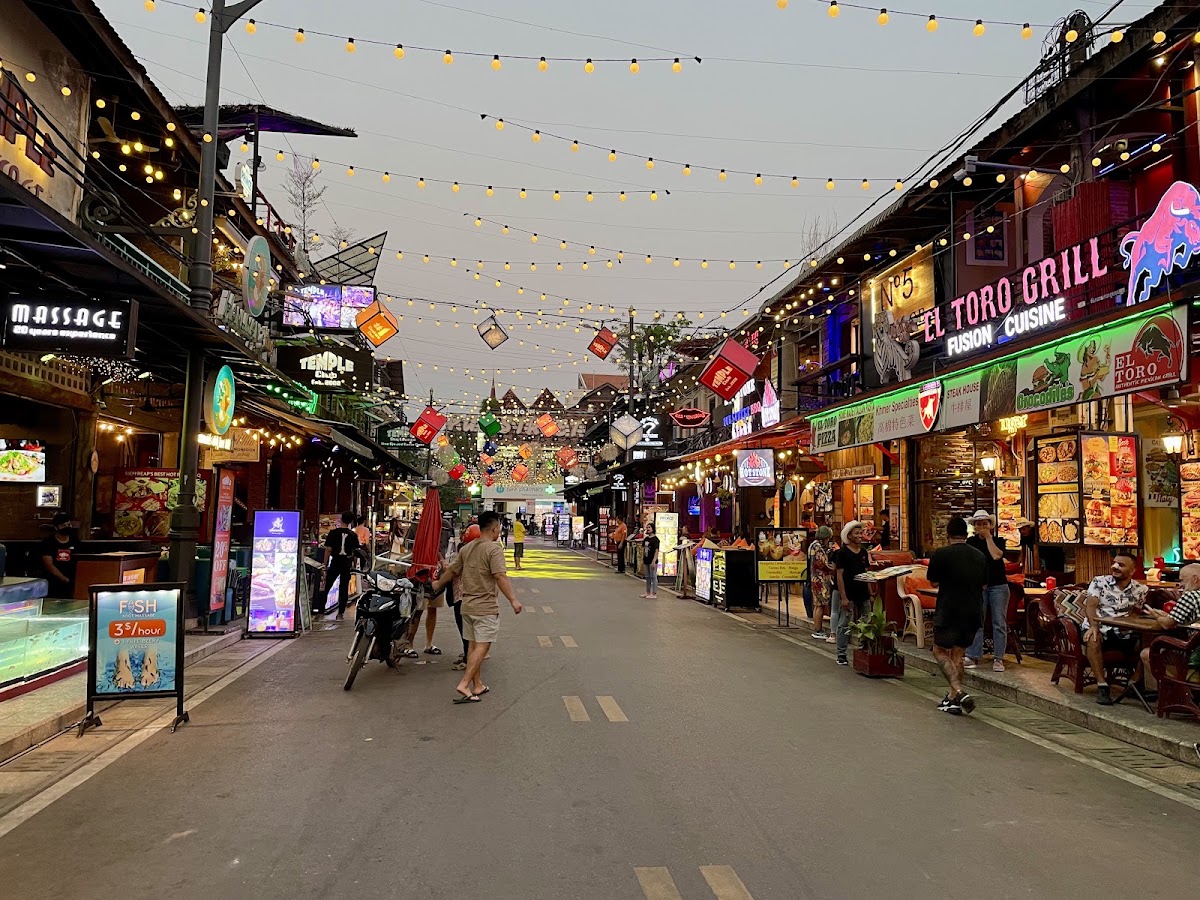
Siem Reap's new airport sits about 40 minutes east of town, so your first taste of Cambodia is a dark highway giving way to string lights and open-front cafes. Most hotels will send a driver for you; if yours does not, a pre-booked transfer beats haggling in the arrivals lane after a long flight.
Drop your bags, grab a cold Angkor beer (about 3,000 riel, roughly \$0.75) on the hotel terrace, and get to bed early. Tomorrow starts before the sun does.
A quick note on money: US dollars work almost everywhere here, and change under a dollar comes back in riel. Carry small bills.
Your First Look at Angkor Wat, Softened by Evening
The five towers go the color of dark honey as the light drops, and the crowds thin out toward the exits just as it gets beautiful.
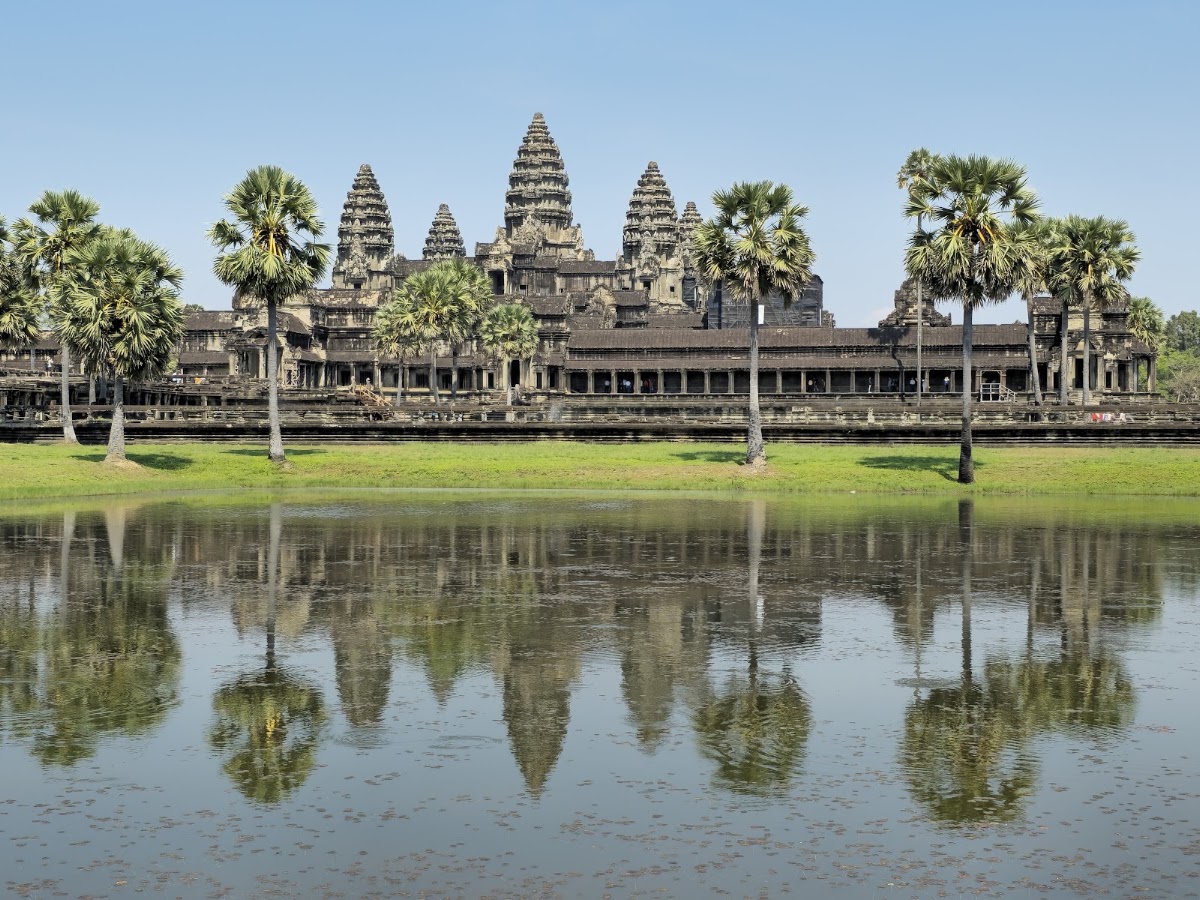
Everyone talks about Angkor Wat at sunrise (you will do that too, tomorrow), but a late-afternoon first visit is the smart move. You beat the sunrise mob, you get gentle light for photos, and you learn the layout so dawn is not a scramble.
Buy your Angkor Pass at the official ticket office on the way in. A one-day pass is \$37, but the three-day pass at \$62 is what you want for this trip; it covers everything across the whole park. Keep it on you, they check at every temple.
Walk the western causeway across the moat, then take your time in the galleries. The bas-reliefs run for hundreds of meters, army after carved army marching into stone. Save the central towers for last, when the sun is low behind them.
Sunrise Over the Reflecting Pond
It is 5am, pitch black, and 200 people are standing silently around a pond waiting for a shape to appear in the water.
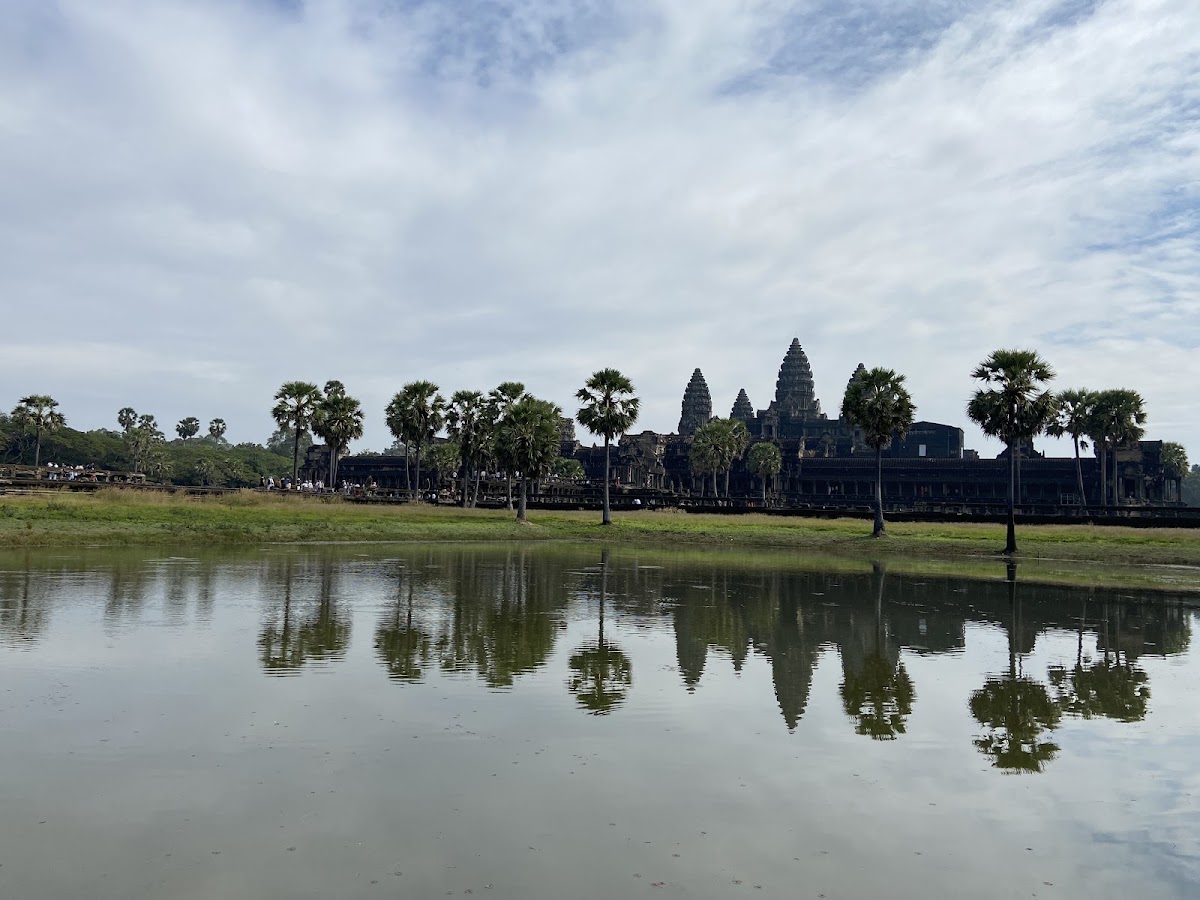
This is the postcard. You leave the hotel in the dark around 4:45am, join the quiet procession across the causeway by phone-torch, and stake out a spot at the left reflecting pond. Then you wait.
What happens next depends on the sky. On a clear morning the towers ignite orange and reappear upside-down in the still water. On a cloudy one you get soft pinks and a calmer crowd. Either way it earns the early alarm.
Bring a light layer; dawn is cool before the heat lands. And do not rush off the moment the sun clears the horizon, the ten minutes after are when the light gets its color.
Ta Prohm, Where the Jungle Won
A silk-cotton tree the size of a building has grown straight through a temple roof, its roots pouring over the stone like slow gray water.
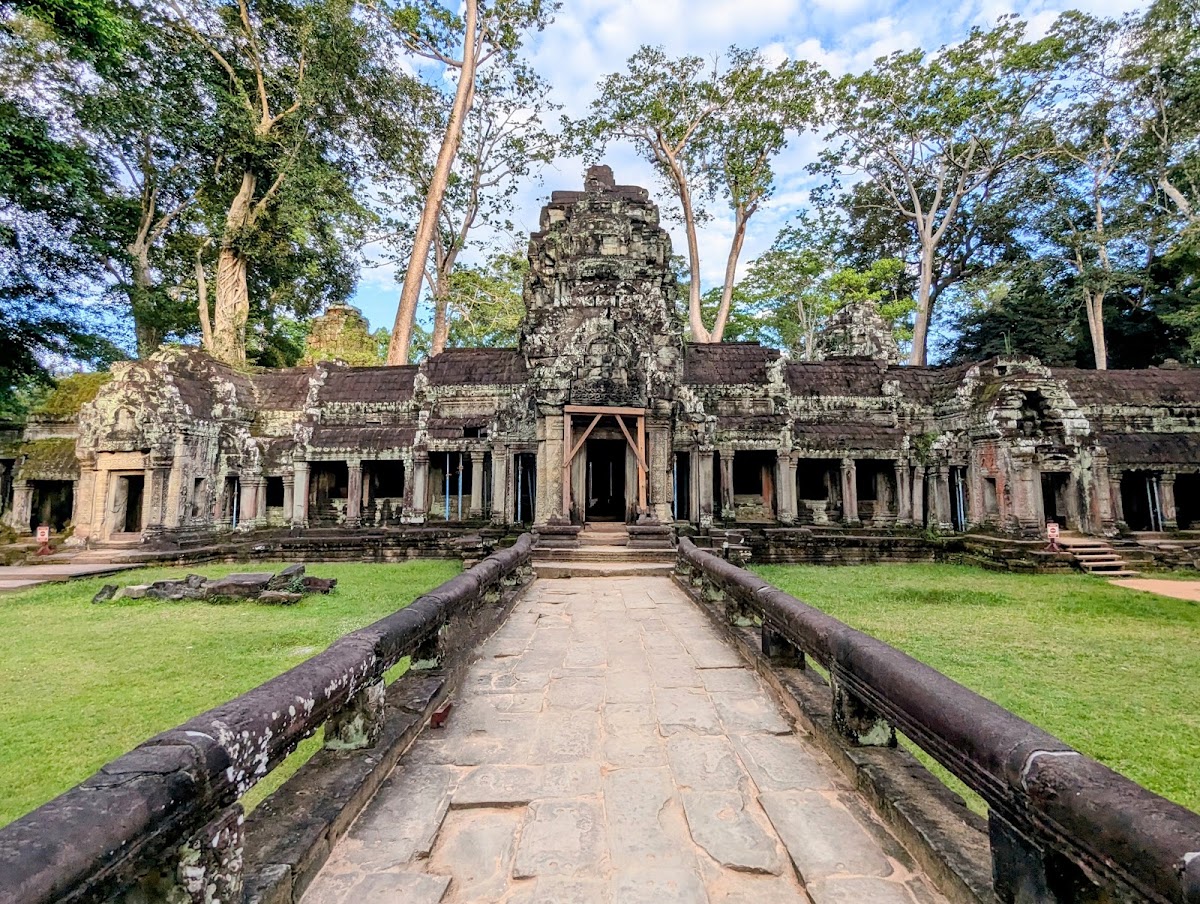
If Angkor Wat is order, Ta Prohm is glorious chaos. Left deliberately half-cleared, this is where trees and temple have fused into one thing you cannot untangle. You have seen it in the movies; standing under those roots is something else entirely.
Go early, right after sunrise breakfast, before the tour coaches arrive. The most famous root formations have small queues for photos, so a bit of patience (or an off-hours arrival) makes the difference.
Watch your footing. The walkways wind over uneven, sometimes wet stone, and the light here is dappled and dim under the canopy.
The 200 Faces of Bayon
Turn a corner and a giant serene face is smiling at you. Turn another, and there are three more.
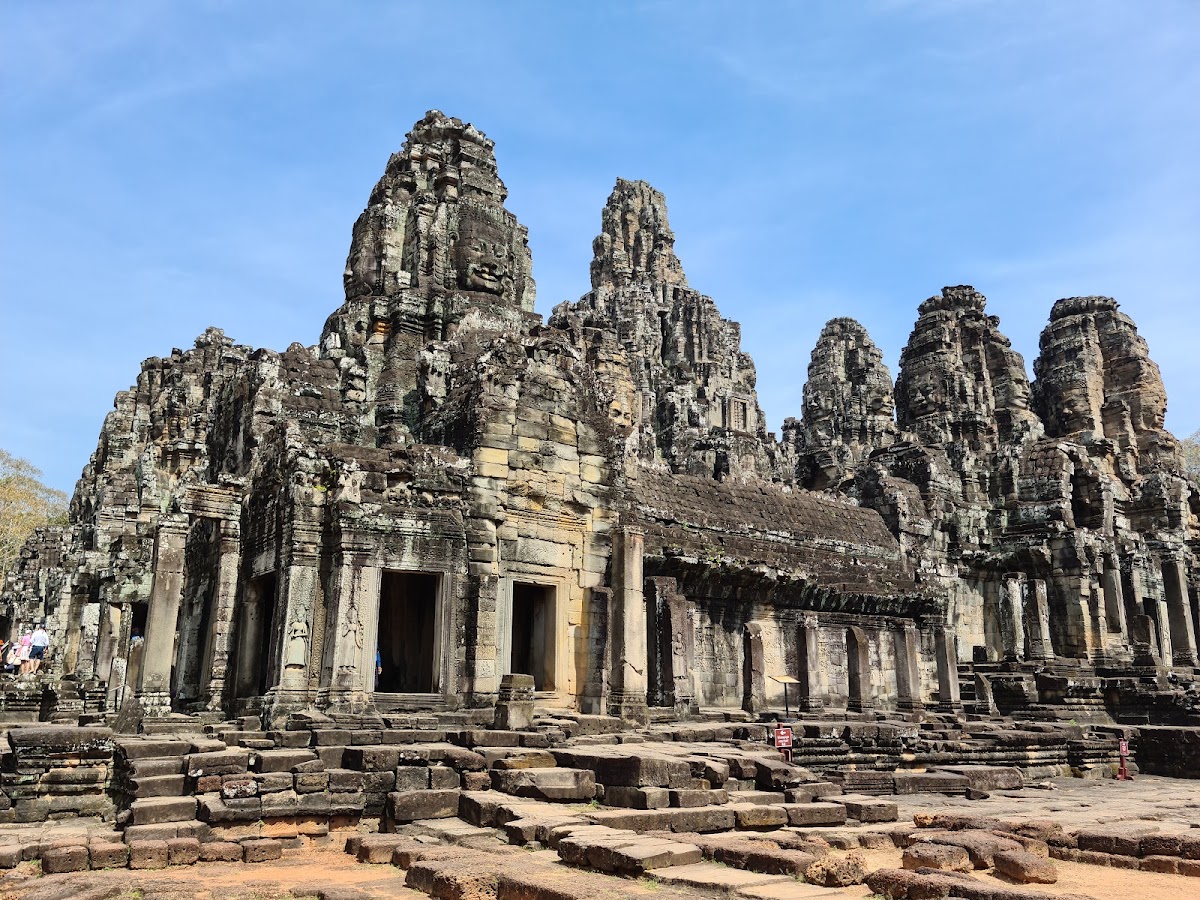
Inside the walled city of Angkor Thom sits Bayon, and its towers are carved with more than 200 enormous stone faces, all wearing the same half-smile. Walk the upper terrace slowly and let them appear one by one; the effect is quietly overwhelming.
Enter Angkor Thom through the South Gate, where a causeway lined with stone gods and demons pulls a giant serpent across the moat. It is one of the great arrivals in the whole park.
By now it is getting hot, so this is lunch time. Head to one of the local restaurants clustered near the park gates for a plate of fish amok (Cambodia's coconut-and-lemongrass curry, steamed in banana leaf) before the afternoon.
The Pink Sandstone Jewel Box: Banteay Srei
Rose-colored walls so finely carved they look pressed rather than chiseled, every inch dense with flowers, gods, and dancing figures.
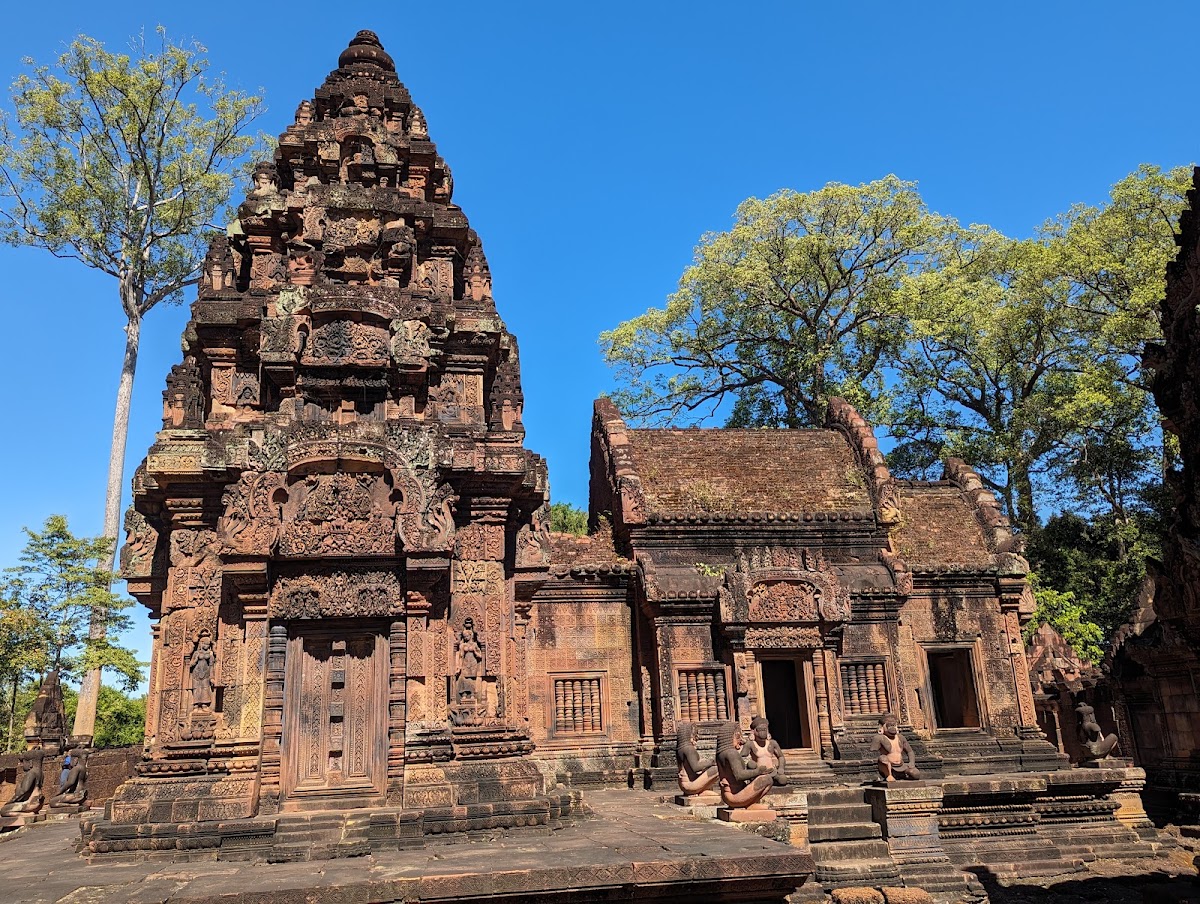
Banteay Srei sits about 25 kilometers northeast of the main cluster, which is exactly why it is worth the detour. Smaller and off the standard loop, it rewards you with the finest carving in the whole Angkor region, cut into a warm pink sandstone that seems to glow.
The name means "citadel of women," and the theory goes that the detail was too delicate for a man's hand. Historians disagree, but you will understand the sentiment when you see it.
Because of the drive, this pairs well as an afternoon extension after the main temples. Your tuk-tuk or car driver can build it into the day; agree the route and price before you set off.
A Village on Stilts Over Tonle Sap
Wooden houses stand ten meters up on spindly legs, and a boy paddles a tin basin between them like it is the most normal thing in the world.
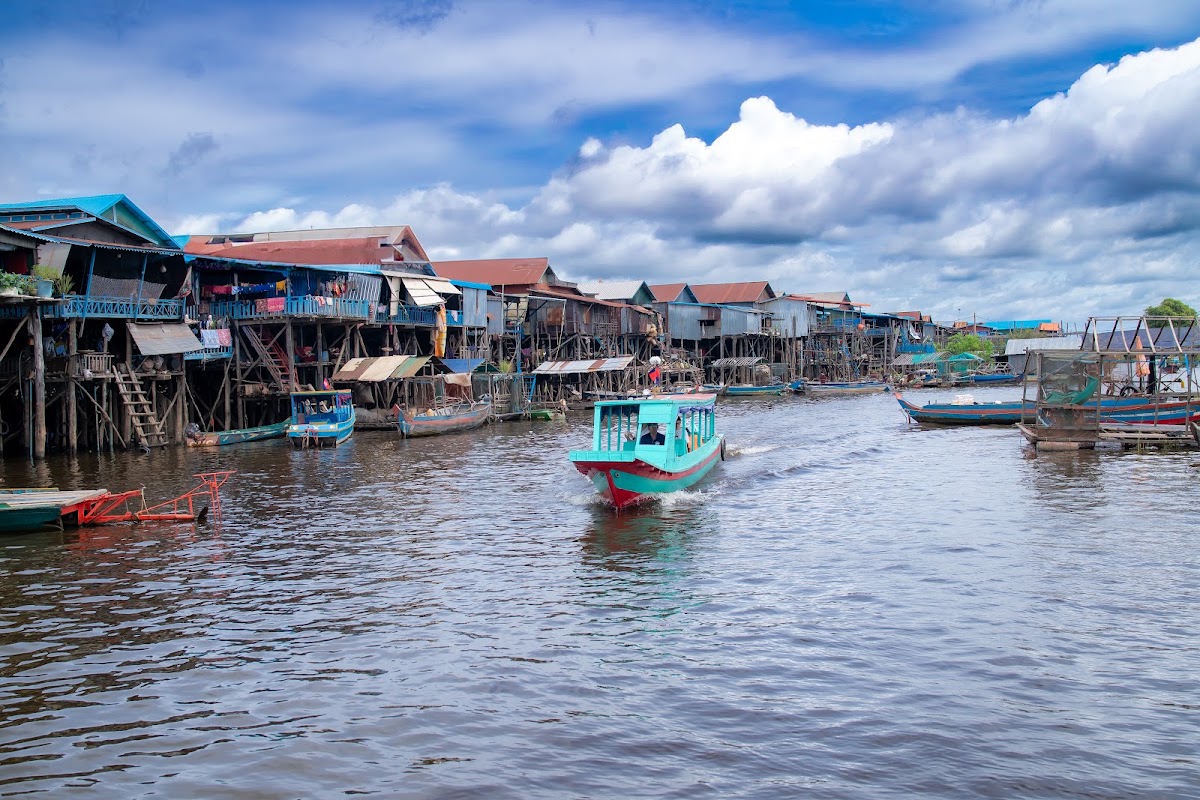
Time to leave the temples behind. Kampong Phluk is a fishing community built on stilts at the edge of Tonle Sap, Southeast Asia's largest freshwater lake. In the wet season the water rises so high that boats drift beneath the houses; in the dry season those same houses tower on their stilts above cracked mud.
You reach it by narrow longtail boat through a flooded forest, and the ride is half the experience. This is a working village, not a set, so go with a responsible operator and skip the places that push captive-animal photos or overpriced "orphanage" visits.
Aim for late afternoon so you drift back across open water as the sun sinks into the lake.
Context, Then a Dinner That Does Some Good
Air-conditioned calm, a thousand Buddhas glowing in one gallery, and finally the names for everything you climbed over yesterday.
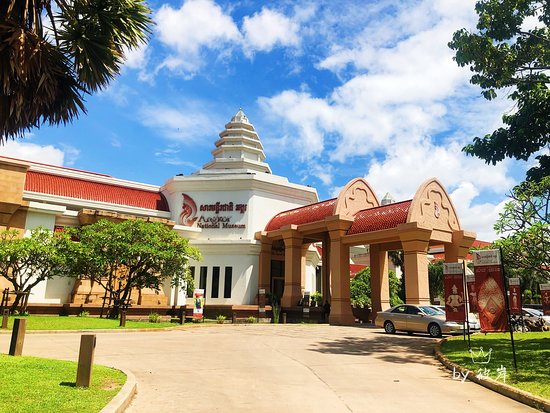
Do the Angkor National Museum after the temples, not before. Once you have walked the ruins, the galleries on Khmer kings, Hindu and Buddhist cosmology, and the famous Hall of a Thousand Buddhas actually click into place. Entry is around \$12, and the cool interior is a welcome break from the heat.
For dinner, book a table at Marum, a social-enterprise restaurant where at-risk youth train for careers in hospitality. The tapas-style menu is genuinely excellent, red tree-ant stir-fry, crispy pork, fresh spring rolls, and every dollar goes back into the program.
After that, wander. The Old Market lanes and riverside are made for an aimless last evening, ice cream in hand.
On your final morning, a slow hotel breakfast and a transfer to the airport is all that is left. You will already be planning the next trip.
Ready to book?
Book the rest of Siem Reap, Cambodia
Handpicked partner searches, dates pre-filled. Pricing is identical to going direct — the partner shares a small commission with Tabi so this guide stays free.
Frequently asked
How many days do you need in Siem Reap?
Four days is the sweet spot. It gives you two mornings for the main Angkor temples (including both a sunset and a sunrise at Angkor Wat), one day for the Tonle Sap floating village and the Angkor National Museum, and a relaxed final morning before your flight. Two days is enough only if you are moving fast and skipping the lake.
Which Angkor Pass should I buy, and where?
For a trip like this, buy the three-day pass (\$62) at the official Angkor Enterprise ticket office on the road into the park; it covers every temple and can be used across multiple days. A one-day pass is \$37 and a seven-day is \$72. Bring the physical pass with you daily, as staff check it at each temple entrance.
When is the best time of year to visit?
November to February is the cool, dry season and the most comfortable for temple-hopping, though it is also the busiest. The floating villages are most dramatic from roughly August to October when Tonle Sap is at its highest. April and May bring serious heat, and the summer months bring afternoon rain but greener landscapes and thinner crowds.
How do I get around the temples?
Hire a tuk-tuk driver for the full day, around \$25 to \$40 depending on whether you include far-flung sites like Banteay Srei. It is affordable, breezy, and your driver waits at each temple and knows the timing to dodge crowds. A private car with driver is worth it for the hotter months or the longer drive out to Banteay Srei.
Is Siem Reap safe and easy for first-time visitors?
Yes. It is a well-trodden, friendly town used to international travelers, and English is widely spoken around the temples and restaurants. Take normal precautions with valuables, use reputable tour operators, choose ethical experiences over captive-animal or unregulated 'orphanage' visits, and check your government travel advisory before you go.
Skip the planning
Your Siem Reap, Cambodia trip, ready to go
Adopt the day-by-day itinerary we built to match this guide. Every stop is a real place, every booking link is validated. Free forever, no card needed.
Open the Siem Reap, Cambodia itinerary