
Vientiane, Laos
What to Do in Vientiane in 3 Days: Golden Stupas, River Sunsets, and a Walk That Stays With You
A slow, photo-first walk through the quietest capital in Southeast Asia, from the gold of Pha That Luang to the last light over the Mekong.
TL;DR
Vientiane moves at the pace of a river town that happens to be a capital, and three unhurried days are exactly enough to feel it.
- The gold spire of Pha That Luang glowing against a hot afternoon sky
- Emerald tiles and carved teak doors at Haw Phra Kaew
- Rows of silent Buddha statues in the cloister walls of Wat Si Saket
- A quiet, hard-to-forget hour at the COPE Visitor Centre
- The sun dropping red over the Mekong from Chao Anouvong Park
Have this trip planned in 60 seconds
We built the Vientiane, Laos itinerary that pairs with this guide, day-by-day with verified venues and one-tap booking links. Free to adopt, edit however you want.
Landing Soft: The Drive In From Wattay
Warm air thick with frangipani the second the terminal doors slide open, and a road so quiet you can hear your own tuk-tuk engine.
Wattay International sits barely six kilometres from the centre, so the ride into town takes maybe 20 minutes and gives you your first read on the place. No skyscrapers, no honking wall of traffic. Just low shophouses, monks in orange crossing at the lights, and the occasional golden roof flashing between the trees.
Sort your ride before you walk out of arrivals so you are not haggling with a jetlagged brain. A fixed-price airport transfer is cheap here (figure 150,000 to 200,000 kip, roughly 7 to 9 USD) and the driver drops you right at the door.
Check in, drop the bags, and resist the urge to nap. The light in Vientiane is best in the late afternoon, and you have a golden stupa to get to.
The Gold That Stops You in the Street
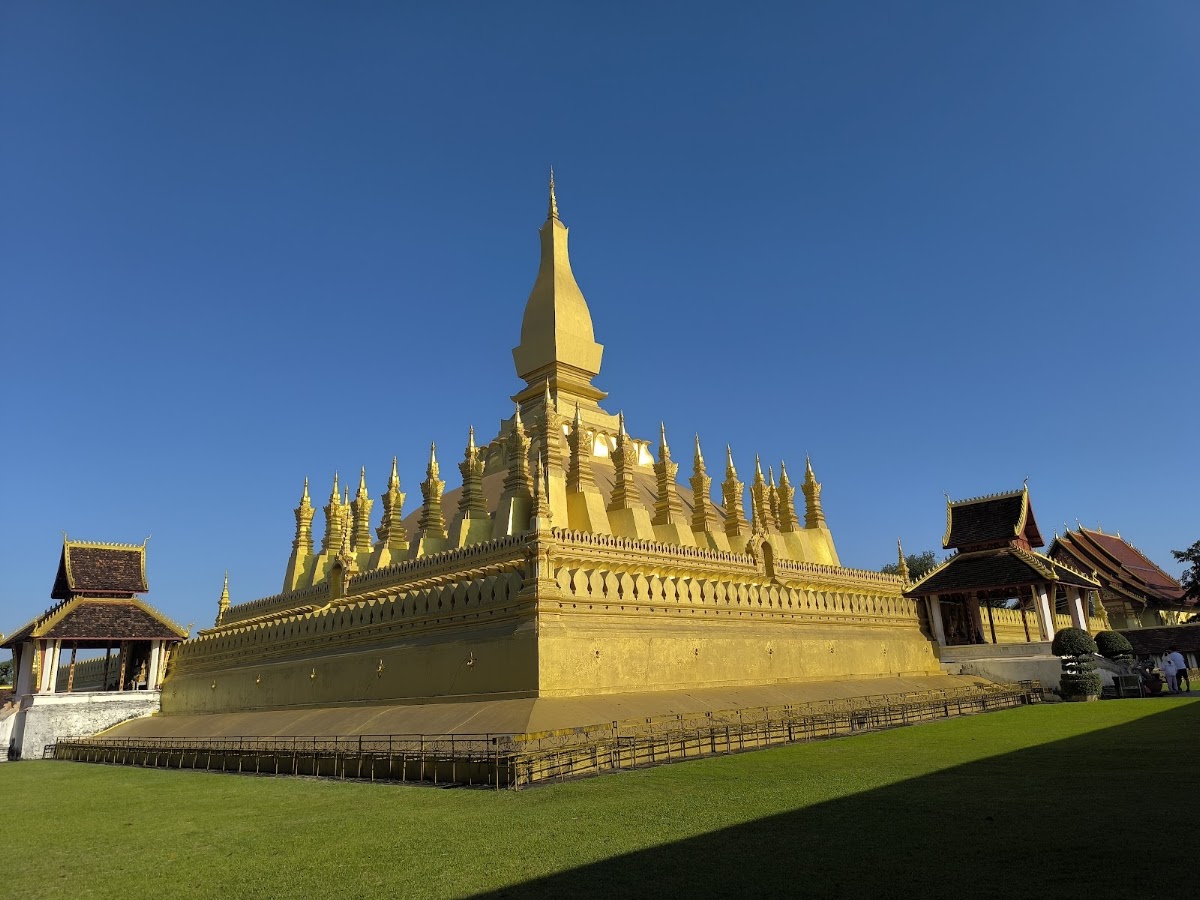
A stupa so bright in the four o'clock sun you squint before you even get close, its tiered spire pointing straight up like a flame cast in metal.
Pha That Luang is the symbol of the whole country, the shape stamped on the national seal, and in person it earns every bit of that status. The central spire rises in square tiers to a point, the gold leaf catching the light so hard it looks almost wet. Try to arrive mid to late afternoon when the sun hits it side-on and the surrounding whitewashed wall glows too.
Entry is 30,000 kip (about 1.50 USD). Shoulders and knees covered, shoes off before the inner terrace. Walk the full perimeter; the view shifts as the angle changes and the quiet reclining Buddha at nearby Wat That Luang Neua is worth the extra five minutes on foot.
This is a working religious site, not a photo set, so keep your voice down and step back when people come to pray. For the backstory on why this stupa matters so much to Lao Buddhism, the Tourism Laos site (tourismlaos.org) has a clear rundown.
Breakfast Where the Whole City Shops
Steam rising off a cart of fresh baguettes, the clatter of coffee being pulled through a metal filter, and someone grilling skewers two stalls down before 8am.
Start day two at Talat Sao, the Morning Market. Despite the name it runs all day, but mornings are when the food section hums. This is where Laos shows off its French hangover in the best way: crusty baguettes split and stuffed with pate, cucumber, and chilli, washed down with kaafee, the thick local coffee poured over a slab of sweetened condensed milk.
Graze. A filled baguette runs 15,000 to 25,000 kip (under 1.50 USD), a coffee about the same. Point at what looks good, smile, pay in small notes. Nobody expects you to speak Lao, but a quick khop chai (thank you) goes a long way.
The market also sells textiles, silver, and electronics if you want to wander, but the real reason to come is to eat standing up with the people who actually live here.
The Little Temple That Keeps the Emerald Buddha's Memory
Carved teak doors almost black with age, and rows of weathered bronze Buddhas lined up along a shaded veranda like old guardians.
Haw Phra Kaew is a short walk or quick tuk-tuk from the market, and it is a gear change in mood. It once housed the Emerald Buddha (now in Bangkok, a sore point in these parts) and today works as a small museum of Lao religious art. The building itself is the draw: tiered roof, gilded trim, and those extraordinary doors.
Entry is 30,000 kip (about 1.50 USD). Give yourself half an hour to walk the outer veranda slowly, where the bronze and stone Buddhas sit in soft shade, each one slightly different in posture and expression.
Photography is usually fine outside; inside the main hall it is often not, so watch for the signs. It is a calm, unhurried stop that sets you up perfectly for the temple next door.
Thousands of Buddhas in a Crumbling Cloister
A low cloister wall pocked with tiny alcoves, and in every single one a small seated Buddha, hundreds upon hundreds of them fading into the shadows.
Wat Si Saket is the oldest surviving temple in the city, and it survived precisely because it was built in a Siamese style the invading armies chose to spare. The headline is the cloister that wraps the main hall: its walls are honeycombed with niches holding more than 2,000 small Buddha images, with larger statues seated below along the colonnade.
Entry is 30,000 kip (about 1.50 USD). Walk the cloister in a full loop, slowly, and let your eyes adjust to the dim. The repetition is the whole point; it is quietly overwhelming in the best way.
Sit on the steps for a few minutes when you are done. Wat Si Saket sits on a busy corner but inside the walls it is one of the stillest places in Vientiane.
The Hour That Changes How You See Laos
A chandelier made of hundreds of clear prosthetic limbs hanging over a quiet gallery, catching the light like something both beautiful and heartbreaking.
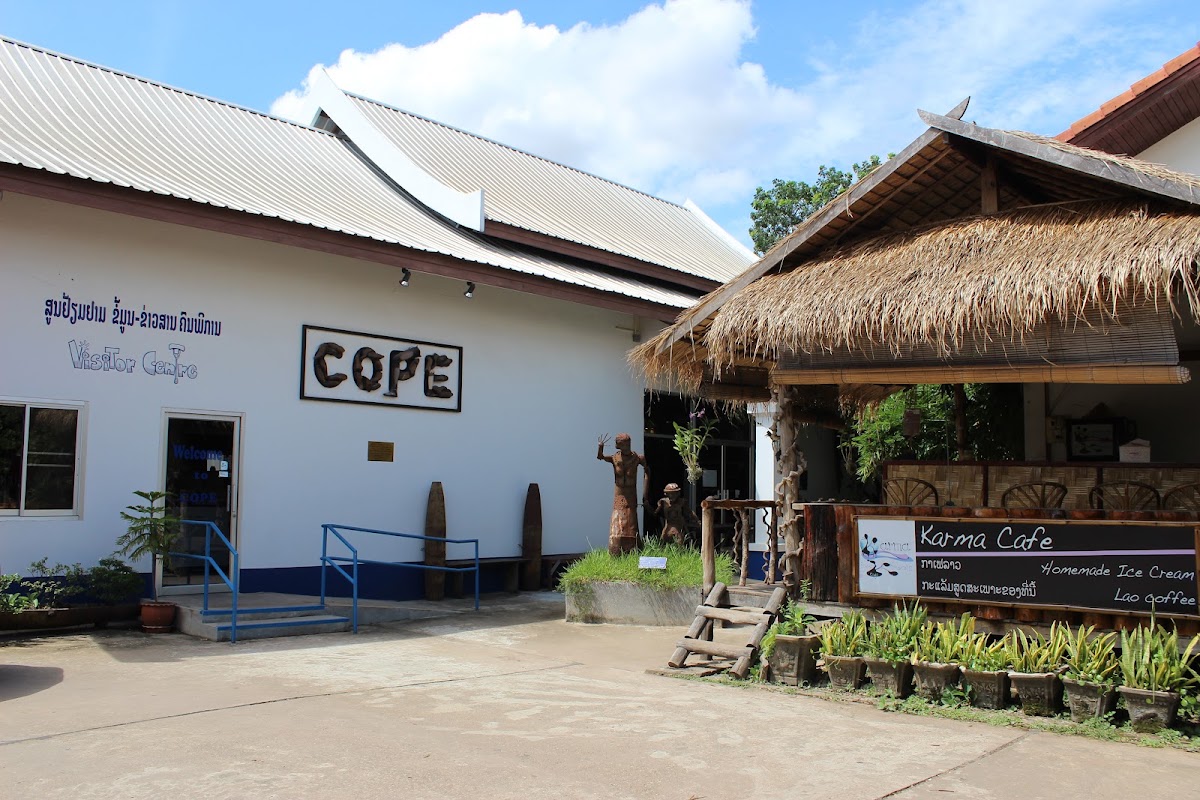
The COPE Visitor Centre is the stop people do not expect and never forget. Laos is the most heavily bombed country per capita in history, a legacy of the Vietnam War era, and unexploded ordnance still injures people in rural areas today. COPE is the organisation that fits prosthetics and rehabilitation for survivors, and the centre tells that story with real clarity and zero melodrama.
Entry is free; donations go directly to the work. Give yourself at least 45 minutes for the exhibits, the short documentaries, and the gift shop, where purchases fund prosthetic limbs. It is sobering, yes, but it is also hopeful, and it gives real weight to everything else you have seen that day.
If you want to understand the wider context before you go, the official COPE site (copelaos.org) lays it out plainly.
Last Light on the Mekong
The sun melting into a wide brown river, Thailand a hazy line on the far bank, and a night market firing up its first grills behind you.
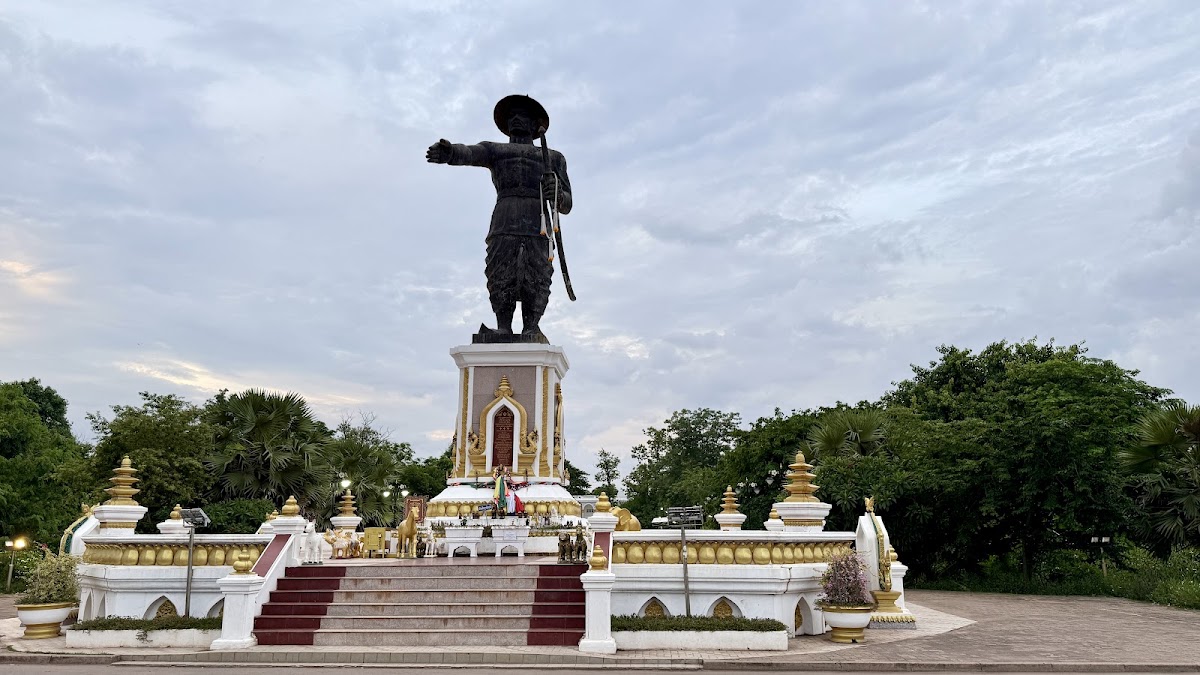
End the day at Chao Anouvong Park, the long riverside promenade along the Mekong, timed for sunset. The great statue of King Anouvong stands with his hand raised toward the water, and behind it the sky does something genuinely cinematic as the light drops. This is where the whole city seems to show up: joggers, families, teenagers doing group aerobics, vendors wheeling out carts.
As the sun goes, the riverside night market unfolds along the embankment, all red tarpaulins and grilled skewers and cold Beerlao. Wander, graze, people-watch. Skewers run a few thousand kip each; a large Beerlao is around 15,000 to 20,000 kip (under 1 USD).
This is the softest, most local hour of the trip. No ticket, no queue, just a river and a slow crowd watching the day end. It is the moment that makes you understand why people fall for this quiet little capital.
One Last Coffee Before You Go
A tiny café table, a strong Lao coffee, and a fresh croissant that would not be out of place in Lyon.
Vientiane's French-colonial past left behind a proper café culture, and the city is dense with little spots doing excellent coffee and pastries. Build a slow breakfast into departure day: a flaky croissant or a filled baguette, a strong kaafee, and 20 minutes to watch the street wake up.
Many of the best cafes cluster in the blocks between the river and Wat Si Saket, walkable from most central hotels. Pay in kip, tip a little, and let the morning be unhurried.
When it is time, the airport is only 20 minutes out, so you do not need to leave early. Pre-book the transfer the night before and you can linger over that last cup without watching the clock. Vientiane is not a city that rewards rushing, right up to the final hour.
Ready to book?
Book the rest of Vientiane, Laos
Handpicked partner searches, dates pre-filled. Pricing is identical to going direct — the partner shares a small commission with Tabi so this guide stays free.
Frequently asked
How many days do you need in Vientiane?
Three days is the sweet spot. It covers the golden stupa at Pha That Luang, the temple cluster of Haw Phra Kaew and Wat Si Saket, the COPE Visitor Centre, the morning market, and a Mekong sunset, while still leaving room to slow down. Two days is doable if you move briskly; one day only skims the surface.
What is the best time of year to visit Vientiane?
November to February is the most comfortable window, with drier air and cooler temperatures. March to May gets very hot, and the rainy season runs roughly June to October, bringing afternoon downpours and a very full, fast-moving Mekong. If you come in the hot months, plan temple visits for the morning and save the river for sunset.
How do you get around the city?
The central sights are flat and walkable, so expect to cover a lot on foot. For the longer hop out to Pha That Luang or for any trip in the midday heat, grab a tuk-tuk and agree the price before you set off. Ride-hailing apps also operate in the city. Everything in this log is within an easy tuk-tuk ride of the centre.
What should I know before visiting the temples?
Dress modestly with shoulders and knees covered, and remove your shoes before entering temple interiors and inner terraces. Keep your voice low and step aside for anyone who has come to pray, since these are active religious sites, not museums. Most sites charge a small entry fee of around 30,000 kip, so carry small notes.
Is the COPE Visitor Centre worth visiting?
Yes, and it is the stop most people remember most. It tells the story of unexploded ordnance in Laos and the prosthetics work done for survivors, with real clarity and without melodrama. Entry is free and donations fund the work directly. Budget at least 45 minutes, and go before your Mekong sunset to give the day some weight.
Skip the planning
Your Vientiane, Laos trip, ready to go
Adopt the day-by-day itinerary we built to match this guide. Every stop is a real place, every booking link is validated. Free forever, no card needed.
Open the Vientiane, Laos itinerary