
Zanzibar, Tanzania
Zanzibar in 6 Days: Stone Town, Spice Farms, and the Turquoise North
A picture-first walk from carved wooden doors to the sandbar reefs of Mnemba, in the order you'd actually travel it.
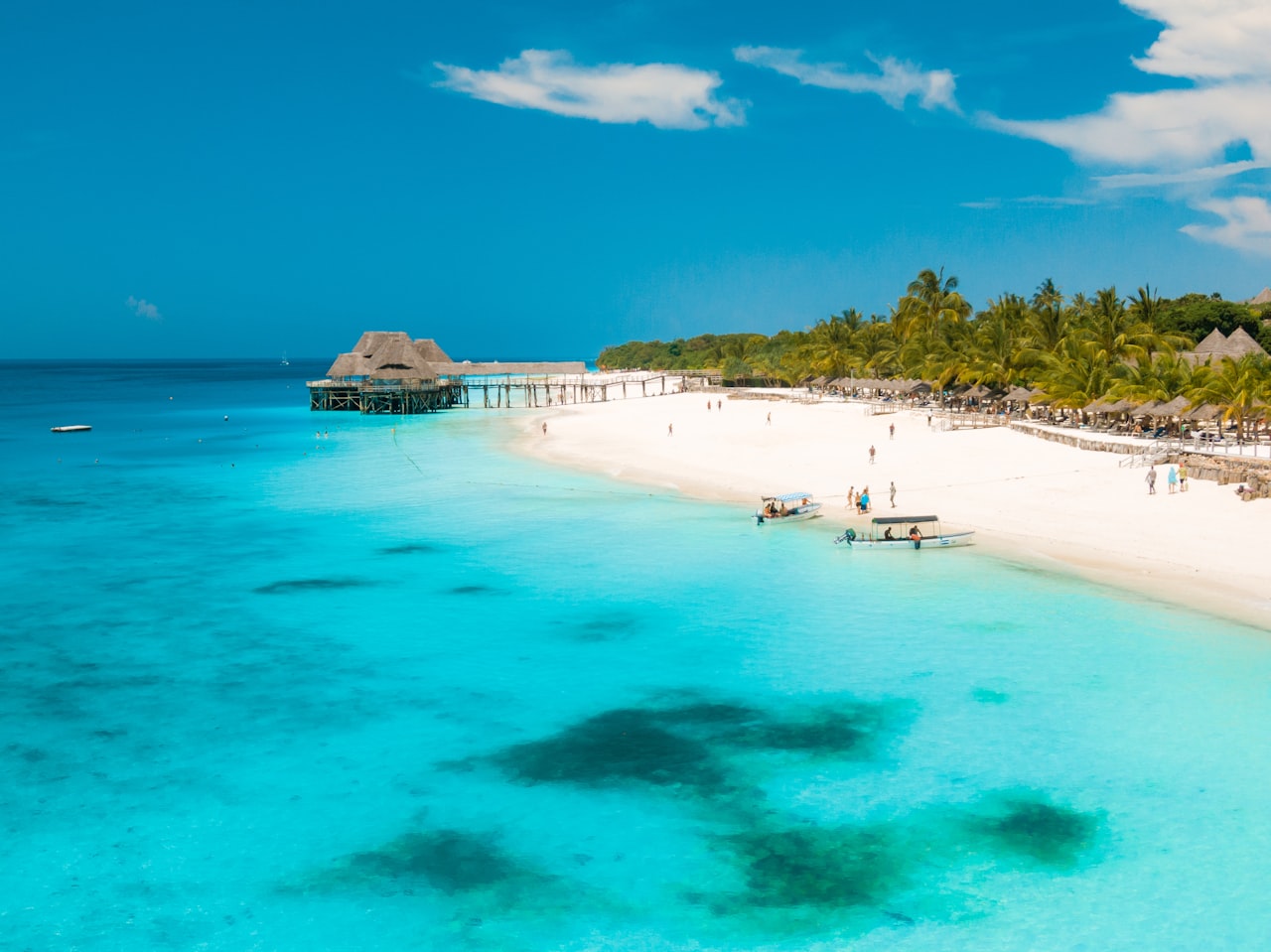
Photo by Humphrey M on Unsplash
TL;DR
Follow the classic Zanzibar arc: two days losing yourself in Stone Town's alleys, then north to where the Indian Ocean turns unreasonably blue.
- Carved doors and cardamom smoke in Stone Town's tangled lanes
- A spice farm where you bite ginger straight from the soil
- Nungwi at low tide, dhows tipped over on wet sand
- Mnemba Atoll snorkeling over parrotfish and coral gardens
- Kendwa sunset with your feet in warm shallow water
Have this trip planned in 60 seconds
We built the Zanzibar, Tanzania itinerary that pairs with this guide, day-by-day with verified venues and one-tap booking links. Free to adopt, edit however you want.
Stepping Off the Plane Into Warm, Salted Air
The door opens and the heat wraps around you like a towel out of the dryer, thick with sea salt and a faint sweetness you can't place yet. Spoiler: it's cloves.
Abeid Amani Karume International Airport sits about 6 km south of Stone Town, so the ride in is short but it does the work of resetting your brain. Palm fronds, dala-dala minibuses crammed to the roofline, kids in school uniforms, the ocean flashing between buildings.
Arrange the transfer ahead of time rather than negotiating at the curb. The fixed rate to Stone Town runs roughly 25,000 to 40,000 TZS (about 10 to 16 USD), and having a driver waiting with your name means you skip the taxi scrum after a long-haul flight.
Ask your driver to drop you at the edge of the old town. Cars barely fit the lanes past a certain point, and honestly, walking the last stretch with your bag is the better introduction.
Getting Happily Lost Behind the Carved Doors
Every few meters a door stops you: teak the size of a table, studded with brass spikes, framed by carvings of lotus flowers and chains and fish. Then the alley bends and swallows you again.
Stone Town is a UNESCO World Heritage site, and the fastest way to understand why is to hand yourself over to a local guide for a couple of hours. Start at the Old Fort, a squat coral-stone rampart from the late 1600s, then let the walk pull you through the maze of Swahili, Arab, Indian, and Portuguese influences that built this place.
Your guide will read the doors for you (round-top for Indian merchants, square for Arab, the number of studs a quiet flex of wealth) and steer you past the former slave market at the Anglican Cathedral, a heavy stop that the town does not hide from.
The alleys genuinely all look the same after twenty minutes, which is the point. Buy a cold tamarind juice, follow the smell of grilling meat, and let the map stay in your pocket.
Details on Stone Town's designation are on the UNESCO World Heritage list at whc.unesco.org/en/list/173.
The Spice Farm Where You Eat Straight From the Ground
A farmer scrapes bark off a branch, holds it under your nose, and suddenly you're standing inside a jar of cinnamon. Next comes cardamom, then a knob of ginger pulled from the dirt, dusted off, and handed to you to bite.
Zanzibar was the world's clove capital for a reason, and a morning at a working spice farm like Tangawizi north of Stone Town turns the island's whole history into something you can taste and smell. Vanilla vines, nutmeg cracked open to show the red mace inside, lipstick-red annatto seeds smeared on your hand as war paint.
Someone will almost certainly climb a coconut palm barefoot and lob one down for you, then weave you a hat and a frog out of palm leaves while you're still processing the climb. Lean into it.
Tours run about 25,000 to 40,000 TZS (10 to 16 USD) and usually include a fruit tasting and lunch. Bring small bills to buy spices at the end. They cost a fraction of the airport gift shop and smell about a hundred times stronger.
Sultans, Fading Grandeur, and a Rooftop Dinner
Inside the Palace Museum the ceiling fans turn slow over a sultan's four-poster bed, and out the window the same Indian Ocean the royal dhows once sailed lies flat and silver.
The Palace Museum on the seafront was home to Zanzibar's sultans, and it wears its history a little threadbare, in the best way. Faded photographs, heavy dark furniture, the story of Princess Salme who ran off with a German merchant and wrote the whole scandal down. Give it an hour.
Spend the free afternoon doing nothing productive. Watch the doorway carvers work, sip coffee, poke into a curio shop.
Then, as the light drops, climb to one of Stone Town's rooftop restaurants above Forodhani Gardens. Below you the gardens fill with a nightly street-food market: grilled seafood skewers, the local "Zanzibar pizza" folded on a hot griddle, sugarcane juice pressed to order. Eat a full dinner upstairs for the view, or graze your way through the stalls afterward. Do both if you're hungry enough.
North to Nungwi, Where the Tide Rearranges the Beach
The road opens up, the buildings thin out, and then the water hits you: a turquoise so bright it looks color-corrected. At low tide the dhows lie tipped on wet sand and the sea pulls back for what feels like a kilometer.
The transfer from Stone Town to the northern tip takes about 1.5 hours by road and costs roughly 60,000 to 90,000 TZS (24 to 36 USD) for the car. This is where Zanzibar shifts gears from culture to pure beach.
Nungwi is one of the few beaches on the island where the tide barely swallows the swimming, so unlike much of the east coast you can actually get in the water most of the day. Boat builders still hand-shape dhows on the sand at the village end, chisels and all.
Book a beachfront seafood dinner for your first night here. Whole grilled snapper or a plate of prawns, feet in the sand, the sky doing its slow pink-to-purple thing over the water. It's the moment the trip fully unclenches.
Sea Turtles in a Tidal Lagoon, and a Sail Into the Sunset
Green turtles the size of coffee tables glide up to the surface of a natural rock pool, and if you lower a piece of seaweed into the water one will paddle over and take it right from your fingers.
Mnarani Natural Aquarium is a tidal lagoon turned conservation center at the north tip of Nungwi, home to rescued green and hawksbill turtles, some of which are eventually released. Entry is around 25,000 TZS (10 USD) and morning light is best for photos. It's a genuinely lovely, low-key hour.
Spend the free afternoon horizontal. This is the part of the trip you'll miss most later, so don't over-schedule it.
As the day cools, book yourself onto a dhow sunset cruise straight off the beach. A traditional wooden sailboat, the sail catching the last wind, the sun melting into the ocean while the crew pours you a drink. It's touristy and completely worth it. Dinner afterward is best kept simple: a local beach bar, cold Kilimanjaro or Serengeti lager, grilled fish, sand between your toes.
The Reef at Mnemba, Then the Softest Sand on Kendwa
You roll off the boat and the water is so clear it barely registers as water: parrotfish in electric blue and green, a moray tucked in the coral, maybe a pod of dolphins on the ride out. This is the day the whole island shows off.
Mnemba Atoll, off the northeast coast, is the best snorkeling within easy reach of Nungwi. The atoll itself is a private island, but the surrounding reef is protected and open, and the visibility is ridiculous. Boat trips run roughly 60,000 to 100,000 TZS (24 to 40 USD) per person depending on group size and gear. Go early, before the wind and the crowds.
A quick note that matters: check current travel advice from your government before booking any water activity, and confirm your operator provides life jackets and follows the reef's no-touch rules. The US State Department posts Tanzania updates at travel.state.gov and the UK's are at gov.uk/foreign-travel-advice/tanzania.
Cap the day a short hop down the coast at Kendwa, whose sand is powder-fine and whose sunsets are the stuff of postcards. Grab a spot at a beach bar, order a passion-fruit whatever, and watch the sky go on fire one last time.
One Last Slow Breakfast Before the Airport
Fresh mango and papaya, a spiced Zanzibar coffee, the ocean doing its bright blue thing while you pretend you don't have a flight. Draw this one out.
Save your last morning for a leisurely beachfront breakfast. Tropical fruit, eggs however you like them, that thick sweet coffee, and absolutely no rush. Take one more walk to the waterline while the sand is still cool.
The transfer back to Abeid Amani Karume International Airport from the north runs about 1.5 hours, so build in buffer. Aim to leave Nungwi around three hours before an international departure, more if you're flying at a busy time.
Buy your cloves and vanilla in Stone Town or at the farm rather than the terminal, tip your driver, and take the smell of the place home with you. Six days is exactly enough to fall for Zanzibar and not nearly enough to feel done with it.
Ready to book?
Book the rest of Zanzibar, Tanzania
Handpicked partner searches, dates pre-filled. Pricing is identical to going direct — the partner shares a small commission with Tabi so this guide stays free.
Frequently asked
How many days do I really need for Zanzibar?
Six days is the sweet spot for a first visit: two in Stone Town for the culture, spice farm, and street food, then three to four up north for beach time, the Mnemba reef, and a dhow sunset. Fewer than four and you'll spend too much of it in transit.
When is the best time to go?
The long dry season from June to October has the most reliable sunshine and calm seas, ideal for snorkeling at Mnemba. December to February is also hot and dry. Avoid the long rains of March to May, when many smaller places on the coast close.
Is it easy to get from Stone Town to the northern beaches?
Yes. A private transfer to Nungwi or Kendwa takes about 1.5 hours by road and typically costs 60,000 to 90,000 TZS (24 to 36 USD) for the car. Most hotels arrange it, or you can pre-book a driver so someone is waiting for you.
Do I need to cover up on the beach?
On the resort beaches at Nungwi and Kendwa, swimwear is fine. In Stone Town and any village, Zanzibar is conservative and Muslim, so both men and women should cover shoulders and knees out of respect. A light scarf or sarong in your bag solves most situations.
Can you swim at any time of day, or does the tide get in the way?
This varies hugely by beach. Much of the east coast dries out to a vast tidal flat at low tide, so swimming is timing-dependent. Nungwi is one of the few spots where the water stays deep enough to swim most of the day, which is a big part of why it anchors the northern half of this trip.
Skip the planning
Your Zanzibar, Tanzania trip, ready to go
Adopt the day-by-day itinerary we built to match this guide. Every stop is a real place, every booking link is validated. Free forever, no card needed.
Open the Zanzibar, Tanzania itinerary