
Osaka, Japan
What to Do in Osaka: 4 Days of Neon, Street Food, and Castle Views
A walking log through Osaka's loudest canals, oldest temples, and the takoyaki stall you'll dream about.
TL;DR
Osaka is the friend who talks with their mouth full, drags you down a neon alley, and knows exactly where the good takoyaki is.
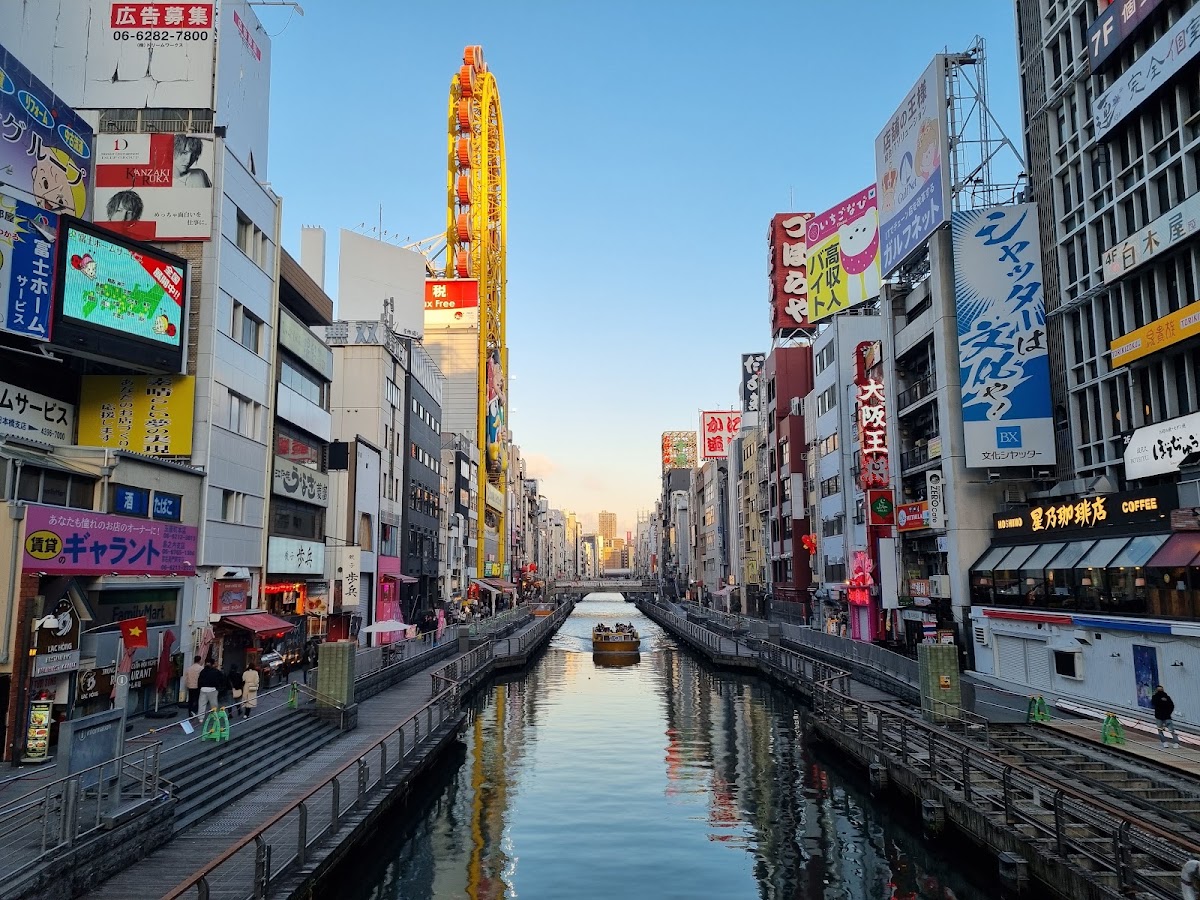
- Dotonbori at night, canal water throwing back a wall of neon
- Takoyaki eaten scalding-hot from a Dotonbori stall counter
- Osaka Castle floating above cherry trees in Nishinomaru Garden
- Kushikatsu and Tsutenkaku Tower glowing over retro Shinsekai
- A quick train to Fushimi Inari's endless vermilion torii gates
Have this trip planned in 60 seconds
We built the Osaka, Japan itinerary that pairs with this guide, day-by-day with verified venues and one-tap booking links. Free to adopt, edit however you want.
Dotonbori After Dark, Where the City Turns Its Volume Up
The canal water is black glass, and across it a wall of neon (crab legs the size of cars, a running man mid-stride) throws color all the way down to your shoes.
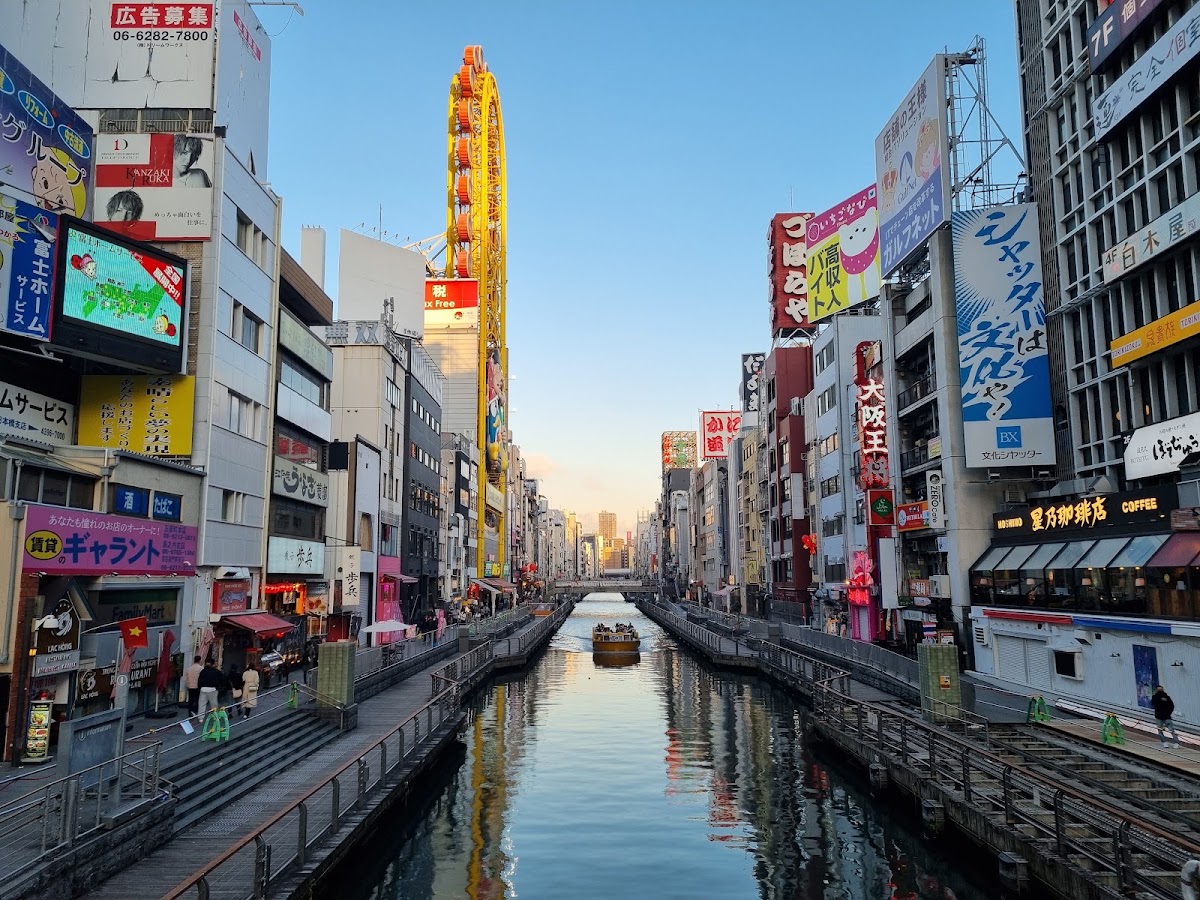
Start here, at night, on the Ebisubashi bridge. This is the Osaka everyone pictures before they arrive, and it somehow still surprises you in person. The Glico running man sign has been sprinting since 1935, and the crowd underneath him is half tourists, half locals meeting friends after work.
Walk the canal-side path east to west. Every few steps a restaurant barker waves a laminated menu, and the smell shifts from grilled squid to soy-sweet sauce to fryer oil. Don't plan dinner too tightly. The whole point of Dotonbori is grazing.
Give yourself a full evening. You'll want to loop back over the bridge at least twice, once to eat and once just to look.
The Takoyaki Stall Where You Burn Your Mouth and Don't Care
Eight little spheres in a paper boat, blistered brown, wobbling under a drizzle of sauce and a snowfall of bonito flakes that curl like they're breathing.
Takoyaki is Osaka's own invention, and Dotonbori is where you eat it standing up. Watch the cook rotate each ball in its cast-iron dimple with a metal pick, fast as a card trick. Inside is a nub of octopus and a molten center that will absolutely scald the roof of your mouth. Everyone learns this the same way.
A boat of six to eight runs around 500 to 700 yen (roughly 4 to 5 USD). Grab a beer or a canned oolong from the vending machine next door and eat on your feet by the railing.
One local move: blow on it, then bite it in half first to let the steam out. Your palate will thank you for the rest of the trip.
Hozenji Yokocho, One Alley Over and Two Centuries Back
Duck off the neon boulevard into a stone lane barely wide enough for two people, hung with paper lanterns, quiet enough to hear your own footsteps on the wet flagstones.
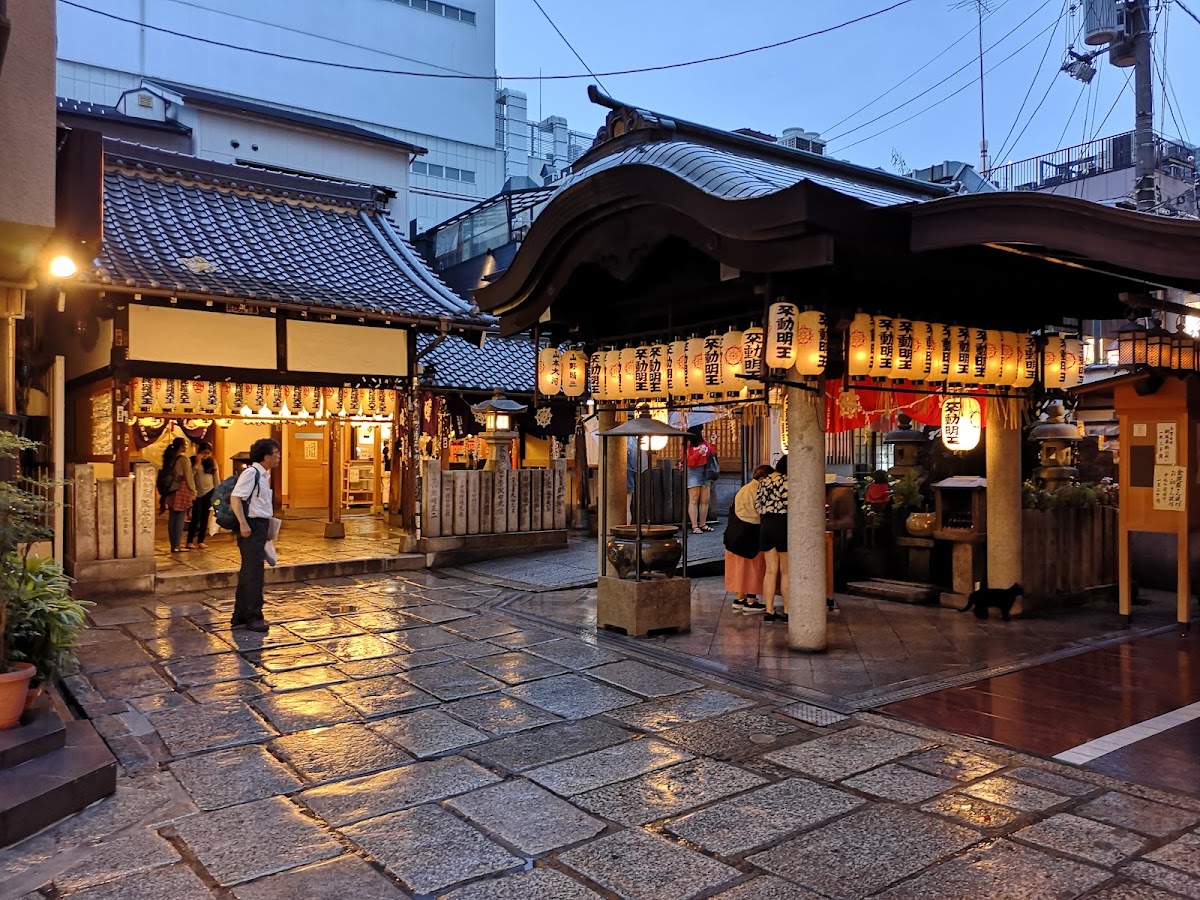
Fifty meters from the chaos of Dotonbori sits Hozenji Yokocho, and the switch in mood is almost comic. This is old Osaka: tiny counter bars, curtained doorways, and the little moss-covered Hozenji temple statue that regulars splash with water for luck. The stone is soft green with decades of it.
Duck into one of the narrow izakaya here for a skewer and a glass of shochu. Seats are few and elbows are close, which is exactly the appeal.
Come through once by day to see the lane's texture, then again at night when the lanterns do the work. Two very different alleys, same address.
Osaka Castle Floating Over the Cherry Trees
Green-tiled roofs stacked eight stories high, gold tigers gleaming on the eaves, the whole thing lifting out of a sea of pink and white blossom in spring.
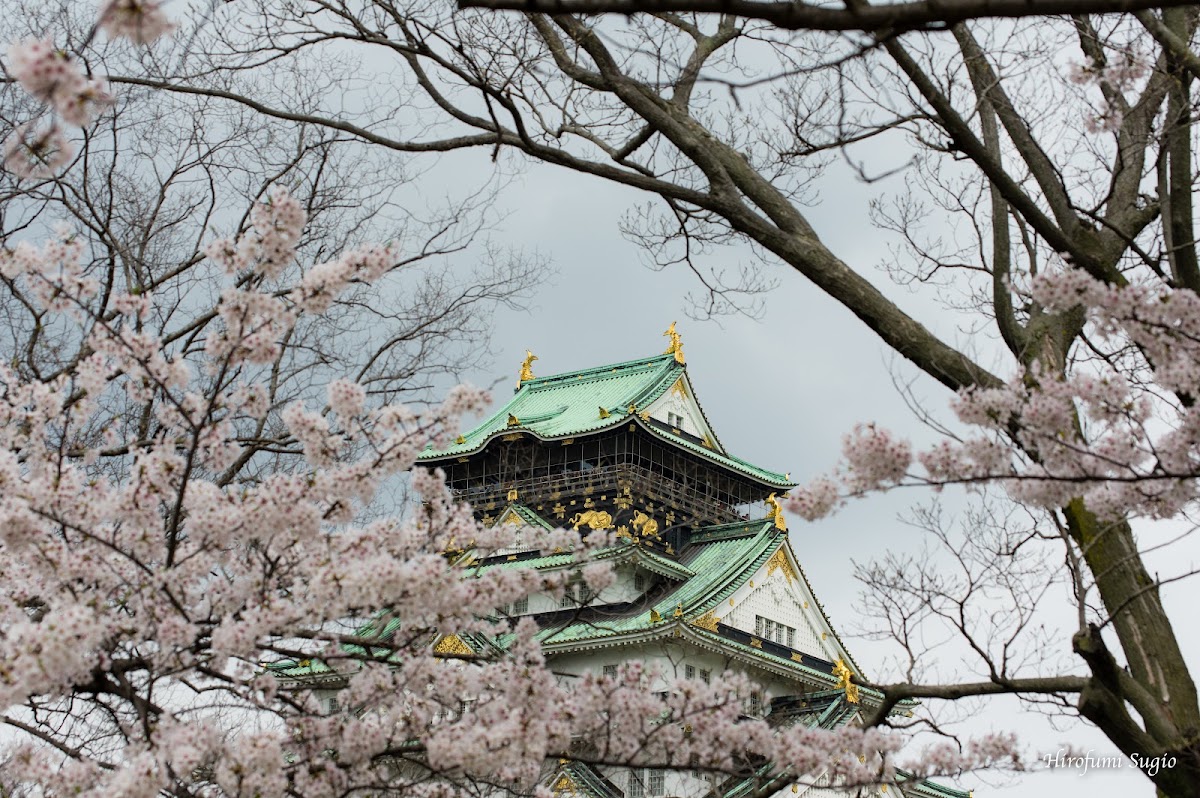
Day two, go early, before the tour buses. The keep you see is a 1930s reconstruction, but the moats and the massive stone walls are the real 16th-century thing, and the scale of them still makes people stop and stare. Some of the base stones are the size of a small car.
Walk into Nishinomaru Garden for the classic postcard angle, the castle framed by trees across the lawn. Entry to the garden is around 200 yen (under 2 USD); the keep itself is about 600 yen (roughly 4 USD) and the top floor gives you a full sweep of the city.
Give it a slow morning. The park around the castle is huge, and half the pleasure is the walk in through the outer gates.
Kuromon Ichiba, Breakfast You Eat Standing at the Stalls
A covered arcade under a striped ceiling, ice beds glittering with sea urchin and fat scallops, vendors torching wagyu right there on skewers so the fat hisses and drips.
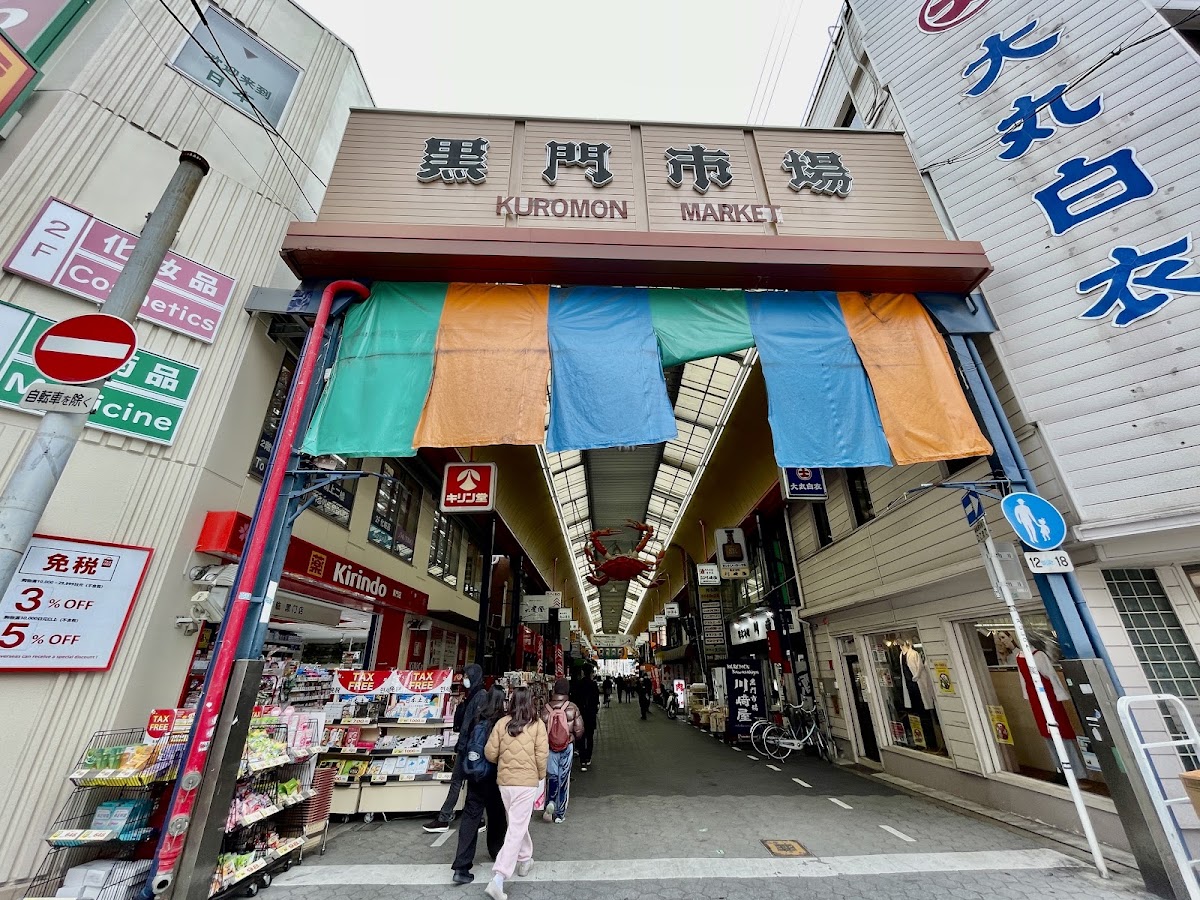
Locals call Kuromon 'Osaka's kitchen,' and 190 years of feeding the city has made it very good at this. Come hungry and graze your way down the arcade: a scallop grilled in its shell, a slab of otoro tuna, a stick of A5 wagyu seared to order, maybe a whole grilled crab leg.
Most stalls will cook your pick on the spot and hand it over with a little tray so you can eat as you wander. Bring cash; a few of the smaller counters don't take cards.
It's busiest mid-morning, which is honestly the best time. The energy of the whole market working at once is part of the meal.
Shinsekai and Tsutenkaku, Osaka's Retro Neon Fever Dream
A stubby steel tower glowing like a jukebox, streets below crammed with plastic blowfish, pufferfish lanterns, and the deep smell of things frying in beef fat.
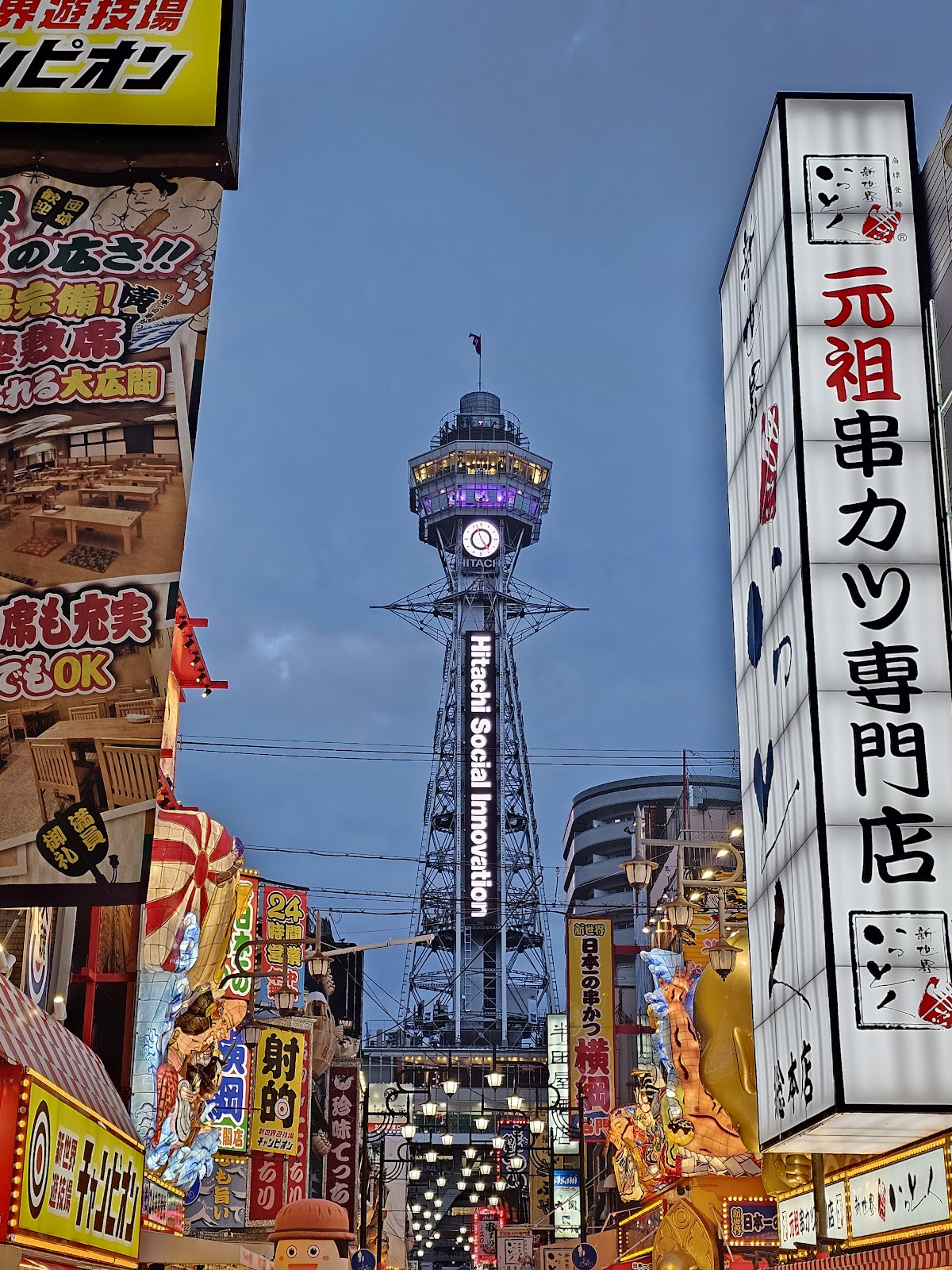
Shinsekai was built over a century ago to imitate Paris and Coney Island at once, and it has aged into something entirely its own: gloriously loud, a little rough around the edges, and completely unbothered about it. Tsutenkaku Tower stands in the middle of it, changing color at night.
This is kushikatsu country, deep-fried skewers of meat, vegetables, and cheese with one iron rule posted everywhere: no double-dipping in the communal sauce. A plate of assorted skewers with a beer runs cheap and cheerful, maybe 1,500 to 2,500 yen (about 10 to 17 USD).
Eat here in the evening when the neon is doing its full retro thing. It photographs like a film set.
Kaiyukan and the Bay, Where a Whale Shark Drifts Past Your Face
Standing in a dim blue hush, a whale shark the length of a bus glides by the glass, and the whole crowd goes quiet at the same second.
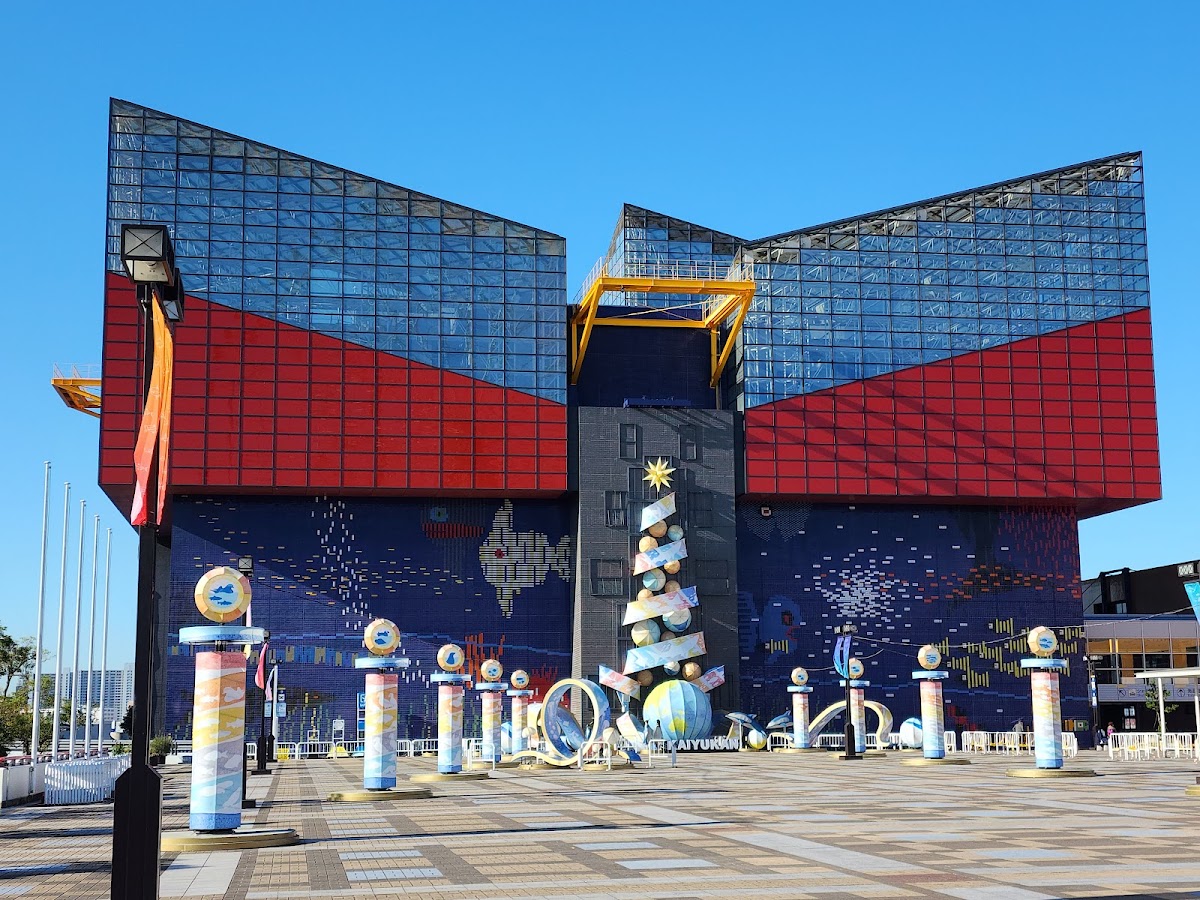
Day three, head to the waterfront. Osaka Aquarium Kaiyukan is built around one enormous central tank representing the Pacific, and its resident whale sharks are the reason people line up. Entry is around 2,700 yen (roughly 18 USD), and the spiral ramp down through the exhibits is genuinely lovely.
Right next door, the Tempozan Ferris Wheel lifts you 112 meters over the bay for a slow, quiet loop, best at dusk when the harbor lights come on. Grab lunch at Tempozan Marketplace between the two.
If you're heading to Universal after, the Captain Line ferry hops straight across the water from the pier here. It's a quick, breezy shortcut that beats doubling back on the train.
One Train Out, to a Tunnel of Ten Thousand Torii
Vermilion gate after vermilion gate, so close they blur into a single glowing corridor, sunlight slicing through the gaps and striping the path in orange.
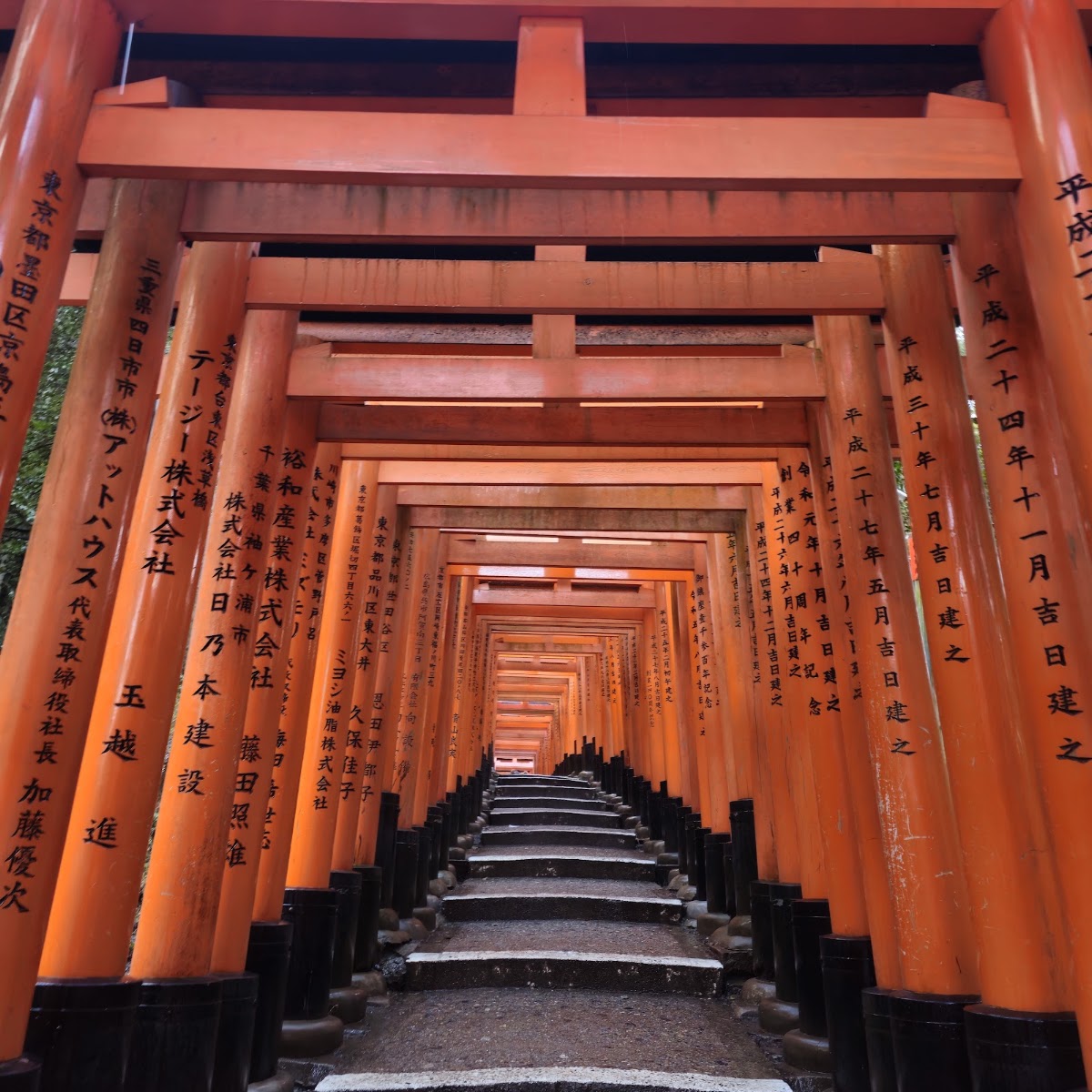
Osaka makes a superb base for a day trip, and Kyoto is under 30 minutes by train. Fushimi Inari Taisha is the reason to go: thousands of torii gates climbing the hillside in an endless red tunnel. Go early or late and you can find stretches almost to yourself, which is the whole magic.
Prefer something gentler? Nara is just as close the other direction, where wild deer bow for crackers in the park and the Great Buddha of Todaiji sits in one of the largest wooden buildings on earth.
Whichever way you point, an IC card or a rail pass keeps it simple. Then it's back to Namba for a farewell yakiniku or sushi dinner, still full of neon.
Ready to book?
Book the rest of Osaka, Japan
Handpicked partner searches, dates pre-filled. Pricing is identical to going direct — the partner shares a small commission with Tabi so this guide stays free.
Frequently asked
How many days do you need in Osaka?
Four days hits a comfortable rhythm: two for the central food-and-neon districts (Dotonbori, Namba, Shinsekai), one for the bay and aquarium, and one for a day trip to Kyoto or Nara. Short on time? Even two days covers Dotonbori and Osaka Castle at a good pace.
What food is Osaka actually known for?
Osaka's nickname is 'the nation's kitchen.' The signatures are takoyaki (octopus balls), okonomiyaki (savory griddle pancakes), and kushikatsu (deep-fried skewers, big in Shinsekai). Kuromon Ichiba Market is the best single spot to graze across many of them.
Is Osaka a good base for visiting Kyoto and Nara?
Excellent, in fact. Kyoto is roughly 15 to 30 minutes away by train and Nara around 30 to 45 minutes, so many travelers stay in Osaka for the food and nightlife and make both cities easy day trips. A regional rail pass or an IC card covers the hops.
How do you get around Osaka?
The subway and JR loop line cover almost everything, and an IC card (ICOCA, or any compatible card) taps you through every gate. Central districts like Namba, Dotonbori, and Shinsaibashi are also very walkable once you're in them.
When is the best time to visit Osaka?
Late March to early April for cherry blossoms around Osaka Castle, and October to November for mild, clear autumn weather, are the two sweet spots. Summer is hot and humid; winter is chilly but quiet and great for indoor food crawls.
Skip the planning
Your Osaka, Japan trip, ready to go
Adopt the day-by-day itinerary we built to match this guide. Every stop is a real place, every booking link is validated. Free forever, no card needed.
Open the Osaka, Japan itinerary