
Seoul, South Korea
What to Do in Seoul in 5 Days: Palaces, Market Crawls, and the Peak You'll Remember
A five-day walking log through Seoul, from the throne hall at Gyeongbokgung to a granite ridge above the whole city.
TL;DR
Five days in Seoul that swing from 600-year-old palace courtyards to steaming market alleys and a granite peak with the skyline at your feet.
- Chicken-and-ginseng soup at Tosokchon, a five-minute walk from Gyeongbokgung
- The changing-of-the-guard drums echoing across Gyeongbokgung's throne hall plaza
- Mung-bean pancakes hissing on cast iron at Gwangjang Market
- Bibong peak in Bukhansan, city haze giving way to sharp granite
- A midnight soak at Dragon Hill Spa before the airport train home
Have this trip planned in 60 seconds
We built the Seoul, South Korea itinerary that pairs with this guide, day-by-day with verified venues and one-tap booking links. Free to adopt, edit however you want.
Off the Airport Train and Straight Into Ginseng Steam
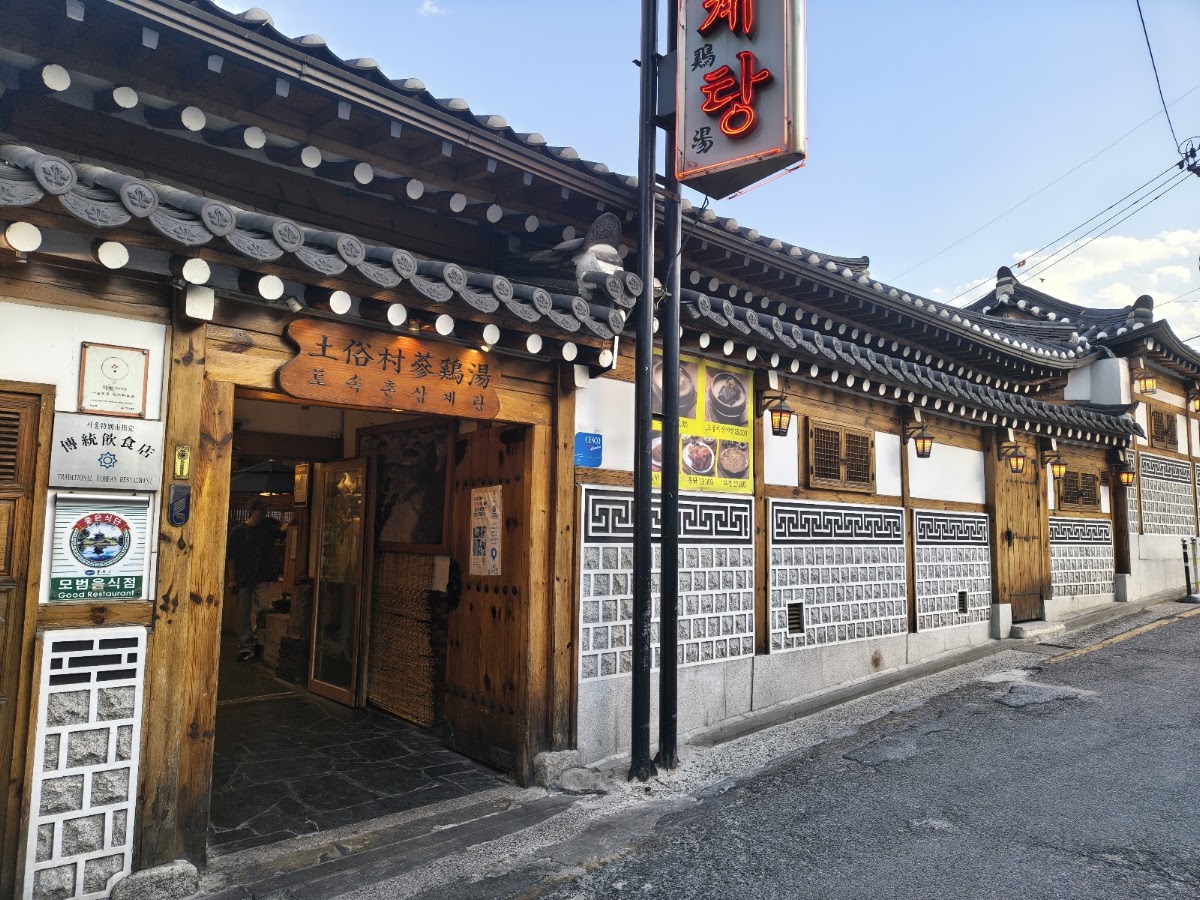
The AREX doors open at Seoul Station and 40 minutes later you're lifting the lid off a clay pot, a whole young chicken cooking inside with ginseng, jujube, and sticky rice.
Start where the train drops you. The AREX Express runs from Incheon International to Seoul Station in about 43 minutes for roughly 11,000 won (around 8 USD), no transfers, luggage racks by the doors. From there it's a short metro hop up to Jongno-gu.
Tosokchon Samgyetang is the first stop for a reason. The samgyetang here (whole spring chicken in milky ginseng broth) is the dish half of Seoul eats on the hottest days of summer, and the line outside moves faster than it looks. Around 20,000 won a bowl.
Eat slowly. You'll want the energy, because the palace is a five-minute walk from the front door and that's exactly where you're headed next.
Drums at the Throne Hall
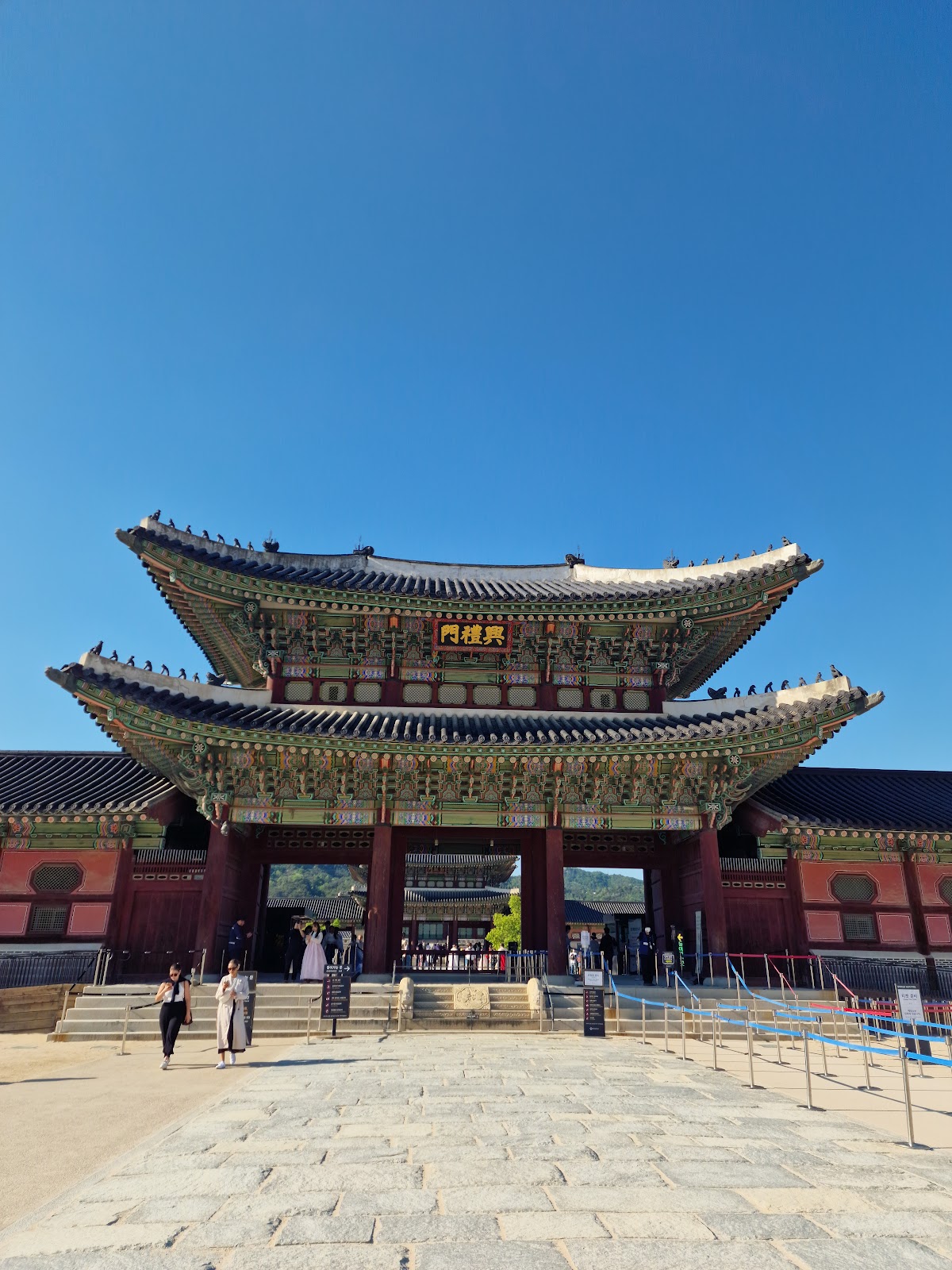
Twin drums thud across a stone plaza, guards in blue and red move in slow procession, and behind them the throne hall roof lifts at the corners like it's about to take off.
Gyeongbokgung is the big one, the main royal palace of the Joseon dynasty, first built in 1395. Time your arrival for the changing of the guard (usually 10am and 2pm, weather permitting) and stand near the Gwanghwamun gate for the full ceremony.
Walk straight back to Geunjeongjeon, the throne hall. It sits on a double stone terrace ringed by rank stones, with Bugaksan mountain framed perfectly behind the roofline. This is the postcard, and it earns it.
Entry is 3,000 won (about 2.30 USD). Show up in hanbok, the traditional dress rented from shops all around the gate, and you walk in free. Check opening hours before you go, the palace closes Tuesdays.
The Secret Garden Behind the Second Palace
Past a plain wooden gate the noise drops away, and a lotus pond opens up in front of a pavilion that has stood on that spot since the 1600s.
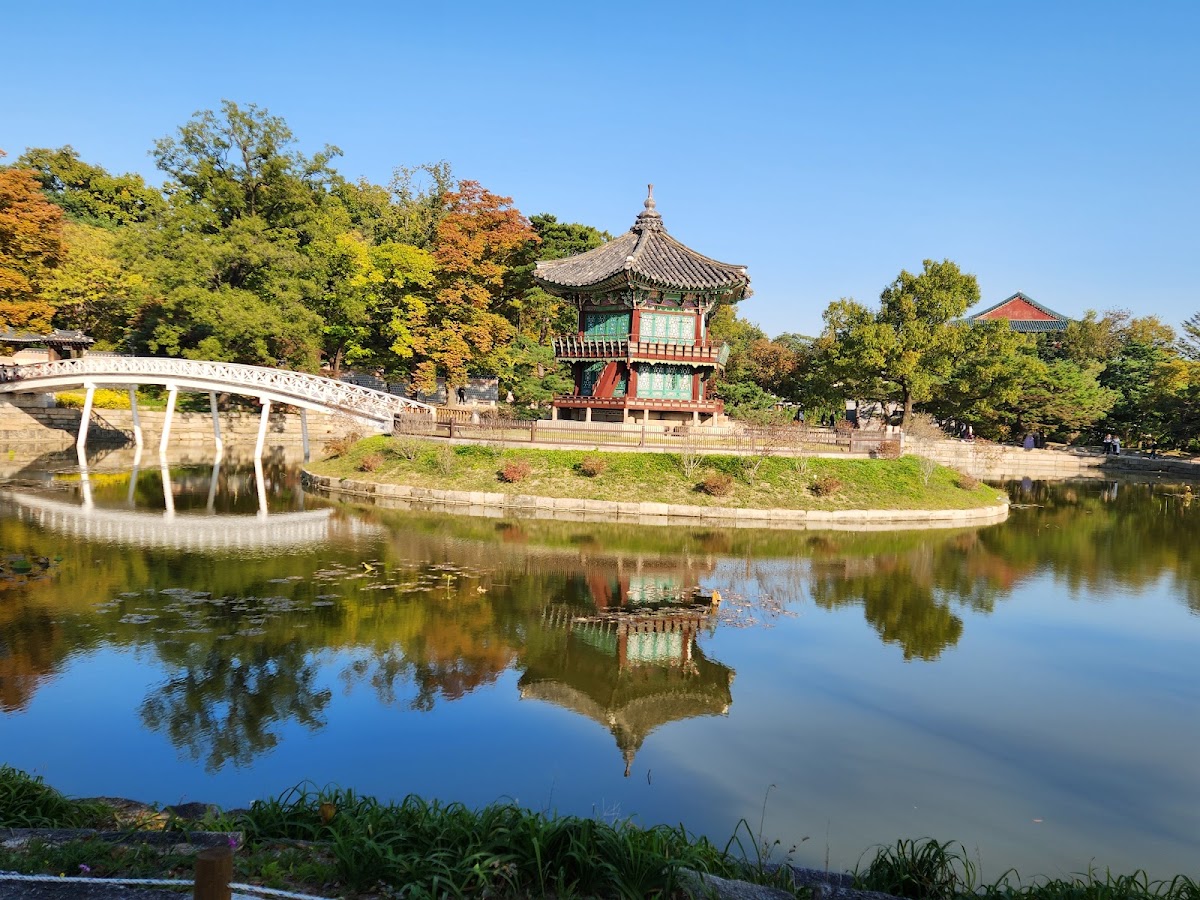
Changdeokgung is the palace to see if you only see two. It's a UNESCO World Heritage site, and the reason is Huwon, the rear garden the kings kept private for 300 years.
Huwon is timed-entry only, in small guided groups, so book the English tour slot when you buy your ticket at the gate (garden access is an extra fee on top of palace entry, together around 8,000 won). The walk winds past Buyongji pond and the two-story Juhamnu library, then up through wooded hills that feel a world away from the traffic outside.
Afterward, drift west toward the Bukchon neighbourhood. The transition from palace walls to sloping tile-roofed lanes happens in a single block.
Tile Roofs, Cafe Anguk, and an Alley Dinner
You crest a Bukchon lane and 100 hanok rooftops step down the hillside in grey waves, the modern city glinting far below them.
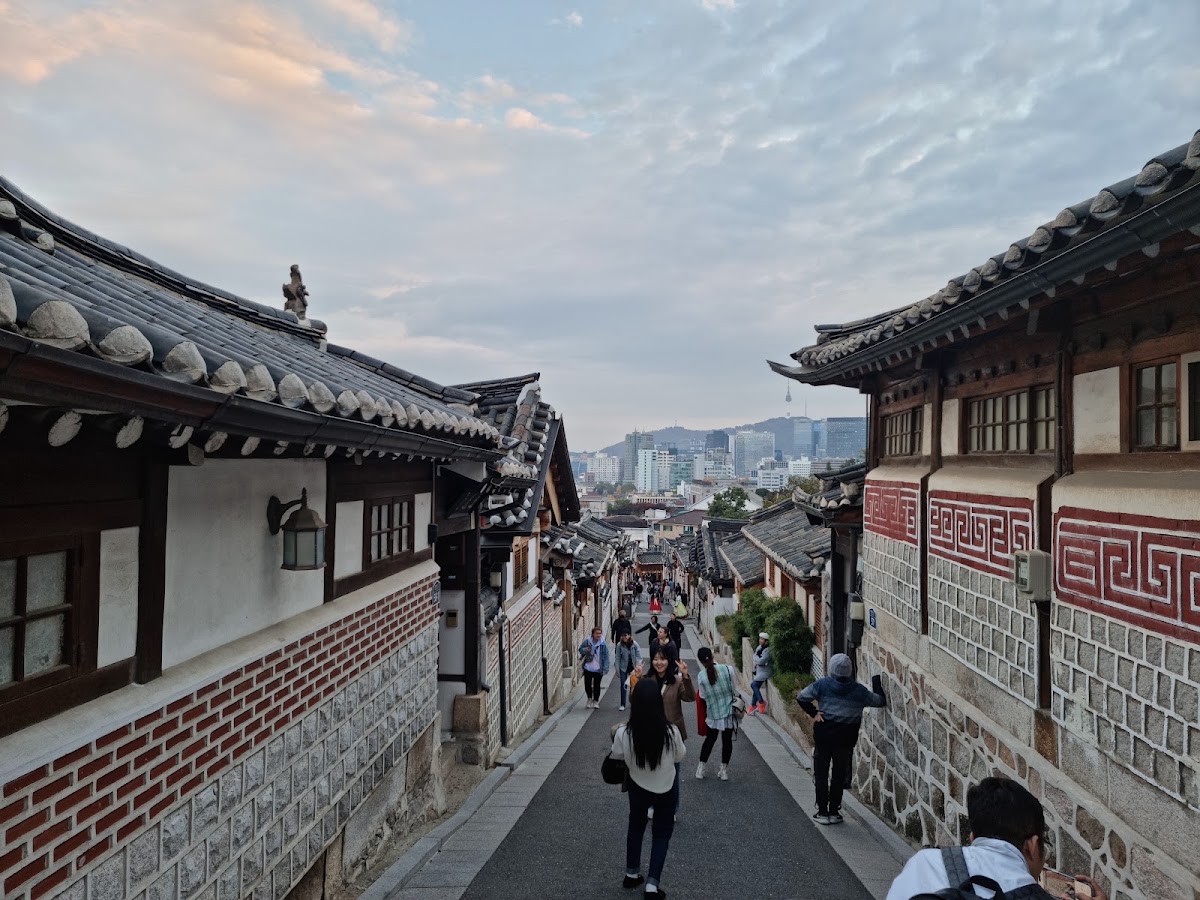
Bukchon Hanok Village is a living neighbourhood, not a museum, so keep your voice down on the residential lanes (there are posted quiet hours and it matters to the people who live here). The classic view is from the top of Bukchon-ro 11-gil, looking down the sloped street toward downtown.
Work your way toward Onion Anguk, a cafe set inside a restored hanok where you drink flat whites in a courtyard under exposed timber beams. Then cut over to Insadong-gil, the craft-and-antiques strip, for hand-made paper and old tea sets.
Dinner is in Ikseon-dong, a warren of narrow alleys packed with tiny restaurants. Changhwadang is the one to aim for, a hanok dining spot that turns the old courtyard layout into an intimate meal. Book ahead, the alleys fill up fast after dark.
Breakfast at Full Volume in Gwangjang Market
Cast iron griddles hiss with mung-bean pancakes, an ajumma waves you onto a plastic stool, and someone slides a plate of mayak gimbap in front of you before you've finished sitting down.
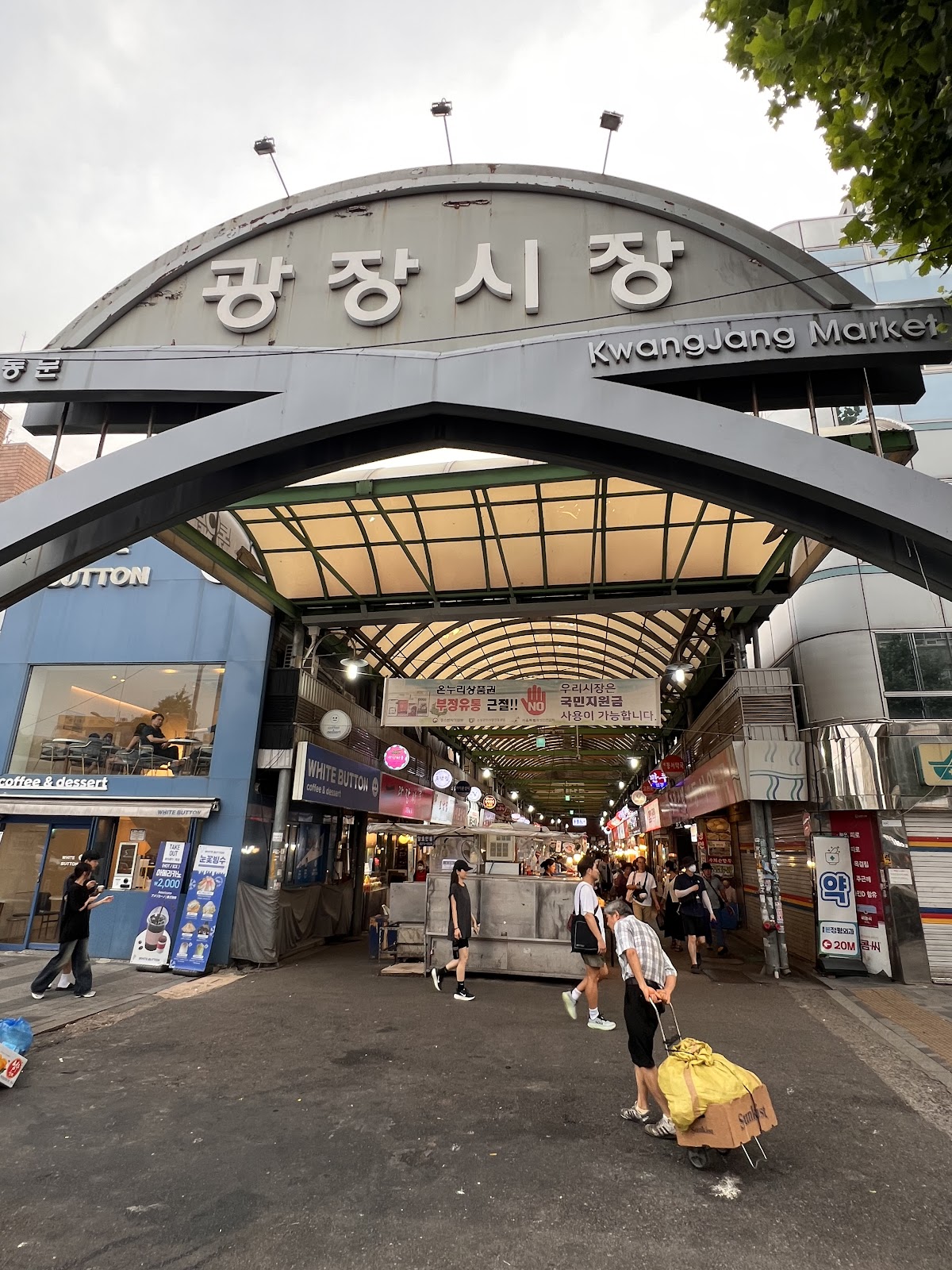
Gwangjang is one of the oldest markets in the country and its food alley runs at full tilt from morning. Come hungry. The greatest hits: bindaetteok (mung-bean pancakes ground and fried to order), mayak gimbap (the addictive little seaweed rolls), and a bowl of steaming sundae. Point, sit, eat, repeat. Most plates run 4,000 to 8,000 won.
Cash goes further here than card, so bring some. Watch the pancake stalls grind the beans on stone mills right in front of you, the batter hitting the oil in a wall of sound and smell.
From the market it's an easy roll south to the silver curves of Dongdaemun Design Plaza, then across town for the afternoon.
The City Wall, Then the Buskers of Hongdae
You climb a stone rampart older than most capitals in Europe, and the whole packed valley of Seoul spreads out warm in the late-afternoon light.
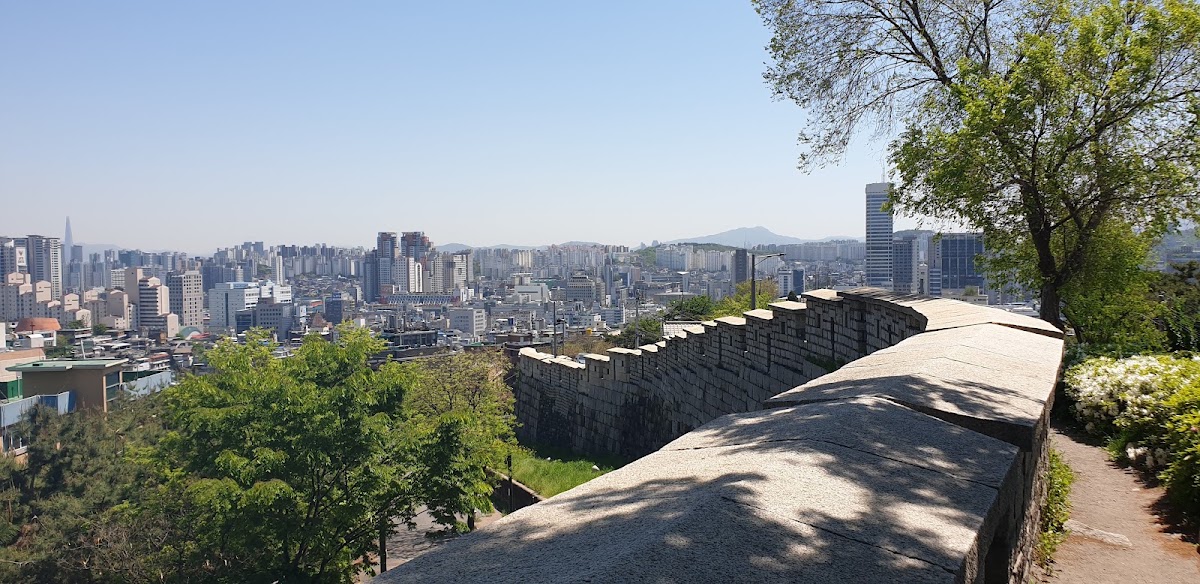
The Seoul City Wall dates to 1396, and the Naksan section is the gentle one, a paved ridge path through Naksan Park with the wall on one side and rooftop views on the other. It's maybe an hour at a stroll, best in the last hour before sunset.
When the light goes, swing over to Euljiro Nogari Alley, where the pojangmacha (street tents) put out folding tables and the standard order is cold beer with dried pollock. Loud, cheap, and pure Seoul.
End the night across the river in Hongdae, the university district. Buskers set up amps around the Hongdae Playground and the side streets stay busy till the small hours. Follow the crowd, follow the music.
Granite Underfoot at Bukhansan
The trees fall away, the trail turns to bare pale granite, and suddenly the city you've been walking through for days is a grey grid far below your boots.
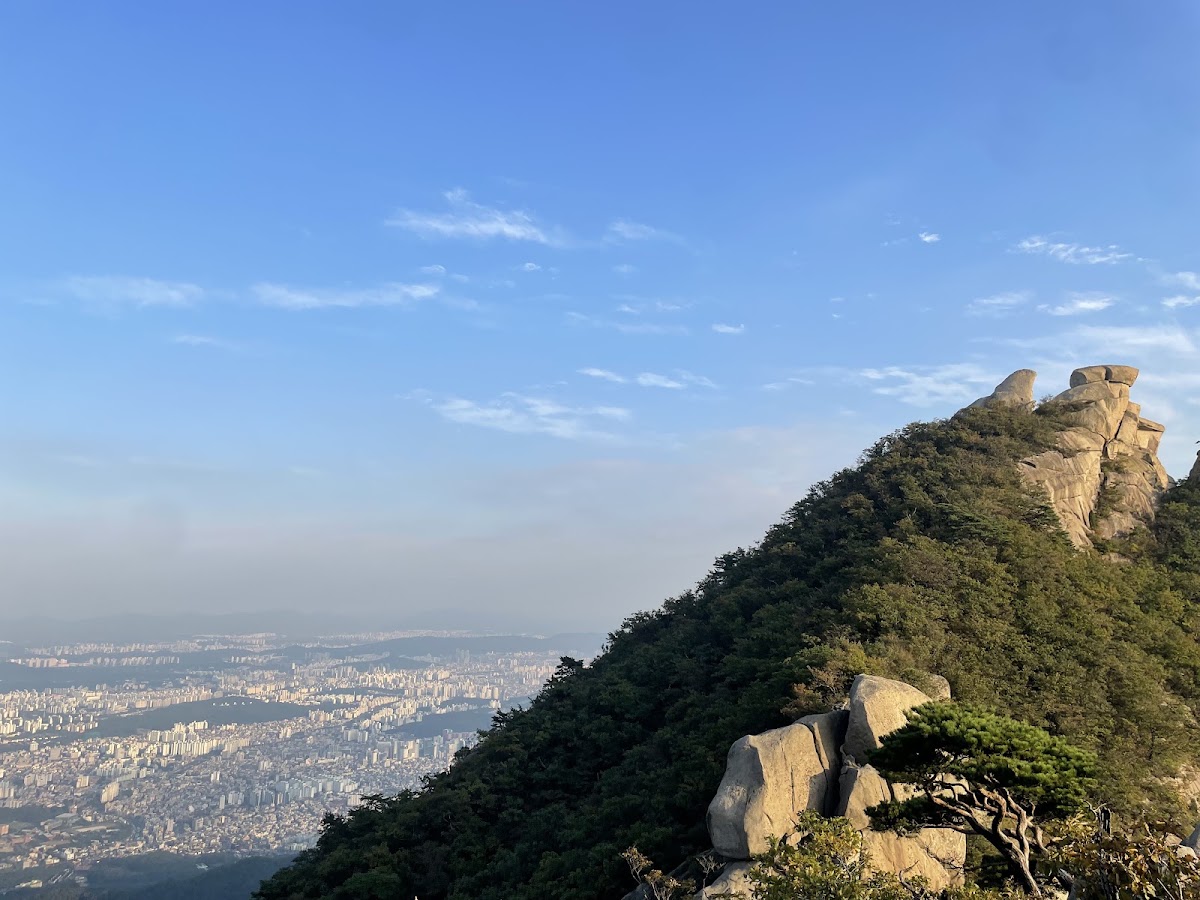
Seoul has a full national park inside its metro reach, and a day on Bukhansan is the counterweight to all the city walking. Head for the Bukhansanseong entrance and climb toward Bibong peak, a sharp granite spire with a 360-degree payoff at the top.
This is a real hike, not a stroll: think 4 to 6 hours round trip, some rope-assisted scrambling near the summit, proper shoes and water essential. Start early and check the forecast, the granite gets slick in rain. The park website (english.knps.or.kr) has current trail conditions.
Back in town, reward the legs with Korean BBQ at Born and Bred in Hannam-dong, where the aged beef is the whole point, then late-night dessert at the cavernous Cafe Onion in Seongsu.
One Last Soak Before the Train Home
Steam curls off a hot pool, the tension of a week of walking finally lets go, and somewhere down the corridor a family is asleep on a heated jade floor.
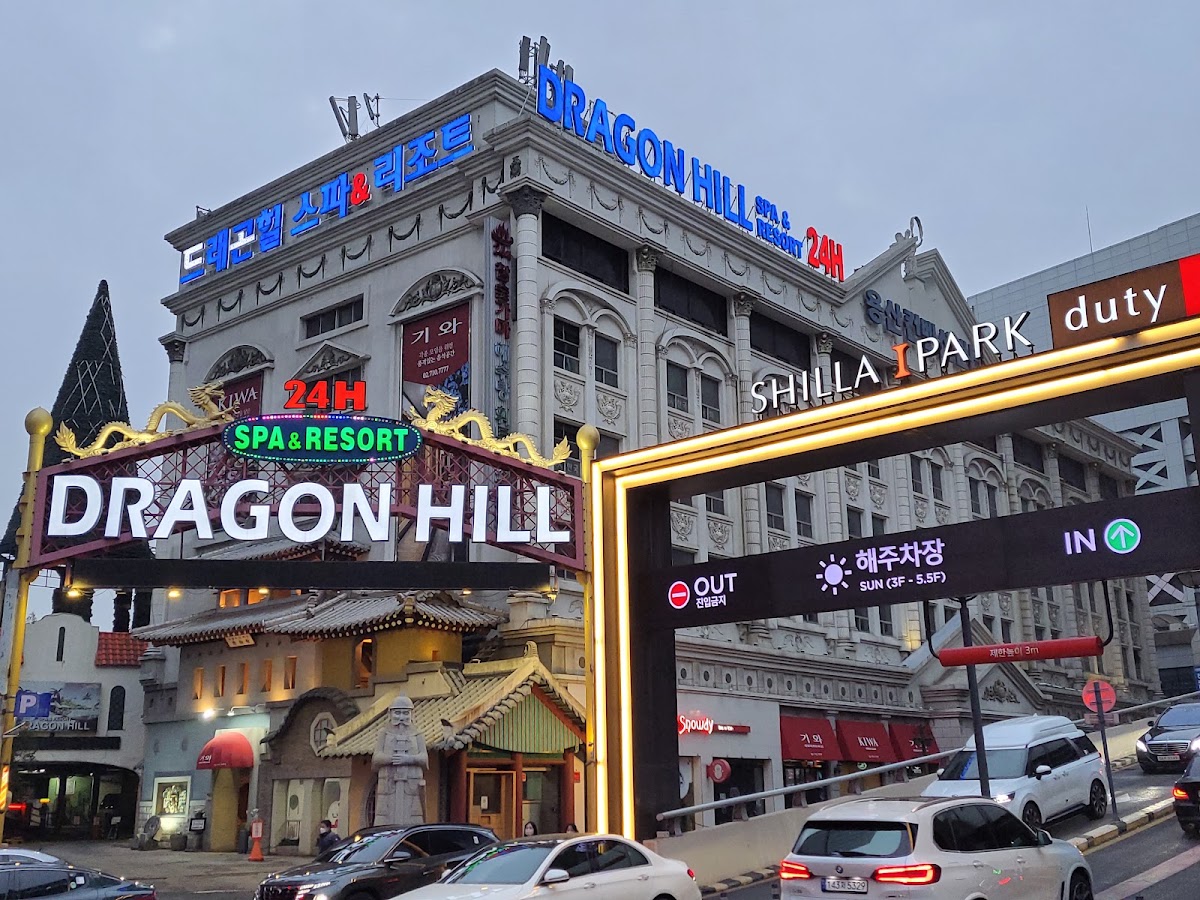
Spend your last morning at Dragon Hill Spa, a huge jjimjilbang (Korean bathhouse) near Yongsan. You pay a flat entry of around 15,000 won, change into the house shorts and tee, and drift between hot and cold pools, sauna rooms lined with salt and charcoal, and warm sleeping floors. It is the most relaxed you will feel all trip.
For lunch, Myeongdong Kyoja does one thing to perfection: kalguksu, hand-cut noodles in a rich broth, with a side of garlicky kimchi that keeps coming. Then ride the Namsan Cable Car up to the base of N Seoul Tower for a final look over the city.
When it's time, the AREX Express from Seoul Station carries you straight back to Incheon. Same 43 minutes, same easy ride, the whole city shrinking behind you.
Ready to book?
Book the rest of Seoul, South Korea
Handpicked partner searches, dates pre-filled. Pricing is identical to going direct — the partner shares a small commission with Tabi so this guide stays free.
Frequently asked
How many days do you need for Seoul?
Five days is the sweet spot to pair the palaces and old neighbourhoods with a market crawl, a mountain hike, and the Gangnam side of the river without rushing. Three days covers just the core of Jongno-gu (Gyeongbokgung, Bukchon, Gwangjang Market) at a faster pace.
What's the best way to get from Incheon Airport into the city?
The AREX Express train runs nonstop to Seoul Station in about 43 minutes for roughly 11,000 won. There's also an all-stop AREX commuter line that's cheaper but slower, plus airport limousine buses that reach specific hotel zones directly. For most travellers the express train is the simplest.
Do I need to book palace tickets in advance?
General palace entry you can buy at the gate. The exception is the Huwon Secret Garden at Changdeokgung, which runs on timed guided tours in limited group sizes, so reserve that slot when you arrive or online. Remember most palaces close on either Monday or Tuesday, so check the day before.
Is the Bukhansan hike doable for a casual walker?
Bibong peak is a real hike with rope-assisted granite scrambling near the top, so it suits someone with reasonable fitness and proper shoes rather than a total beginner. If you want the national park scenery without the scramble, there are gentler trails from the same Bukhansanseong entrance. Start early and check the weather.
When is the best time of year to visit Seoul?
Spring (April to May) for cherry blossoms and mild days, and autumn (late September to November) for crisp air and colour on the mountains, are the standout seasons. Summer is hot, humid, and includes a rainy stretch; winter is cold and dry with occasional snow that looks stunning on the palace roofs.
Skip the planning
Your Seoul, South Korea trip, ready to go
Adopt the day-by-day itinerary we built to match this guide. Every stop is a real place, every booking link is validated. Free forever, no card needed.
Open the Seoul, South Korea itinerary